The night sky in van Gogh’s painting The Starry Night may have been inspired by celestial arrangement visible before dawn on 22 July 1889. Findings suggest artwork portrays an artistic observation of waning crescent Moon, Venus, & the Hyades star cluster: https://t.co/wz21KJMlpE
@SciReports The authors suggest that helmet use, e-scooter design, urban infrastructure, and rider behaviour could influence injury risk, and recommend mandatory helmets, stricter speed limits, and improved scooter design.
👉 Read the full article here: https://t.co/S3wgKVltff
E-scooter riders may face a higher risk of serious brain and internal organ injuries than motorcyclists and cyclists, according to research published in @SciReports.
@SciReports Adult e-scooter riders had a higher risk of brain, internal organ, and blood vessel injuries than the other groups, although their risk of fractures was lower. Helmet use was documented in just 5.9% of e-scooter riders.
Open science is about more than access to publications. Explore key lessons from 7 researchers on sharing data, code and protocols to improve transparency, reproducibility and research impact.
https://t.co/fkcnw03XM8
#OpenAccessWeek#OpenScience
In a small preliminary study, women who received 15 micrograms of the psychedelic drug LSD focused for longer periods and responded faster to a stimulus than did those who were given a placebo. This effect was not observed for male participants.
https://t.co/6IuTGO9UXP
Salt marshes can survive extreme wave events with modest erosion but are likely to offer the best flood protection to coastlines that experience moderate storms, according to the results of experiments in a massive wave flume reported in @Nature: https://t.co/nRnPwwyjlS
An enzyme in the brain might help to preserve cognitive resilience with advancing age, partly by clearing the organ of lipid droplets.
https://t.co/IssAgkrW0w
Kann KI unsere Beziehungen verändern?
Bei Science on the Spree diskutieren Expert:innen aus Forschung & Politik über Auswirkungen von KI auf Vertrauen, Kommunikation & psychische Gesundheit.
📍Haus der Kulturen der Welt + Livestream
https://t.co/8ONPqavyqp
#BerlinScienceWeek26
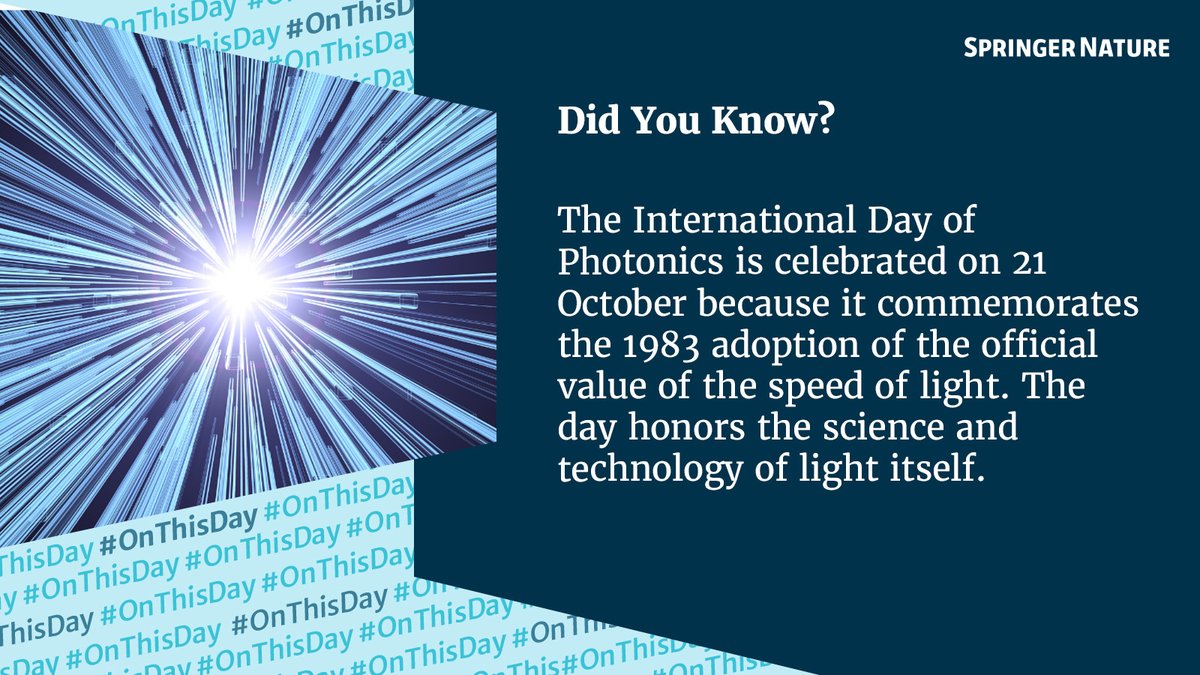
#OnThisDay, we celebrate the International Day of Photonics. From fiber-optic internet to medical imaging and lasers, light-based technologies help power our modern world. Here's to the science of light and the discoveries it makes possible. ✨🔬
Geomorphologist Christel Hansen follows environmental change across some of Earth’s most contrasting landscapes, from Antarctica to Africa. https://t.co/ZMa543Ul74
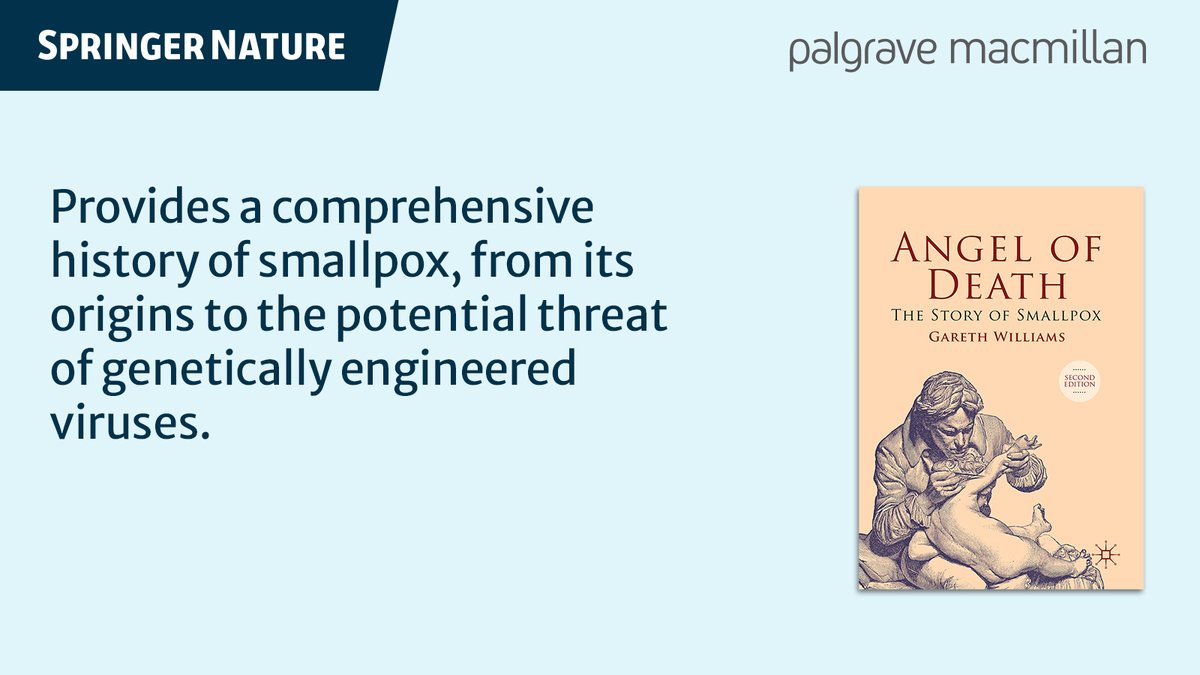
This revised edition of @Palgrave's Angel of Death provides a compelling account of humanity’s battle against one of its greatest killers. It traces the dramatic rise and fall of smallpox, including the creation of world’s first vaccine by Edward Jenner: https://t.co/IzwQTKp8J0
Open access isn't slowing down. Evidence shows it's continuing to grow.
Findings from Springer Nature & STM show researchers continue to choose #OA, institutions continue to invest in it, and engagement with open research is rising worldwide.
Read more: https://t.co/za6fx0ki3E
Improvements in cancer treatment in the past half century have made many forms of the condition less deadly, while outcomes for other forms continue to lag. These are the top cancer success stories of the past 50 years, by the numbers: https://t.co/sTSSiSoMcr
Good news can seem in short supply. But it is there if you go looking. In Nature’s latest collection of stories selected to bring readers joy, learn about a country that has reversed its rates of diabetes, umbrellas that keep corals cool and more: https://t.co/OkGayfaFlU
Around 44% of reef-building coral species are estimated to face an increased relative risk of extinction. Analysis published in Nature suggests that projected heat stress associated with climate change is the primary driver of population declines: https://t.co/9kprEIROZi
You’ve invested time, expertise and effort into your research. How can you maximise its impact? Our new white paper, explores 200,000+ research articles and shows how open access can increase readership, citations, visibility and global reach. 📖 https://t.co/X5MyKB96r2
#OnThisDay in 1900, Max Planck presented his groundbreaking law of black-body radiation. Planck’s formula solved a major puzzle in physics and set him on the path toward the idea of energy quanta, laying the groundwork for the quantum revolution. ⚛️
October 18th is World Menopause Day. To mark the occasion and amplify menopause research, @SciReports is calling for papers on Menopause. To explore related content and submit your research, please visit the Collection webpage: https://t.co/1d7FXI5CgK