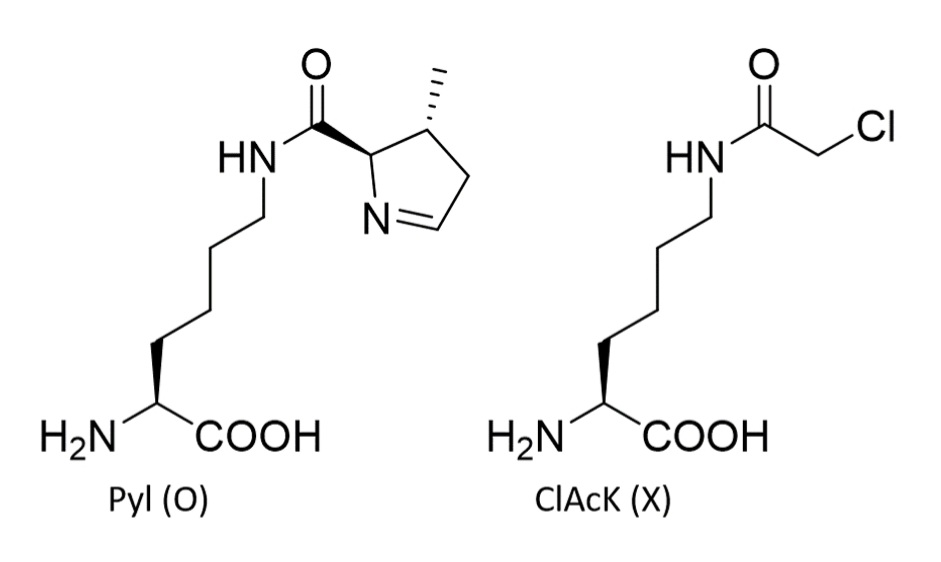
Excited to share our new paper on site-specific in vivo SUMOylation! We've developed a novel method using genetic code expansion and proximity-induced crosslinking.
Our new method overcomes this limitation by using a non-canonical amino acid, 2-chloroacetyl-Nε-lysine (ClAcK), which can react with a proximal cysteine.
Our approach provides a straightforward way to generate site-specific SUMO conjugates in cells. It also has the potential to be adapted to mammalian cells.
However, studying SUMOylation in vivo has been tough due to lack of control over which lysine residues get modified. Existing enzymatic methods are limited.
Excited to share our new paper on site-specific in vivo SUMOylation! We've developed a novel method using genetic code expansion and proximity-induced crosslinking.
SUMOylation is a crucial post-translational modification, like ubiquitination, that regulates many cellular processes. It's involved in protein stability, localization, and interactions.
In conclusion, not all sugars are equal! Be mindful of added sugars, particularly fructose and HFCS. Focus on whole, unprocessed foods and consider healthier alternatives like rare sugars to improve your metabolic health.
Not all sugars are created equal! While they all provide energy, some have unique effects on your body. Let's explore why some sugars & diets are more harmful than others.
On the other hand, rare sugars like allulose and tagatose are being investigated as healthier alternatives. They have shown potential for improving blood glucose control, reducing body fat, and positively altering the gut microbiome. https://t.co/YIQ9yJsNRc
What are rare sugars? They're monosaccharides and their derivatives that exist in small amounts in nature, unlike common sugars like glucose and fructose.