Today we're taking the wraps off Restive Fund III: $45M to back founders building the AI-powered future of financial services.
When @JTylerGriffin and I started @restivevc in 2018, we thought we had good timing. But today, is even a better time to build!
Some thoughts:
We had a bizarro payments moment last week, when both Stripe and Ant International announced a number of new agentic solutions within days of one another.
Many of the headline solutions were the same, but the underlying approaches were dramatically different:
Payments
➡️ Stripe lets agents pay with a range of existing payment rails, including cards, bank accounts, stablecoins, and BNPL
➡️ Ant pulls agents into the Alipay wallet ecosystem, short-circuiting providers outside of that system
Identity
➡️ Stripe, through their Link product, forces a human to approve each transaction. They don't try to solve the question of agent identity.
➡️ Ant built a full "Know Your Agent" framework. Agents get a digital identity, certified capabilities, a trust score that determines how much autonomy they earn.
Settlement
➡️ Stripe's Machine Payments Protocol wraps existing rails and partners like Visa, Mastercard, Anthropic, OpenAI, and Revolut in a machine-readable layer.
➡️ Ant built agent-to-agent settlement from scratch for nano-transactions, optimizing for high frequency small dollar transactions that cut out the card networks.
Every layer of Ant's stack points back to Ant and reinforces their ecosystem. Stripe is building scaffolding around the full network of payment providers.
What's interesting is that Stripe was in a position to verticalize more. They have been early and aggressive within agentic payments, and in another world they would have taken a more Ant-like approach to their stack. They chose interoperability instead.
Both were the right moves for each market. But it shows a shrewd level of pragmatism by Stripe that I think will serve them well as the market continues to get more active and well-capitalized. Was this the right move?
Does AI upend or 100x humans in wealth management?
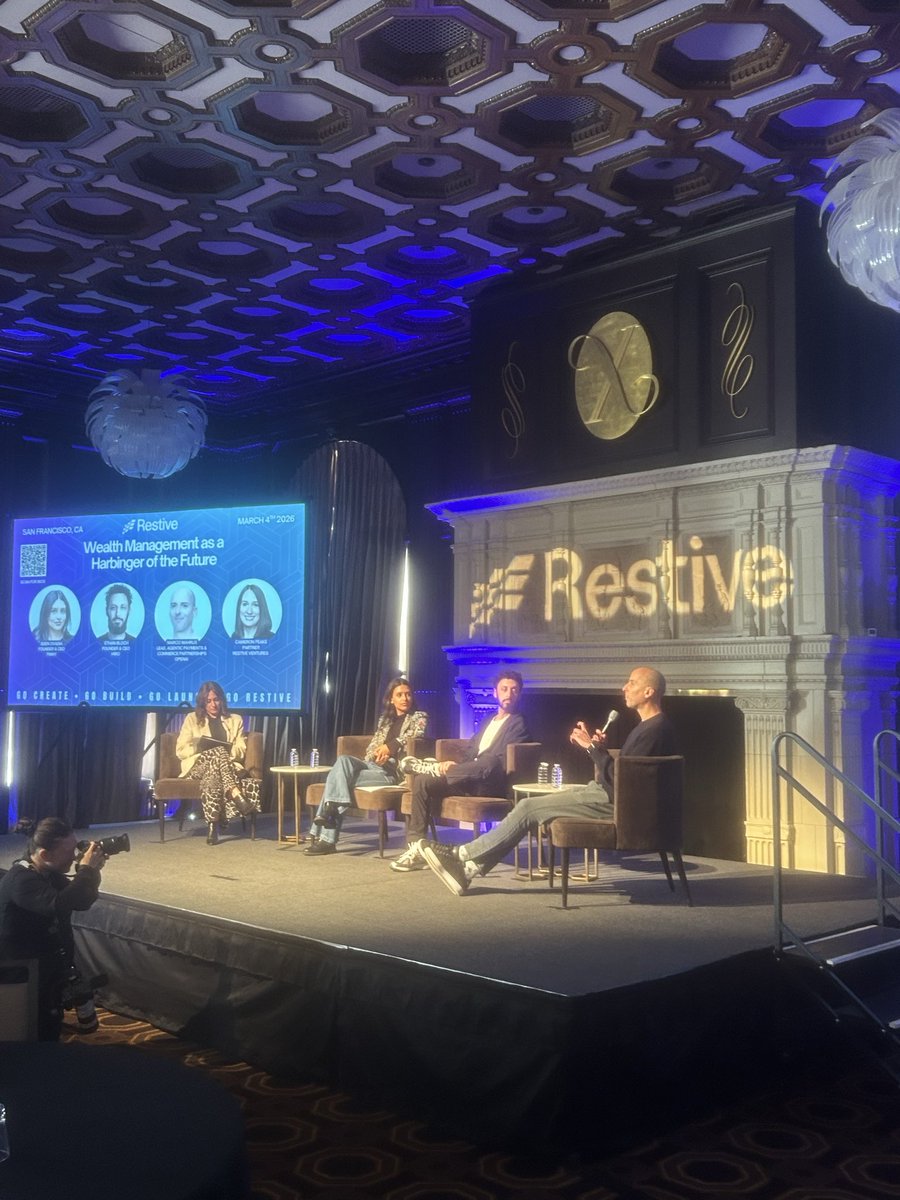
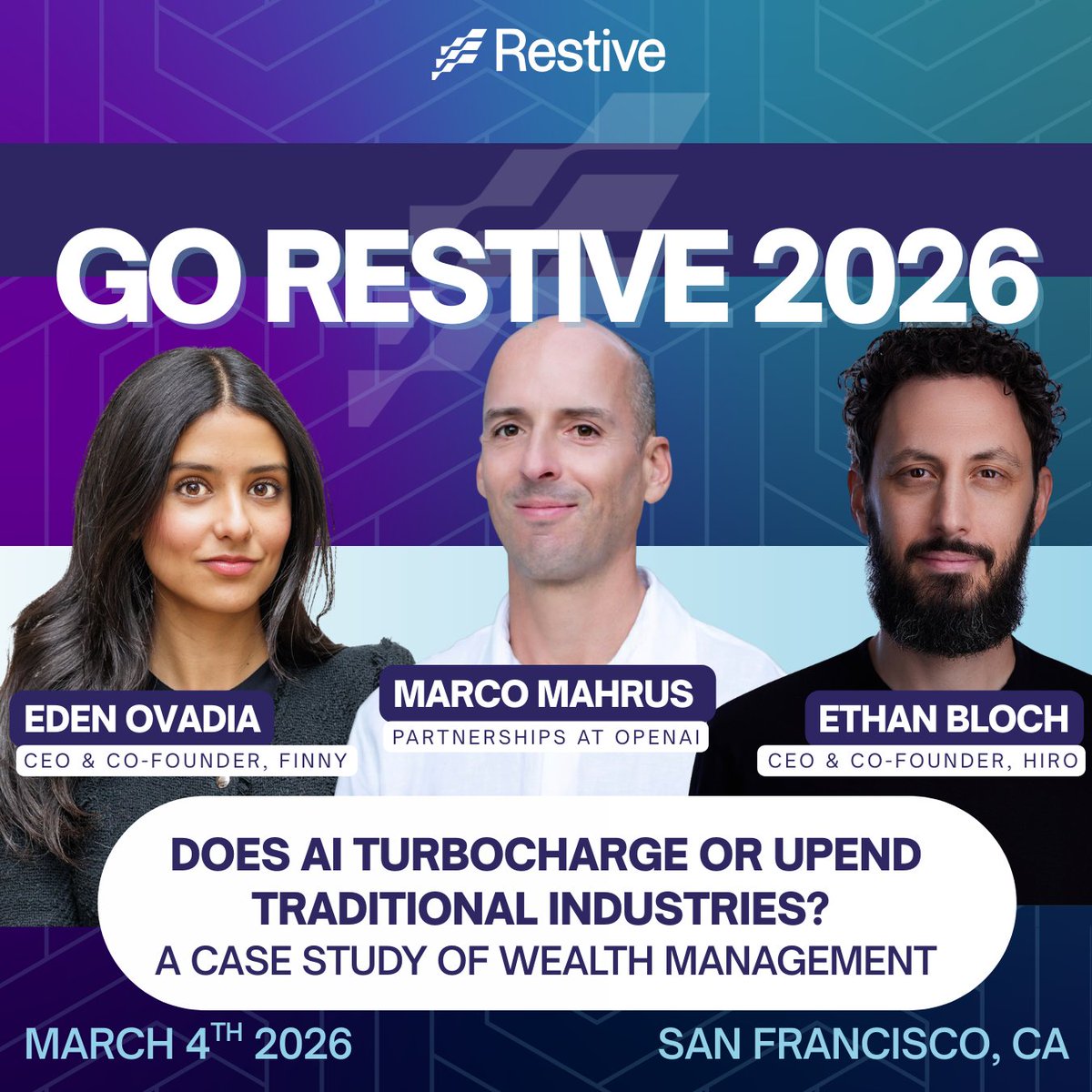
This was the question we posed last month at Go Restive, along with @Eden__Ovadia of @FINNYAI, @ebloch of Hiro, and Marco Mahrus of @OpenAI.
Just a few weeks later, OpenAI acquired Hiro. The panel's debate about whether AI replaces or amplifies advisors just got a lot more real, with the full force of Chat GPT's user base now in the equation.
The advantages we identified? A dramatically expanded TAM. Ultimate customization. Massive efficiencies.
The limitations? Liability. High touch, personal relationships. Opaque regulation.
Check out the full "debate"- which turned out to be a much more nuanced, sophisticated conversation than our opener would indicate. https://t.co/KES8wiXx6b
Instacart bought Instaleap this week to get into 30 countries. Will acquisitions like this exist in 5 years?
Internationalization within tech has historically meant M&A or methodical country-by-country rollouts over many years.
However, with AI companies, we're seeing internationalization being built in from day 1. It's effectively trivial to build multi-language products that can adapt to local regs. International partners are hungry to engage with US AI companies. This has meant that the demand and capabilities are available at the outset.
So does the next generation of tech companies even need to acquire their way to new markets? Or will we see international growth be the default from Day 1?
110m agent transactions in 5 months.
This was what @programmer of @coinbase shared about x402 volume last month at our Go Restive conference. And they're close to matching that again in just the last 30 days.
There is a big debate around stablecoins vs fiat and whether card networks will matter. But that's not where the real opportunity is. The hard part is everything around the core payment: Who is this agent acting for? Can it be trusted? What happens when a malicious merchant tricks an agent into buying something? How do you reconcile a thousand simultaneous transactions?
Permissioning, identity, disputes, fraud. The smartest builders are spending their time on standards, protocols, and protocols addressing these issues.
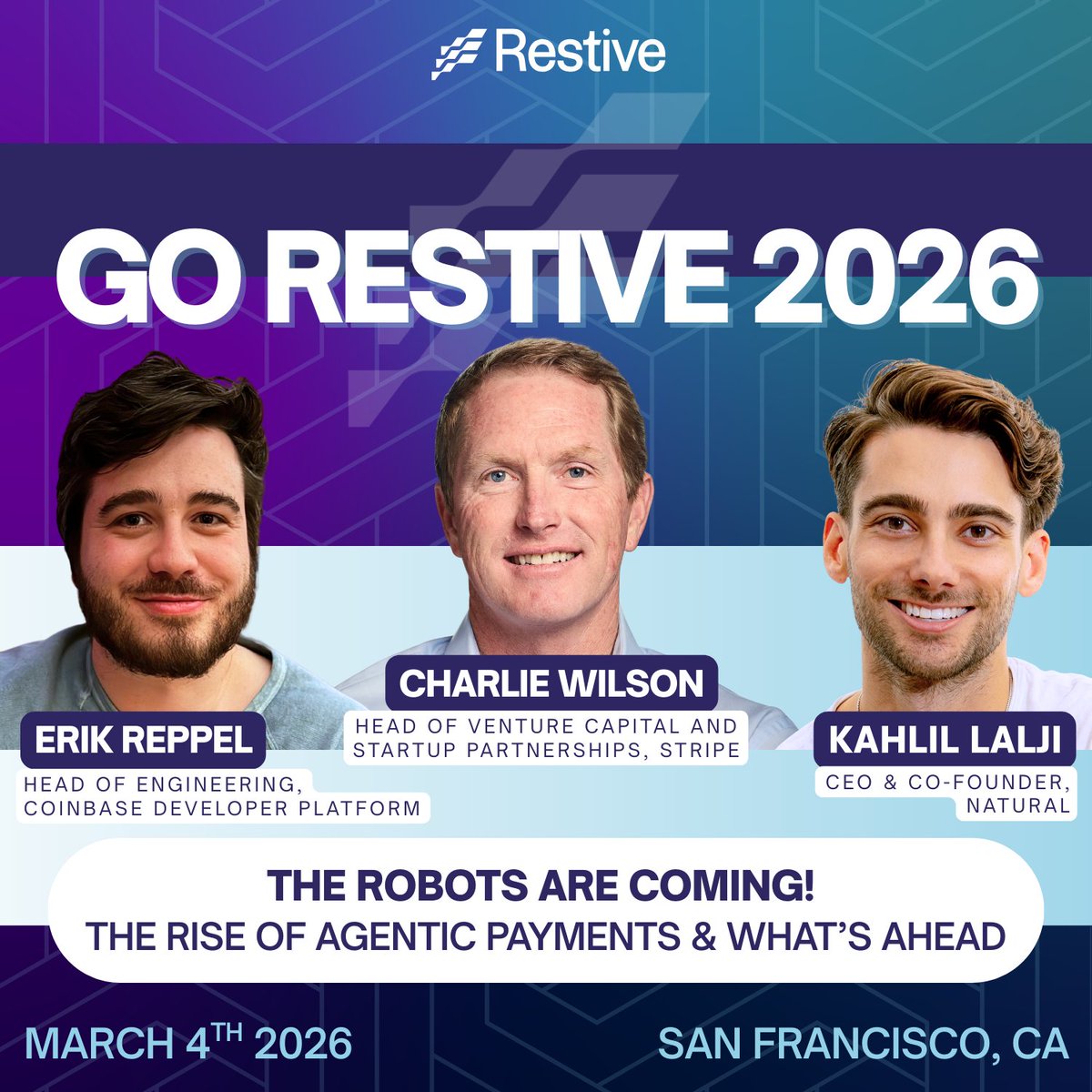
I dug into all of this on a panel with Erik, Charlie Wilson from @stripe and @bykahlil of @naturalpay.
.@stripe is excited to join the newly formed x402 foundation, as a founding member along with @coinbase and @cloudflare, to build an open ecosystem for agent-initiated payments.
Businesses on Stripe can accept money via x402 in a few lines of code: https://t.co/bggWrEarjT
Solana's CPO said last week that the network has processed 15M AI agent payments, and predicted 95-99% of future transactions will come from machines, not people.
x402 just crossed 75M transactions in 30 days.
The signal to watch is agent-to-agent payments are driving a significant share of this growth. We're seeing it show up in more and more pitches too, with agents paying agents for microservices.
Many new commerce use cases hit crypto circles first, then expand. Expect to hear much more about A2A payments in mainstream conversations in the coming months.
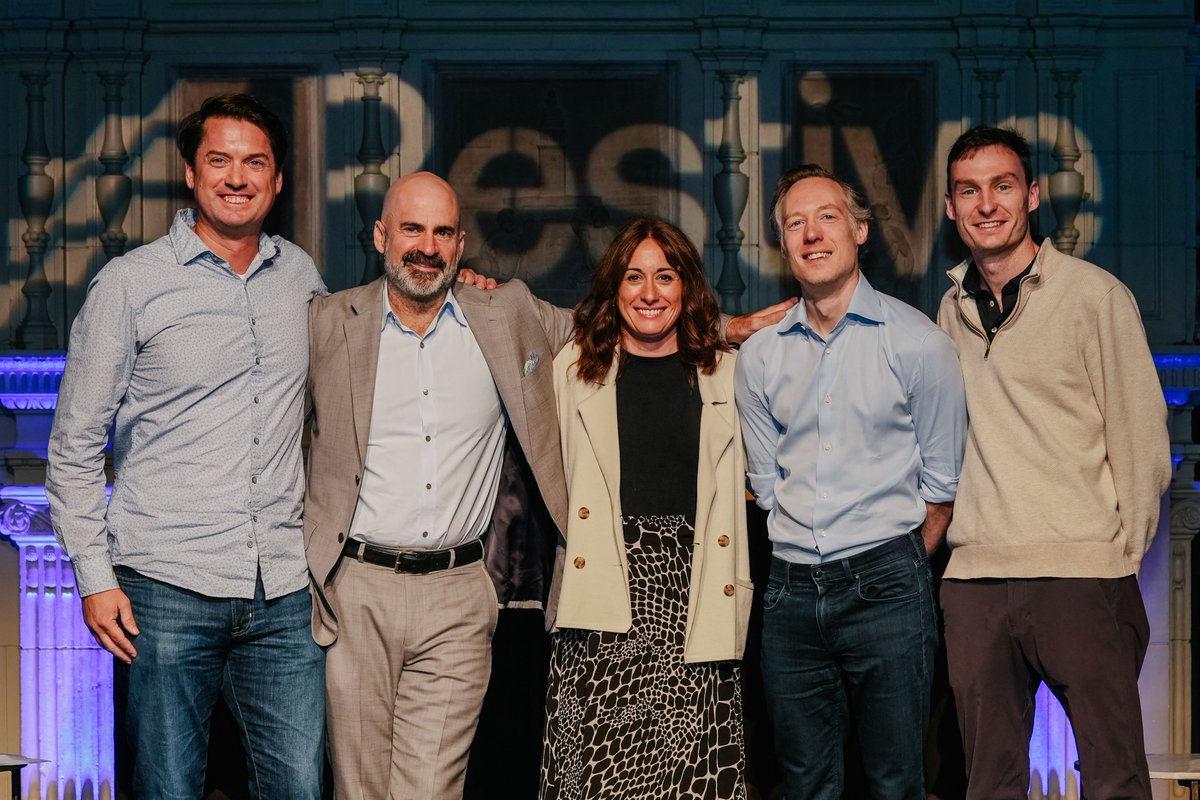
Thank you to everyone who came to our Go Restive event this week! It was a reminder of how far AI has come since our first conference just last year: agents can now replace human actions, machines can communicate (and socialize!) with one another, and we're at the cusp of a new paradigm in payments.
A few takeaways from this week:
- There was a buzz among everyone building - from hallway conversations to statements on stage - about the massive infrastructure shift we're undergoing that is unlike any we've seen in decades. It's a great time to be building.
- With Erik Reppel (@programmer), @bykahlil , and Charlie Wilson, we discussed the future of agentic payments. The use cases are here, and there have already been an impressive number of transactions. The only thing that is standing in the way of a major platform shift is greater awareness and empowerment of agents. This feels inevitable.
- With @Eden__Ovadia, @ebloch, and Marco Mahrus, we discussed wealth management and AI, and its impact on legacy industries. As much as I tried to tee the conversation up to be about human-in-the-loop vs. fully autonomous models ( 😉 ), the conversation actually became much more interesting as we broke apart the advantages of human vs. agentic involvement and how different customer segments were better served by each.
Finally, the standout moment in @Ryan_Falvey's conversation with Jason Wilk was Jason's story about how https://t.co/O3zP3DJNn2 rebounded from their rollercoaster run in the public markets. By battening down and rearchitecting much of the company with AI, Jason was able to build a much more resilient company and produce much more value for his employees and shareholders.
We'll be sharing video and summaries in the coming weeks. Thanks again to all of our speakers, sponsors, and attendees. And we're always thrilled to discuss these topics, and invest with founders building in these areas!
We're seeing a major infrastructure shift occurring across the internet. The companies that engage now, while the standards are still being written, will set the terms for the next era. Everyone else will operate on terms set without them.
Shoutout @crossmint@naturalpay@flowglad
Agentic payments: it's what everyone is talking about, but what's actually going on? When will it move from early adoption to mainstream? And who will win? I'm so excited to be moderating a panel with three leaders at the forefront of this topic: @ErikReppel at @coinbase, Charlie Wilson at @stripe and @bykahlil at @naturalpay.
And for those interested in attending... we are sold out, but our founder application is open and we might sneak a few more folks through ;)
A majority of the founders are using AI to supercharge traditional industries. Others are using AI to go after those industries from the outside. The agreement is that the tech is going to radically transform legacy industries.
I'm super excited about this panel at Go Restive that addresses this topic head on. Using wealth management as our case study, we'll have @ethanbloch, @Eden__Ovadia and Marco Marhus of @OpenAI debating what the future will look like and how we'll get there.
And for founders - applications are still open! https://t.co/YQAVyAuafZ
Proud to share Onshore's $31M Series B. LFG 🚀. Invested early and knew from day 1 this team was a force.
$200B+ in tax incentives go unclaimed every year. Onshore (formerly SPRX) is fixing that with an AI-native platform that's already delivered $600M+ in results for 500+ companies.
https://t.co/GtRQlFnj6n
Thanks to @VCJournal for featuring my takes on agentic commerce and the agentic infrastructure layer that is being created right now!
We're at an exciting point where those of us operating and investing at the earliest stages are seeing infrastructure being created for an entirely new system of purchasing, discovering, an engaging with products. With that scaffolding in place, the whole commercial experience will start to shift. Shout out to @bykahlil of @naturalpay as one of our portfolio companies featured in the piece!
More on this to come from me... and in the meantime, let me know if you are building in or excited about this new layer- I'd love to chat. https://t.co/4hj4tsT7xg
I think we only see bottlenecks in the face of demand. So the first question is where will that demand come from? It seems like today it’s mostly coming from the dev community. If that grows to something bigger, my gut is checkout (merchant payment systems can’t operate with crypto)