Oceans are our closest equivalent of a spirit world. A primordial, floaty realm covering most of the planet that humans can't access without specialized equipment, where all life came from, full of strange colorful intelligent creatures and singing peaceful leviathans.
You must write.
You must visit the water.
You must talk to the trees, and to God.
You must love.
You must remember.
You must learn to eat better.
You must call down your dead
with drum and gin.
You must—live.
Again and again and again.
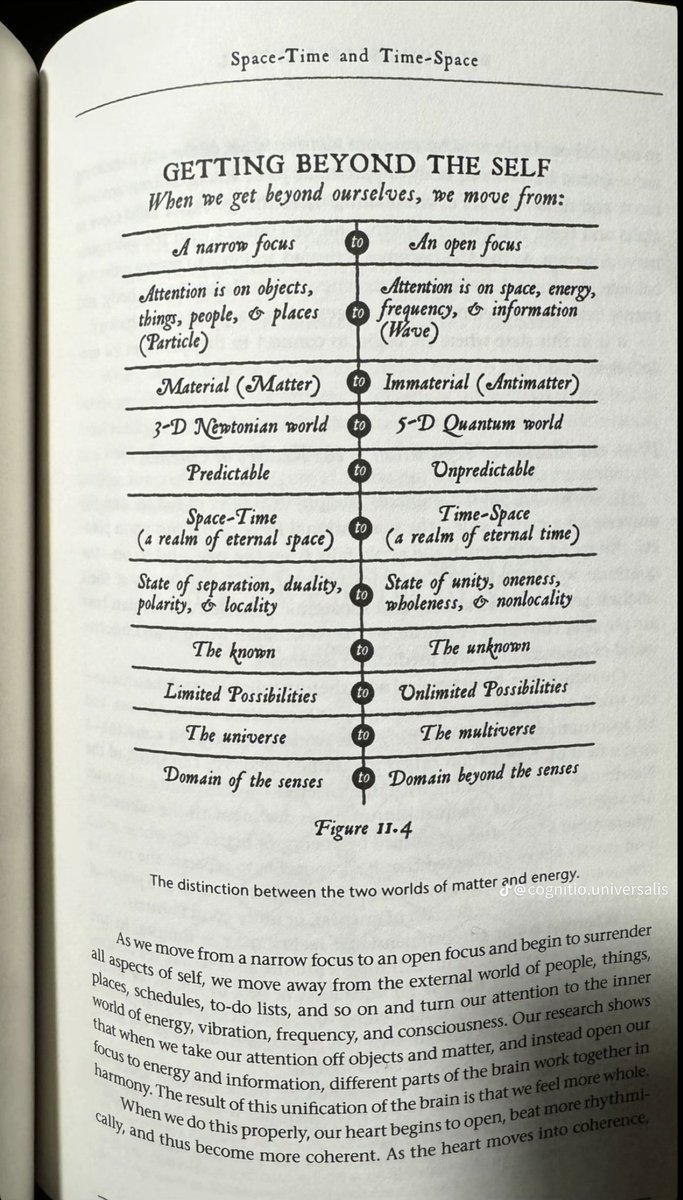
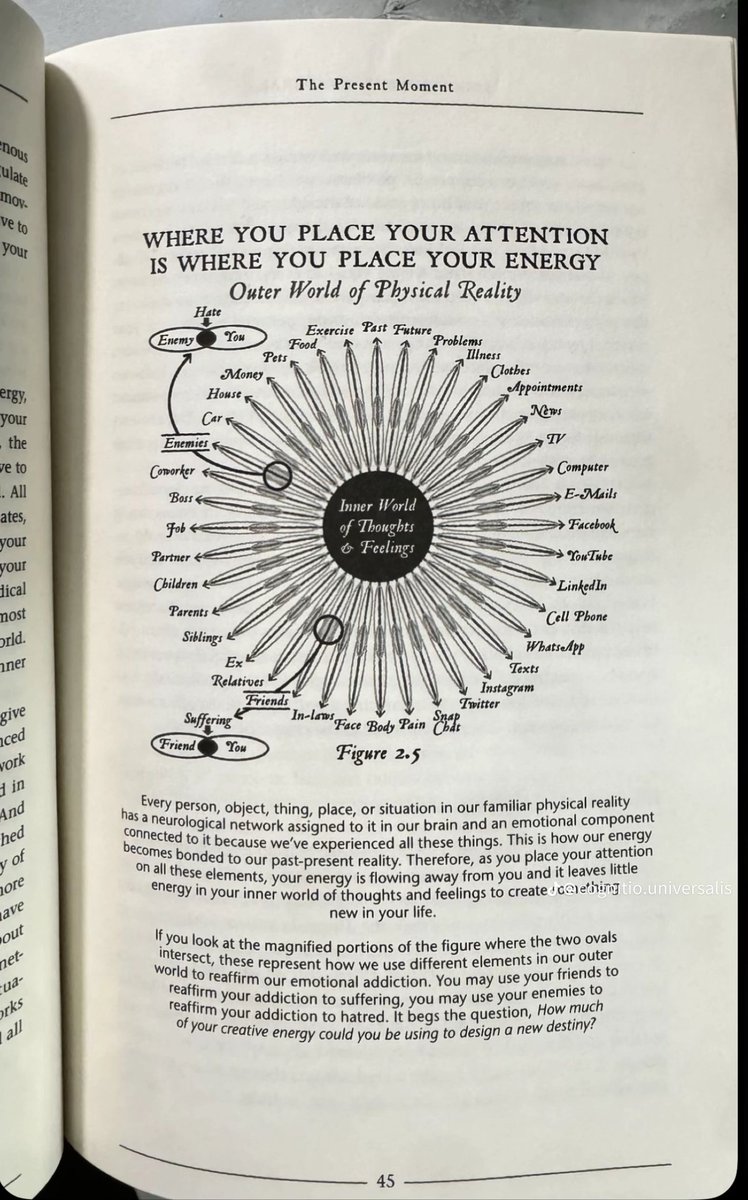
unless you learn how to protect your creative force you will be drained out of all creativity and youth by basic distractions in life. this is why knowledge is power it opens all doors and solves all your problems even the ones you thought were impossible
this makes a lot of sense. i have always felt this weird obstacle between me and my goals caused by depletion of my energy and now im realizing it's being caused by my lack of knowledge on how to keep and utilize my creative energy to create my desired reality
To get “out of our heads,” sometimes we have to get fully into our heads first.
Thoughts usually come with both sensory component and conceptual components.
For “overthinkers” the sensation of a thought often feels like a light tingling in their brain.
Or a tightness, pressure or a very localized numbness in part of the brain.
Although it requires some sensitivity, usually one can identify some sensation like this if one looks closely at a thought.
At times of over-thinking, try focusing on locating the sensation of the thought.
This puts us back in the world of sensation without suppressing the thinking.
From there, we can gradually spread our sensation outwards.
Start sensing into the rest of our brain, then the rest of our skull and face.
Then expanding our awareness down to our neck, shoulders, torso, arms, hands, legs, feet.
Before we know it we are out of our heads and back in our bodies.
It can have the feeling of discovering a vast palace in which our brain is a tiny chamber.
But a chamber that is made of fundamentally the same stuff.
In Tibetan Buddhism, the Rainbow Body ('ja' lus) is a profound spiritual attainment where a practitioner’s physical body dissolves into light, often leaving behind only hair and nails. This phenomenon occurs through advanced Dzogchen practices, specifically Trekchö and Tögal, which transform the five gross elements of the body into five-colored light.
Physical Process: The body shrinks and emits radiant light, eventually vanishing or leaving only small remnants.
Reason for Remnants: Hair and nails are said to remain because they are considered "dead material" without consciousness, unlike the rest of the corporeal form.
Variations: In the highest attainment, the Rainbow Body of Great Transference, the body dissolves completely without leaving any physical trace, as exemplified by Guru Padmasambhava.
Documentation: Historical records from monasteries like Kathok and Dzogchen, as well as modern accounts (e.g., Sonam Namgyal in 1952), document witnesses observing this dissolution and the subsequent presence of hair and nails.
a question for you: “why aren’t you doing a lot of what energizes you?”
perhaps also interesting: “why arent you ALLOWED to do a lot of what energizes you?”
Jung's words on finding your own path:
“What is to come will be created in you and from you. Hence look into yourself. Do not compare, do not measure. No other way is like yours. All other ways deceive you and tempt you. You must fulfill the way that is in you.”
One of the greatest misunderstandings in religion is the belief that stories about what happens after death are necessarily describing what happens when the physical body dies. The Egyptian Book of the Dead, the Tibetan Book of the Dead, the Greek myths of descent into the underworld, and even the biblical accounts of death and resurrection can all be understood as descriptions of internal processes that take place while we’re still alive. The descent into the underworld is the confrontation with everything we’ve buried within ourselves. The judgment of the dead is the moment we can no longer hide from the truth of what we are. The terrifying deities of the Tibetan tradition are manifestations of consciousness that must be recognized rather than feared. And the resurrection described in Christianity is the emergence of a new way of being after the identity we’ve spent our lives constructing begins to dissolve.
The problem is that people have spent thousands of years turning descriptions of experiences into beliefs about places they’ll go after they die. They’ve mistaken maps of consciousness for maps of the afterlife. I’m not claiming to know entirely what happens after physical death. What I’m saying is that there’s a death you can experience long before your body dies, and until you’ve undergone it, you’re largely dependent on what other people tell you these stories mean. You can spend your entire life studying descriptions of resurrection without ever actually experiencing it. You can memorize every detail of the underworld without ever making the descent. At some point, you have to stop studying the map and actually make the journey. The kingdom of heaven isn’t necessarily somewhere you go when you die….it’s something you can discover while you’re still alive.
If consciousness is as fundamental to reality as your spiritual philosophy suggests, why is training it treated as optional? You’ll spend hours learning how to manifest a particular outcome but hesitate to spend forty-five minutes investigating the awareness through which every outcome is experienced
If you don’t know what to do, try sitting some place cozy and doing nothing, absolutely nothing but resting until an authentic desire to do something appears in your gut.