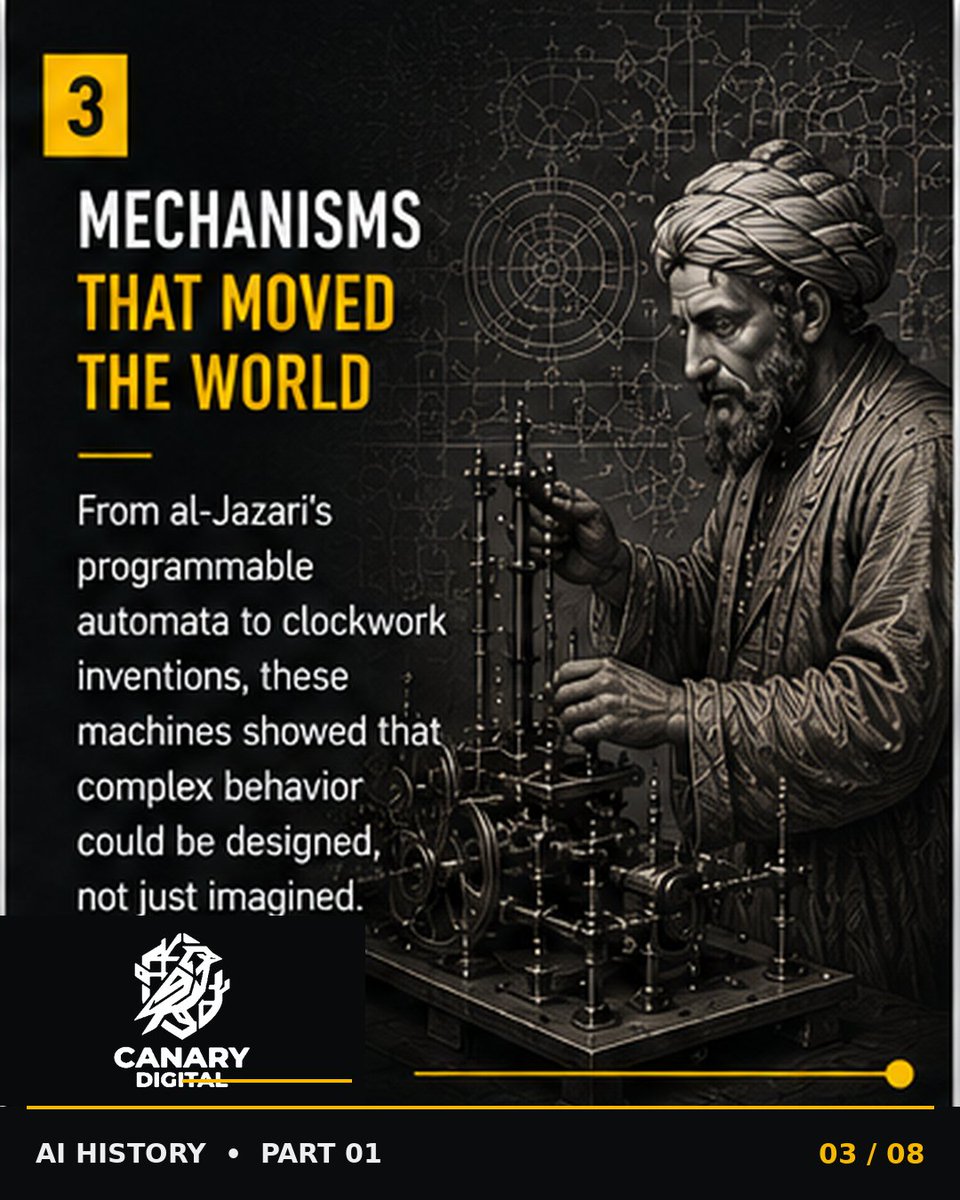
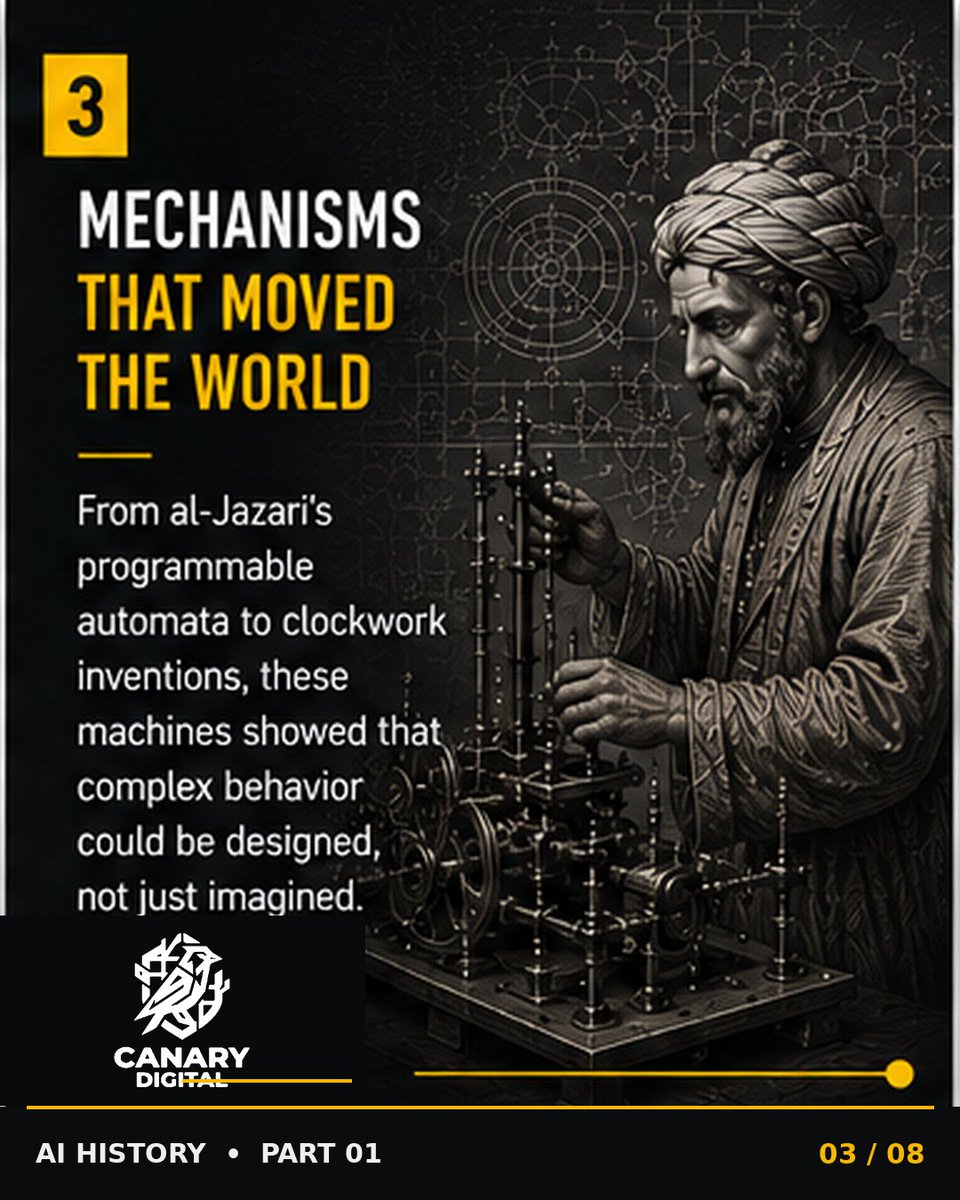
The history of AI did not begin in 1956.
Long before electronic computers, people were already formalizing logic, building automata, encoding instructions, and imagining thinking machines.
A short history thread.
The history of AI did not begin in 1956.
Long before electronic computers, people were already formalizing logic, building automata, encoding instructions, and imagining thinking machines.
A short history thread.
Next in the series: Alan Turing, artificial neurons, cybernetics, information theory, and the birth of machine intelligence as a scientific field.
Read Part 1:
https://t.co/IqHm1QnDmF
The history of AI did not begin in 1956.
Long before electronic computers, people were already formalizing logic, building automata, encoding instructions, and imagining thinking machines.
A short history thread.
3/ Recovery by design
Production agents need timeouts, retries, fallbacks, approval steps and safe stopping conditions.
The model is only one component. Reliability comes from the system around it.
Follow @canarydigitalx for clear AI systems explainers.
AI agents look impressive in demos.
Production is where they fail.
The biggest problems are rarely the model alone. They come from unreliable tools, weak memory, hidden latency, missing guardrails and poor recovery.
Here is what reliable agents actually need.
2/ Observability and evaluation
You cannot improve an agent you cannot inspect.
Teams need traces, cost and latency monitoring, failure categories and repeatable evaluations—not only successful demo examples.
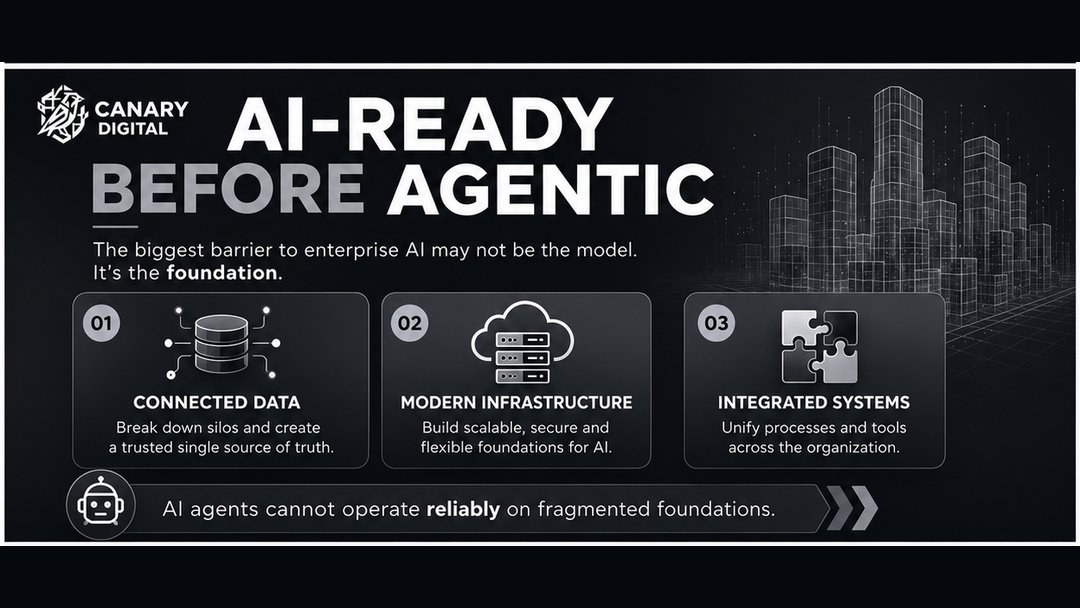
The biggest barrier to enterprise AI may not be the model.
It is fragmented data, legacy systems and technical debt.
Before companies can become agentic, they must become AI-ready.
The next AI boom could be an infrastructure modernization boom.
#EnterpriseAI#AIAgents
OpenAI is expanding access to frontier AI for science.
Its new ChatGPT for Academic Researchers program will provide free access to advanced models and tools for up to 100,000 scientists, mathematicians and engineers.
AI is becoming research infrastructure.
#AI#Science
@JensenHuang The strongest case for open weights may be auditability and ecosystem diversity—not openness by itself. Could industry signatories also support shared safety evaluations and deployment standards so openness and accountability scale together?