Hugging Face has released Transformers v5.22.0, listing Mistral Large 4 among its new models.
According to the release notes, this native multimodal mixture-of-experts model has approximately 1 trillion total parameters and 49 billion active parameters per token, or 52 billion including embeddings and output layers. It supports a 1 million-token context window, accepts text and images, and produces text. The notes describe uses including analysis of charts, technical drawings, and documents.
The model offers low, medium, and high reasoning effort, with high as the default, plus function calling and JSON output with strict schema enforcement. The release notes say it uses the Mistral Ecosystem Open-Weight License; operating a model-as-a-service business requires a separate commercial license from Mistral. These specifications and capabilities are reported in the release notes.
https://t.co/N5MhVhxbQu
LangChain Core 1.7.2 is out. Compared with 1.7.1, the release adds two methods, add_notification_metadata and get_notification_metadata, and fixes an issue where merge_content changed the first message’s content. These changes are relevant to developers working with notification metadata and message content in LangChain. The release notes list the method names and the fix, but do not provide further usage details. GitHub’s release API records publication at 19:04:29 UTC on October 29, 2026.
Official release: https://t.co/202XDslvY7
Arm has outlined a native Arm development workflow combining GitHub Copilot CLI, GitHub review tools and automated testing. Developers can run the coding agent on organization-controlled Arm compute to edit code, execute project commands, run tests and investigate failures. Remote Control lets them steer a session from another device while commands continue to run natively on Arm.
Changes can then go through a GitHub pull request and automated builds and tests on Arm64 runners. Arm says working on the target architecture can help teams spot architecture-specific dependency or runtime issues earlier and use real hardware measurements to guide optimization. Developers remain responsible for reviewing agent-generated changes and validating their correctness.
https://t.co/DTEkGI2Og8
ChatGPT now works with iCloud Mail and Calendar
OpenAl added iCloud Mail and iCloud Calendar plugins to ChatGPT on October 27. They work like the existing Gmail and Google Calendar ones.
Try asking:
- Find last week's delivery notice
- Catch me up on unread mail from the past two days
- What is on my calendar next week?
- Move Friday's meeting to 3 p.m.
To connect, enable each plugin, sign in with your Apple account and create an app-specific password.
Available on all ChatGPT plans, free and paid, on web, desktop and iOS. Pro users' Dot agent can use both plugins. Only iCloud accounts are covered; Gmail or Outlook accounts added to Apple's Mail app are not.
https://t.co/AQ1n9x7dPj
chatgpt-can-work-with-your-icloud-mail-and-calendar-thanks-to-new-plugin-support/
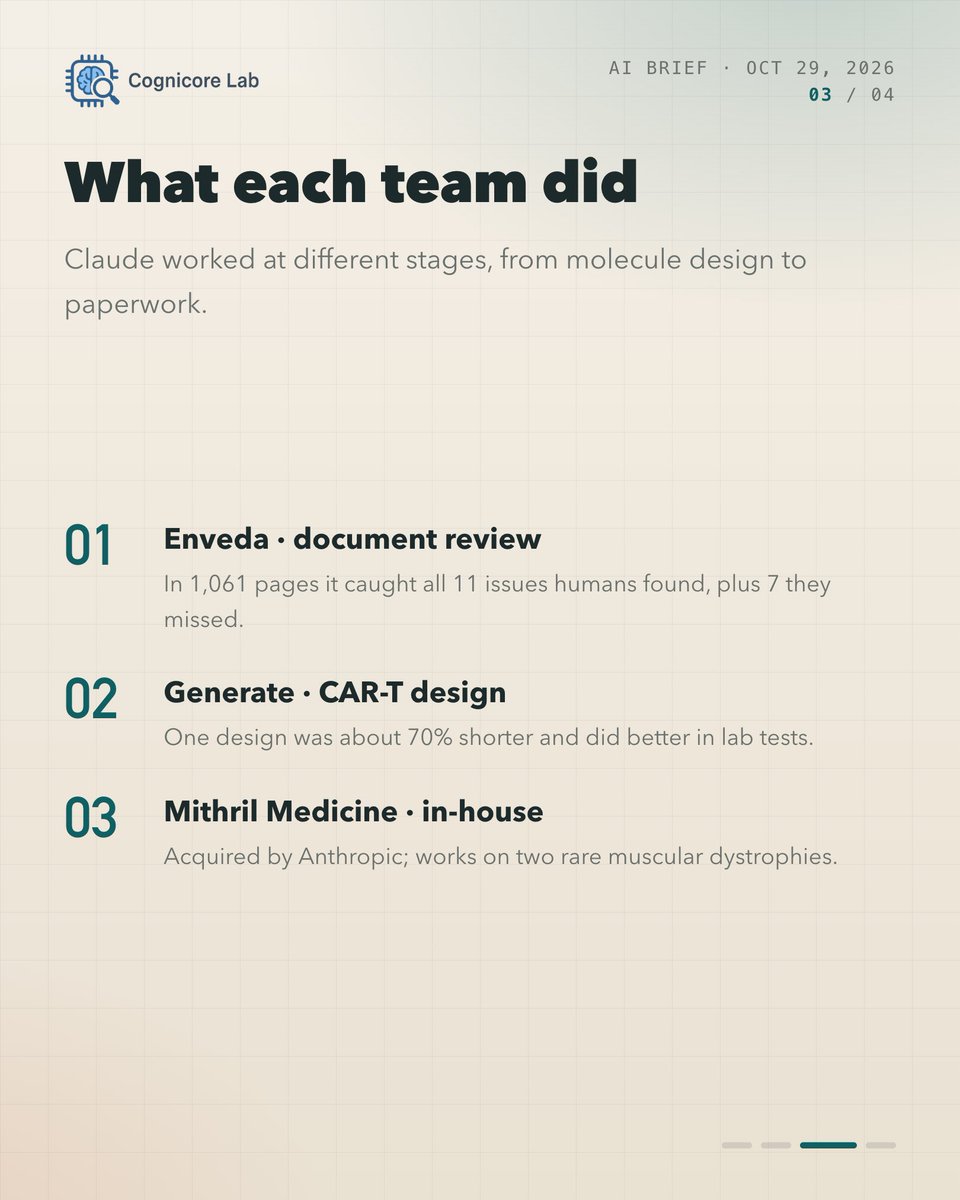
Anthropic shared early results from using Claude in drug development on October 27, across six partners:
- Divergence Labs: about 35,000 antibody designs in roughly a month, for food-allergy work
- BigHat Biosciences: about 1,010 variants made and tested in about 10 weeks; the best bound more than 10x more tightly
- Enveda: across 1,061 pages of manufacturing and filing documents, Claude caught all 11 issues human reviewers found plus 7 they missed; human review time fell 89%
- Generate Biomedicines: a CAR-T design about 70% shorter than the standard version that performed better in lab tests
Anthropic also acquired Mithril Medicine, which works on two rare forms of muscular dystrophy. A candidate could reach human trials as soon as late 2028.
Most of this is preclinical. It is a long way from an approved drug.
https://t.co/afB3HAECnc early-progress-drug-development
NVIDIA released Nemotron 3.5 Transcribe on October 28, an open-weight speech-to-text model.
- Transcribes 40 languages; translates 31 to or trom English
an hour long
About 30B parameters, about 4B active per token
5.33% average WER on the Hugging Face Open ASR English leaderboard, first among open-weight models
minutes on one RTX PRO 6000 GPU, using a forthcoming NVFP4 version
NVIDIA also released Granary V2: 463,062 hours of speech data in 48 languages.
It works on recorded audio only, not live streams.
https://t.co/sC4daIqojG nemotron-transcribe-granary
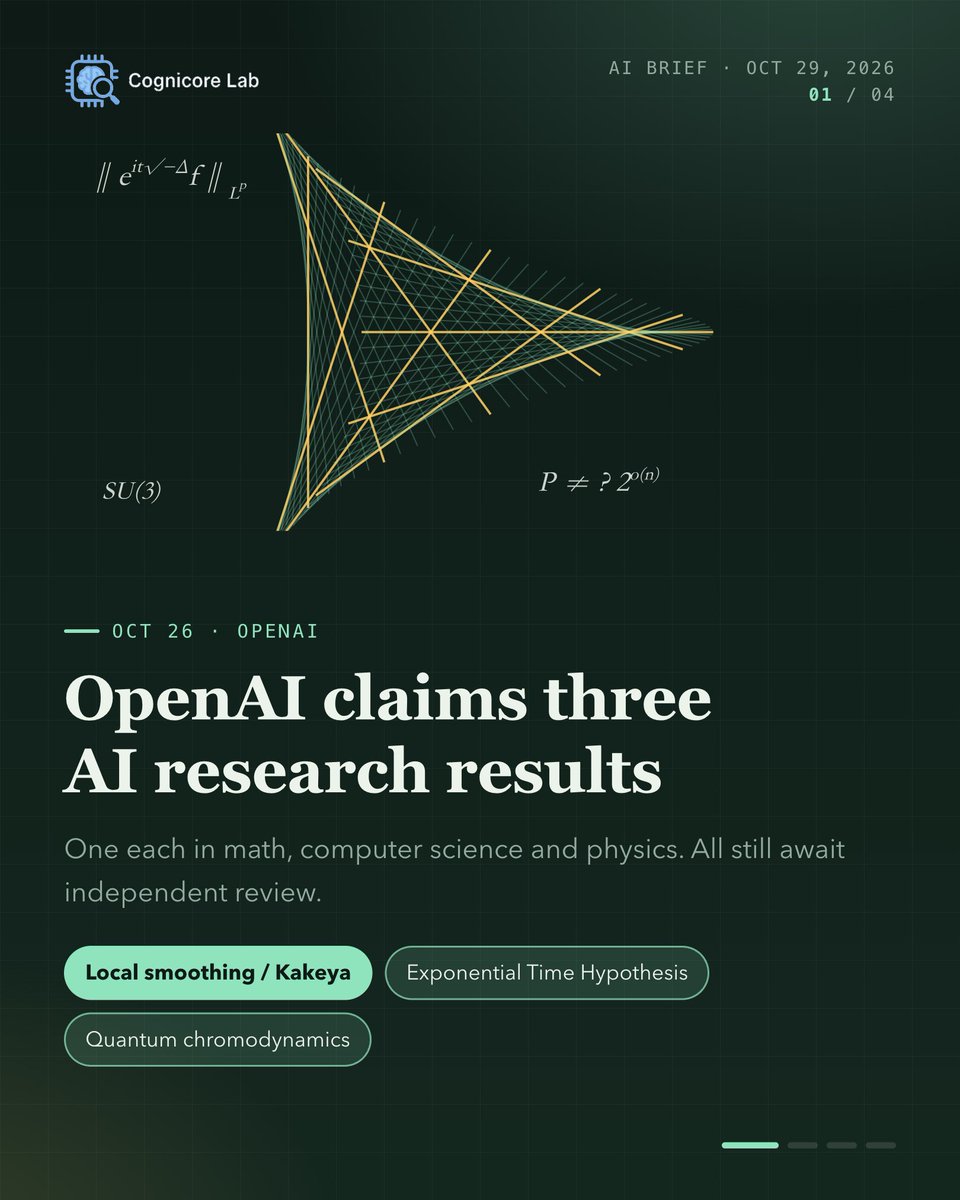
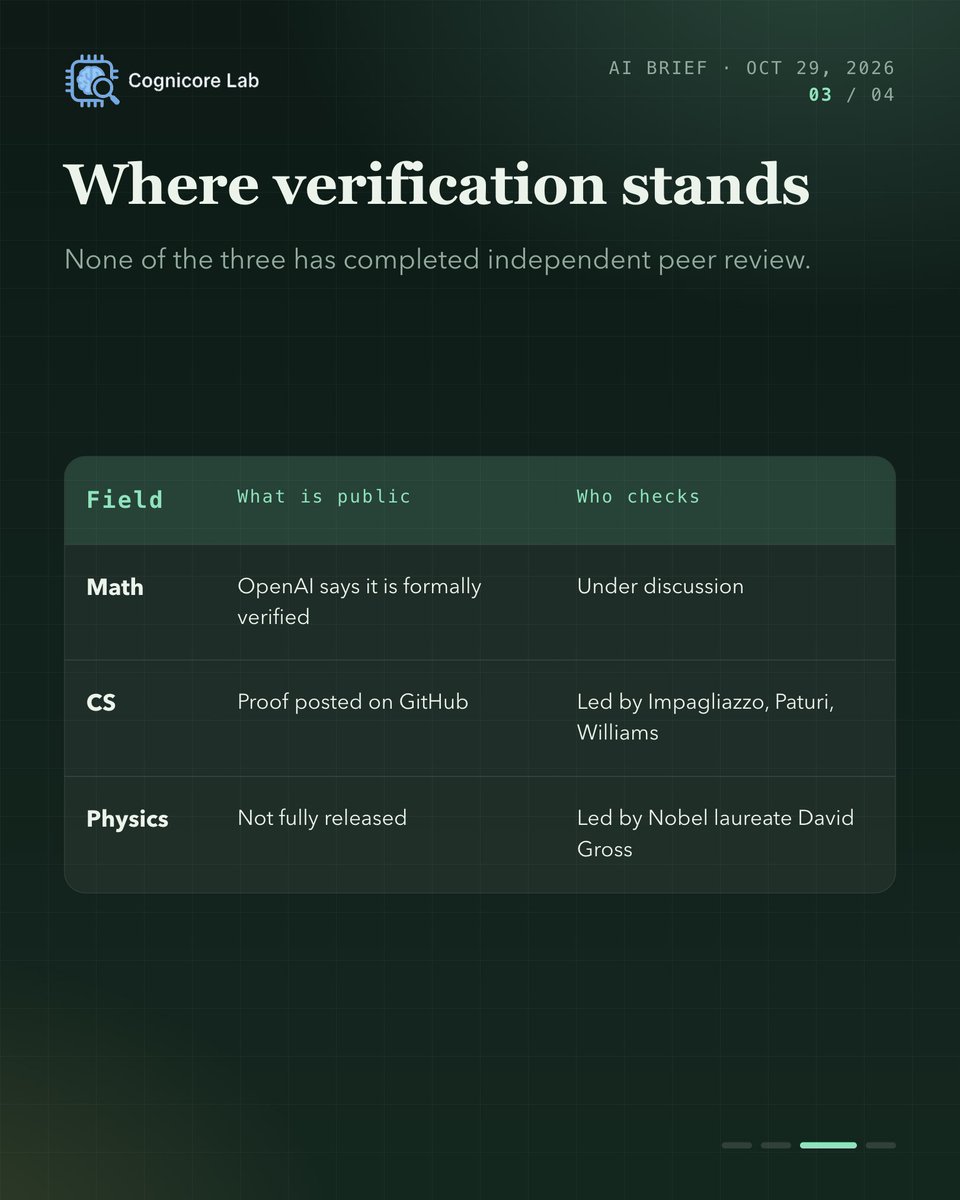
OpenAl claims three Al research results
On October 26, OpenAl published three results it says its models produced, in math, computer science and physics:
Math: a proot of the local smoothing conjecture in every dimension, which would also settle the Kakeya conjecture
Computer science: a claim that the Exponential Time Hypothesis is false.
Hundreds of papers rely on ETH for hardness results
- Physics: a rigorous existence proof for certain interacting quantum field theories, including
QCD
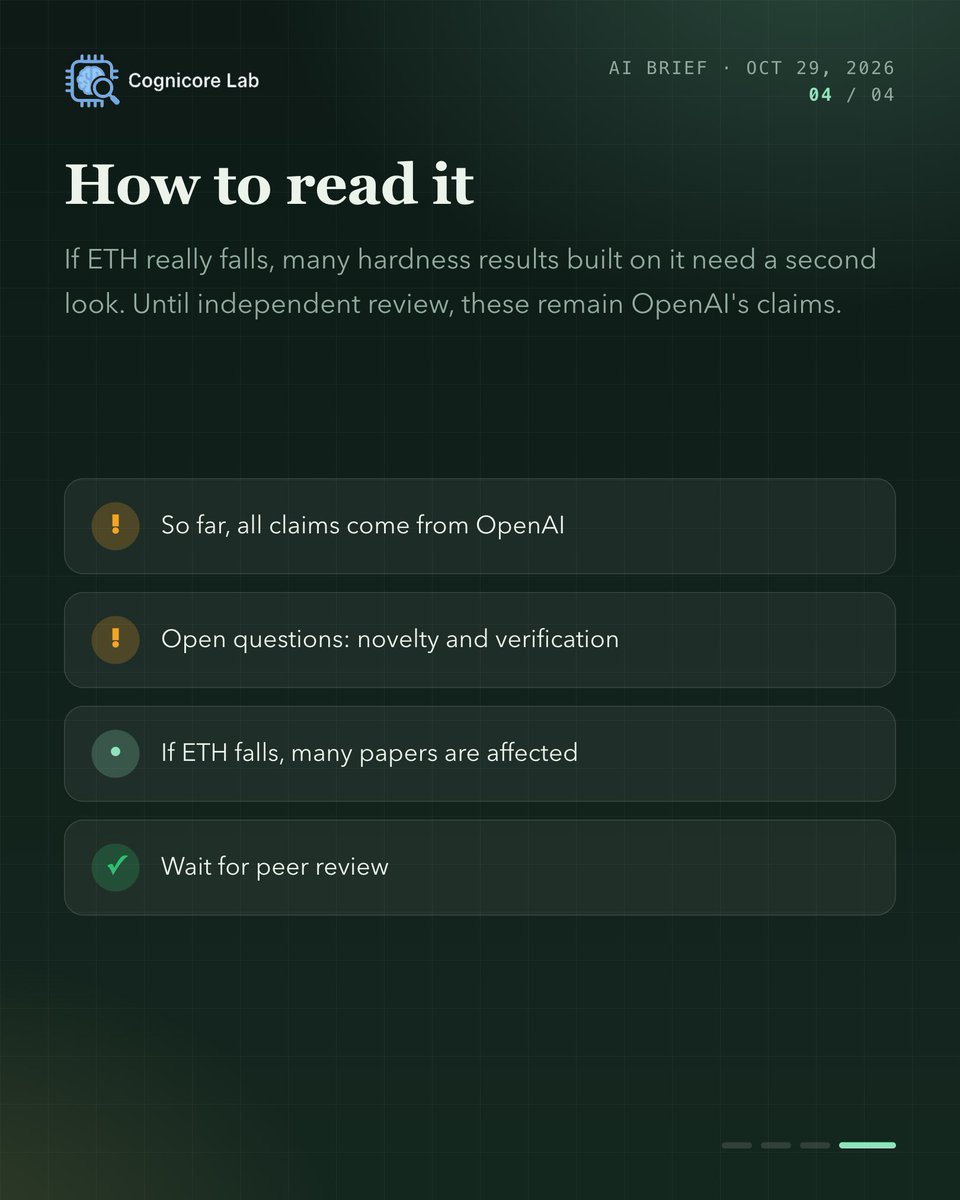
For now these are OpenAl's own claims.
A group led by Impagliazzo, Paturi and Williams will check the ETH result. The physics materials are not fully public; a group led by Nobel laureate David Gross will review them.
Mathematicians are also debating how such Al results should be verified.
Wait for independent review before treating any of them as settled.
https://t.co/Kyn6yf5Yle
communities/
Gemini 4 Carbon takes the top spot
Google released Gemini 4 Carbon on October 28. It scores 59 on the Artificial Analysis Intelligence Index, ahead of Claude Opus 5.5
(58) and GPT-6 Astra (57).
First in 15 of the 17 benchmarks on Google's own table
Long context (GraphWalks): 96.2 vs 66.8 for Opus 5.5
Simulated vending business (Vending-Bench
2): $16,484 vs $9,235
- Exploit test (ExploitGym): 54.8 vs 34.5
It is not a clean sweep. Opus 5.5 still leads an OSWorld computer-use subset, GPT-6 Astra wins one coding test, and the overall lead is a single point.
Access is limited to select cyber defenders for now, with no date for anyone else. Intro API pricing is $2 / $10 per million input / output tokens.
https://t.co/TtopK13qBw models-and-research/gemini-models/ introducing-gemini-4-carbon/
Anthropic files to go public
Anthropic, the company behind Claude, publicly filed its S-1 with the SEC on October 26. It plans to list on the Nasdaq Global Select Market under the ticker ANT. The offering size and price are not set yet.
What the filing shows:
Revenue: $41M in 2023, $386M in 2024, $4.6B in 2025, and $16.3B in the first half of 2026, up 1,300% year over year
More than 11,900 customers paying $100K+ a year (as of Sept 30)
$141.1B raised in total (as of June 30)
A $693M operating loss in H1 2026, with $1.0B of operating income in Q2 alone
A Long-Term Benefit Trust elects a majority of the board through a special class of stock. The filing itself says it does not expect growth at this pace to continue.
A summary of a public filing, not investment advice.
https://t.co/4yrjDgHyS1
data/2130357/000162828026067168/ anthropicpbc-sx1.htm
Hugging Face has released Transformers v5.21.1, a patch addressing two issues in the machine learning model framework.
The release notes list a fix for the rope_scaling setter in configurations that assign it during initialization. They also say the patch fixes remote code loading in vLLM.
Transformers provides model definitions for text, vision, audio and multimodal machine learning models, for both inference and training. The release notes identify the fixes but do not provide further details about their effects. The patch was published on October 29, 2026 at 08:35 UTC.
https://t.co/QLwThMIgQG
Open WebUI v0.12.5 is out, with new ways to inspect chat activity and organize notes in the AI interface, which supports Ollama and the OpenAI API among others.
The new Sessions tab in Admin Analytics lists chats with their tokens, responses, errors and time spans. Administrators can filter by search, model, token range or sub-agents. Viewing saved replies and tool calls, including their timing and outcome, requires ENABLE_ADMIN_CHAT_ACCESS to be enabled.
Notes can now contain pages and subpages that users can add, rename, reorder, move, download, link and delete. Search results and the model work with notes page by page. A note also shows who else has it open; clicking a person jumps to their page and working location.
The release was published on October 29 at 09:08 UTC.
GitHub Copilot has introduced image generation and editing in public preview. Describe an image in a Copilot chat, and your selected reasoning model calls a dedicated image-generation tool powered by GPT Image 2.5 Flare. Copilot previews the result inline and saves it to your workspace.
You can try it in VS Code, the GitHub Copilot app, or Copilot CLI, including while working through a coding task. This can help you create a visual asset without leaving the Copilot workflow.
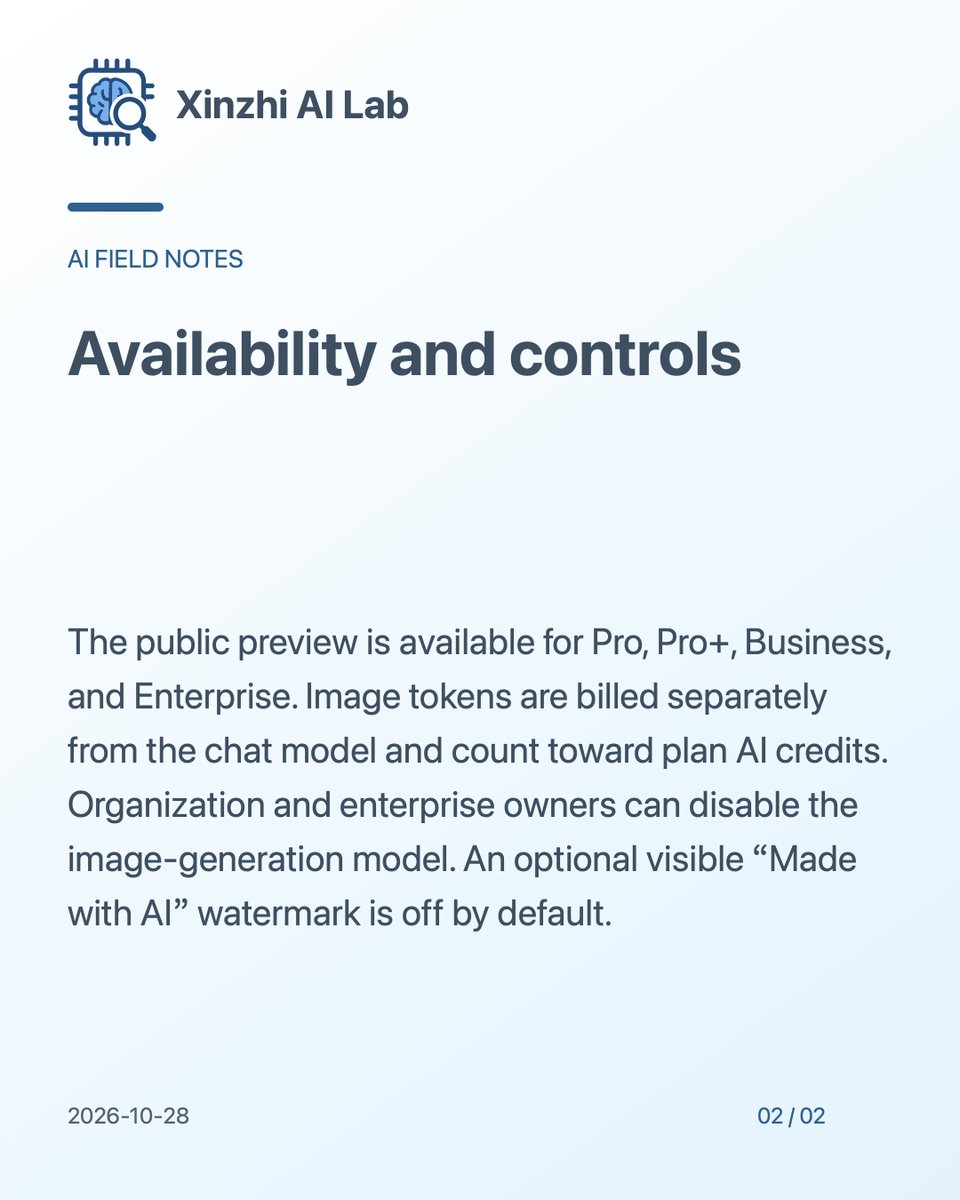
The preview is available to Copilot Pro, Pro+, Business, and Enterprise users. Image tokens are billed separately from the chat model and count toward the plan’s AI credits. Organization and enterprise owners can disable the image-generation model through Copilot model policies. A visible “Made with AI” watermark is optional and off by default.
Ollama v0.40.13 expands platform support for Liquid AI’s LFM3 models. According to the release notes, the models now run on Linux and Windows as well as Apple silicon.
The announcement specifically includes text-to-speech in lfm3-audio and lfm3-omni, offering a way to generate speech from text across the listed platforms. The release notes do not provide performance figures or further deployment details.
GitHub’s release API lists the publication time as October 28, 2026, at 19:55 UTC.
https://t.co/fKz4bk35aD
LangChain Core 1.7.1 is out. The release notes list two fixes relevant to developers working with streams and diagrams: preserving gateway tracing metadata in v3 streams, and escaping node metadata in Mermaid labels.
The first concerns tracing information carried through streaming; the second concerns how node metadata is handled in diagram labels. LangChain describes its repository as an agent engineering platform. The release was published on October 28, 2026 at 15:00 UTC. The notes do not provide performance measurements for these fixes.
Official release: https://t.co/UR3sKOyN9V
MCP Servers v2.2.0 is out with guidance on runtime and certificate security. Its TypeScript servers rely on the Node.js runtime for certificate checks and do not bundle CA certificates. The fetch server verifies HTTPS through httpx using the certifi bundle; this release updates the fetch Docker lockfile to certifi 2026.10.23.
For people running the TypeScript servers, the release recommends Node.js 24.22.1 or 26.12.1 and later. It also cautions that the packages’ engines field accepts any Node.js 24 version, so npm will not warn about an older unpatched runtime. Existing fetch environments created before October 23 retain an older certifi and may need a refresh.
The fetch update also refuses autonomous fetching when robots.txt returns a 5xx response and adds a --no-readability-js option.
Microsoft AI has introduced MAI Image 2.7 in preview as an image editing model. According to Microsoft, it can restyle or relight an entire scene, change text and symbols within an image, and restore or enhance existing assets.
The company describes uses such as moving a product into a new setting, changing the lighting and mood, and reworking individual objects while keeping the larger picture in mind. These capabilities are based on Microsoft’s own description of the preview.
https://t.co/v3bkSXei7m
Claude Code v2.1.312 is out. The terminal-based agentic coding tool uses natural-language commands to handle routine tasks, explain code and work with Git workflows.
The update adds oidc.user_id_claim to the Claude apps gateway, allowing user identification through an id_token claim other than sub—for example, Microsoft Entra ID's oid.
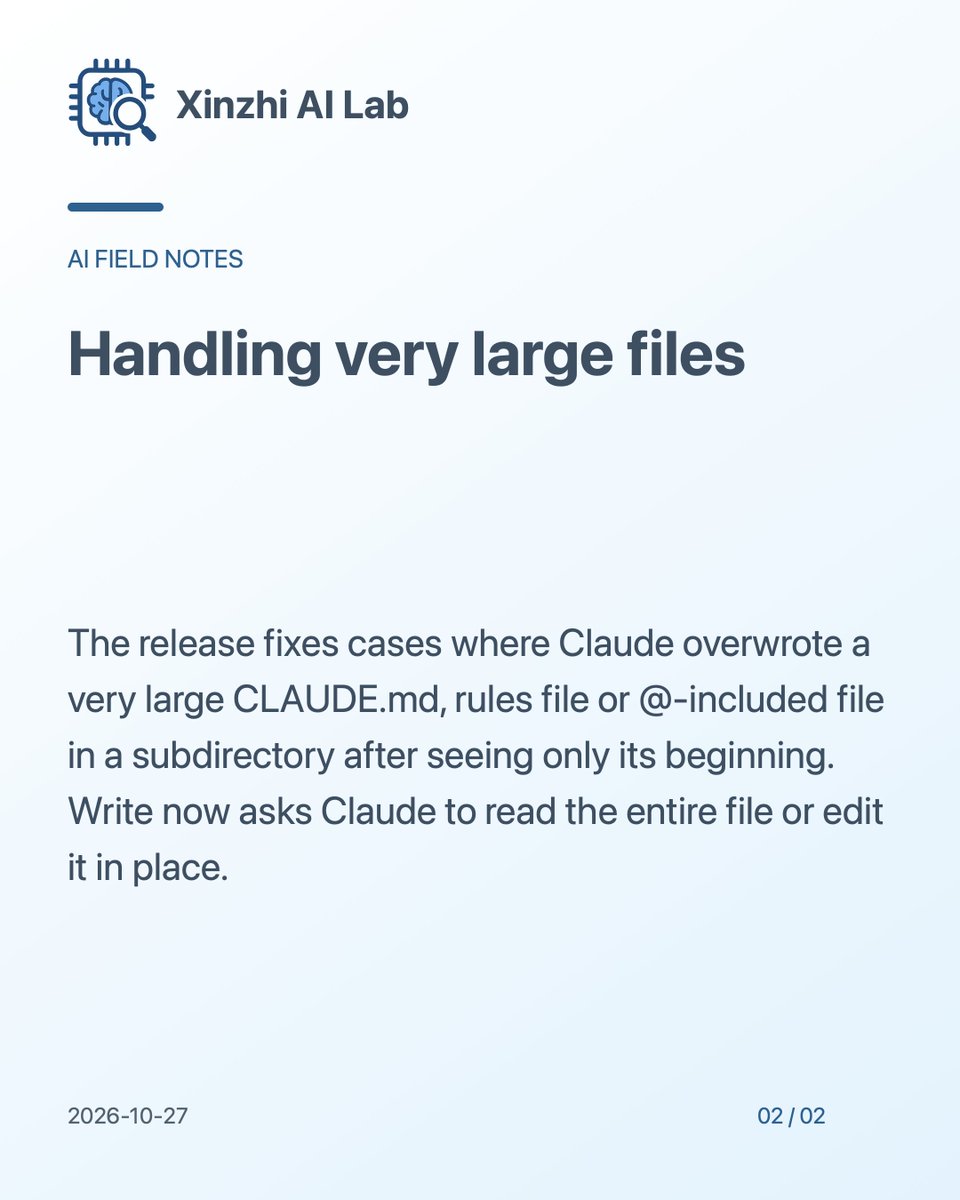
It also fixes a problem where managed settings and organization policy were not fetched for the rest of a session after signing in through the VS Code extension. Another fix addresses overwriting very large CLAUDE.md, rules or @-included files in subdirectories after Claude had seen only the beginning: Write now asks Claude to read the entire file or edit it in place.
Release notes: https://t.co/5D6bEwTLhM
LangChain has released langchain-anthropic 1.7.7. The release notes list a fix for tracing resolved reasoning effort, an infrastructure change relaxing upper bounds on third-party dependencies, and fixes for dependencies in some partner packages. The Anthropic partner package also updates certifi from 2025.11.12 to 2026.10.19.
For developers working with this integration, these are maintenance changes to tracing and dependencies. The published notes do not provide further details about the effects of each change. The official release API records the publication time as October 27, 2026, at 23:48:24 UTC.
https://t.co/OjBdYhG1eO
Claude Code v2.1.311 is out. The terminal-based agentic coding tool uses natural-language commands to carry out routine tasks, explain code, and handle Git workflows.
This release adds --hold-idle-file and --max-hold-min to the self-hosted runner. They keep an idle session while the host reports processes it left running.
It also fixes two session and tool issues: standard-context sessions that exceeded 200K tokens could stop with a message requiring credits for 1M context; Claude Code now compacts the conversation and continues. Subagents can also use MCP tools from servers that finish connecting after the subagent starts.
These details come from the official release notes: https://t.co/P4PAIGDYnk