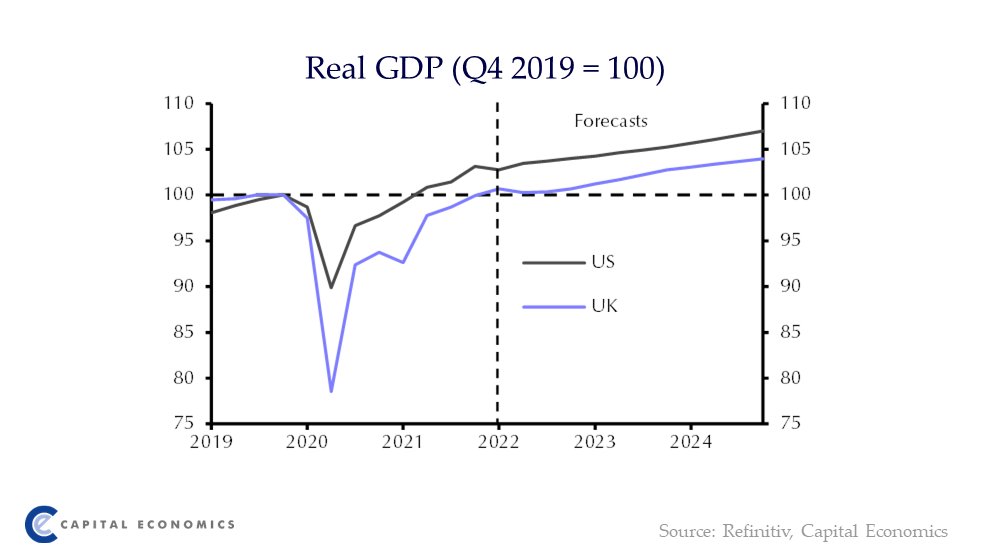
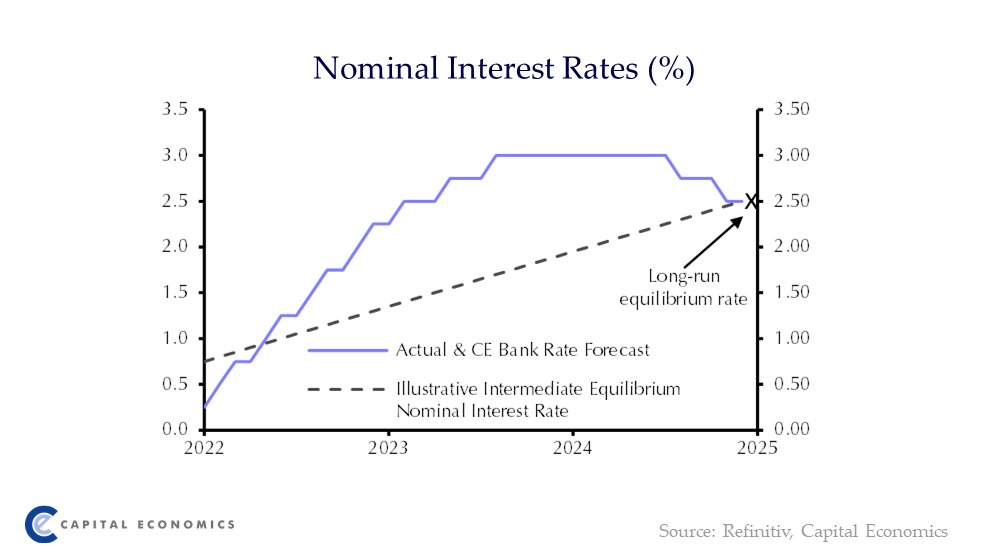
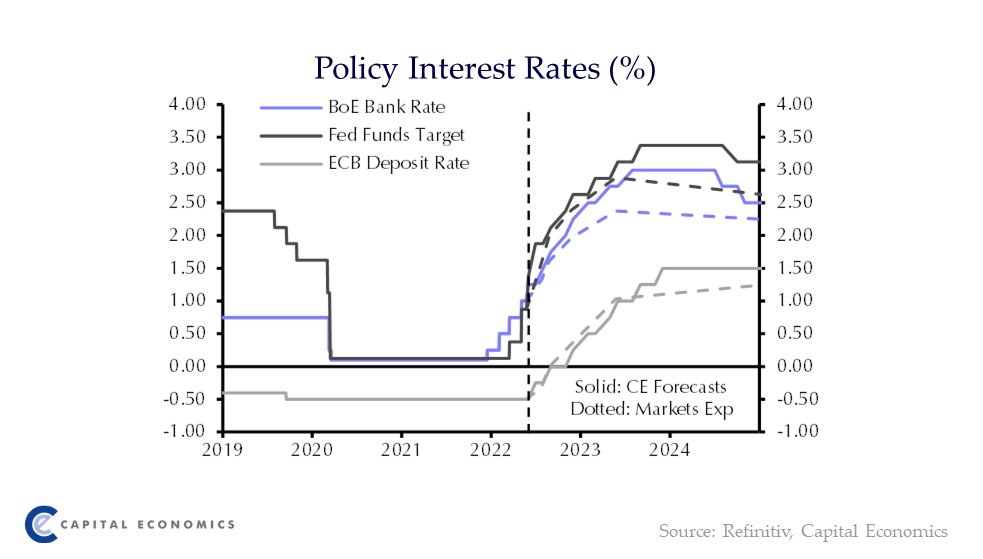
UK Q2 2022 Outlook: Our forecasts envisage inflation being higher, GDP growth being lower and interest rates rising further than investors and other analysts expect. Read more here: https://t.co/cZFZeukV82
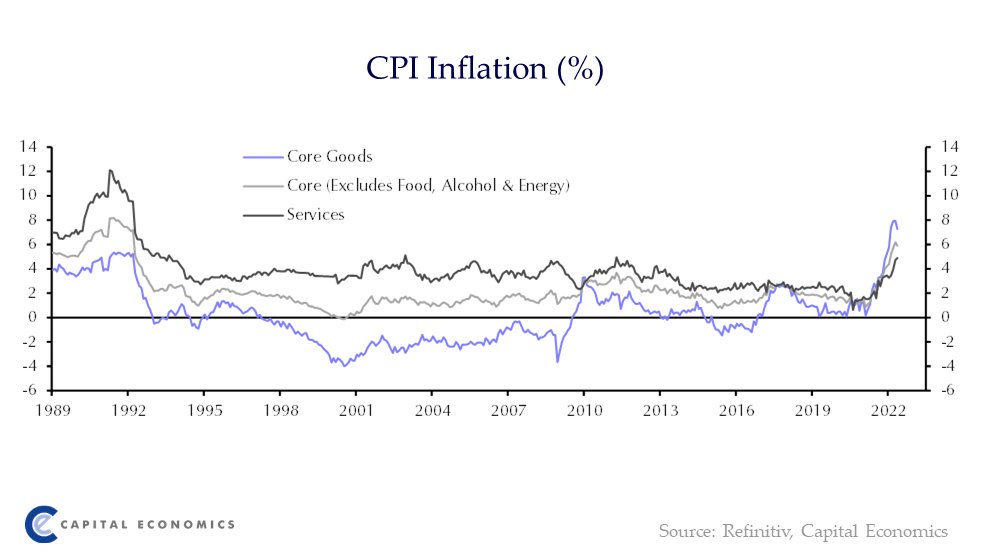
It’s too soon to conclude that the weak tone of this week’s news on activity means that inflation won’t become more persistent. Our proprietary measure of underlying/persistent CPI inflation rose to a new record high in May. Read more here: https://t.co/iowH02vimt
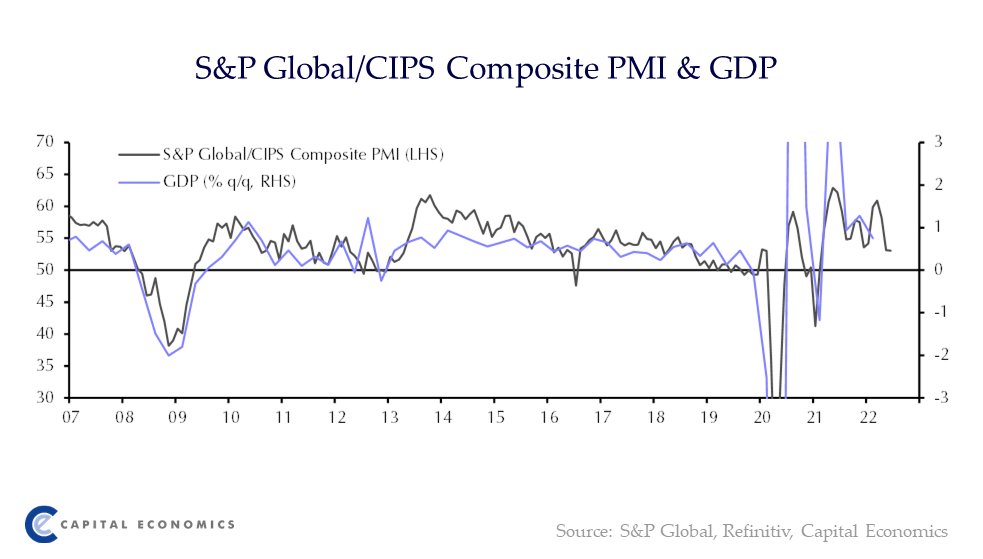
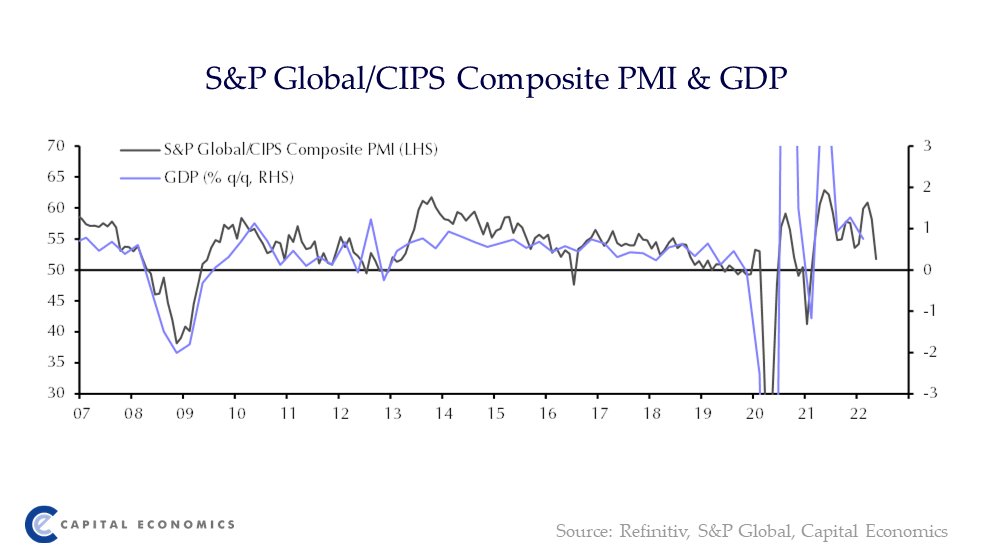
The fact that the composite PMI didn’t fall in June means the economy could be holding up a little better than we and the Bank of England had feared. Beneath the headline numbers, the survey also suggests strong inflationary pressures have not gone away. https://t.co/etibRopAVk
The larger-than-expected rise in public borrowing in May is an early blow for the government on a day when it is expected to lose two by-elections. Read more here: https://t.co/nk8CkkHMbv
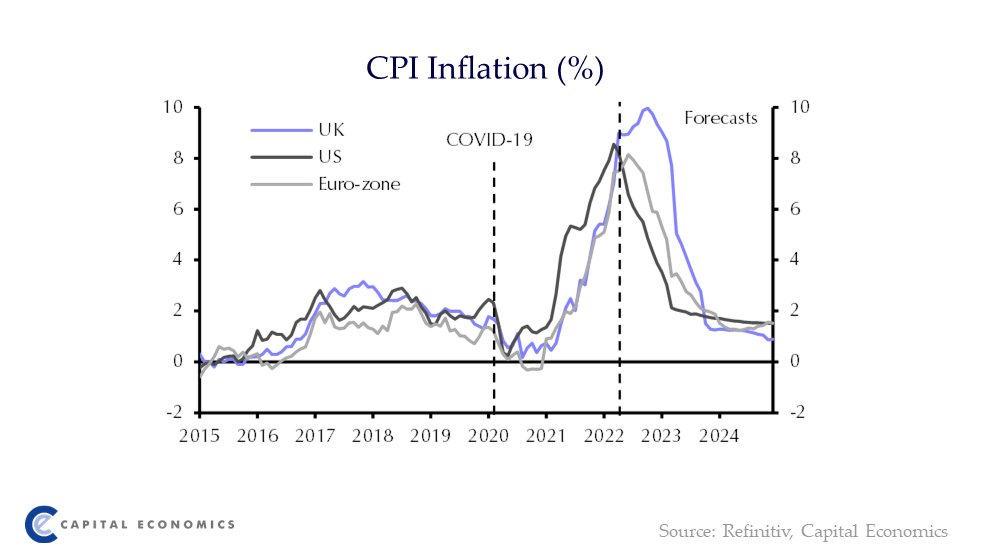
The further rise in CPI inflation to a new 40-year high of 9.1% in May won’t prevent the Bank of England from raising interest rates further, but it may encourage it to opt again for a 25 basis point rate hike at its next meeting in August. https://t.co/gmXrS2yIfy
In some ways, given its concerns about the weakening in the real economy, the Bank of England's decision not to follow the Fed and raise rates by more than 25 basis points makes sense. Read more here: https://t.co/yvAni80ZL0
By raising interest rates by 25bps today, from 1.00% to 1.25%, rather than by 50bps or the 75bps the Fed announced last night, we think the Bank of England is putting too much weight on the softening economy and not enough on surging inflation. Read here: https://t.co/MQaDt3nnJe
The 0.3% m/m fall in real GDP in April wasn’t as weak as it looks, but it nonetheless increases the chances that the economy is slipping into recession. This is unlikely to prevent the Bank of England from raising interest rates again on Thursday. https://t.co/MCQiPk9zx0
We think the Bank of England may join other central banks in hiking interest rates by 50 basis points, from 1.00% to 1.50%, at next Thursday’s meeting. Read more here: https://t.co/dPkgfbdIPk
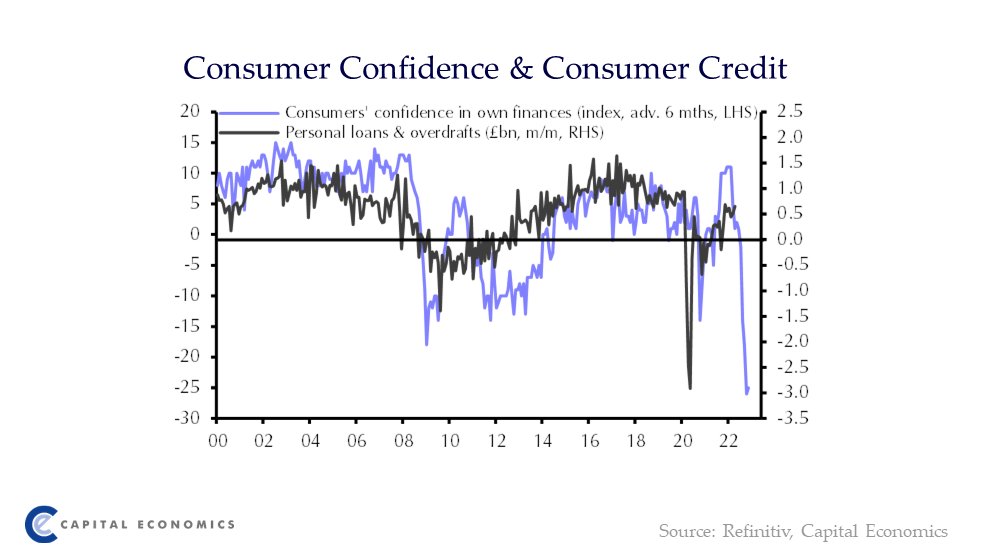
April's money and credit data provide another reason to think that the consumer slowdown in April wasn't too severe. But it may take time for the cost of living squeeze to fully filter through into weakness in consumer spending. Read more here: https://t.co/svcBJZaPvB
The new fiscal stimulus announced by the Chancellor this week puts more pressure on the Bank of England to raise interest rates into restrictive territory. Read here: https://t.co/3TCw9SuvsF
Q2 2022 UK Markets Outlook: If we are right in expecting inflationary pressure to stay strong even as the economy gets dangerously close to a recession, then the prices of gilts and UK equities will probably fall further over the next year. Read more here: https://t.co/gq1ic4unY4
The flash PMI survey for May suggests that economic growth has slowed to a crawl and that the risk of a recession has not gone away. Even so, weakness in the economy doesn’t seem to be filtering into an easing of price pressures. https://t.co/FuVknjS8Tf
Not only did the surge in CPI inflation to 9.0% in April leave inflation in the UK above the rates in both the US and the euro-zone, but inflation in the UK will probably rise further and stay higher for longer. Read more here: https://t.co/UC2k8OWDio
The collapse in consumer confidence has added to the probability that the UK experiences a recession this year. But households’ stock of savings and the tightness in the labour market means that it may not weigh on consumer spending as much as in the past. https://t.co/KeVOcbh8bh
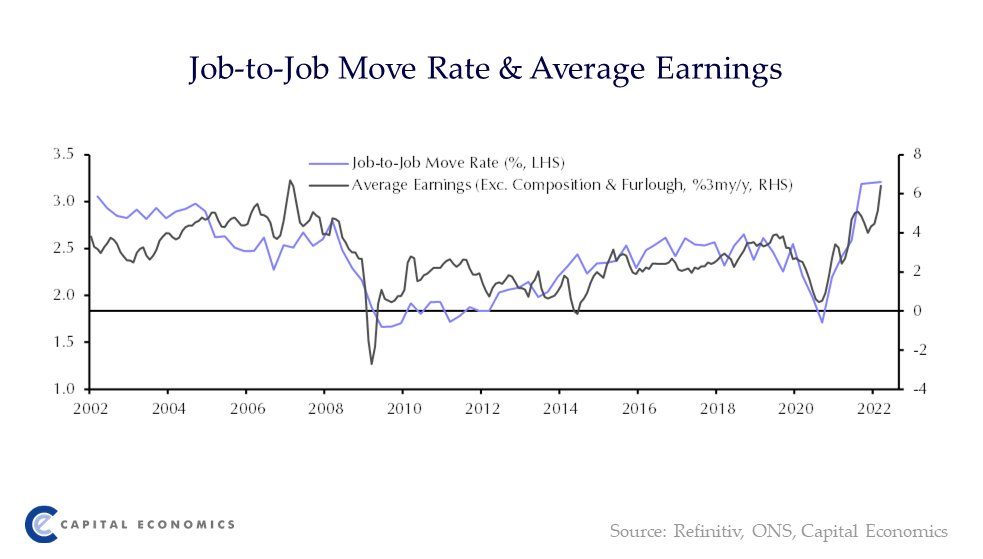
In March the unemployment rate fell to a 47-year low of 3.7% and wage growth accelerated. This supports our view that the Bank of England will have to raise interest rates further than widely expected, from 1.00% now perhaps all the way to 3.00% next year. https://t.co/4oW4pGVb1R
It looks as though the economy is halfway towards a recession. Our forecast that next week’s CPI release will reveal that inflation jumped to a 40-year high of 9.2% in April means that the MPC may have to break new ground. Read here: https://t.co/yOFvlrwzNm
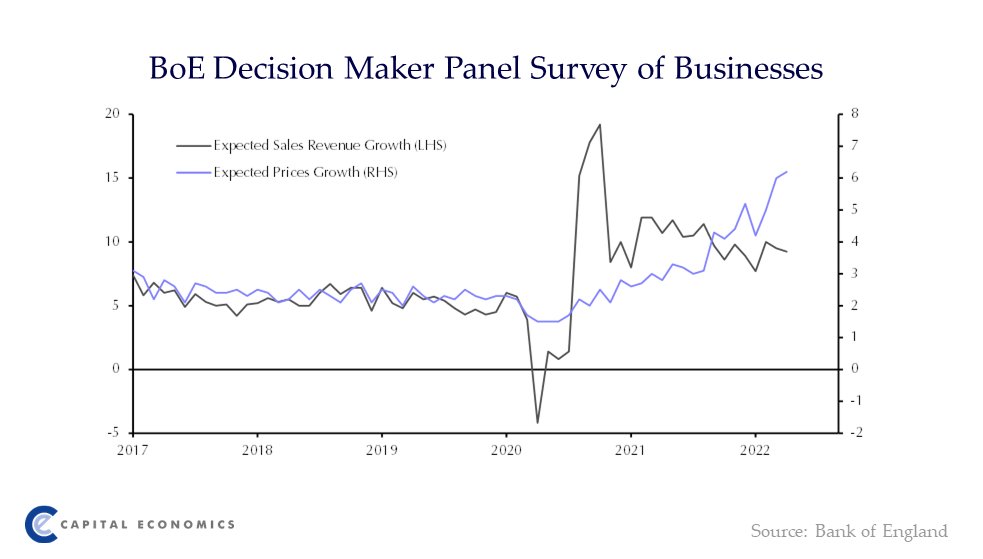
The weaker economic outlook triggered by the surge in CPI inflation to a 30-year high of 7.0% in March has yet to put a dent in businesses own expectations for their selling prices. Read more here: https://t.co/ZkBg7xSsBe
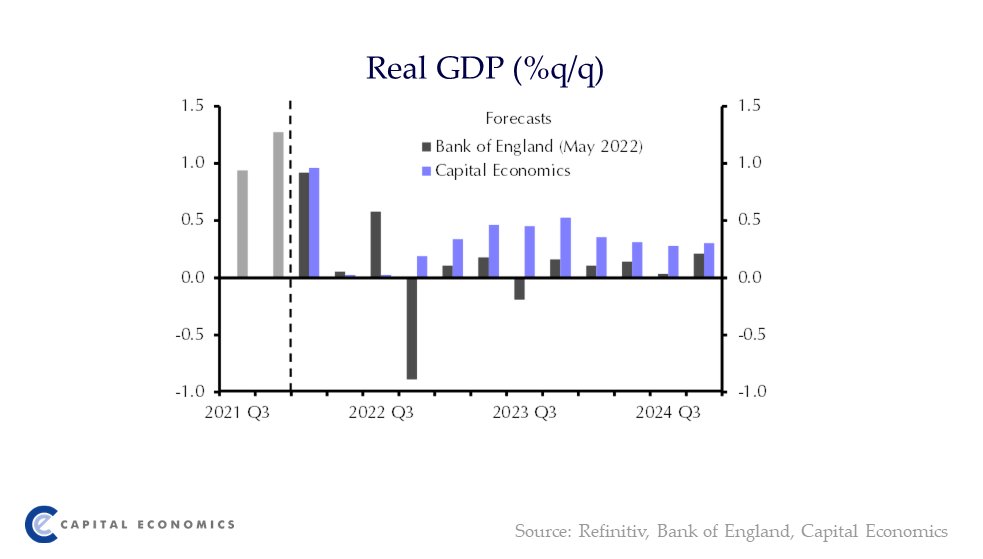
The Bank of England’s prediction that the economy is on the brink of recession grabbed the headlines this week, but we suspect its GDP forecast will prove too downbeat. https://t.co/8gHm2elaFJ
The Monetary Policy Committee (MPC) struck a more dovish tone today. We think longer-lasting domestic price pressures will mean the MPC ends up raising rates to a peak of 3.00% next year. Read more here: https://t.co/ZbHJUaLhZT