Oil is retreating today, but the physical situation has not improved.
Yesterday’s move above $100 started to priced in two closed chokepoints: Hormuz plus an imminent closure of Bab el-Mandeb. The second has not happened (yet), so some of the panic premium is coming out.
Dow just reported.
Dow’s Packaging & Specialty Plastics EBIT jumped from $71m to $1.28bn as polyethylene prices rose 30%.
Nice readthrough for Sasol's chemical division.
Today the old relationship - Energy up, Precious metals down - unfortunately reasserted itself.
Mostly because US yields managed to break through strong resistance levels.
Oil pushed inflation and Fed-hike expectations higher.
Something important may be changing in commodity markets.
For the past few months, higher oil meant lower precious metals. Today energy and precious metals are rallying together.
That may be more than a one-day curiosity. A short thread 🧵
This is no longer only an oil shock.
It is a multi-front, multi-commodity supply shock: Hormuz; Russian refineries and the Kerch Strait; Gulf fertilizer; and now Black Sea grain exports.
Energy security is becoming food security.
The oil market is no longer dealing with one supply shock.
Gulf output remains impaired. Russia has reportedly lost ~2m b/d of refining capacity, potentially forcing 0.6–0.8m b/d of crude output offline.
Brent at ~$83 is pricing a rapid repair. There is very little room for error.
"We are, however, more concerned about the “grey rhino”: a large, visible and highly probable risk that everyone can see coming, but that is ignored because nobody knows exactly when it will strike."
A difficult quarter, but not a broken thesis.
In our Q2 / half-year letter, we reflect on a tough period for portfolios, the dominance of the AI narrative, and why we remain focused on energy security, real assets, uranium, precious metals and the dollar.
https://t.co/kTkgRGXoML
We may have found one of the more asymmetric opportunities in the energy sector.
If current energy prices hold and Harbour Energy meets production guidance, the company could be looking at 35–40% free cash flow yields by 2028.
Reach out if you would like the research note.
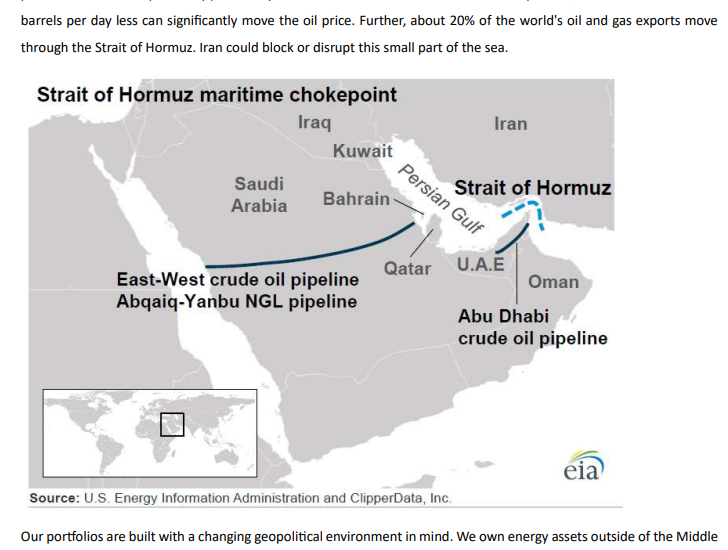
Back in Q3 2023, we highlighted the Strait of Hormuz as a geopolitical risk investors should not ignore.
Not because we knew the timing.
But because in a changing world, portfolios need exposure to energy, real assets and optionality — not just traditional equity/bond diversification.
That is no longer a side issue. It is core portfolio construction.
https://t.co/pCjr8fxuDE
Data sits in enormous centres (capital) on land, built with labour and processing of it requiring lots of energy.
We have a generation of investors completely unaware of were things come from and totally ignorant of physical constraints.