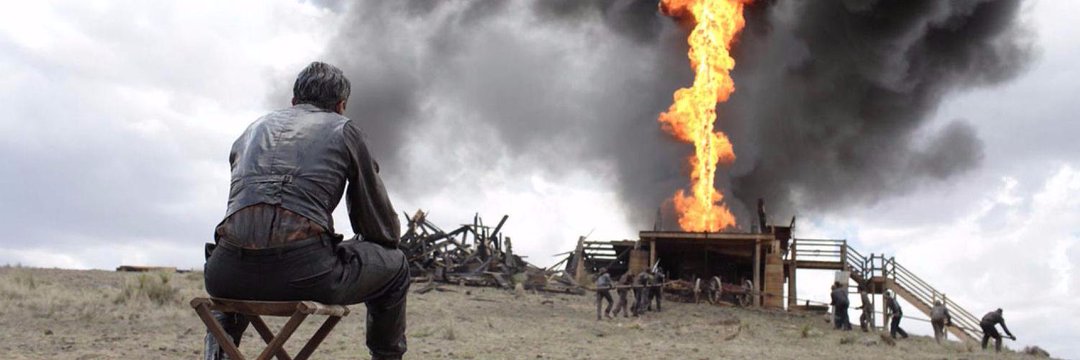
Game theory explains why working harder inside a broken system is the worst response to that system. Because a system is never absolutely broken. It's just producing exactly the outcomes its own incentive structures were designed to produce, whether intentional or not. Working more vigorously inside this system increases your output in the payoff matrix, but it simply won't alter the actual composition of the system's matrix. Thus, the appropriate response is not more effort. Instead, you must aim to identify whose interests the present structure serves and position yourself in favor of those particular values rather than against them. Change the game, or play the game that is actually being played. Either way, you must stop optimizing for the game you wish it to be and start acting realistically and pragmatically.
A trillion is a number so large the human mind struggles to comprehend it.
One trillion seconds ago, humans were painting caves and the pyramids did not exist.
Today, the United States spends roughly $1 trillion every year just paying interest on its debt.
Destroying Tether’s offshore USDT was always part of the Bessent-Moran plan for US-controlled dollar stable coins backed by US Treasuries. If Iran hadn’t been the excuse for expropriating $1 billion USDT they would have made up another reason.
Tether is incorporated in the British Virgin Islands with operations there, El Salvador and Hong Kong.
Christopher Harborne (also known as Chakrit Sakunkrit), the Thai-based crypto oligarch who ‘gave’ £6 million to Nigel Farage, £1 million to Boris Johnson and £12 million to Reform, holds a substantial minority stake.
Be sure this isn’t the last $1 billion Bessent will take.
2000 from Brazil: ‘[Thiel] said the time was right to give Musk the reins to continue “implementing our plans for world domination”.’
2026 from Buenos Aires?
Morocco has overtaken South Africa as Africa’s top industrial economy, marking the end of more than 80 years of South African dominance.
https://t.co/RjdF13Gfpw
ABENDREPORT aus Europa 🇪🇺🇺🇦
1/7
Das darf nicht wahr sein. In Europa, wo alles und jeder unter Schutz steht:
Jared Kushner und Ivanka Trump wollen Albaniens geschützte Südküste in ein 1,4 Milliarden Euro Luxusresort verwandeln – Insel Sazan und Küstengebiet bei Zvernec.
Die EU-Kommission „beobachtet die Lage genau." Und tut NICHTS!!!
DER SKANDAL:
Das Land gehört der albanischen Familie Konomi die es seit Generationen bewirtschaftet. Wer sich wehrt wird verprügelt und eingesperrt.
Albaniens Regierung ignoriert den Eigentumsanspruch. 41 Umweltorganisationen aus 28 Ländern haben protestiert. Das Gebiet ist EU-Schutzzone – Heimat des Mittelmeer-Mönchs-Seehunds, 70 bedrohter Arten, 200 Vogelarten.
Albanien will EU-Mitglied werden. Und baut für Kushner auf geschütztem Land.
🇦🇱🇪🇺🇺🇸Bewaffnete Männer im Auftrag von Oligarchen verprügeln Unterstützer der rechtmäßige Grundbesitzer – die ihre geschützte Küste gegen Trumps und Kushners Luxusresort-Landnahme verteidigen.
Das passiert in Europa. In einem EU-Beitrittsland. Heute. 🇦🇱🇪🇺
Das darf nicht sein.
Not surprisingly, Japan has been drawing down crude oil SPRs at a faster pace than the US is and than its own economy needs, why? To suppress oil prices.
All these governments are choosing the stocks bubble over economic safety and resilience
Thing is the Qing Dynasty understood it needed to industrialize urgently but the imperial court was unable and unwilling to sacrifice elite interests to ensure successful reform (they would have had to empower groups and interests that they thought would weaken their authority).
The world's richest centi-billionaire oligarch used his power to change the rules, so he could dump his garbage company (which is cartoonishly overvalued, unprofitable, and incinerating cash) on retail investors, using trillions of dollars in retirement funds as exit liquidity, all in order to become the first trillionaire.
This is the perfect metaphor for the US economy as a whole, which is entirely based on bubbles and scams.
⚡️Canada is a rich-country warning flare.
The country did not suddenly break.
It spent years converting future capacity into present comfort through housing, leverage, population growth, and state-managed consumption.
Now the bill is showing up.
Canada has enormous natural advantages: land, energy, minerals, water, agriculture, institutional stability, proximity to the U.S., educated labor, and strategic geography.
A country with that asset base should be one of the great productive powers of the 21st century. Instead, much of the national growth model became a loop of importing people, inflating housing, expanding household debt, taxing/redistributing around the pressure, and calling the aggregate number progress.
That model creates GDP, but it does not necessarily create prosperity.
The core sickness is per-capita stagnation hidden by headline scale. A country can grow on paper while the median person feels poorer, more crowded, more indebted, less housed, and less hopeful. That is Canada’s fracture. The macro story and the lived story diverged for too long.
Housing became the false god. It absorbed savings, distorted politics, rewarded incumbents, punished young families, and redirected capital away from productive enterprise. When a country’s main wealth engine is bidding up shelter, it eventually starts consuming its own future. Young people lose formation. Families delay. Businesses struggle. Talent leaves. Politics curdles.
The recession print is the surface crack. The deeper fracture is that Canada’s old growth engine has stopped producing legitimacy.
Tariffs and weak jobs matter, but they are accelerants. The deeper problem is strategic drift. Canada did not build enough future-facing industrial strength relative to its potential. Energy could have been a sovereign superpower. Minerals could have been a strategic weapon. AI power infrastructure could be a national moonshot. Instead, the country over-indexed toward housing, bureaucracy, compliance, redistribution, and moral-managerial politics.
The U.S. has plenty of dysfunction, but it still creates monsters: Nvidia, OpenAI, SpaceX, Palantir, Anduril, hyperscalers, shale, venture capital networks, deep markets. Canada produces capable people and then often loses them into stronger systems. That is the brutal asymmetry.
The policy path ahead probably becomes rate cuts, fiscal support, more housing intervention, immigration recalibration, and attempts to cushion households. Some of that may stabilize the surface. It will not fix the core unless Canada shifts from asset inflation toward productive power.
The real question is whether Canada chooses productivity or keeps protecting the old model.
Productivity means energy development, industrial strategy, permitting reform, housing supply, capital formation, defense/AI/minerals infrastructure, and a political culture that rewards building. The current model means more debt, more transfers, more housing distortion, more young-person despair, and more dependence on U.S. demand.
Final compression:
Canada is not poor.
Canada is misallocated.
The recession is the signal that the housing-population-debt model has reached exhaustion.
A country with immense real assets forgot to build enough real power.
Harvard é tratada pelo trumpismo como símbolo de elitismo, globalismo e esquerda radical. Mas, na hora de escolher onde os filhos de integrantes-chave do governo vão estudar… Harvard, é claro.
The AI ponzi scheme goes like this:
Everyone is generating all these long ass docs and then passing them off for others to read
Then the person receiving is like, wtf this is way too long, and hands that into an AI to read and summarize
Then they are generating a long ass response back
and this cycle goes like that forever. and we call this work now 😅
The token lords watch this from their towers nodding and grinning.
Same country that sells you a 700-hp Hellcat tells you 71 mph on an empty interstate is reckless.
Turn interstates into Autobahns.
America should take freedom seriously on the open road.
What’s sad is that Sony has just built its last TV screen as a fully Japanese company.
After decades of defining what a premium TV could be, the Bravia name is about to belong to China.
This week Sony unveiled the Bravia 9 II and Bravia 7 II - two stunning high-end sets built around its new True RGB display tech.
They will almost certainly be the final products that Sony designs, builds, and services, entirely on its own.
From now on, control of the whole Bravia TV and home audio business shifts to China's TCL.
TCL paid roughly $470 million for a 51% majority stake, leaving Sony with just 49% and the right to keep its name on the box.
The new operation will even be called "Bravia Inc."
For a brand that once treated televisions as a statement of Japanese engineering pride, this is the quiet end of an era.
The logo will live on but the ownership behind it is changing hands.
Sony Bravia = Chinese owned
Buyer beware. TCL + Hisense captures snapshots of your TV screen (and hoovers up other data) and sends it to China