Kremlin:
On one side, there is Russia. On the other side, there is Ukraine, together with a number of European countries and the United States, supplying Ukraine with millions of tons of weapons.
It is no longer an operation. It is a full-scale war.
Commercial traffic continued to move through the Strait of Hormuz over the weekend despite repeated Iranian claims that it had closed the waterway in response to what it described as Israeli violations of a ceasefire
https://t.co/Z9ymasflGI
***EXCLUSIVE*** Andy Burnham fully rules out changing Rachel Reeves’ fiscal rules if he becomes PM
At the weekend his team had left it open whether he might change them in future
But tonight his spokesperson tells Bloomberg he is explicitly ruling out any changes to the existing fiscal rules
AND crucially Burnham is now also ruling out exempting defence spending from the fiscal rules to spend more on the military
He had floated that idea in a Bloomberg interview a few weeks ago but his spokesperson tonight says he won’t pursue it
This is a big attempt by Burnham’s campaign team to reassure markets who were spooked on Friday by his potential premiership
But it may risk disappointing some on the left who had hoped for a more radical fiscal policy
It may also mean tax rises are the likely main revenue raiser in the event Burnham wants to increase spending
In March, we published an open letter to the Board and Management of Teledoc Health $TDOC #Teladoc; for those interested, the letter can be found here - but we wanted to share some further thoughts following recent Q1-26 results - 🧵👇
https://t.co/vP6rb3G67Q
This is crazy: They have a new 2x SK Hynix ETF in Hong Kong (7709 HK) and it is already the 4th biggest ETF in that market commanding 5% of all the aum. That would be like if a 2x stock ETF growing to $750b in the US (biggest one here is $6b and its 4yrs old). The degen gene is strong in Asia. This product doesn't exist yet in US but issuers have filed multiple and are chomping at bit to launch.
Adopting Claude speak in my regular life, episode 1:
Partner: Did you do the dishes tonight?
Me: Yes they're done.
Partner: Why are they still dirty?
Me: You're right to push back. I didn't actually do them.
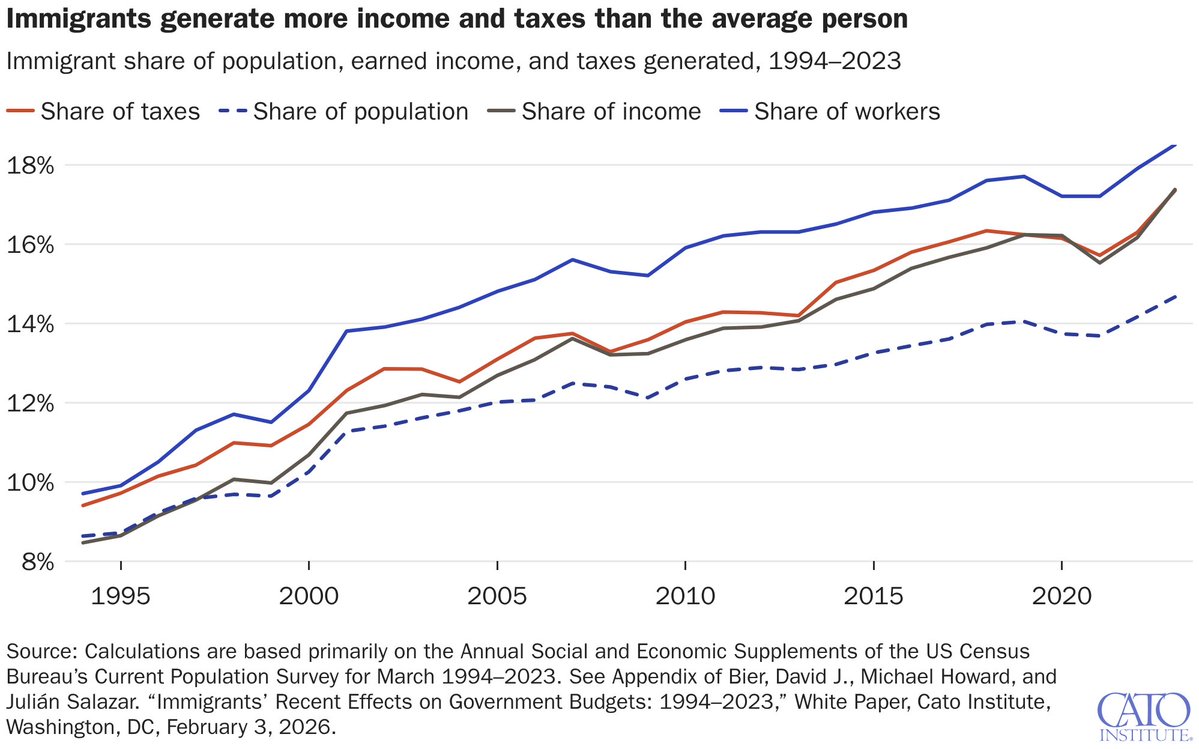
Freakonomics chart of the day...
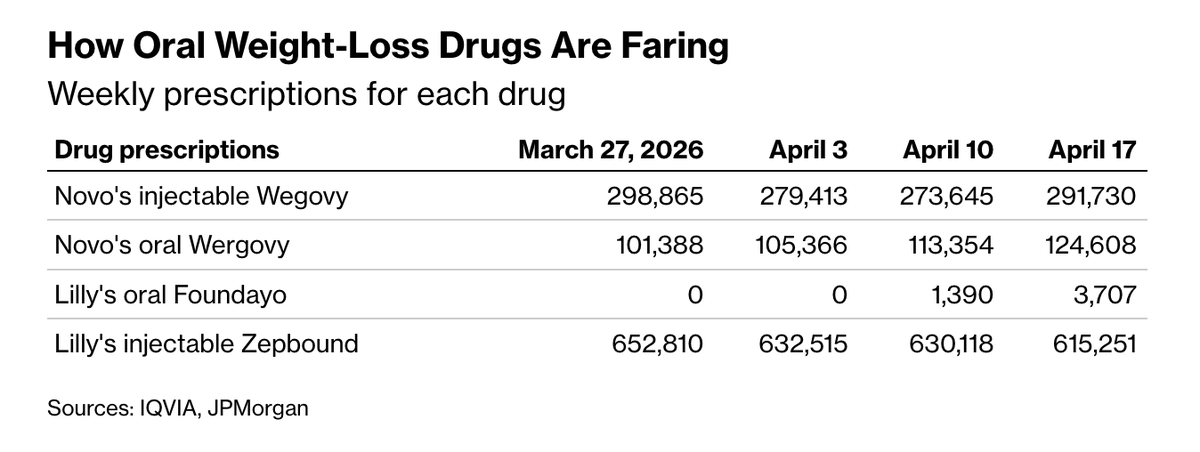
Scary chart for $LLY, especially since its valuation is 5x that of $NVO. Novo up 7%, Lilly down 5%
Novo Injectable went up as Zepbound went down👀
What is going on here?!?
Are patients coming in asking for Novo Wegovy pill, and the doctors are putting some of the patients on Wegovy Injectables instead?
The ongoing closure of the Strait of Hormuz is deeply damaging. Getting global shipping moving is vital to ease cost of living pressures.
The UK has convened more than 40 nations who share our aim to restore freedom of navigation.
This week the UK and France will co-host a summit to advance work on a coordinated, independent, multinational plan to safeguard international shipping when the conflict ends.
🇮🇳 India Is Paying the Highest Price for Crude Oil in Its Recorded History. And Pump Prices Haven’t Moved.
• The Indian crude basket hit $125.9 per barrel in April, surpassing the previous record of $118.6 set in 2012 and making it the most expensive oil India has ever imported. The basket briefly touched $146 in mid-March before easing. For context, it averaged $63 in January. That’s a doubling in under three months.
• This matters more than the Brent headline because the Indian basket is weighted roughly 75% toward sour Gulf grades like Dubai and Oman, the crude most directly disrupted by the Hormuz closure. That’s why India’s actual import cost has at times been running $50 per barrel above Brent. India isn’t paying the global price for oil. It’s paying a worse one.
• India imports approximately 85% of its crude needs. At pre-crisis prices, the annual import bill runs around $100-120 billion. At current levels sustained for a full year, that roughly doubles, draining an extra $80-100 billion from the current account and putting severe pressure on the rupee. The RBI and government are caught between inflation and fiscal sustainability.
• The most striking detail: Indian retail petrol prices have barely moved, still sitting at around ₹103.54 per litre as of today. That means the government or state-owned oil marketing companies are absorbing the difference. That’s the same pattern India followed in 2008 and 2011 before the cost became unsustainable and forced emergency policy changes. The question is how long the absorption can last this time.
Related tickers:
$BZ_F — Brent Crude Futures
$CL_F — WTI Crude Futures
$INDA — iShares MSCI India ETF (broad India equity exposure)
$EPI — WisdomTree India Earnings Fund
$SMIN — iShares MSCI India Small-Cap ETF
$INDY — iShares India 50 ETF (large-cap Indian equities)
$RDY — Dr Reddy’s Laboratories (Indian ADR, input cost pressure)
$IBN — ICICI Bank (Indian ADR, macro/credit exposure)
$HDB — HDFC Bank (Indian ADR, economy-wide drag)
$TTM — Tata Motors (Indian ADR, fuel cost pass-through to consumers)
$WIT — Wipro (Indian ADR, rupee depreciation beneficiary as exporter)
$SHEL — Shell (global crude trading, sour grade exposure)
$BP — BP (refining, Gulf sour crude)
$GLEN — Glencore (oil trading, commodity flows)
$STNG — Scorpio Tankers (tanker rates, rerouting around Hormuz)
$FRO — Frontline (crude tanker, voyage repricing)
$RELIANCE.NS — Reliance Industries (India’s largest private refiner)
$IOC.NS — Indian Oil Corporation (state-owned, absorbing price gap)
$BPCL.NS — Bharat Petroleum (state-owned, balance sheet pressure)
HT @zerodhamarkets
IRAN WAR: Market reaction. We see three major scenarios. As things stand, some kind of resolution that allows the SoH to flow is still possible. From a market standpoint, very few investors can afford to miss the rally that would ensue so every other outcome gets discounted...