I am trying to make people aware of the innocent British lives that have been lost due to our open borders.
This was Alice, aged just 14, raped to death, weighted down and thrown into a river.
It dates back to a time when immigrants arrived by the coachload, because we were in the EU.
This one arrived when Blair was PM.
He had already done time for the murder of his wife but even when he was arrested in the UK in 2009, no one checked his record, so he was never sent home.
The judge put Alice's death down as "unlawful killing" and also said that the victims death was not the fault of the police or Home Office, despite the fact that her killer should have been deported in 2009 under Blair.
I guess no one wanted this poor child on the "murdered list".
Maybe that is why she is not as well known as other murder victims?
We should never let anyone forget Alice, especially the ones who caused her death.
https://t.co/E29oeNQgJH
Many significant periods in human and geological history have experienced temperatures that exceed modern levels—entirely independent of human activity.
These periods occurred under lower atmospheric carbon dioxide levels, and driven primarily by Milankovitch orbital cycles. The Holocene interglacial period, beginning roughly 11,700 years ago, features several prominent climate fluctuations.
During the Holocene Climate Optimum (9,500 to 5,500 years ago), enhanced summer solar radiation pushed Northern Hemisphere temperatures 1°C to 2°C above pre-industrial baselines, creating a sustained period of ecological vitality.
Similarly, regional warm currents during the Roman Warm Period (250 BC to AD 400) and the Medieval Warm Period (1,100 to 1,300 AD) allowed agriculture to flourish in the Mediterranean and enabled Norse settlement in green Greenland. In Europe, Roman-era summer averages reached heights that provided the agricultural stability necessary for imperial expansion.
These eras contrast sharply with the Little Ice Age (1,300 to 1,850 AD), a period of severe polar cooling and glacial expansion triggered by volcanic clusters and solar minimums, demonstrating that cold—not warmth—historically brought societal hardship.
Looking further back to the Eemian Interglacial (130,000 to 115,000 years ago), global averages were roughly 1°C to 2°C warmer than pre-industrial levels, with high-latitude spikes of 4°C to 8°C. This natural warmth caused significant polar melt and raised sea levels by 6 to 9 metres. Crucially, Eemian atmospheric CO₂ remained stable at roughly 285 ppm.
If the planet’s most profound warming intervals were driven by natural orbital mechanics, while CO₂ remained low and stable, it raises serious doubts about the fundamental honesty of the United Nations net zero campaign.
What is the possible justification for a global energy transition project that will cost the global economy a colossal $275 trillion by 2050?
IMAGE: The stone ruins of Hvalsey Church in southern Greenland, from around 1300 AD. The last written record from the Norse settlement here was a wedding in 1408, before the onset of the Little Ice Age rendered these farming communities untenable.
When You Can't Beat Reform, Change The Rules. Labour Just Did.
There is a line in a democracy that, once crossed, changes everything. When those in power begin adjusting the rules of the game to determine its outcome, the game is no longer democracy. It is managed succession. That line was crossed again on Tuesday night.
Two days before the Makerfield by-election, Labour rushed a change to the mayoral voting system through the House of Lords. Regional mayors will now be elected using the supplementary vote system rather than first past the post. The change applies immediately. It will govern whoever replaces Andy Burnham as Mayor of Greater Manchester if he wins on Thursday and stands down.
The government's defence is that it is simply restoring the system used before Boris Johnson changed it in 2021. That argument requires the public to believe that a change Labour could have introduced at any point in two years of government became urgent on Tuesday evening, forty eight hours before the vote that triggers the election it is designed to affect.
Lord Hayward, a Conservative peer and experienced pollster, was precise in the Lords. There is no other justification for the haste, he said, other than that it solves the Labour Party's problems and prevents Reform winning a mayoralty. Not clumsy. Not rushed. Designed.
The mechanics explain why. Under first past the post, Reform could win the Greater Manchester mayoralty on a plurality of votes in a fragmented field, precisely as it won all eight council wards in May's local elections with around fifty percent of the vote. Under the supplementary vote system, voters express a first and second preference. Lib Dem and Green voters, given a second preference, will direct those votes to Labour overwhelmingly. The change does not affect Thursday's by-election. It affects the mayoral contest that follows it, constructing an anti-Reform coalition from the second preferences of smaller parties that Reform itself cannot access.
Lord Jackson identified the wider implication. This is potentially a strategy for a progressive alliance being rolled out ahead of a general election, he said, with the aim of locking out the Conservatives and Reform from power. Burnham's allies have already confirmed he would scrap first past the post nationally in favour of proportional representation. The supplementary vote is the local pilot for a national project. Pool second preferences, lock out the right, govern indefinitely on a minority of first preference votes.
This is not the first time. Earlier this year Labour delayed local elections after the Electoral Commission stated explicitly that the justification was not legitimate, that extending mandates damages public confidence and creates a conflict of interest by allowing those in power to decide how long they may remain there without consent. The Commission's objection was noted and ignored. Reform demolished Labour anyway.
Now the same instinct has been applied to a different mechanism. Not cancellation this time. Electoral system change, deployed with surgical precision forty eight hours before the vote that triggers the election it is designed to affect.
Governments confident in their mandate do not need to change the rules two days before the ballot. They face the electorate and take their chances. The timing of Tuesday night's Lords motion is not a coincidence. It is a confession.
The voters of Makerfield vote on Thursday. The question of who governs Greater Manchester after that, and under what rules, was settled in the Lords on Tuesday. Nobody voted for that.
"Burnham's allies have already confirmed he would scrap first past the post nationally in favour of proportional representation."
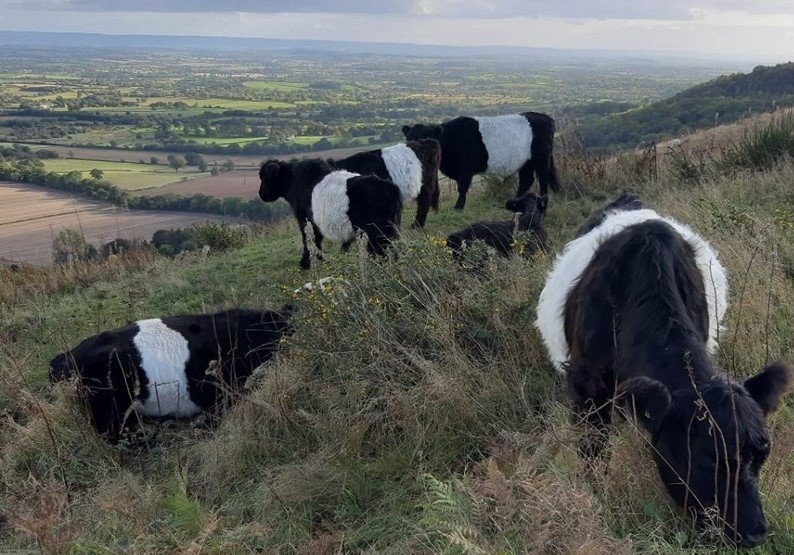
"Just grow crops on that land instead of raising cattle."
Lovely idea. Have you ever actually stood on it?
I mean the hard country, the two-thirds of British farmland that can grow nothing else. The land the postcards leave out. Go and look at what it actually is.
It is a Cumbrian fell at four hundred metres, where the soil is shallower than your hand is long and the rain comes in sideways for most of the year.
It is a Welsh hillside so steep that a tractor on it becomes a cautionary tale, retold in the pub for a generation.
It is the high Pennines, where the frost hangs on into June and the wind has strong opinions about anything that dares to grow upright.
It is Dartmoor, the Highlands, and the moor above your nearest market town: peat, bracken and acid grass, where the closest thing to an arable field is wishful thinking.
Nobody is hoarding these places. No farmer is sitting on prime wheat country out of spite, running cattle on it for a laugh. On this ground, the grazing animal is the entire harvest. There is no better crop for it to be blocking.
Sow wheat on a fell and it will sprout, shiver, take one look at the weather, and give up. Scatter quinoa across mid-Wales and the sheep will watch it fail with the calm of creatures who have seen this film before.
The people demanding crops have mistaken a relief map for a menu. They are ordering dishes the land was never able to serve. Strip the animals off these hills and you free up nothing for vegetables. You simply switch the food production off and hand the rain back to the bracken.
Grass grows there because nothing else will. The cow eats it because nothing else can. That is the entire arrangement, and it is the only one on the table.
So before you redraw British farming from a laptop, go and stand on the land you mean to convert. Wear good boots. It will not have changed its mind by the time you arrive.
22 YEARS LATER AND NOBODY HAS ANSWERED FOR WHAT HAPPENED TO DR DAVID KELLY
His name was Dr David Kelly. Most people have forgotten him. They shouldn't.
He was a quiet, mild-mannered scientist who spent his career inspecting weapons facilities around the world.
He knew more about Iraq's arsenal than almost anyone alive.
In 2003, Tony Blair's @InstituteGC government published a dossier claiming Saddam Hussein could deploy chemical weapons within 45 minutes. That claim was used to justify a war.
Kelly knew the intelligence behind it was being exaggerated. He said so, privately, to a @BBCNews journalist.
That one conversation destroyed his life.
The government found out he was the source. Instead of protecting a man who had served his country for decades, they quietly let his name reach the press. He was publicly identified, dragged before two parliamentary committees, and grilled by his own employer.
His wife said he came home a broken man.
On the afternoon of 17 July 2003, he left his house for a walk in the Oxfordshire countryside. He was 59 years old. He never came back.
His body was found the next morning in woodland. A knife beside him. A blister pack of painkillers nearby.
Here is where it gets worse.
Tony Blair personally intervened to replace the normal coroner's inquest with a private inquiry run by Lord Hutton.
The original inquest was suspended before it even properly began. It was never resumed. To this day,
Dr David Kelly is the only person in England and Wales in living memory to have died in unexplained circumstances without receiving a full coroner's inquest.
Lord Hutton concluded suicide. Case closed.
Except eight senior doctors and a former coroner wrote to @thetimes saying the verdict was medically unsafe.
The wound found on Kelly's wrist, a severed ulnar artery, would not cause fatal blood loss in a healthy person.
There were no fingerprints on the knife. The painkillers found were not in a quantity that experts considered lethal.
The government's response, delivered by Attorney General Dominic Grieve in 2011, was essentially: the Hutton Inquiry was good enough, stop asking questions.
Think about that. A man quietly raised concerns about the biggest political deception in modern British history, a war that led to the deaths of hundreds of thousands of people. He was publicly exposed, professionally destroyed, and found dead days later and the government personally made sure there would never be a proper independent investigation into how he died.
Tony Blair went on to become a Middle East Peace Envoy. He has a knighthood.
Dr David Kelly got a private inquiry, a rushed verdict, and a sealed post-mortem report that was not released to the public for years.
Nobody was ever held accountable. Not for any of it.
This story should be on the front page every single year. Share it if you think it matters.
Sources: @BBCNews@guardian@thetimes@PrivateEyeNews
It Took Eight Years to Listen to a Bereaved Father. It Took a By-Election to Act.
Molly Russell died in November 2017. Her father has spent the years since asking governments of both colours to act on the algorithms that fed his fourteen-year-old daughter suicide content until she took her own life. Eight years. The most recent stage of that process was a three-month consultation that closed last month, attracting some 100,000 responses. The Prime Minister told bereaved parents gathered in Downing Street that responding properly would be challenging given the volume, and that he would move as fast as possible by the summer recess.
That timeline has now collapsed to days. On Monday Starmer will announce what he calls a "game-changing" ban on under-16s using social media, complete with facial age scans, curfews for teenagers and restrictions on addictive features. The announcement lands three days before the Makerfield by-election, in which Andy Burnham, the man positioning himself to challenge Starmer for the Labour leadership, is standing as the party's candidate.
Ian Russell does not believe this is a coincidence. He told the Telegraph there was "no reason other than maybe a by-election in Makerfield" for the sudden acceleration, and called it "political opportunism." From a man who buried his fourteen-year-old daughter and has spent eight years pleading with successive governments for exactly this kind of action, the word "disgraceful" carries weight no opposition politician could match.
What makes the timing more damning is the evidence Russell is citing against it. Australia introduced its own under-16s ban in December 2025. Six months on, six in ten Australian under-16s remain on the banned platforms because the tech companies have failed to enforce it and children have found ways around it. Russell's own charity, the Molly Rose Foundation, has just published research showing 47 percent of girls aged 13 to 17 are still being shown high-risk content relating to suicide, self-harm and eating disorders every week, under the existing Online Safety Act that was supposed to have already fixed this. Ofcom admits nine in ten children aged 8 to 12 are using platforms with a minimum age of 13, because nobody enforces the limit that already exists.
Russell's argument is not that nothing should be done. It is that the government is choosing a headline-grabbing ban it knows does not work, over the harder regulatory work, forcing platforms to redesign addictive features, that experts say would. He fears that when the ban unravels as it has in Australia, the Prime Minister will be left asking why nobody warned him in advance. They did. This week.
There is a precedent for how fast this government can move when it chooses to. Liz Kendall's powers to remove "incendiary" online content during a "crisis" went from announcement to legislation within forty-eight hours. Jonathan Hall, the government's own terror watchdog, raised the national security implications of mass migration through proper channels and received silence that has now lasted for weeks, in the same period that Belfast burned. Eighty-seven thousand four hundred and fifty people sit in the asylum appeals backlog, a figure larger than the population of Carlisle, with no comparable urgency attached to it at all.
Two different forms of harm to children and to the country. One produced legislation in two days. The other has waited eight years and counting, and finally moved only once a leadership rival's name appeared on a ballot paper. The question Ian Russell is too polite to ask directly is the one that matters most. What, precisely, does this government consider urgent, and for whose benefit?
"Ian Russell does not believe this is a coincidence. He told the Telegraph there was "no reason other than maybe a by-election in Makerfield" for the sudden acceleration, and called it "political opportunism.""
.@PeterStefanovi2 Lord Heseltine has been one of Britain's most committed europhiles for forty years, and he's spent the decade since the referendum trying to overturn its result. A man with that record doesn't get to declare the result a con and be treated as a neutral observer. He's a participant in this argument, not a judge of it.
But take the claim on its own terms. If Brexit has not delivered what people voted for, the question that follows is why. And the answer is not that people were sold a false prospectus. The answer is that the people charged with implementing the result, the civil service, the Treasury, much of the political and legal establishment Heseltine has belonged to his entire career, never accepted that result and built a settlement designed to dilute it. The Trade and Cooperation Agreement kept Britain tethered to EU regulatory standards through level playing field provisions. Britain became a rule taker rather than a rule maker. Northern Ireland ended up with an internal regulatory border that nobody voted for. That is not what Leave campaigners promised. It is what the people Heseltine represents delivered instead.
So if this is a con, identify the con artists correctly. It is not the fifty-two per cent who voted to leave. It is the establishment that spent the years since engineering a halfway house, then pointing at the halfway house as proof the whole project was fraudulent. Rachel Reeves told the Economist she wishes Britain had voted Remain. She is completing exactly the project Heseltine has spent a decade demanding. The con is still running and Heseltine is one of its longest serving operators.
As for heinous crime, that is the language of a man who has never accepted that seventeen million people might have had legitimate reasons for their vote and is still, a decade later, unable to process the fact that he lost.
"The con is still running and Heseltine is one of its longest serving operators."
The Navy That Could All Along. It Just Needed A By-Election.
On Sunday morning, Royal Marine Commandos and National Crime Agency officers boarded the Smyrtos, a Cameroon-flagged Russian oil tanker, in the English Channel. The operation took six hours, supported by Chinook, Merlin and Wildcat helicopters, an RAF P-8 Poseidon, and the warships HMS Sutherland and HMS Ledbury. Keir Starmer ordered it personally and called it "yet another blow to Russia." It was the first UK-led boarding of a Russian shadow fleet vessel in British waters.
The authority for this operation has existed since March. That month, Starmer agreed that British armed forces and law enforcement could stop, board and detain sanctioned shadow fleet vessels in accordance with international law. That is the legal framework. It has sat in place for eleven weeks.
In those eleven weeks, more than two hundred sanctioned tankers sailed through Britain's exclusive economic zone. Checked. Unchallenged. Three days ago, Britain's role in shadow fleet enforcement was still limited to supporting others, while France carried out its fourth such boarding, commandos rappelling onto a tanker four hundred nautical miles off Brittany.
Two weeks ago, a former Royal Marine MP told the Defence Secretary that France had again demonstrated seizing these vessels was "both legal and achievable," and that the gap between Britain's permissions and Britain's actions came down to the Attorney General's hesitation. Finland, Sweden, Estonia, France and the United States, he said, have no such hesitation.
In April, the explanation on offer was that the constraint was never legal capability. Lord Hermer's framework required an individual legal case for each boarding, and the government used that requirement to explain months of watching sanctioned vessels pass through British waters. A Russian frigate escorted tankers through twenty-one miles of Channel while Iran closed a strait of similar width with a single announcement. The Navy was ready. The law, we were told, was not.
The law was ready in March. What changed on Sunday was not the framework. It was the decision to use it.
Makerfield votes on Thursday. Reform holds every council ward in the constituency. A government that spent eleven weeks explaining why two hundred tankers could not be touched found, four days before a by-election it cannot afford to lose badly, that the first one could be.
This is not really a story about Russia, or about the Channel. It is the same story as Britain's asylum backlog. 87,450 people. A four percent removal rate. Years of unused levers. It is the same story as Hungary, which received 47 asylum applications in the same six months Britain received roughly 50,000, and as America, where border crossings fell from 1.6 million to under 240,000 within months of a government choosing to act. The tools existed throughout, in every case. The decision to use them was the only variable that was ever missing. On Sunday, for four days' worth of reasons, it stopped being missing.
"Agency officers boarded the Smyrtos, a Cameroon-flagged Russian oil tanker, in the English Channel. The operation took six hours, supported by Chinook, Merlin and Wildcat helicopters"
What is playing out now with the Belfast attack, with Henry Nowak, is a grand symphony of gaslighting & dishonesty that is almost too stomach-churning to watch
We witnessed the same after Southport, with the rape gangs....and on & on
They KNOW their mass migration ideology caused these atrocities. So they choose to deflect on to right-wing politicians, GB News and what they call the "far right".
The public need to understand exactly how their game is played and the poisonous ideology that underpins it.
The cycle is always the same:
Fury erupts across Britain, driven not by public figures (as they claim), but by the atrocity itself. You know, the mad asylum seeker wielding a bloodied knife...
Footage is shared on social media, watched with our own eyes. The pure unvarnished truth that the legacy media can't spin.
Figures on the right respond with natural fury - indeed, rage - that the elite's callous disregard for reality and their fellow citizens has yet again unleashed carnage.
But the media and the political class can't talk about that reality. They can't talk about the incident itself. Because they would have to admit it is thanks to them that such people - such murderers - have entered the country.
The BBC, The Guardian, Sky News, Labour, the Greens, the Lib Dems & many Tories, too --
What THEY CHOOSE to talk about, what they WANT YOU TO THINK the real story is about, is the anger and the choice of words of those of us who are utterly appalled and outraged by the latest atrocity -- an atrocity THEY enabled.
This is gaslighting propaganda of the most repellent and unforgivable kind.
With Southport, the real story was apparently not the son of a Rwandan refugee committing one of the most heinous crimes in British history.
No, the real story was Nigel Farage's reaction to that orgy of slaughter against little girls. When locals rioted, James O'Brien and others labelled it the 'Farage Riots'.
The small number of rioters suddenly became the story, used to dismiss the concerns of ALL protestors. "Far-right thuggery", was how Keir Starmer referred to law-abiding mothers and pensioners.
Anything to avoid talking about the crime itself and the ideology that brought its perpetrator into our country.
And now we see the same playing out with the Belfast attack and the murder of Henry Nowak.
Newsnight misleadingly quoted Nigel Farage as saying "white rage," a revealing and vile smear for which they have had to apologise yet again.
In lockstep, the media and political class rapidly converged on their narrative: this was to be a story about Nigel Farage's naughty words.
THIS is what has dominated their coverage.
This is what they want to talk about in Parliament, in the TV studios, and in the press. Farage's naughty words.
"Just how naughty were they? Should such bad words be tolerated? Should he be arrested?"
"Do we need to apply yet more censorship to protect the public against his mean, hurty words?"
These people are so far beneath contempt it is difficult to find words that do them justice.
This is a story not about Nigel Farage or the right, but the deeply ingrained anti-British and anti-white ideology that is destroying this nation.
This is an institutionally treasonous state, and Henry Novak and Stephen Ogilvie are its latest victims.
That is the real story our political and media class are attempting to bury under a mountain of pearl-clutching theatrics, lies, and misdirection.
They have blood on their hands. It's about time we said it.
Clip from my monologue. 👇
Full monologue linked in the second post. 1/2
Islamic Religious Instruction, Combat Training And Hezbollah Sympathies. Welcome To The Peak District's Spiritual Warrior Camp.
Sayed Hussain Makke ran his Spiritual Warrior camp again this month. Same location, Darwin Lake in the Peak District. A camp built around Islamic religious instruction, evidently aimed at young Muslim men, combining wrestling and combat training with theology sold under the language of God-centric masculinity and brotherhood. A year ago a 16-year-old who attended said it felt like Hassan Nasrallah, Hezbollah's late leader, was with us again.
Makke has mourned Hezbollah fighters, including a British friend who died serving the proscribed group, and has also glorified senior figures in Iran's Revolutionary Guard. He attended Nasrallah's funeral and praised the size of the crowd as proof the resistance was alive and well. Hezbollah's military wing has been proscribed in Britain since 2008, its political wing since 2019. Supporting a proscribed organisation carries up to 14 years in prison.
Alicia Kearns, former chair of the foreign affairs select committee, has been reporting Makke to counter-terror police for months. This week he flew back into the country. Nothing happened. Her message to the Home Office was blunt. Months ago she handed the Government evidence about Hussain Makke. This week he walked into Britain unchallenged. If that is what stopping at nothing looks like, the Government's promises to Britain's Jewish community aren't worth the paper they're written on.
Counter Terrorism Policing London's response was a sentence built entirely out of conditional clauses. Reports get reviewed. Reviews get passed on. Nothing closes the loop.
When journalists reported on the camp, Makke's response, issued through a legal group, did not deny attending Nasrallah's funeral. It accused the Jewish Chronicle of being an asset of a hostile foreign regime and said British authorities should instead focus on tracking, capturing and imprisoning home-grown Jewish extremists who have served in the genocidal Israeli military. That statement was made by a man about to run a residential camp for teenagers, for the second year running, without having been arrested.
And there's a dimension to this that gets lost when every story involving an Islamic preacher gets filed under one heading. Makke is a Shia cleric trained at a seminary in Lebanon under Hezbollah influence, now based in an area of southern Lebanon with a significant Hezbollah presence. He is not representative of British Muslims generally, the large majority of whom are Sunni and have no connection to this. But what he is building, year on year, looks exactly like the organised, identity-based recruitment that has reshaped local politics in towns like Kirklees: discipline, cohesion, a shared sense of grievance and mission, instilled early and reinforced annually. Whatever you think of that model, it works. The institutions meant to be watching for it are, by their own account, still reviewing.
That asymmetry is the real story. A man with an open paper trail of pro-Hezbollah statements, openly hostile to British Jews in writing, runs annual camps for teenagers while an MP's repeated referrals sit in a queue. Henry Nowak's case showed what happens when officers are trained to treat a racism accusation as the primary fact requiring response. This is the same reflex from a different angle. A fear of how acting might look appears to carry more weight than a documented paper trail of supporting a proscribed terrorist organisation. Kearns has handed over the evidence. The question, asked directly, is whether anyone will open the file.
"Makke has mourned Hezbollah fighters, including a British friend who died serving the proscribed group, and has also glorified senior figures in Iran's Revolutionary Guard."
The Asylum Backlog Hit 87,450. The Terror Watchdog Warned of a Security Risk
87,450 people are in the asylum appeals backlog. That is roughly the population of Carlisle. Imagine every man, woman and child in that city, waiting in a queue that grows by the day, more than double the number of new asylum claims made in the same year.
The numbers published this week should stop a government in its tracks. The backlog is up 71.5 percent in a single year. 70 percent of rejected claimants now appeal. 40 percent of those rejected remain in Britain regardless. Of the more than 200,000 people who have crossed the Channel illegally since 2018, only around 4 percent have ever been removed. The system is not failing to cope with the numbers. The system is the numbers.
The Home Office describes this as progress, pointing to a 72 percent fall in the initial decision backlog since 2023. What it does not say is where those decisions went. They went into the appeals system, where the backlog has more than doubled. Speeding up the front door while leaving the back door unchanged relocates the queue and multiplies it, because every rejected claimant who appeals is entitled to taxpayer-funded accommodation while they wait. The National Audit Office puts the total cost at £4.9 billion for 2024-25, with £2.1 billion spent on hotels alone.
Shabana Mahmood's response is to legislate again, restricting Article 8 family life claims to immediate family, requiring judges to prioritise public safety, and setting a 28-week limit on appeals. That legislation implicitly admits the current framework has allowed dubious family connections to block removal, that judges have not been prioritising public safety, and that appeals have run indefinitely. These are not new problems Mahmood has discovered. They have been documented for years by anyone willing to look, while those who raised them were told they were exaggerating or that no evidence existed.
Then there is Jonathan Hall. Not a commentator. Not an activist. The government's own Independent Reviewer of Terrorism Legislation, a King's Counsel appointed specifically to provide neutral expert assessment of the law. This week, in the aftermath of the Belfast stabbing and the riots that followed, Hall said publicly that immigration must be assessed in national security terms, that certain nationalities present elevated risk profiles for serious violence, and that trauma among asylum seekers from conflict zones may compound that risk further. Foreign nationals accounted for one in seven sexual offence convictions in 2024. Hall is not speculating. He is the most senior independent legal authority on terrorism law in the country, and he has said the system as it stands is a security risk.
The government's response to Hall's intervention was silence. He raised it through proper channels. Nobody answered.
So here is where Britain stands. An appeals backlog larger than the population of an entire English city, growing at 71.5 percent a year. A removal rate of 4 percent for illegal arrivals. A National Audit Office report confirming the cost is disproportionately high and driven by delay. A Home Secretary legislating to fix problems that amount to an admission the system has been broken in exactly the ways critics described. And a terror watchdog, appointed by the government itself, warning that the entire framework constitutes a national security risk, met with silence from the department responsible for it.
This is not a system under strain. It is a system working exactly as designed. Faster removals, restricted appeals, leaving the ECHR, every lever has been available for years and none pulled with urgency. The backlog will keep growing. The removal rate will stay near zero. Somewhere in that queue of 87,450, the next Belfast is already waiting its turn.
"In the aftermath of the Belfast stabbing and the riots that followed, Hall said publicly that immigration must be assessed in national security terms"
Downing Street Wiped the Phone Before Anyone Could Find It
Scotland Yard has reopened its investigation into the reported theft of Morgan McSweeney's phone, the device that almost certainly contained the most direct evidence of how Lord Mandelson came to be appointed as Britain's ambassador to Washington. Detectives are examining CCTV footage from the Westminster street where McSweeney claims he was robbed on the evening of October 20 last year. They fear the footage will already have been deleted. It is usually stored for only three months. The investigation, in other words, has been reopened into evidence that may no longer exist.
On the evening of October 20, McSweeney called 999 from Pimlico. He gave the wrong address. He did not correct the handler when the wrong address was read back to him. He did not identify himself as the Prime Minister's chief of staff. He did not mention that the device contained sensitive government material.
The following day, a police officer called to ask whether McSweeney had tracked the phone using its built-in tracker. He did not respond. At some point between the reported theft and that unanswered call, Downing Street remotely wiped the device. This destroyed the tracker. The phone could no longer be located. The messages it contained could no longer be recovered.
Now consider what did not happen. The Metropolitan Police were not informed that the missing device belonged to the Prime Minister's chief of staff. MI5 was not informed. GCHQ was not informed. The Information Commissioner's Office, which must by law be notified within 72 hours of any serious data breach involving personal information, was not informed. It told The Telegraph this week that it had received no notification at any stage.
Set this against what was happening inside Downing Street at the same moment. Officials had been holding meetings to discuss what they would do if the Conservatives used parliamentary process to force the disclosure of McSweeney's messages with Lord Mandelson. The phrase used in those meetings, according to reports, was coming for Morgan's messages. Days after those meetings concluded, the phone containing Morgan's messages was reported stolen. Days after that, it was wiped.
A prosecutorial mind, presented with this sequence, asks one question above all others. At the point when Downing Street chose to wipe the device, did anyone consider that doing so would destroy the tracker and make recovery impossible? The answer is yes. That is what remote wiping does. It is not a passive consequence. It is the purpose.
There are innocent explanations available for most of what surrounds this affair. Wrong addresses happen. Unanswered calls happen. Notification failures happen. But the decision to wipe a missing government device, knowing that doing so would render it untraceable and its contents unrecoverable, at the precise moment when those contents were the subject of active parliamentary and legal scrutiny, is not a clerical error. It is a choice. And choices have authors.
Keir Starmer has said he beats himself up over the Mandelson appointment. He has not said who authorised the wipe. He has not explained why the ICO was not notified. He has not said whether anyone in Downing Street attempted to track the device before wiping it. He has not explained why MI5 and GCHQ, the agencies whose job it is to manage exactly this kind of security risk, were kept in the dark.
These are not difficult questions. They have simple, factual answers. A government with nothing to hide would have provided them already.
The country is still waiting.
"Keir Starmer has said he beats himself up over the Mandelson appointment. [...]. He has not explained why MI5 and GCHQ, the agencies whose job it is to manage exactly this kind of security risk, were kept in the dark."
The Messages Are Not Gone. They Are on Someone Else's Phone.
There is a certain kind of political scandal that ends not with a dramatic revelation but with a mundane one. Not a smoking gun but a forgotten detail. Not a conspiracy unravelled but a basic error of logic, sitting in plain sight, waiting for someone to point at it. This is one of those moments.
We have spent several weeks being told that Morgan McSweeney's messages are gone. Wiped. Unrecoverable. Lost to a street robbery in Pimlico and a remote deletion that, conveniently, destroyed the tracker along with everything else. Downing Street has leaned heavily on this narrative. The messages cannot be produced because the messages do not exist. The phone is gone. The evidence is gone. Move along.
There is a problem with this story. WhatsApp is not a one-way street. When two people exchange messages, those messages exist on both devices. Wiping one phone does not reach through the internet and delete the other. McSweeney's conversations with Lord Mandelson are not only on McSweeney's phone. They are also on Mandelson's phone. His conversations with Jonathan Powell are on Powell's phone. His conversations with Matthew Doyle are on Doyle's phone. The messages Downing Street has declared unrecoverable are, in fact, sitting in the pockets and cloud backups of everyone McSweeney spoke to.
Any child with a smartphone could tell you this. And it raises a question so obvious it is remarkable that it has taken this long to ask it loudly: why has nobody in Downing Street been asked to produce their devices?
The answer, in Mandelson's case, may already be known to the Metropolitan Police. He was arrested in February on suspicion of misconduct in public office. When you arrest someone on those grounds, you seize their phone. That is standard procedure. It is not optional. If Mandelson's device was taken, as it almost certainly was, then the Metropolitan Police are already in possession of the other end of every conversation Downing Street has spent months telling us is lost.
Read that again slowly. The government may have wiped one phone while the police were already holding the other.
If that is the case, then the claim that McSweeney's messages are unrecoverable is not an unfortunate consequence of a street robbery. Maintaining that claim in full knowledge of Mandelson's arrest and the likely seizure of his device is not carelessness. It is something considerably more serious.
Downing Street has refused to say whether any attempt was made to track the wiped phone. It has refused to explain why the ICO was not notified. It has refused to say whether MI5 or GCHQ were informed. It is now going to have to answer a fourth question, and this one is harder to manage than the others. If the police have Mandelson's phone, where are the messages?
"The messages Downing Street has declared unrecoverable are, in fact, sitting in the pockets and cloud backups of everyone McSweeney spoke to."
Ambition Before Accountability. The Pattern Burnham Hopes You've Forgotten
Andy Burnham is positioning himself as the man who will change Labour for the better. The outsider who understands working people. The mayor who got things done. Before Westminster accepts that narrative it should examine the one thing Burnham has been consistent about throughout his career. When institutional failure has required a reckoning, he has commissioned a review, expressed anger and moved on. The reckoning never comes.
Start with Mid Staffordshire. As Health Secretary from 2009 to 2010 Burnham personally recommended the trust for Foundation Trust status on the basis of four lines of information. Between 400 and 1,200 more patients died at Stafford Hospital than would have been expected. He and his predecessor Alan Johnson rejected 81 requests for a full public inquiry sitting in public across their combined tenures. The Francis Inquiry, which Burnham resisted, found systematic failures. David Nicholson, the NHS chief, told that inquiry that the level of detail Burnham required before recommending Foundation Trust status was surprising because usually ministers would expect much more. The HuffPost analysis published at the time concluded that looking at the witness statements it was difficult not to reach the conclusion that Burnham was guilty at best of incompetence, at worst of gross negligence. Burnham's response was to stand before Parliament and accuse the government of failing to respond adequately to the Francis Report. The report he never wanted. About the trust he had recommended.
Then comes the Augusta inquiry. Operation Augusta was a Greater Manchester Police investigation into a grooming gang of up to 100 members who abused at least 57 children, some as young as 12. It was closed before Burnham's mayoralty. But when MPs wrote to him challenging him on the failures documented in the subsequent review, his response was described in Hansard as supine. He accepted the lack of resources argument without challenge despite Greater Manchester Police having gained over 1,000 additional officers in the years the operation ran. There was, in the words of MPs who examined his reply, no sense of injustice. The minutes from the GMP meeting where the decision to close Augusta was taken had disappeared. The minutes from Manchester City Council had disappeared at the same time. The IOPC subsequently concluded it could not determine who took the decision or why because records were missing and former employees were unwilling to cooperate.
The Rochdale review he commissioned identified 96 men still deemed a potential risk to children who remained at large. Nobody has answered the question of what his mayoralty did to locate and prosecute them. Not Burnham. Not any of the MPs now championing him for Downing Street.
The pattern is not accidental. Mid Staffordshire. Augusta. Rochdale. In every case the same structure. Institutional failure. Review commissioned. Parliamentary challenge answered inadequately. Unanswered questions buried under the next announcement. The man presenting himself as the antidote to institutional evasion has spent his entire career practicing it.
Now he seeks to represent Makerfield. Reform is ahead in polling for the seat by 46 to 35 percent. Labour lost 20 councillors in Wigan last Thursday while Reform gained 23. The seat being handed to him is no longer the safe Labour fortress it once was. If he loses it his leadership bid ends before it begins. If he wins it the questions above will follow him to Westminster.
The political class preparing to crown him has not required him to answer those questions once. It will not start now. Changing the leader without changing the culture of institutional evasion reproduces the problem with a more popular face attached. Britain has been here before. It knows how it ends.
The BBC Has Ruled. Brexit Damaged The Economy. No Further Debate Required.
The BBC's editorial complaints unit has decided that the negative economic impact of Brexit is now a settled fact. Not a contested judgement. Not one side of a live debate. A fact, in the same category as man-made climate change, requiring no balancing view.
The ruling followed a Radio 4 Today programme segment featuring Andrew Bailey, the Governor of the Bank of England, alongside Liam Byrne and Sir John Gieve, both long-standing advocates of closer EU alignment. All three agreed Brexit had damaged growth. The presenter, Katya Adler, did not challenge the premise or introduce a dissenting voice. A complaint followed.
The ECU's response is the revealing part. It acknowledged the segment failed to "acknowledge the alternative case" for pursuing opportunities outside the EU rather than realignment with it. That part of the complaint was upheld. But the central complaint, that three pro-EU voices agreeing with each other on air is not balance, was dismissed. The reasoning given was that this reflected "the consensus among economists" and there was no "significant body of economic opinion" on the other side.
This is worth pausing on. The BBC is not claiming it found balance. It is claiming balance was unnecessary because one side of the argument does not meaningfully exist. The institution that is legally required to be impartial has ruled itself the arbiter of which questions are still open and which are closed, and Brexit has just been moved into the closed file.
The economics itself does not support the certainty on display. The headline figure driving much of this narrative, an 8 per cent hit to GDP since 2016, comes from an NBER paper built on a "synthetic control" model that constructs a hypothetical non-Brexit Britain from a basket of comparator countries. The largest weighting in that basket, over 60 per cent, is the United States, a country currently riding an AI investment boom and a separate fiscal stimulus. The model also weights Estonia and Greece more heavily than France or Germany. On a straightforward per capita basis against France and Germany, the actual comparators, Britain's performance since 2016 sits roughly in line with both. An 8 per cent gap simply isn't visible. This is a model producing a number that then gets reported as "the consensus," which the BBC then cites as the reason no alternative view is required.
That loop, model produces number, number becomes consensus, consensus becomes fact, fact requires no balance, is the mechanism. It does not require a conspiracy. It requires an institution that has decided which conclusions are respectable and which are not, and which then treats its own prior decision as evidence.
The same posture has been on display all week. A government department can decide its diversity targets are lawful without seeking legal advice to check. A police force can decide a book about dismantling "inner white supremacy" is leadership training. A broadcaster can decide an economic question is closed and that deciding so does not breach its own impartiality rules. In each case, the institution marks its own homework, and the mark is always a pass.
None of this requires Brexit to have been a triumph. Britain's economy has genuine problems, most of them unrelated to single market membership. But a state broadcaster, funded by compulsory licence fee under threat of prosecution, has now formally placed one of the most consequential political decisions in modern British history beyond the reach of its own impartiality obligations. Reform's Lee Anderson called it being "blinkered by groupthink." The more precise description is an institution that has stopped being able to tell the difference between its own assumptions and the facts.
"The BBC is not claiming it found balance. It is claiming balance was unnecessary because one side of the argument does not meaningfully exist."
The Cheques Go Out. The Men Arrive. The Women Pay the Price.
The Foreign, Commonwealth and Development Office published its aid allocations without apology or embarrassment. Afghanistan receives £192 million. Somalia £143 million. Yemen £142 million. Sudan £141 million. Nigeria £138 million. The Treasury writes the cheques. The Foreign Secretary insists the money saves lives. Neither of them will say what the figures actually represent.
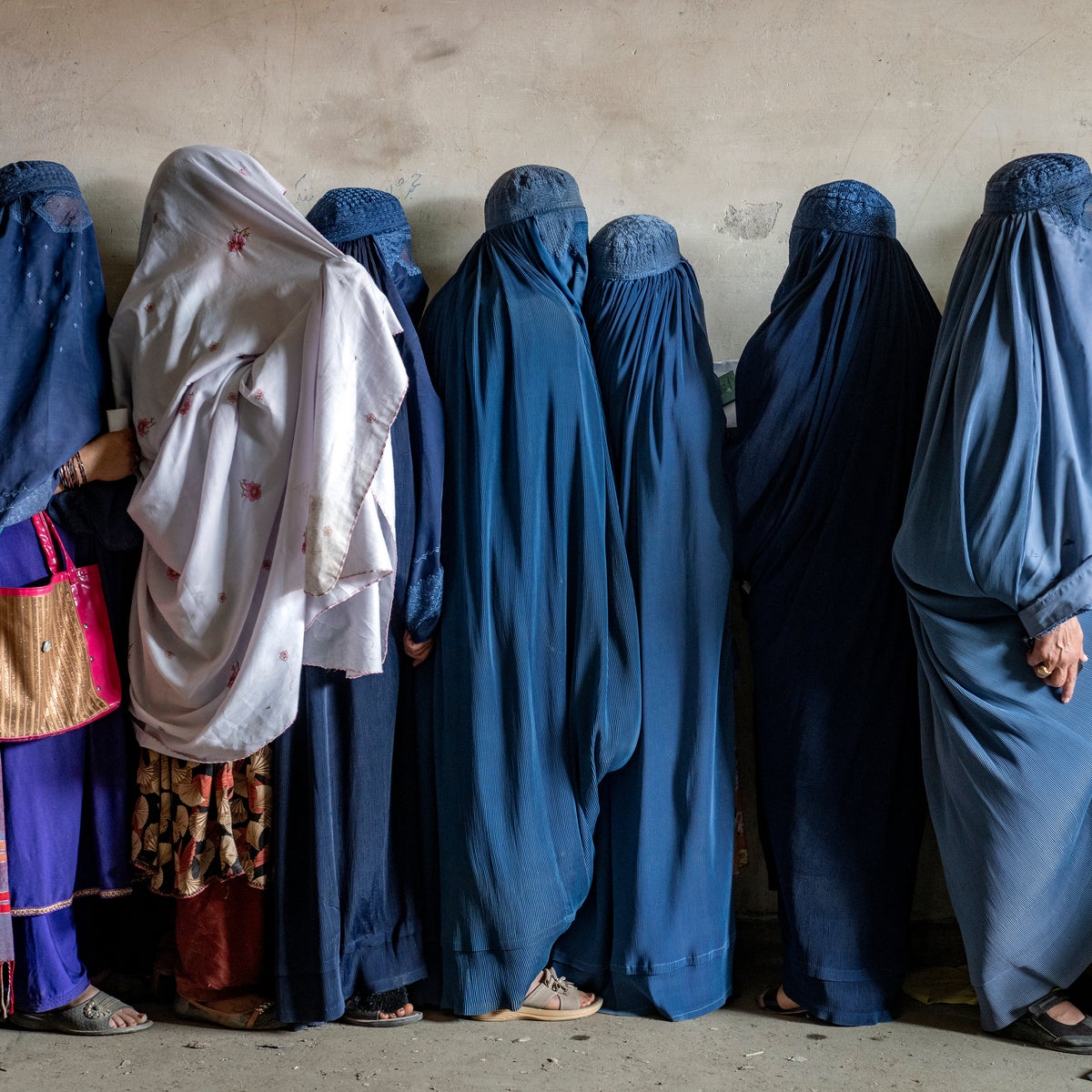
Afghanistan is governed by a regime that in April 2024 announced the enforcement of stoning and flogging for women accused of adultery. The UN's own Special Rapporteur describes a system of institutionalised discrimination amounting to gender apartheid. Girls are banned from secondary education. Women have been stripped from public life by decree. Britain sends £192 million a year, routed through NGOs the Taliban has simultaneously banned women from working for, which rather defeats the stated purpose.
Somalia ranks second on the Open Doors World Watch List for Christian persecution, behind only North Korea. Christians identified in the country face torture or death. Women and girls face forced marriage and sexual violence as instruments of social control. The Somali parliament has repeatedly failed to pass legislation on FGM and sexual violence. Britain sends £143 million.
Yemen, where FGM affects up to 84 percent of women and girls in some governorates, and where apostasy carries the death penalty, receives £142 million. Sudan, which has 15 million women and girls who have undergone FGM, receives £141 million. Nigeria, whose northern states operate sharia courts with apostasy laws punishable by death, and where 14 million women and girls have undergone FGM, receives £138 million. Five of the ten top recipients of British aid appear in the Open Doors top ten for Christian persecution. The government knows this. The figures are its own.
The same government presides over the Channel. Between 2018 and 2024, 147,568 people arrived illegally by small boat. Of those for whom data was recorded, 76 percent were males aged 18 to 39. In 2024, the leading nationalities were Afghans, Syrians and Iranians. In the first half of 2025, 70 percent of those crossing were young males from Afghanistan, Sudan and Iran. They arrive without verified documents. They arrive without verified ages. They are processed at Manston and dispersed into communities across Britain, often into hotels operating with minimal supervision.
The crime record is now a matter of parliamentary record. Louise Casey's report into rape gangs identified asylum seekers among those involved in the sexual exploitation of young British girls. The five nationalities most likely to cross the Channel saw a 110 percent increase in sexual offence convictions between 2021 and 2024. Foreign nationals account for one in seven sexual offence convictions while comprising one in ten of the population. In London, they account for over 40 percent of sexual assault charges while comprising 25 percent of the population. The Sun found 339 charges in six months across only half the asylum hotels in operation. The Mail on Sunday found 708 charges across a third.
A YouGov poll found 93 percent of Britons support the deportation of illegal migrants convicted of rape and violent crime. Ninety-three percent. The highest rate of support was in Scotland, at 97 percent. The British public has arrived at a verdict. The political class is still writing the briefing notes.
Britain is funding, at scale, some of the most repressive and misogynistic regimes on earth. Britain is simultaneously admitting, without adequate screening, large numbers of young men formed in those same societies. The connection is not complicated. The refusal to state it plainly is a political choice, made in the full knowledge of the consequences, and those consequences are being borne by British women.
"Britain is funding some of the most repressive and misogynistic regimes on earth."







![JChimirie66677's tweet photo. Downing Street Wiped the Phone Before Anyone Could Find It
Scotland Yard has reopened its investigation into the reported theft of Morgan McSweeney's phone, the device that almost certainly contained the most direct evidence of how Lord Mandelson came to be appointed as Britain's ambassador to Washington. Detectives are examining CCTV footage from the Westminster street where McSweeney claims he was robbed on the evening of October 20 last year. They fear the footage will already have been deleted. It is usually stored for only three months. The investigation, in other words, has been reopened into evidence that may no longer exist.
On the evening of October 20, McSweeney called 999 from Pimlico. He gave the wrong address. He did not correct the handler when the wrong address was read back to him. He did not identify himself as the Prime Minister's chief of staff. He did not mention that the device contained sensitive government material.
The following day, a police officer called to ask whether McSweeney had tracked the phone using its built-in tracker. He did not respond. At some point between the reported theft and that unanswered call, Downing Street remotely wiped the device. This destroyed the tracker. The phone could no longer be located. The messages it contained could no longer be recovered.
Now consider what did not happen. The Metropolitan Police were not informed that the missing device belonged to the Prime Minister's chief of staff. MI5 was not informed. GCHQ was not informed. The Information Commissioner's Office, which must by law be notified within 72 hours of any serious data breach involving personal information, was not informed. It told The Telegraph this week that it had received no notification at any stage.
Set this against what was happening inside Downing Street at the same moment. Officials had been holding meetings to discuss what they would do if the Conservatives used parliamentary process to force the disclosure of McSweeney's messages with Lord Mandelson. The phrase used in those meetings, according to reports, was coming for Morgan's messages. Days after those meetings concluded, the phone containing Morgan's messages was reported stolen. Days after that, it was wiped.
A prosecutorial mind, presented with this sequence, asks one question above all others. At the point when Downing Street chose to wipe the device, did anyone consider that doing so would destroy the tracker and make recovery impossible? The answer is yes. That is what remote wiping does. It is not a passive consequence. It is the purpose.
There are innocent explanations available for most of what surrounds this affair. Wrong addresses happen. Unanswered calls happen. Notification failures happen. But the decision to wipe a missing government device, knowing that doing so would render it untraceable and its contents unrecoverable, at the precise moment when those contents were the subject of active parliamentary and legal scrutiny, is not a clerical error. It is a choice. And choices have authors.
Keir Starmer has said he beats himself up over the Mandelson appointment. He has not said who authorised the wipe. He has not explained why the ICO was not notified. He has not said whether anyone in Downing Street attempted to track the device before wiping it. He has not explained why MI5 and GCHQ, the agencies whose job it is to manage exactly this kind of security risk, were kept in the dark.
These are not difficult questions. They have simple, factual answers. A government with nothing to hide would have provided them already.
The country is still waiting.
"Keir Starmer has said he beats himself up over the Mandelson appointment. [...]. He has not explained why MI5 and GCHQ, the agencies whose job it is to manage exactly this kind of security risk, were kept in the dark."](https://pbs.twimg.com/media/HEdF_DFbcAAM8lJ.jpg)