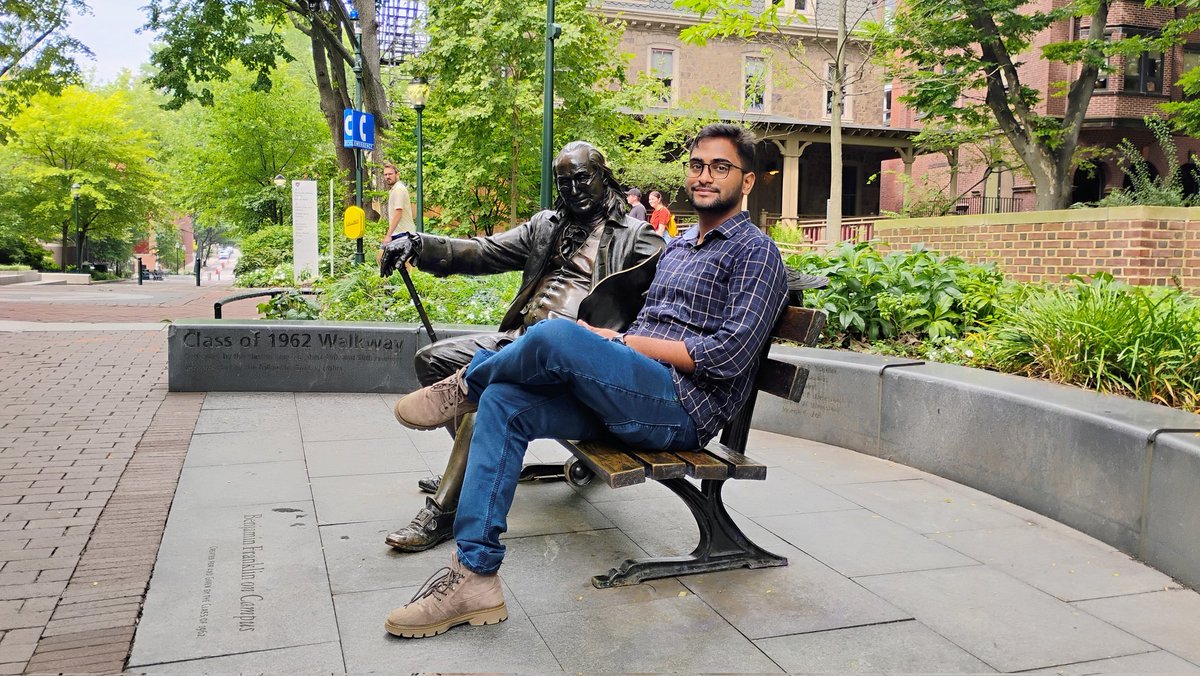
An important life update, I have joined the University of Pennsylvania @Penn as a PhD student in the Department of Materials Science and Engineering @MSEatPenn. I will be working under the supervision of Prof. Ritesh Agarwal. Looking forward to meeting new set of amazing people..
Hey Tweety, now that I can say I have met my personal legend in this lifetime — actually, twice.
Thank you Craig Ferguson @CraigyFerg , for all the lessons and really everything!
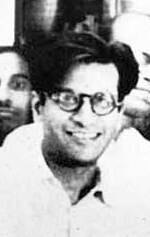
Imagine a man standing on the docks of Calcutta, watching the empty horizon where a ship was supposed to appear. He realizes the future of his country’s science is at the bottom of the sea. Instead of crying, he turns around, walks into a local welding shop, & starts sketching a vacuum pump on a piece of brown packing paper.
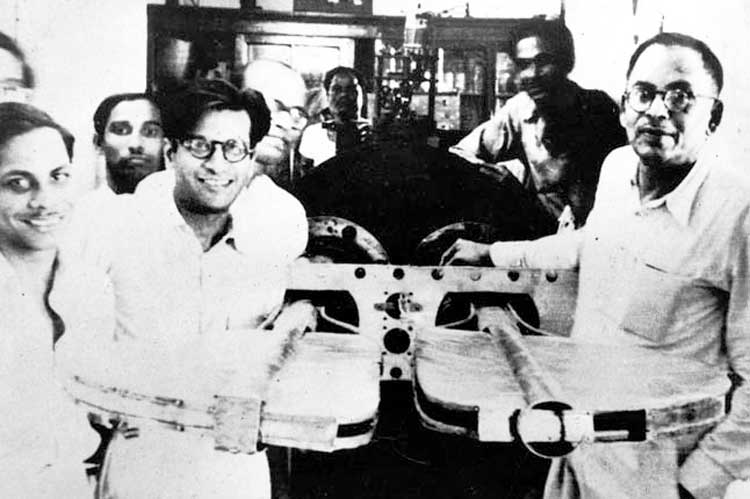
We celebrate the architects of the atomic age, but we have forgotten the man who actually built the engine. He was the ghost who brought the 1st Cyclotron to India, dragging the future of nuclear physics across a war-torn ocean, only to let others take the bow.
In the 1930s, the world of physics was shifting from chalkboards to massive machinery. Dr. Basanti Dulal Nagchaudhuri was at Berkeley, working directly under Ernest Lawrence (the inventor of the Cyclotron). He was not just studying; he was learning how to build the God-Machine, the particle accelerator.
In 1941, Nagchaudhuri & his mentor Meghnad Saha secured the parts for India’s 1st Cyclotron from the US. It was a moment of national pride, India was about to enter the elite club of nuclear research. But then, the tragedy struck. The ship carrying the crucial vacuum pumps & magnets was torpedoed by a Japanese submarine in the middle of World War II. The heart of India’s 1st great machine sank to the bottom of the ocean.
Most scientists would have quit. Nagchaudhuri did not. He did not wait for a new shipment. He went to the scrap yards & local factories of Calcutta. He used Jugaad before the word existed, fabricating complex vacuum systems & high-tension transformers from scratch in a colonized, resource-starved India.
By 1954, he had succeeded & 1st Cyclotron became fully operational in the East at the Saha Institute of Nuclear Physics. He was the man who trained the 1st gen of Indian nuclear scientists. If Bhabha was the Visionary, Nagchaudhuri was the Engineer of the Infinite.
Every cancer hospital in India that uses radiation therapy & every nuclear power plant we operate owes its existence to the technical lineage started by Nagchaudhuri’s Scrap-metal Cyclotron.
Like many indian unsung heroes, he sacrificed his personal research to build institutions. He became the Vice-Chancellor of JNU & the Scientific Advisor to the Ministry of Defence. He was notoriously modest. While his contemporaries were building public personas, he was in the basement of the physics lab, his hands covered in grease, ensuring the pumps were still running.
While everyone knows the name Homi Bhabha, almost no 1 knows the man who was his intellectual superior in the lab... the experimentalist who actually "caught" the particles that Bhabha theorized.
Perfect spin-off from Dhurandhar — Jameel Jamali’s story.
His journey from espionage to the upper ranks of Pakistani politics feels like a mix of House of Cards and Better Call Saul.
Indian cinema will be forever grateful, @AdityaDharFilms.
#Dhurandhar2TheRevenge@netflixindi
@gunsnrosesgirl3 Learning not to take things personally,
Realize more often than not people do you wrong because of incompetence rather than malice
Also practice daily gratitude, yes even when you don't feel grateful, that's the point
New in #npj2dmaterials@Nature_NPJ: Maity et al. present an efficient atomistic method to solve exciton properties in twisted WS₂/WSe₂, accurately predicting low-energy optical peaks and interlayer states. #nanomaterials#2dmaterials https://t.co/ZXJWv4yb2F
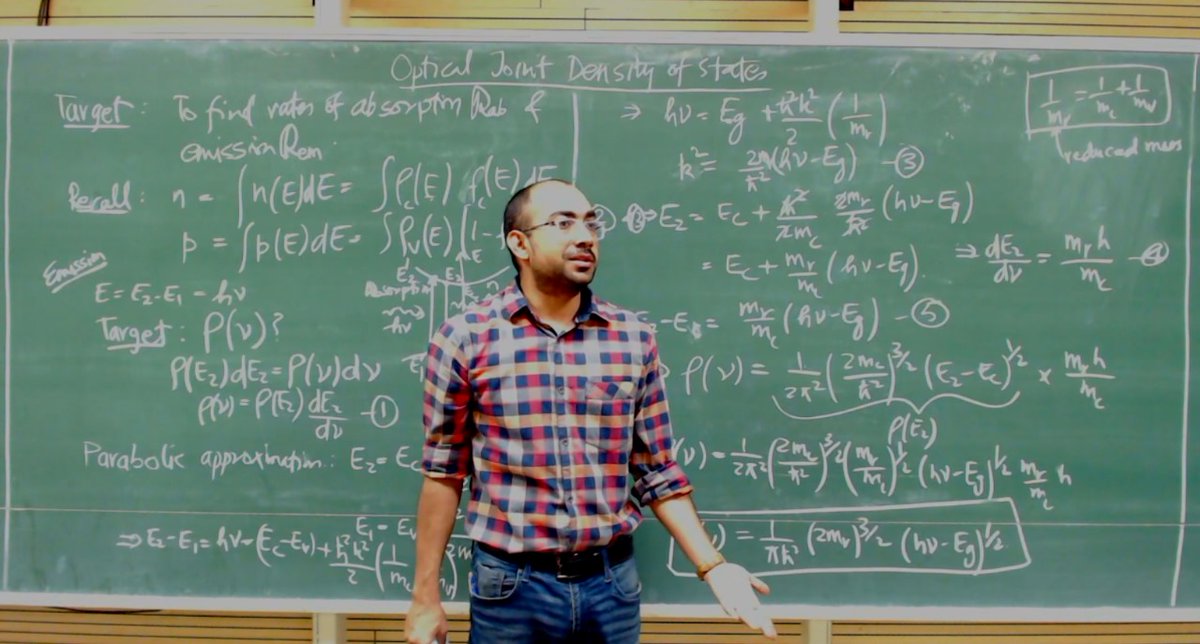
Today's tutorial is on 'Mott transition', a celebrated phenomenon in physics, propouneded by Sir Neville Mott a long time ago. There are many versions of Mott transition, and people use the terminology uncritically extensively because scientists like appealing to authorities!
The first word my daughter learned to speak was ‘book’. With wide eyes, she would point at a book and say ‘boo’ in a voice full of glee. We began taking her to a nearby Crossword bookshop (in Aundh, Pune) when she could barely walk. Our trips soon became a cherished daddy-daughter tradition, where we would visit once every month and buy three books for her. She chose two and I chose one.
A friendly employee once told me, his face beaming with pride, that this was the biggest Crossword in India! Four floors full of books felt like a heaven. But then they converted one floor into a kids play area. Another surrendered to a toy shop. Then cafes. Then stationery. Then an event space. The book shelves, once brimming with finely curated collections, became crowded with cheap campus romance and badly written historical fiction. Yet, we continued our tradition. 3 books a month!
Yesterday, we went there to find the doors shut. A man on a ladder was ripping out the Crossword sign. Slowly. Methodically. As he pulled out one letter after another, I felt a physical sensation of pain. My daughter had tears in her eyes. A glowing light somewhere was snuffed out, and the world became slightly darker. And some of my faith in humanity died forever!
A society that does not read is a society that does not know itself. We used to turn pages and paint stories with our imagination. Now we endlessly stab screens till our thumbs hurt, our minds numbed by the dopamine drip of likes and reels. We have become slaves to our devices, consuming whatever they decide for us, our thoughts hijacked by algorithms, our souls starved for meaning.
If you want your children to read, don’t tell them. Show them. Children hate listening to adults, but they love imitating them. Pick up a book yourself, and they will do the same!
P.S.: I verified the claim. The largest store of India’s most beloved chain of bookshops has indeed shut down.