It’s clear @KenyaAirways was WARNED by @KalpaKenya (Kenya Airline Pilots Association) to STOP forcing CREW under quarantine to fly to Europe and The United States. Such reckless disregard may have cost Captain Daudi Kibati his life @KitaviM@ahmednasirlaw@DonaldBKipkorir
The effective way to address the growth of goonism, whether by members of @NPSOfficial_KE or by irregular groups, is to pursue accountability for the perpetrators and particularly their sponsors, accessories and principals, with bulldog tenacity, until they are held to account. Regardless of how high or to who the chain of accountability goes.
This @LawSocietyofKe will undertake henceforth, in coordination with human rights defenders (HRDs) & civil society organisations. It is time we said ENOUGH! to goonism phenomenon and meant it.
@thekhrc@AmnestyKenya@twavinya@HakiKNCHR
#TimeIsRIPE
Every Kenyan should now take @dkmaraga candidacy seriously. He has true courage and generosity of spirit. It couldn't have been easy to be a Chief Justice picked up by police.
#Ukombozi#UkatibaMovement
Let me explain to the public
1. On 18.5.26 the 3 Judge Bench issues Conservatory Orders✅
2. On 4.6.26 the AG files a Rule 5(2)(b) at the CoA against the orders. ✅
3. The Highlighting of Submissions on main Petition is set for 29.6.26 by the 3 Judge Bench at the HC✅
4.Immediately the HC gave the date, the CoA serves a Notice of Hearing of the Rule 5(2)(b) application on the same 29.6.26✅
5. On the Mn. of 9.6.26, the HC was asked to slot the Highlighting of 29.6.26 at 2:30pm, to avoid the clash since the CoA is in the morning.✅
6. The Court of Appeal then shortly shares another Notice indicating the Hearing is 18.6.26 & not 29.6.26✅
@Kenyajudiciary@jsckenya
Why is the Court of Appeal an Executive Court that is being orders ? How can a Judiciary expected of Stable Independence behave this way post 2010?
A KSh 4.8 trillion budget in the context of a widening deficit and rising cost of living must be anchored on one question. How does it ease pressure on households while building long-term economic resilience?
First, we appreciate that education has been provided a big share but the funding must resolve the basics. Clear capitation arrears to stabilise schools, move decisively from intern teachers to adequately paid permanent hires, increase teacher numbers to match enrolment and reduce classroom pressure. Sustainable financing of universities must also be prioritised to protect access and quality.
Second, healthcare investment should focus on access and protection. Strengthen primary healthcare as the first point of care, equip and staff referral hospitals and expand financial risk protection so that no household is pushed into poverty by illness. Universal Health Coverage (UHC) must be felt at the facility level not just stated in policy.
Third, social protection should be responsive to economic realities. They should index cash transfers for the elderly, persons with disabilities and vulnerable children to inflation and ensure predictable and timely disbursement so that support retains its real value.
Fourth, prioritise sectors that create jobs. We should scale up investment in agriculture value chains, Micro, Small and Medium Enterprises (MSME) and youth enterprise programmes. This requires affordable credit and targeted support that enables small businesses to grow and absorb labour. Employment creation must be central to our fiscal objectives and not a residual outcome.
Finally, fiscal choices must reflect discipline and clarity of purpose. Reduce non-essential expenditure, limit reliance on opaque borrowing and align every allocation to measurable outcomes in service delivery and economic opportunity.
The people’s budget has its flaws but it forces us to confront a basic truth. Kenyans are asking for credible and costed programmes that prioritise classrooms, clinics and jobs over bureaucracy, luxury projects and opaque borrowing. Our duty is to insist that every shilling in this Budget reflects a genuine commitment to equitable allocation of public resources and constitutionalism over politics.
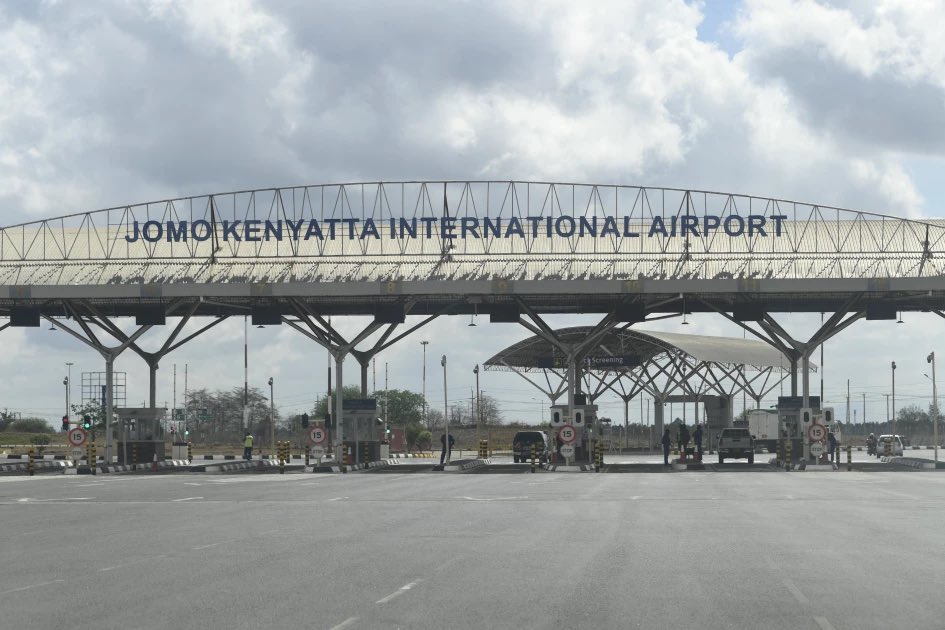
The reported award of a Ksh. 375 Billion contract to China Communications Construction Company for the expansion and modernization of Jomo Kenyatta International Airport is a massive infrastructure undertaking that must be subjected to the highest standards of transparency and value for money. Modernizing our critical aviation hub is essential for economic growth, but the proposed funding model of relying heavily on commercial loans backed by the Air Passenger Service Levy risks placing an unfair burden on Kenyan travelers and airlines. This levy must not become a hidden financial tool that inflates the cost of flying without delivering clear benefits to ordinary citizens.
The Law Society of Kenya calls for full public disclosure of the contract terms and procurement process to ensure absolute compliance with the Constitution and public procurement laws. We demand rigorous oversight to guarantee local content participation for Kenyan firms, alongside independent verification that this massive project delivers genuine value given the country’s debt sustainability concerns. Large scale infrastructure projects must serve the public interest and uphold the public finance principles under Article 201 of the Constitution. The @LawSocietyofKe will monitor this development closely and stands ready to take swift legal action on any constitutional violations that arise.
The FIST Agenda represents a decisive break from debt-led development and a transition toward citizen-led growth. At its core is the belief that Kenya's prosperity will not be built through endless borrowing but by empowering ordinary citizens to produce, invest, and consume. By challenging the legitimacy of debts linked to corruption, opacity, and projects that delivered little public value, the agenda seeks to reclaim up to KSh 1.6 trillion currently absorbed by debt servicing. It proposes replacing the punitive 16% VAT regime with a 5% Sales Tax, allowing households and businesses to retain more of their income, stimulating demand and accelerating economic activity.
The reclaimed resources would be directed toward fully funding healthcare and education as constitutional rights rather than commercial services, ensuring that no Kenyan is denied treatment or learning opportunities because of cost. At the same time, ending excessive domestic borrowing would free banks to lend to farmers, traders, manufacturers, and entrepreneurs, unlocking affordable credit and expanding productive investment. The result is a new social contract built on economic justice, productive enterprise, and the conviction that public resources should serve citizens before creditors.
You cannot tax hungry citizens into prosperity.
1. Audit the debt.
2. Cut government excess.
3. Start austerity at State House.
4. Show Kenyans where their money went.
Until then, Budget 2026/27 is noise wrapped in paperwork.
Kenya needs leaders who respect the Constitution, value accountability, and understand that public office is a trust, not a privilege.
A Presidency led by David Maraga and Edwin Sifuna would at least put integrity, transparency, and the rule of law back at the center of government.
The ballot will remember.
The KES 1.1 Billion that is self imposed can also be serviced by killing the KES stollen daily which still translates to KES 1.1 Billion
#RejectBudget2026 #DebtAuditNow #MaragaSifuna2027
They sold public assets.
They monetized government services.
They raised taxes.
They introduced new levies.
Now they want to borrow another Sh1.1 trillion. At what point do we admit that this is no longer economic management but a conveyor belt of debt?
Every year the government comes back with the same script: borrow more, tax more, spend more, and explain less.
If all this borrowing was delivering results, Kenya would be an industrial giant by now. Instead, citizens are poorer, businesses are struggling, and debt repayments are consuming resources that should be funding development.
The tragedy is not the borrowing itself. The tragedy is borrowing colossal sums while the promised transformation remains largely invisible to the ordinary Kenyan.
It increasingly feels as though the entire country is being mortgaged so that a privileged political class can feast today while future generations inherit the bill.
MISSING PERSON | Please RT
Help find Esther Wairimu Keige, last seen around Juja Town, Gachororo. Black dress, black shoes. She is vulnerable and needs urgent help.
📞 0719 483 323 | 0722 809 878 | 0722 791 139 | 0700 012 803
Or contact the nearest police station. #MissingPerson #Juja #Kenya
As Treasury CS John Mbadi presents a massive KSh 4.8 Trillion budget for the 2026/27 financial year, the Law Society of Kenya stands as a vigilant constitutional watchdog over the Finance Bill and the Appropriation Bill. This election-year budget carries a steep KSh 1.11 Trillion deficit, which is severely disconnected from the crushing cost-of-living realities ordinary Kenyans face. Sourcing nearly 90% of this deficit financing, totaling KSh 997.8 Billion, from domestic borrowing will choke local businesses, starve the private sector of credit, and violate the public finance principles under Article 201 of the Constitution. While we welcome the prioritization of health and education, government spending must be transparent, impactful, and free from administrative wastage.
On revenue generation, the LSK questions the constitutional validity of the Finance Bill 2026’s introduction of a "securitisation" framework. Pledging future public revenues, such as the Housing, Road Maintenance, and Railway Development levies, as collateral to bypass the Consolidated Fund creates a dangerous hidden debt mechanism that threatens to bankrupt future state agencies. The LSK will not sit idly by as our national liabilities are understated. We will analyze these proposals in meticulous detail, aggressively engage in public consultation phases, and take swift legal action against any provisions that violate constitutional standards on fairness, equity, or mandatory public participation. The @LawSocietyofKe remains firmly on the frontlines to shield Kenyans from predatory fiscal engineering.