Updated as of 9:30 P.M., August 18, 2026
- 𝐂𝐨𝐮𝐫𝐭 𝐨𝐟 𝐀𝐩𝐩𝐞𝐚𝐥𝐬 - 𝐌𝐚𝐧𝐢𝐥𝐚 𝐚𝐧𝐝 𝐁𝐚𝐠𝐮𝐢𝐨 - inclement weather
- 𝐂𝐨𝐮𝐫𝐭 𝐨𝐟 𝐓𝐚𝐱 𝐀𝐩𝐩𝐞𝐚𝐥𝐬 - Quezon City day
- 𝐀𝐥𝐥 𝐭𝐡𝐞 𝐟𝐢𝐫𝐬𝐭- 𝐚𝐧𝐝 𝐬𝐞𝐜𝐨𝐧𝐝-𝐥𝐞𝐯𝐞𝐥 𝐜𝐨𝐮𝐫𝐭𝐬 𝐢𝐧 𝐭𝐡𝐞 𝐍𝐚𝐭𝐢𝐨𝐧𝐚𝐥 𝐂𝐚𝐩𝐢𝐭𝐚𝐥 𝐉𝐮𝐝𝐢𝐜𝐢𝐚𝐥 𝐑𝐞𝐠𝐢𝐨𝐧, 𝐚𝐧𝐝 𝐢𝐧 𝐭𝐡𝐞 𝐏𝐫𝐨𝐯𝐢𝐧𝐜𝐞𝐬 𝐨𝐟 𝐀𝐛𝐫𝐚, 𝐁𝐞𝐧𝐠𝐮𝐞𝐭, 𝐈𝐥𝐨𝐜𝐨𝐬 𝐒𝐮𝐫, 𝐋𝐚 𝐔𝐧𝐢𝐨𝐧, 𝐏𝐚𝐧𝐠𝐚𝐬𝐢𝐧𝐚𝐧, 𝐁𝐚𝐭𝐚𝐚𝐧, 𝐁𝐮𝐥𝐚𝐜𝐚𝐧, 𝐍𝐮𝐞𝐯𝐚 𝐄𝐜𝐢𝐣𝐚, 𝐏𝐚𝐦𝐩𝐚𝐧𝐠𝐚, 𝐓𝐚𝐫𝐥𝐚𝐜, 𝐙𝐚𝐦𝐛𝐚𝐥𝐞𝐬, 𝐁𝐚𝐭𝐚𝐧𝐠𝐚𝐬, 𝐂𝐚𝐯𝐢𝐭𝐞, 𝐋𝐚𝐠𝐮𝐧𝐚, 𝐑𝐢𝐳𝐚𝐥, 𝐎𝐜𝐜𝐢𝐝𝐞𝐧𝐭𝐚𝐥 𝐌𝐢𝐧𝐝𝐨𝐫𝐨 𝐚𝐧𝐝 𝐎𝐫𝐢𝐞𝐧𝐭𝐚𝐥 𝐌𝐢𝐧𝐝𝐨𝐫𝐨 - inclement weather
For 𝐭𝐫𝐢𝐚𝐥 𝐜𝐨𝐮𝐫𝐭𝐬, please be guided by the following:
1. The 𝐟𝐢𝐥𝐢𝐧𝐠 𝐨𝐟 𝐢𝐧𝐢𝐭𝐢𝐚𝐭𝐨𝐫𝐲 𝐚𝐧𝐝 𝐧𝐨𝐧-𝐢𝐧𝐢𝐭𝐢𝐚𝐭𝐨𝐫𝐲 𝐩𝐥𝐞𝐚𝐝𝐢𝐧𝐠𝐬 𝐢𝐧 𝐜𝐫𝐢𝐦𝐢𝐧𝐚𝐥 𝐜𝐚𝐬𝐞𝐬 is 𝘵𝘦𝘮𝘱𝘰𝘳𝘢𝘳𝘪𝘭𝘺 𝘴𝘶𝘴𝘱𝘦𝘯𝘥𝘦𝘥. Consequently, the respective deadlines will be moved to the next working day.
2. The 𝐟𝐢𝐥𝐢𝐧𝐠 𝐨𝐟 𝐢𝐧𝐢𝐭𝐢𝐚𝐭𝐨𝐫𝐲 𝐩𝐥𝐞𝐚𝐝𝐢𝐧𝐠𝐬 𝐩𝐞𝐫𝐬𝐨𝐧𝐚𝐥𝐥𝐲, 𝐭𝐡𝐫𝐨𝐮𝐠𝐡 𝐫𝐞𝐠𝐢𝐬𝐭𝐞𝐫𝐞𝐝 𝐦𝐚𝐢𝐥 𝐨𝐫 𝐛𝐲 𝐚𝐜𝐜𝐫𝐞𝐝𝐢𝐭𝐞𝐝 𝐜𝐨𝐮𝐫𝐢𝐞𝐫 𝐢𝐧 𝐜𝐢𝐯𝐢𝐥 𝐜𝐚𝐬𝐞𝐬 is likewise 𝘵𝘦𝘮𝘱𝘰𝘳𝘢𝘳𝘪𝘭𝘺 𝘴𝘶𝘴𝘱𝘦𝘯𝘥𝘦𝘥, and the respective deadlines are moved to the next working day.
3. However, the foregoing suspension of the filing of pleadings 𝘴𝘩𝘢𝘭𝘭 𝘯𝘰𝘵 𝘢𝘱𝘱𝘭𝘺 in instances where the concerned court maintains a skeleton workforce tasked to receive pleadings and handle urgent concerns, among others.
4. Notwithstanding, under Rule 13-A (Interim Rule on the Electronic Filing and Service of Pleadings, Judgments, and other Papers in Civil Case) of the Rules of Court, 𝐧𝐨𝐧-𝐢𝐧𝐢𝐭𝐢𝐚𝐭𝐨𝐫𝐲 𝐩𝐥𝐞𝐚𝐝𝐢𝐧𝐠𝐬 𝐢𝐧 𝐜𝐢𝐯𝐢𝐥 𝐜𝐚𝐬𝐞𝐬 𝐬𝐡𝐚𝐥𝐥 𝐬𝐭𝐢𝐥𝐥 𝐛𝐞 𝐭𝐫𝐚𝐧𝐬𝐦𝐢𝐭𝐭𝐞𝐝 𝐭𝐡𝐫𝐨𝐮𝐠𝐡 𝐝𝐢𝐠𝐢𝐭𝐚𝐥 𝐟𝐢𝐥𝐞 𝐟𝐨𝐫𝐦𝐚𝐭 𝐭𝐡𝐫𝐨𝐮𝐠𝐡 𝐞𝐦𝐚𝐢𝐥.
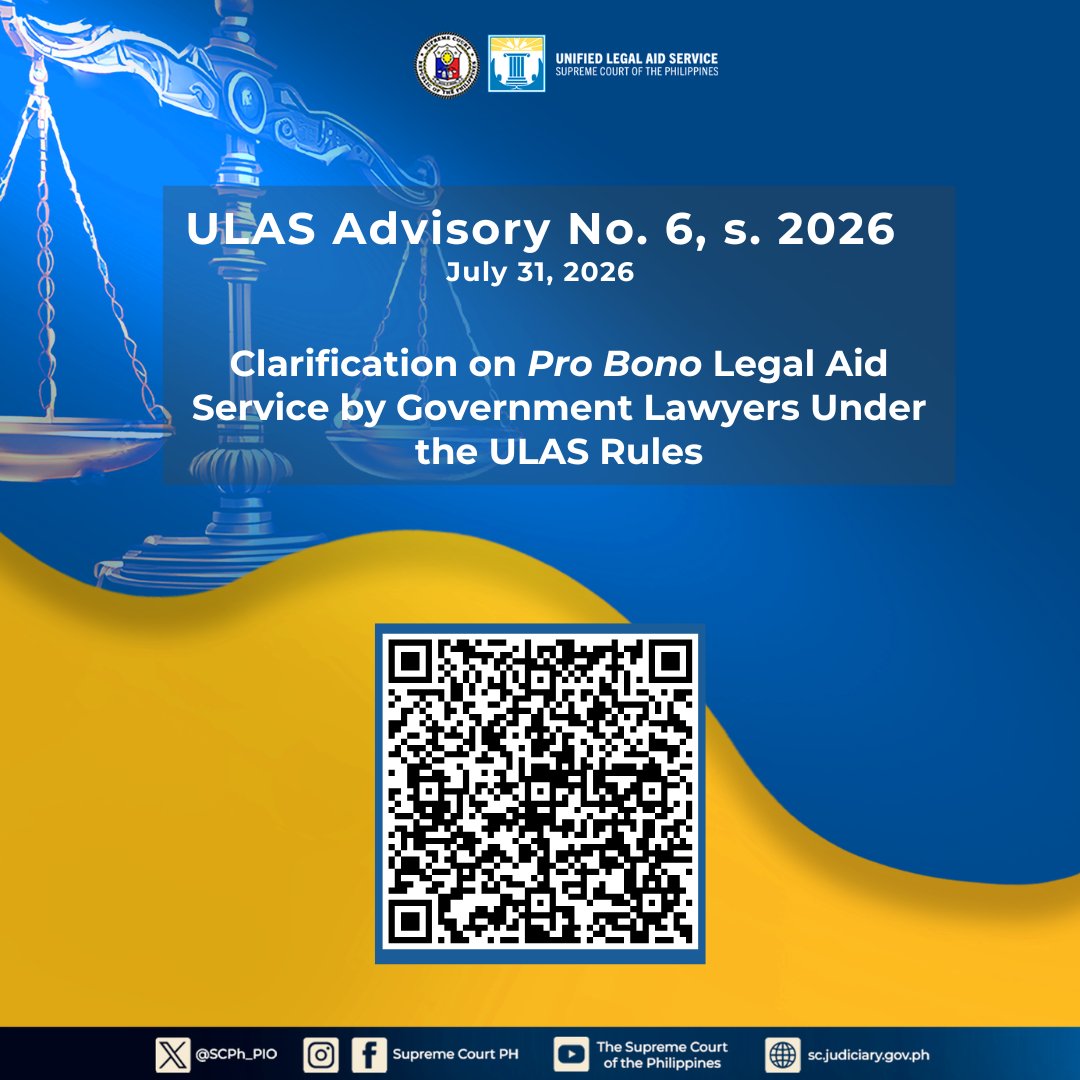
The Unified Legal Aid Service (ULAS) Office has issued ULAS Advisory No. 6, s. 2026 - Clarification on Pro Bono Legal Aid Service by Government Lawyers under the ULAS Rules.
The Advisory clarifies that pro bono legal aid services rendered by lawyers in the government during official time may be credited under the ULAS Rules, provided that such services are authorized by the concerned government agency and do not conflict with the agency's operations or the exigencies of the public service.Government lawyers remain responsible for ensuring compliance with Section 13 of the ULAS Rules, as well as all applicable laws, rules, regulations, and internal office policies.
Read the full text of ULAS Advisory No. 6, s. 2026 here: https://t.co/USVnkwZiVl
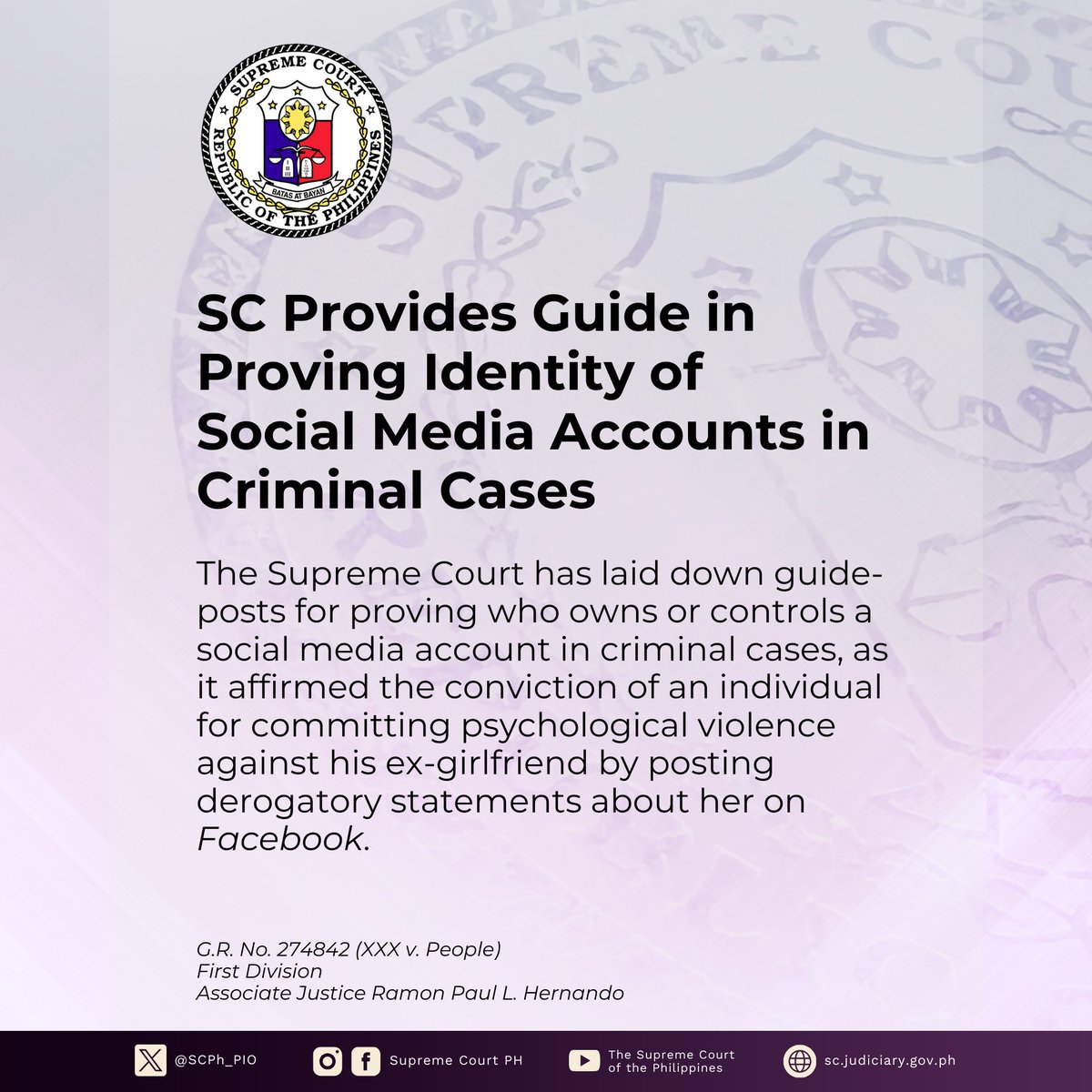
The #SupremeCourtPH has laid down guideposts for proving who owns or controls a social media account in criminal cases.
In a Decision written by Associate Justice Ramon Paul L. Hernando, the SC’s First Division affirmed the conviction of an individual (XXX) for committing psychological violence under Section 5 (i) of the 𝘈𝘯𝘵𝘪-𝘝𝘪𝘰𝘭𝘦𝘯𝘤𝘦 𝘈𝘨𝘢𝘪𝘯𝘴𝘵 𝘞𝘰𝘮𝘦𝘯 𝘢𝘯𝘥 𝘛𝘩𝘦𝘪𝘳 𝘊𝘩𝘪𝘭𝘥𝘳𝘦𝘯 (𝘈𝘯𝘵𝘪-𝘝𝘈𝘞𝘊) 𝘈𝘤𝘵 against his ex-girlfriend (AAA) by posting derogatory statements about her on 𝘍𝘢𝘤𝘦𝘣𝘰𝘰𝘬.
The SC sentenced XXX to up to eight years in prison, imposed a PHP 100,000 fine, and ordered XXX to undergo psychological counseling or psychiatric treatment.
The SC stressed that in criminal cases, the prosecution must prove not only the elements of the crime but also the identity of the offender.
It explained that for crimes committed through social media, the basic features of the platform such as 𝘍𝘢𝘤𝘦𝘣𝘰𝘰𝘬, must be considered.
Noting that 𝘍𝘢𝘤𝘦𝘣𝘰𝘰𝘬 is widely used in the Philippines, the SC held that a 𝘍𝘢𝘤𝘦𝘣𝘰𝘰𝘬 account can easily be created by anyone claiming to be at least 13 years old with an email address or mobile number.
Once an account is created, the user can add friends, exchange private messages, and post statements, photos, or videos visible to others depending on the user’s privacy settings. Fake or dummy accounts can easily spread, enabling disinformation, identity theft, or crimes.
Given this, the SC ruled that guideposts are necessary to establish who owns or controls a social media account. It said the following must be shown to prove ownership or access:
1. Admission of ownership or authorship;
2. Being seen accessing the account or composing the post;
3. Containing information known only to the offender or a few people;
4. Language consistent with the offender’s characteristics;
5. Records from the internet service provider, telecommunications company, or social media site, and results from device forensic analysis showing geolocation features, and other attributes linking the account to the offender;
6. Acts consistent with previous posts; or
7. Other instances showing ownership, access, or authorship.
Applying these, the SC found that several factors proved XXX wrote the 𝘍𝘢𝘤𝘦𝘣𝘰𝘰𝘬 post. The account name bore his full name, and the profile photo showed him with his child from his current live-in partner.
AAA’s sister had also received messages from the same account for years.
Read the full text of the Press Release at https://t.co/KpQff4twGI.
Read the full text of the Decision at https://t.co/e3ilKgnJhG.
Copying of this content is subject to the SC PIO’s Credit Attribution Policy: https://t.co/F48RF1vtzZ.
WORK SUSPENSION: Work in the Supreme Court, Appellate Courts (except the Court of Appeals in Cagayan de Oro), and first and second level courts in the following areas is suspended on Friday, September 26, 2025, due to inclement weather:
Metro Manila
Aklan
Albay
Antique
Batangas
Bataan
Biliran
Camarines Norte
Camarines Sur
Capiz
Cavite
Catanduanes
Guimaras
Iloilo
Laguna
Leyte
Marinduque
Negros Occidental
Oriental Mindoro
Eastern Samar
Northern Samar
Samar
Masbate
Rizal
Romblon
Sorsogon
Quezon
#SCPhWalangPasok #SupremeCourtPH
Court operations in some areas are suspended on Tuesday, August 26, 2025, due to inclement weather; some courts have adopted a work-from-home arrangement. #SCPhWalangPasok#SupremeCourtPH
Refresh this post for more updates and follow the thread:
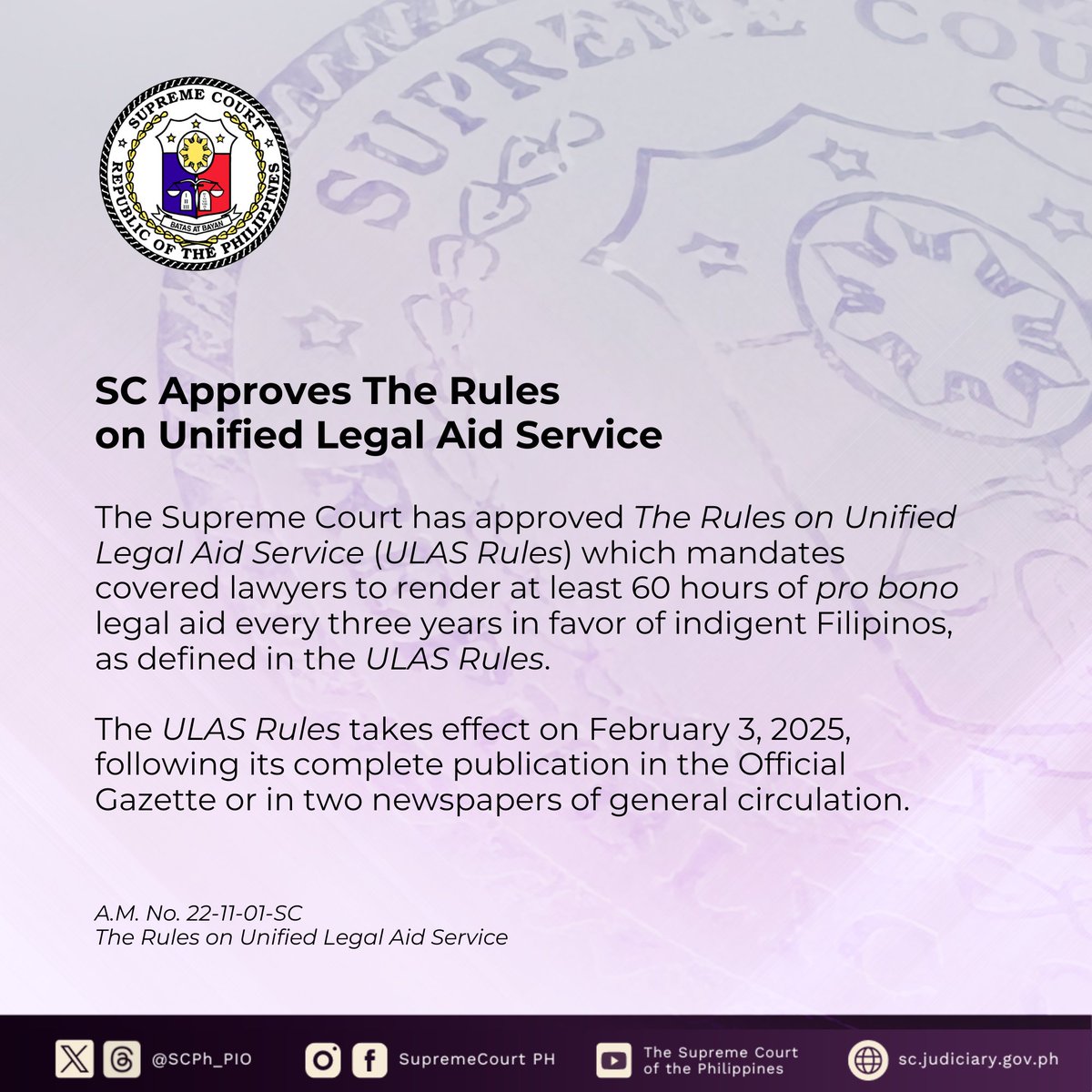
The Supreme Court En Banc has approved The Rules on Unified Legal Aid Service (ULAS Rules) which mandates covered lawyers to render at least 60 hours of pro bono legal aid every three years in favor of indigent Filipinos.
Under the ULAS Rules, any person who has no sufficient means to afford adequate legal services, as assessed by a covered lawyer in accordance with guidelines to be issued by the ULAS Board, may be a qualified beneficiary.
The legal service itself will be free for such qualified beneficiary and the necessary expenses for the rendering of the service will be borne by the Court through the ULAS Fund, to be set up for this purpose. Qualified beneficiaries shall be exempt from payment of docket and other fees.
Pro bono legal aid services can come in many forms, such as representation in court, legal counselling, drafting legal documents, developmental legal assistance, and participation in accredited legal outreach programs.
The ULAS Rules is a product of extensive deliberations and studies made over the course of more than a year by the ULAS Rules Technical Working Group (TWG). In drafting the same, the TWG solicited the invaluable inputs of the Court En Banc, as well as the ULAS Rules' stakeholders—its covered lawyers.
Comments and feedback were gathered in the four-leg ULAS Regional Consultations held last April 12 to May 31, 2024 where the TWG, the Court En Banc, and various Court employees visited major cities in the country to consult lawyers in the local regions.
An online feedback form was likewise published throughout the same period so that the public, including the potential beneficiaries of the ULAS Rules, can likewise be heard. All these channels were opened to ensure that the final version of the ULAS Rules is responsive and accessible.
The ULAS Rules takes effect on February 3, 2025, following its complete publication in the Official Gazette or in two newspapers of general circulation.
Read the full text of the press release: https://t.co/flR7tIkLhL
Read the full text of A.M. No. 22-11-01-SC: https://t.co/AXhLu0GozK
Read more about ULAS Rules on the Supreme Court website: https://t.co/KoWfanhgIQ
#SupremeCourtPH
Copying of this content is subject to the SC PIO’s Credit Attribution Policy: https://t.co/F48RF1vtzZ
The Supreme Court has officially released the Implementing Rules and Regulations of Republic Act No. 11691 or the Judiciary Marshals Act (Judiciary Marshals IRR) to ensure the full implementation of the law and the operationalization of the Office of the Judiciary Marshals.
Enacted in 2022, the Judiciary Marshals Act addresses the alarming increase in violent crimes targeting members of the Judiciary, many of which remain unresolved. The law aims to safeguard judges, court personnel, and court properties while maintaining the integrity of court proceedings.
Under the Judiciary Marshals Act, the Office of the Judiciary Marshals is tasked with ensuring the security, safety, and protection of Judiciary members, officials, personnel, and assets. It operates under the direct control and supervision of the Supreme Court and is empowered to investigate threats, conduct lawful arrests and seizures, and assist in the enforcement of writs and court processes.
The operationalization of the Office of the Judiciary Marshals is a key component of the Strategic Plan for Judicial Innovations 2022-2027, specifically under the target outcome of Efficiency. The SPJI acknowledges that the safety and security of the judiciary are vital to maintaining judicial independence and effective court operations.
Judiciary Marshals will be deployed to secure court premises, including halls of justice, courthouses, and official judiciary events such as conferences, seminars, and meetings. They are also tasked with providing protection to witnesses, including the secure transportation of accused individuals or witnesses when ordered by the court.
Additionally, the Office of the Judiciary Marshals is empowered to investigate crimes committed against members of the Judiciary, as well as allegations of graft and corruption within the judicial system. To perform these functions, marshals can issue subpoenas, apply for search warrants, administer oaths, and access public records from other government agencies, all while adhering to the provisions of the Data Privacy Act.
The Judiciary Marshals IRR shall take effect 15 days following its publication in the Official Gazette, or in two newspapers of general circulation.
Read the full text of the Press Release: https://t.co/Zg6LKsjHd0
Read the full text of A.M. No. 24-04-09-SC: https://t.co/EcU5a5tS8z
#SupremeCourtPH
Copying of this content is subject to the SC PIO’s Credit Attribution Policy: https://t.co/F48RF1vtzZ
DISTANSYA AMIGO!
Ang tamang distansya mula sa ibang sasakyan ay hindi lamang nakatutulong upang maiwasan ang banggaan kundi nagbibigay din ito ng sapat na oras upang tumugon kung may hindi inaasahang pangyayari.
Ang Metrobase (Operations Monitoring and Control Group) ay nagmo-monitor ng lagay ng trapiko maging ng mga sakuna sa mga pangunahing lansangan sa Metro Manila
Para sa anumang road emergency, maaaring tumawag sa Metrobase Hotline 136 para sa agarang responde.
#mmda
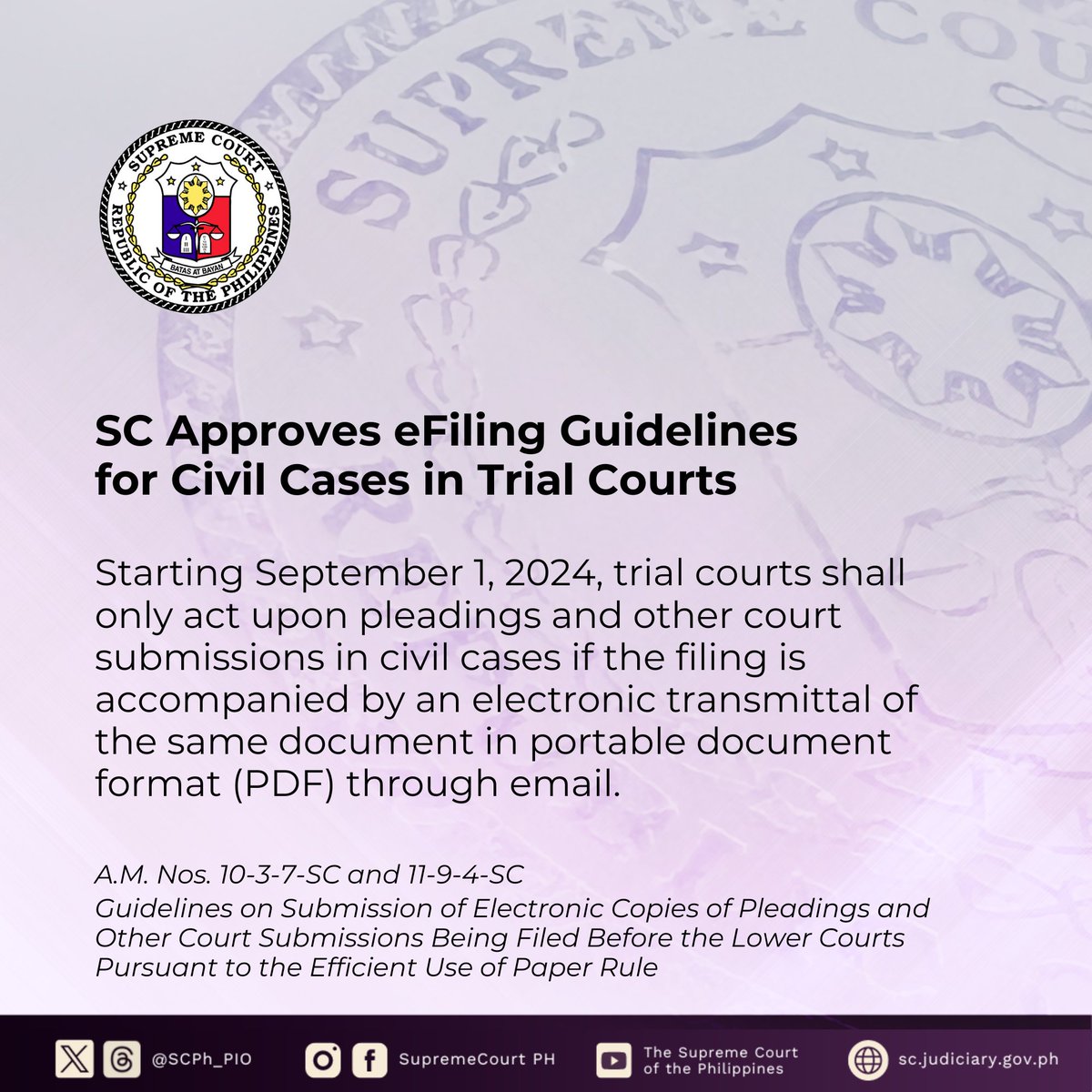
Starting September 1, 2024, trial courts shall only act upon pleadings and other court submissions in civil cases if the filing is accompanied by an electronic transmittal of the same document in portable document format (PDF) through email.
Electronic submissions must be completed within 24 hours from the primary manner of service, which includes personal filing, registered mail, or accredited courier.
A court may waive the electronic transmittal requirement if the annexes, exhibits, and other accompanying documents cannot readily be converted to PDF or if these consist of sealed and confidential documents.
Read more at: https://t.co/HpS7sxE1a3
#SupremeCourtPH
#SPJI
Are you filing a civil case in a trial court?
The Philippine Judiciary is now going digital.
From September 1 to December 1 this year, first-level and second-level courts all over the country will slowly transition to electronic filing for civil cases.
By September 1, all civil filings must include electronic versions of hard copies, or else the courts will not act on them.
During the three-month transition period, each judicial region will be certified before they can start implementing a fully-electronic mode of filing.
The goal is that by December 1, electronic filing will be considered the only mode of filing, except for initiatory pleadings, which would still require hard copies.
To know more, visit the eFiling microsite at: https://t.co/eeVdx5H88r
#SupremeCourtPH
#SPJI
WORK SUSPENSION: Work is suspended in all courts in the National Capital Judicial Region tomorrow, July 25, 2024, due to inclement weather. #SCPhWalangPasok#SupremeCourtPH
WORK SUSPENSION: Work is suspended in all courts in the National Capital Judicial Region today, July 24, 2024, due to inclement weather. #SCPhWalangPasok#SupremeCourtPH
WATCH | At 08:38 AM, the Philippine supply vessel Unaizah May 4 was subjected to direct water cannoning by two CCG vessels near Ayungin Shoal. The UM4 supply boat sustained heavy damages at around 08:52 due to the continued blasting of water cannons from the CCG vessels.
HEADS UP, COMMUTERS! 🪙
Fares for modern and traditional jeepneys are set to increase by P1 nationwide as the Land Transportation Franchising and Regulatory Board approves a petition for provisional fare increase. https://t.co/L3AL7eguu5
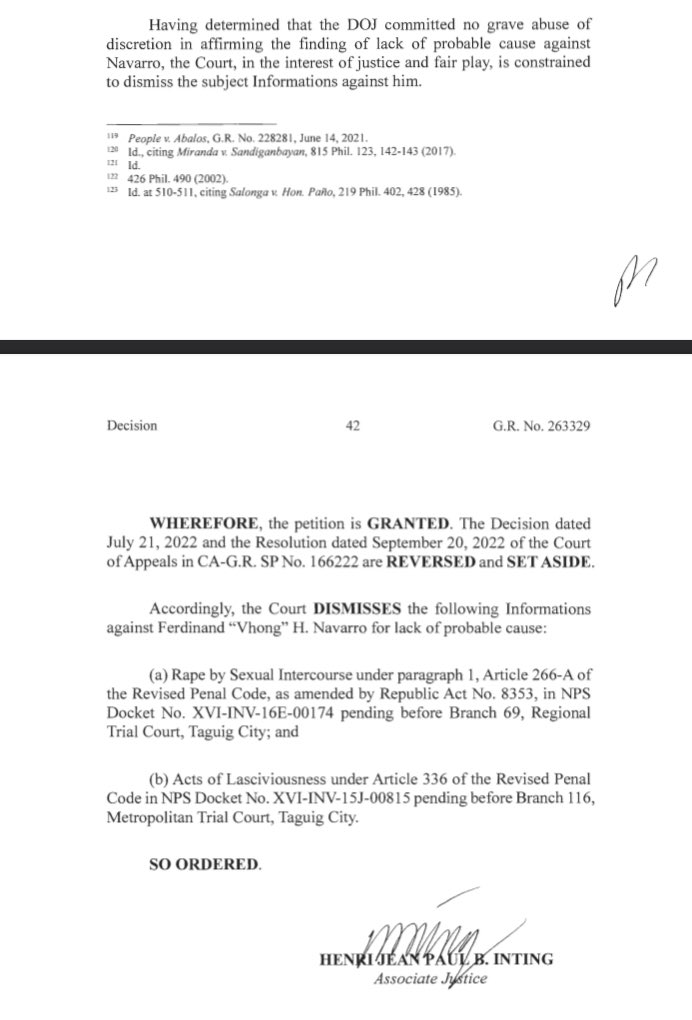
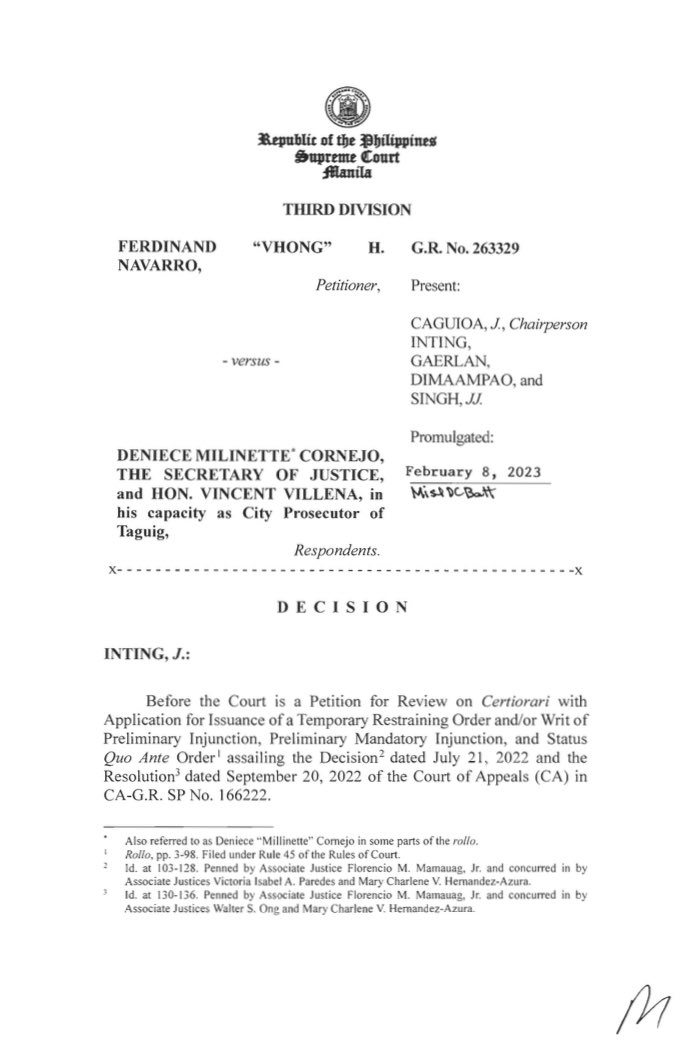
BREAKING: Supreme Court 3rd Div orders dismissal of rape by sexual intercourse and acts of lasciviousness cases vs comedian-host Vhong Navarro after finding that the DOJ did not commit grave abuse of discretion in junking raps filed by Deniece Cornejo.
JUST IN: Taguig court grants comedian-host Vhong Navarro’s bail petition, allowing him to post bail in the rape case filed by model Deniece Cornejo.
Court says not convinced there exists presumption leading to inference of guilt on the part of Navarro.