New feature release: a built-in AI-powered carbon footprint calculator.
Describe your lifestyle or business operations in plain language, get a science-based estimate in seconds, and offset through the same workflow.
Learn more:
https://t.co/X6Fd3RUHX6
The integration leverages Klima’s Retirement Aggregator smart contract to automate purchase, routing, and retirement processes. This unlocks powerful programmatic features—including fractional retirements, condition-based offsets, and easy integration via REST API.
Exciting Announcement: Carbonmark's latest API version is now integrated with @KlimaDAO
We've officially integrated the Klima Protocol as a key supply-side partner, enabling seamless API-based access to over 300,000 tonnes of onchain carbon liquidity on the Base blockchain.
Developed through close collaboration, this integration brings tokenized carbon credits directly into Carbonmark’s platform and API (Version 19). Users and developers can now transact using dynamic pricing, USDC stablecoin settlement, and full traceability.
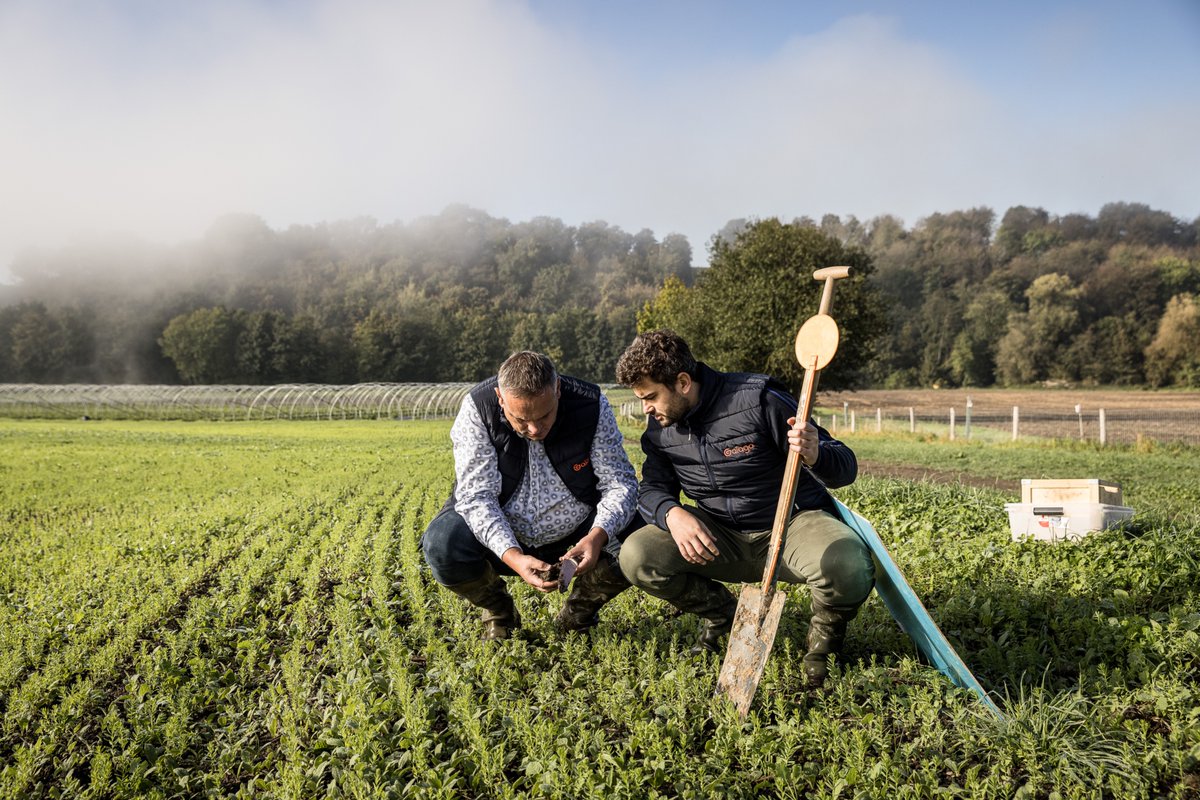
New on Carbonmark: GAIAGO 🌱
A regenerative agriculture project turning soils into measurable carbon sinks.
✔️ Direct soil measurement (not just models)
✔️ ISO 14064-2 aligned
✔️ Farmer-first economics
✔️ Credits issued via Carbonmark Direct
https://t.co/uP26r5ohpd
The internet isn’t weightless.
Data centers, devices, AI — all come with emissions.
So what can we do about it?
Our latest article 👇
https://t.co/whvEhGGQQB
Banning plastic straws won’t fix the carbon footprint of events.
The biggest emissions come from travel and food.
Our new article explores how to actually reduce event emissions — and how to responsibly address what remains.
https://t.co/eeBbMdB2Wn
Tokenized Carbon Credits: A New Asset Class for DeFi 💎
The fact that global carbon finance is entering a multi-trillion-dollar era absolutely melts my brain.
~$100B is where voluntary carbon markets could reach by 2030 and potentially much larger by the mid-2030s as corporate net-zero commitments kick in.
But today, the legacy market is super opaque, slow, and bogged down by high costs.
The alpha? Our space is putting these credits on-chain, turning climate action into a liquid, programmable asset.
Once carbon credits become DeFi assets, they'll get:
– 24/7 liquidity
– AMMs for price discovery
– fractional ownership
– automated retirement
– collateral in lending markets
– derivatives on top
And the Web3 stack for this is already forming 👇
– @ToucanProtocol: the OG bridge that converted legacy registry credits into on-chain tokens and standardized them into massive liquidity pools like BCT.
– @KlimaDAO: accumulating tokenized credits into a massive treasury to back a new algorithmic climate currency.
– @regen_network: built an entire ecological blockchain. instead of tokenizing existing credits they issue new ecocredits directly on-chain with embedded scientific dMRV data.
– @carbonmarkcom: pushing the marketplace and API layer where companies can buy, swap, and retire carbon credits on-chain without touching registry infrastructure themselves.
– @weareflowcarbon: backed by heavy VC bags, they focused on tokenizing high-quality credits into bundles like GNT to capture institutional ESG flows.
These carbon tokens are non-correlated RWAs. They’re tied to environmental markets and regulatory demand rather than crypto cycles.
That makes them potentially interesting collateral for lending markets or as backing assets for climate-aligned stablecoins.
Those projects above look good, but the sector is kinda in an early phase.
So I still think we need more devs cooking to really unlock the huge potential of climate assets onchain.
Events connect people.
But they also generate emissions across travel, venues, catering, materials, and digital infrastructure.
The events industry may account for up to 10% of global GHG emissions.
Our latest article breaks down the main sources.
https://t.co/R2EzddhPkY
Construction is the largest emitting value chain globally (~39% of CO₂)
For credible Net Zero pathways:
Measure → Reduce → Neutralize residuals.
Where do carbon credits fit? We unpack it here 👇
https://t.co/zND2dSLAM7
🌱 From guilt to contribution.
Personal carbon offsetting is evolving — from “canceling out” emissions to supporting real climate solutions.
Why is this shift happening? And how can individuals take part responsibly?
https://t.co/SuJ6zgqiK1
🌊 New on Carbonmark: Sea Cave® True Blue Carbon®
Designed to last 500+ years, these biogenic structures restore kelp forests, enhance fisheries, and deliver verified blue carbon.
Credits are available for instant purchase and retirement:
https://t.co/qIaRG9woQA
What makes a carbon market work in practice—not just on paper?
Chile is strengthening its climate architecture through the Green Tax, domestic offsets, Article 6.2 cooperation, and the voluntary program HuellaChile.
We break it all down here: https://t.co/AJQWqLNuVb
Excited to announce our partnership with the National University of La Plata (UNLP), one of Argentina’s leading public universities, to bring the credits issued under its Carbon Program onchain via Carbonmark Direct: https://t.co/9F1qBdEmQR
Our Building with Blockchain in the Carbon Markets series is now complete!
In Part 3, we explore how Carbonmark bridges blockchain innovation and real-world adoption — while amplifying access to the carbon market for both buyers and sellers.
https://t.co/QqTHz4VEI7
Can blockchain fix carbon markets’ transparency problem? 🌍🔍
Alex Taylor, co-founder of @KlimaDAO & @carbonmarkcom, joins the Shaken Not Burned podcast to talk about the messy reality of voluntary carbon markets.
🎧 Listen here: https://t.co/pbVLzHCeVN
Circular solutions are coming on-chain. ♻️
Xworks has issued its first batch of verified carbon credits via Carbonmark Direct.
dMRV + independent verification + blockchain = real transparency.
https://t.co/0nVqQmu5EM