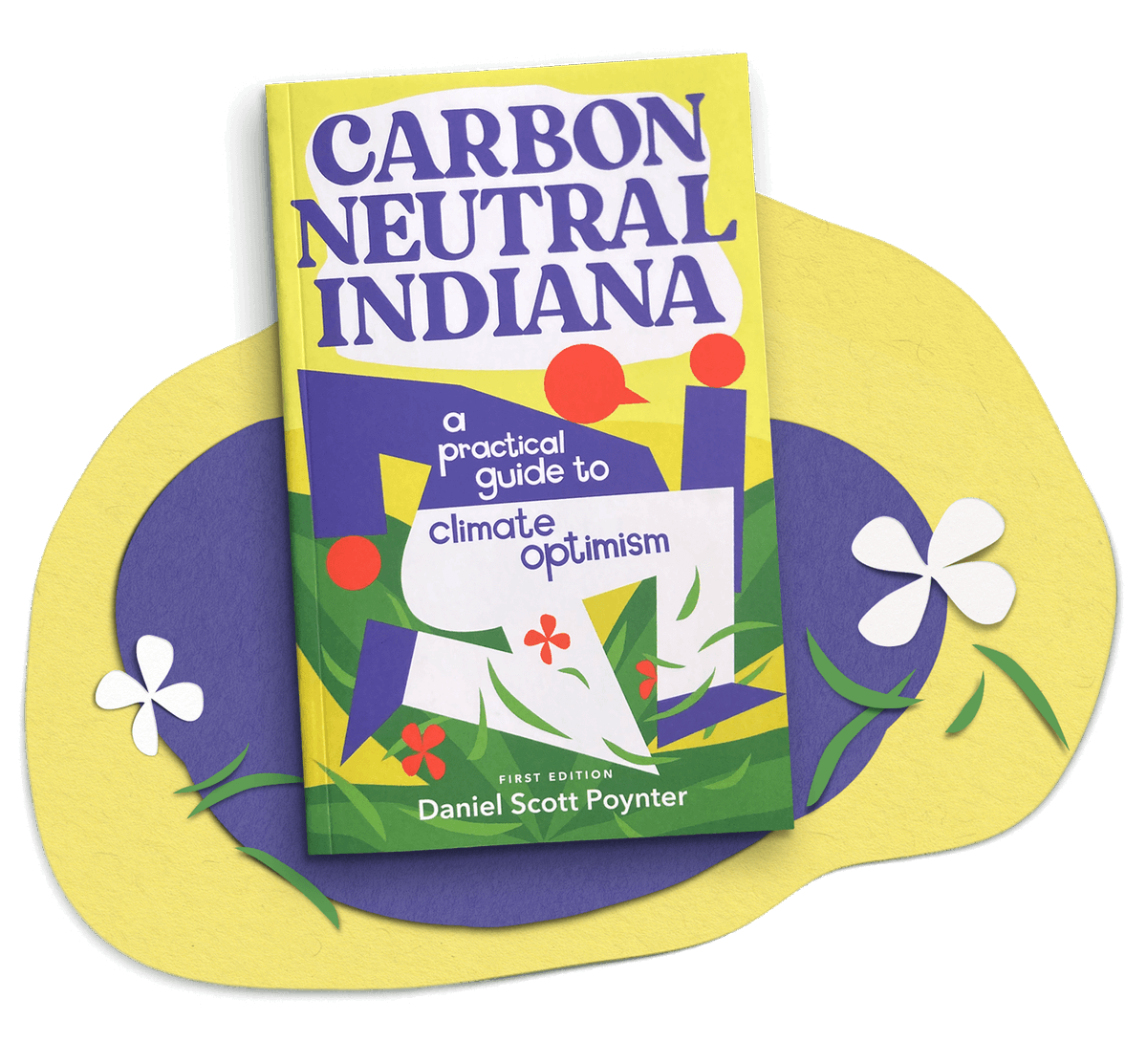
Check out our book! 60 inspiring stories of climate entrepreneurs reducing emissions in Indiana.
Our book has praise from leading liberals AND conservatives in Indiana. :)
https://t.co/DTH5nCh4AU
.@pmarca on the one thing he believes that very few others believe: "The decline and fall of the United States is completely overblown. The 21st century will be another American century."
What does it mean for a climate change nonprofit to be "effective?"
If you measure dollars in, and tons of CO2e reduced, we've been 17X more effective, at 3% the cost, as a recent $5M grant to local university to plant 2,500 trees.
That's over 500X as cost effective.
@matt_barnum I did a ride along with a local police officer recently, and he shared similar concerns. Many leave for the suburbs (better pay, less crime), and applicants are down something like 75%.
In environmental work - a ton of turn over. Institutional knowledge is our biggest challenge.
The Chinese are the competent kind of communists. They spend $7.3B and actually get a train.
The Democrats are the incompetent kind of communists. They spend $100B and it all goes down the drain.
@jjacobs22 It sounds like you're non zero sum, non Malthusian...
Combine that with the fact that you're not a Marxist...
And no wonder you sometimes feel lonely in the climate movement.
@sellieyoung That's the point. The newer generations think being offended is grounds for censorship. That's why many free speech advocates, the ones who used to support ACLU, have moved on to groups like FIRE: https://t.co/66kNUxk9aU
Oxford Offsetting Principals released a 2024 Update. This is one of my favorite documents to learn about carbon offsets, credits from a technology, risk, and strategy from a corporate offsetting perspective. full link in comments.
@sellieyoung It starts with free speech. This needs to be ringing our alarm bells: https://t.co/e4WmCAWfaO
A survey of 55,000 undergraduates found 57% believed people with some view points (like those against abortion) should not be allowed on campus. 57%!
@sellieyoung Philosophy major here.
Philosophy should definitely not go down with the humanities ship. We're the skeptical thinkers that should be questioning the other liberal arts and reviving them to their true calling.
@nickroberts317 Hey Councilor @nickroberts317! At this meeting, Councilman Brown mentioned our non-profit: https://t.co/AvQZb7J97F
Want to make your household carbon neutral? 500+ Hoosiers already are.
(Founder here, I live in Castleton! :) )
@JohnSmillie42 Last night, I heard on NPR that of the $200B historic tobacco settlement, that was supposed to go to smoking cessation programs, only 3% did. o_O
@DavidSacks Tesla is so overwhelmingly dominant in the EV market that any omission of them in the discussion is glaringly intentional. Always the elephant in the room.
@chamath Amazing! Thank you for sharing this. Talk about accelerating the learning curve...
(We're a 501c3 focused on one of the most carbon intensive states in the US and have unlocked the bipartisan riddle on climate: https://t.co/Ljv51PObu0 )
Deep Dive: The Global Energy Transition
In 2020, I made a personal commitment to learn and invest in the energy transition and clean tech / climate change initiatives. I connected with a friend of mine who was a Senior Partner at McKinsey who told me a little secret: when folks like Bill Gates want to learn important new topics, McKinsey helps to educate them by bringing in their Partners to do teach-ins.
Over the next many months, I decided to do the same. They helped teach me a lot, but it also cost me more than $2mm!
So what do you do if you don’t have this kind of money to spend on an ongoing basis? How do we feed our curiosity and continue to learn about the important things that are going on in the world?
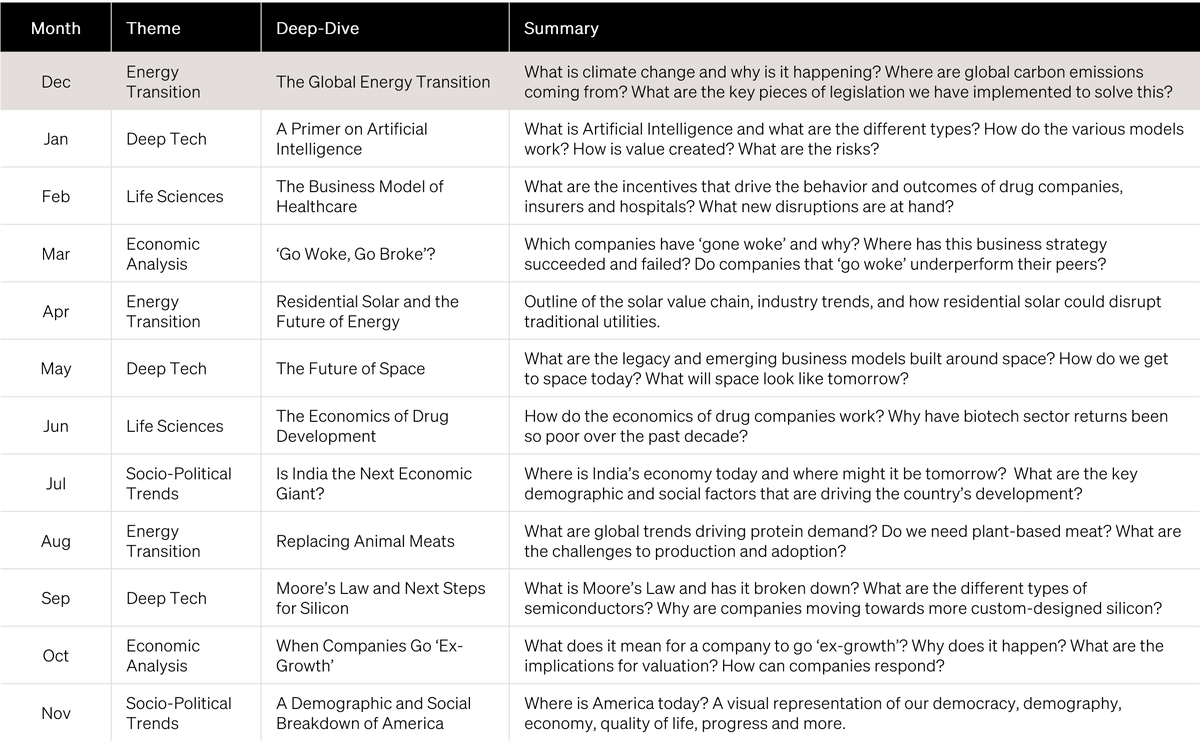
Every month, I will publish a deep dive into a sector that I think is important to understand the world today. These fall into five themes:
1. Deep Tech
2. Energy Transition
3. Healthcare & Life Sciences
4. Economic Analysis
5. Socio-Political Trends
My first deep-dive into the Global Energy Transition is available to you today if you want to learn with me. This is split into two slide decks.
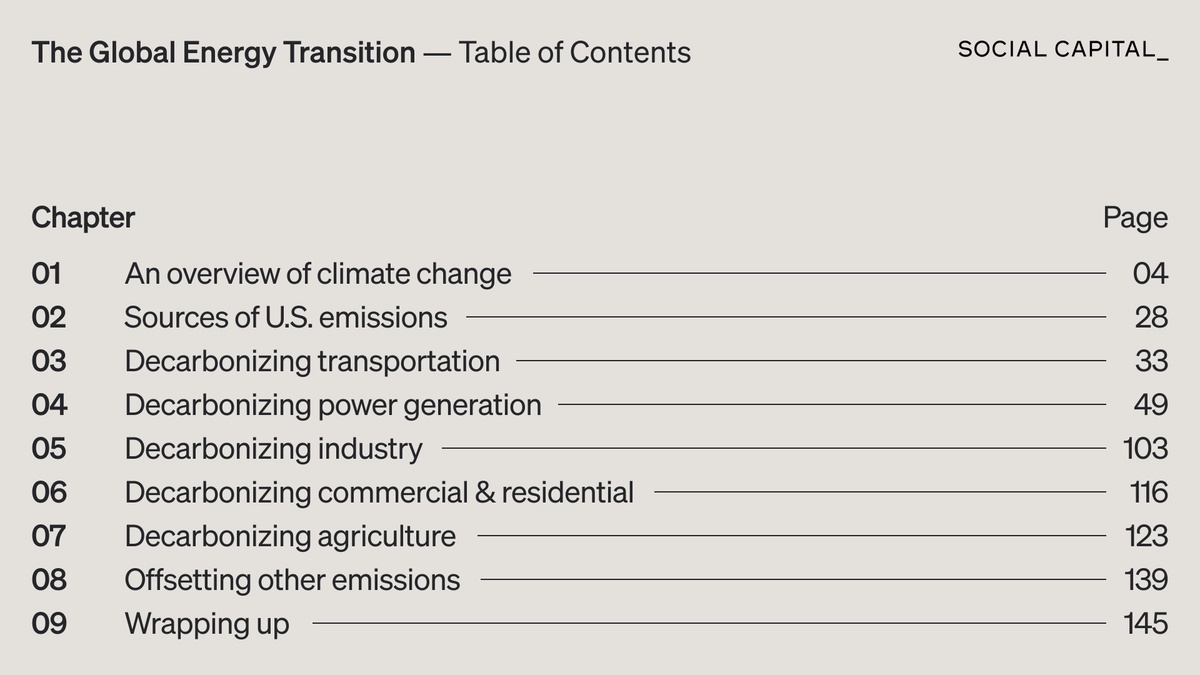
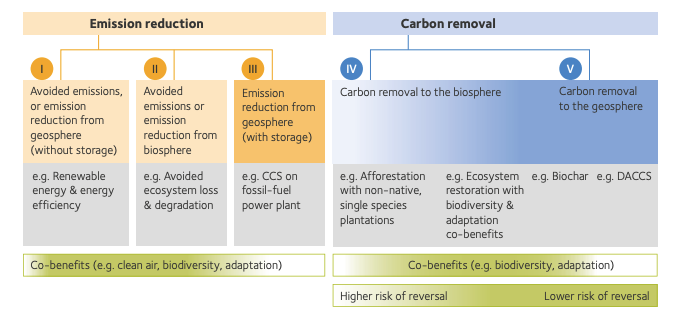
The first is a comprehensive overview of the climate problem, why it exists, where we are today, and potential solutions to fix it.
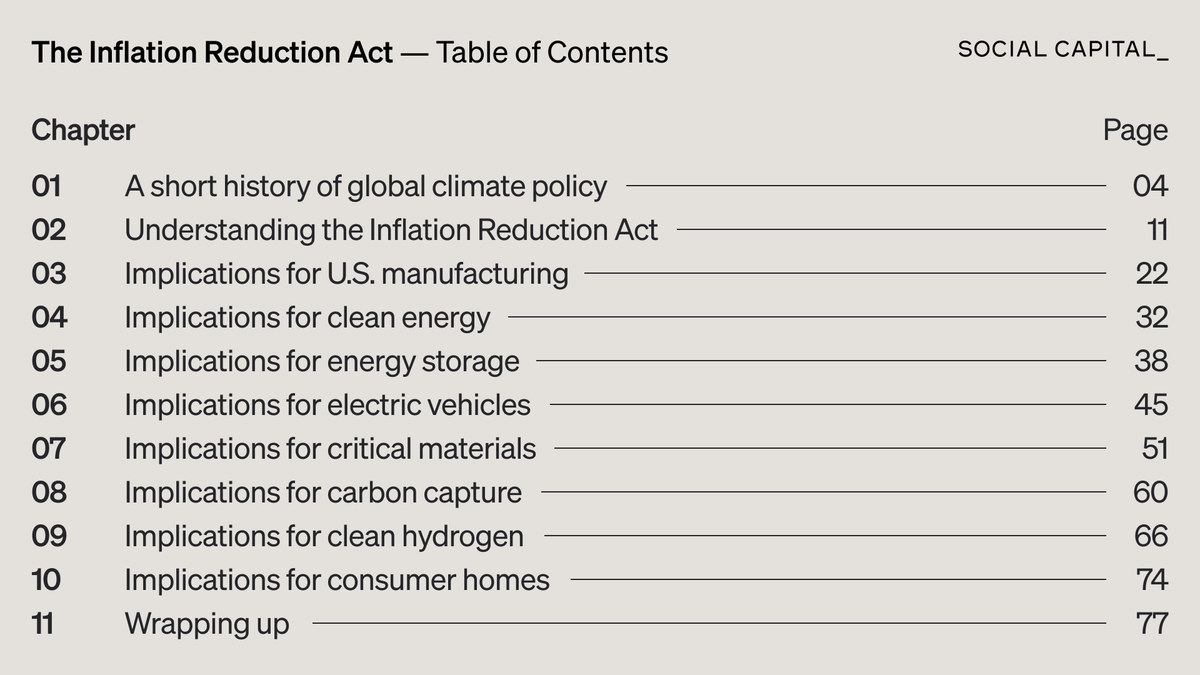
The second is a deep-dive into the Inflation Reduction Act, a key piece of U.S. climate legislation with massive implications for energy transition sectors.
You can read these today on my Substack using the link in my bio. Going forward, future deep-dives will be available to paid subscribers.
If enough people care about this and subscribe, we will invest those revenues to hire more researchers to help me publish more content. We will also look to our subscribers to influence what we research and read out to everyone.
Future Deep Dives:
Disclaimer: The views and opinions expressed above are current as of the date of this document and are subject to change without notice. Materials referenced above will be provided for educational purposes only. None of the above will include investment advice, a recommendation or an offer to sell, or a solicitation of an offer to buy, any securities or investment products.