→ $META decided to sell compute because it is scarce and highly profitable
→ GPU prices will crash and neoclouds will lack demand
You have to pick one or the other
Now, if you think Zuck got into neocloud to sell GPUs for pennies, I have a bridge to sell you
Genuinely impressive work here by the @citrini team. In an market that's been absolutely dominated by AI hardware stocks, they managed to find the few software stocks that have absolutely killed it by being the precise beneficiaries of agentic AI. That's why it's the #1 shop.
U will always get a wrong number if u try to use only Chinese big tech numbers to size AI CAPEX
First, drop the loser Baidu
Second, add the Chinese SOEs & the telecom operators
Also, ByteDance is spending over $100B next year
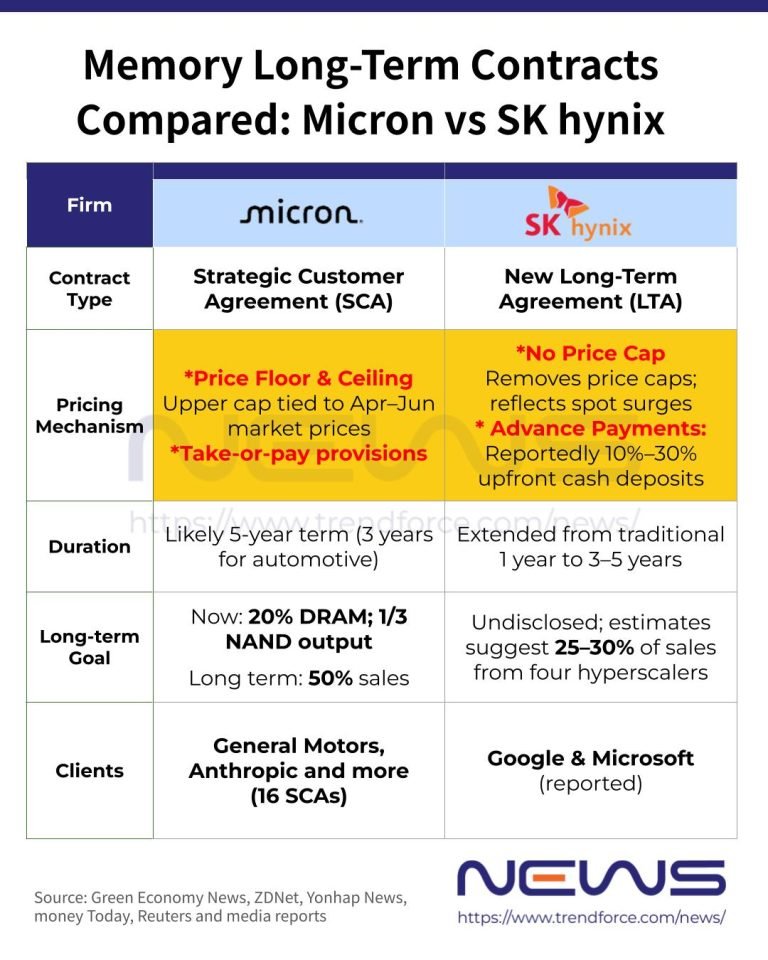
SK hynix is reportedly removing price caps from some memory long-term supply agreements, per TrendForce citing Korean media.
That would let contract prices fully reflect spot market surges during shortages.
This differs from $MU’s Strategic Customer Agreement model, which reportedly includes price floors, price ceilings tied to Apr-Jun market prices, and binding volume commitments.
Memory LTAs are also reportedly moving from traditional 1-year terms to 3-5 years.
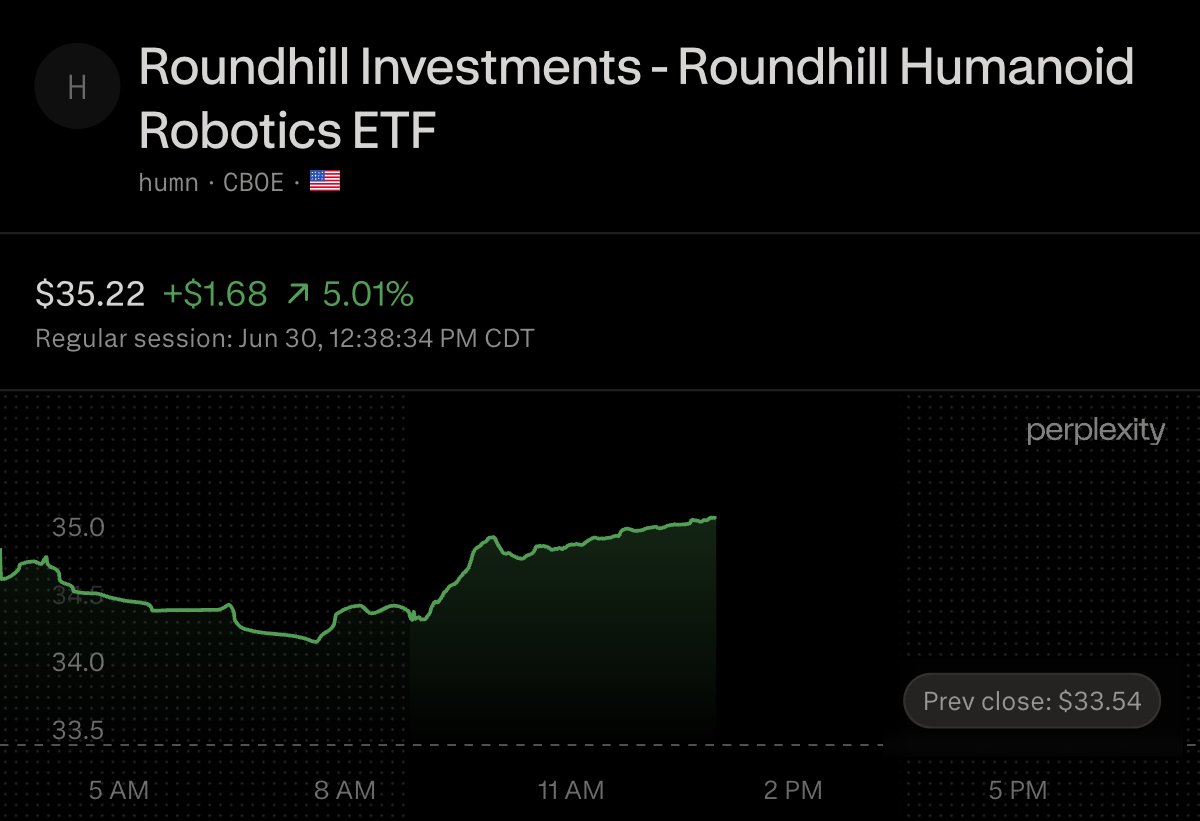
Physical AI stocks are having a big day today.
“The next frontier of AI is physical AI. AI is now beginning to understand the laws of physics.” — $NVDA CEO Jensen Huang
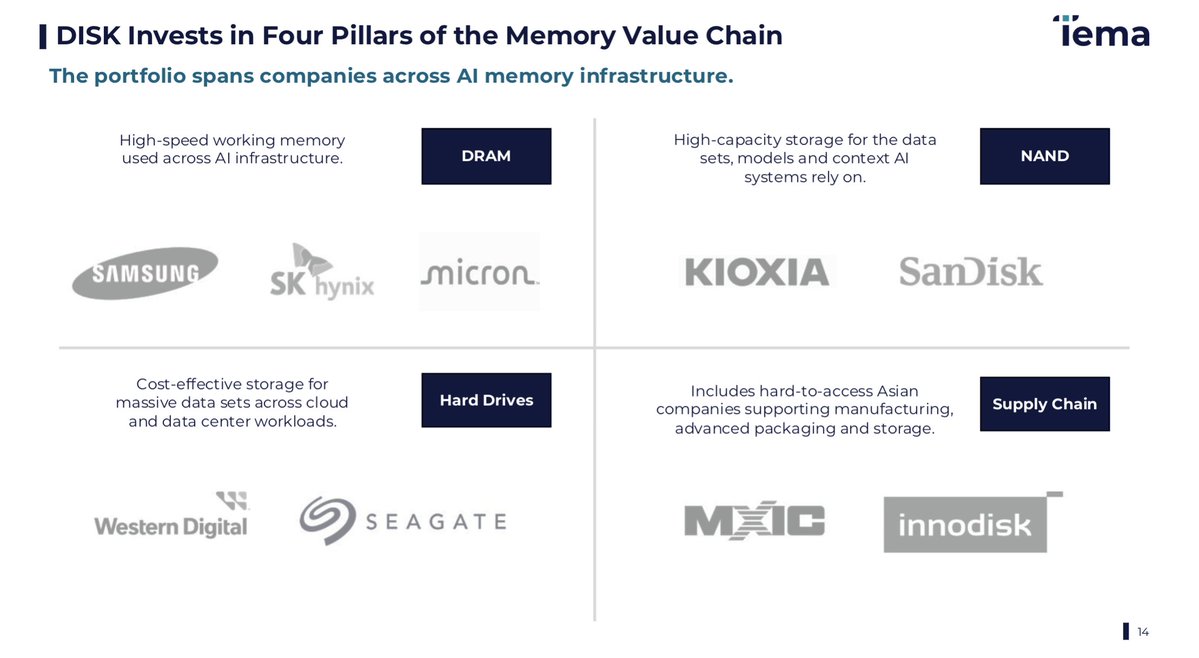
NEW MEMORY ETF JUST LAUNCHED
My partners over at Tema ETFs just launched a new Memory ETF today trading under the ticker $DISK
The ETF invests in memory names like
SK Hynix
Micron
Samsung
Kioxia
Seagate
Western Digital
Innodisk
Mxic
Disclosure: Tema ETF is a partner of StockMKTNewz, the purpose of this is to inform and is not investment advice
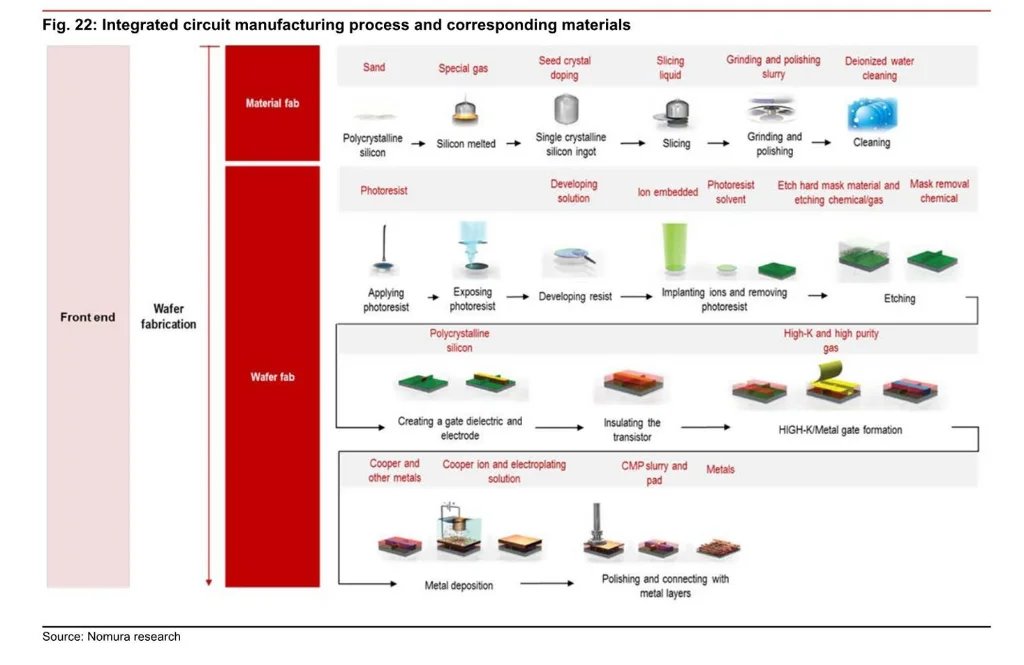
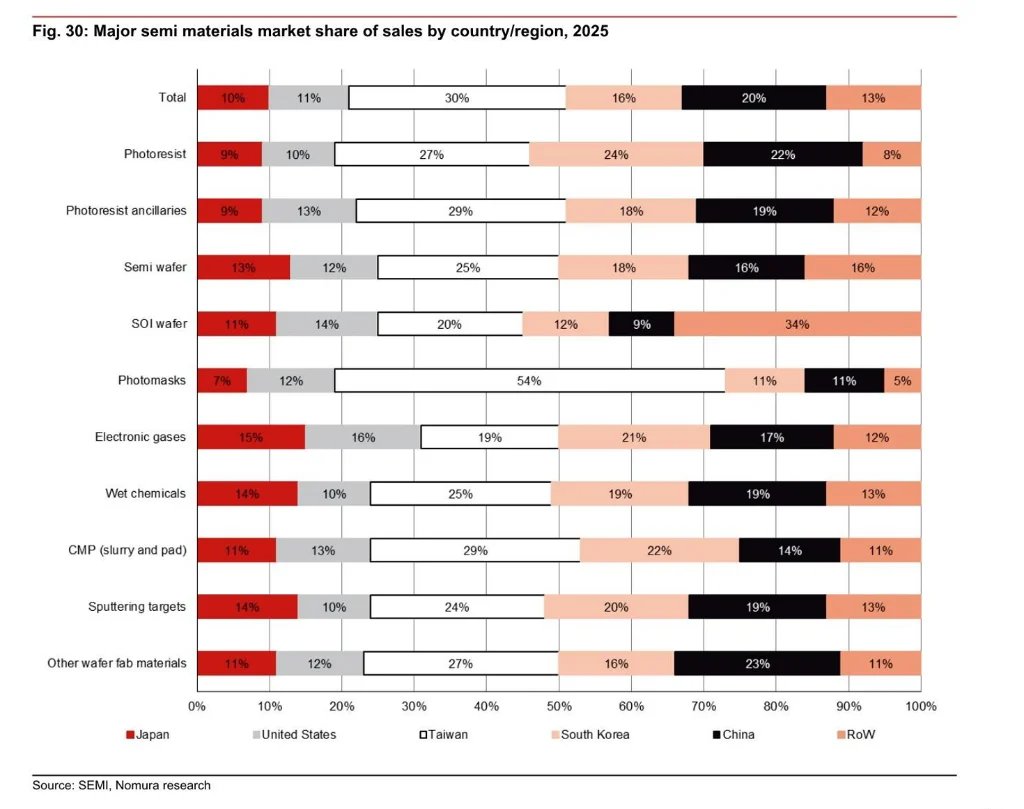
Nomura report : You're not deep enough in the AI Semiconductor stack yet. You're fishing with the crowd.
Buying GPU, CPU or foundry are a crowded trade now. Nomura released the map to the depths. Here's the rundown: You'll surely want to bookmark this
Investment implications run much deeper than GPU demand. For decades, chip performance gains came from one lever: shrink the transistor. At 3nm and below, that lever is breaking.
> New growth model: three pillars: 3D transistors (GAA evolving to stacked cFET), backside power delivery (separating power and signal networks, reducing IR drop), and materials substitution. The capex ramp starts 2026. Mass production hits 2027.
> Photolithography: High-NA EUV tools cost $400M each and require metal-oxide photoresists that run $10,000–$40,000/gallon. Current EUV resists cost $5,000/gallon. That's a 2–8x unit price step-up in a material most investors have never heard of. This is before high-NA even hits mass production (2029).
> Advanced packaging: SoIC hybrid bonding replaces microbumps with direct Cu-to-Cu connections, taking AI chip bandwidth from 200 GB/s to 1 TB/s. It requires nanometer-level wafer flatness, meaning CMP steps increase from 45–55 to 55–70 per chip (20–30% jump). BESI is positioned as the dominant equipment supplier here.
> Glass substrates: Glass-core substrates replace ABF organic substrates for large, high-power AI chips. Lower CTE, better flatness, lower signal loss. Broadcom adopts first for switch ASICs in 2027. Intel follows. The bottleneck is TGV (Through-Glass Via) formation - laser drilling, etching, metal fill, planarization. Companies with proprietary TGV process IP (LPKF, E&E) are entering this supply chain now.
> Photonics: Indium phosphide supply stays tight 2025–2027 due to export controls and yield constraints. The alternative is photonic SOI wafers: 25% the cost of InP, scalable for CPO. Soitec owns ~70% of global photonic SOI share. Demand enters rapid growth by 2027.
> Silicon wafers: Three technology waves (backside power delivery, wafer-bonded NAND, photonic SOI) stack onto baseline demand growth of 5%, adding 4–6 percentage points annually. Total 12-inch silicon wafer demand approaches 10% growth p.a. Supply cannot keep pace. Gap opens in 2027 Pricing power returns to GlobalWafers, Shin-Etsu, SUMCO.
> TSMC the amplifier: $70B capex in 2027 alone. 26 advanced fabs globally. Increasing localized procurement across lithography consumables, CMP, specialty gases, wafers, and packaging materials. Regional suppliers certified now see disproportionate order flow.
Which layer of this supply chain do you think is most mispriced right now - equipment, materials, substrates, or optical?
2026 is ramp setup, 2027 is the inflection, 2028–2030 is full adoption. Best investment can be made by knowing which player is essential for which phase.
Repost this. Most people following the AI trade are one layer too shallow. Your followers will thank you.
Today we’re bringing Google Finance out of beta globally and rolling out new features, including new ways to track your investment portfolio and stay updated on market intel.
We’re also launching a new Google Finance @Android app for easy access on the go, with an iOS app coming soon.
GOOGLE $GOOGL JUST UPGRADED GOOGLE FINANCE
Three major features launched today:
1. AI-POWERED PORTFOLIO TRACKING
Drop in screenshots, upload CSVs or PDFs, or just describe your holdings and Google Finance builds your portfolio automatically. Once set up you can ask questions like "what sectors are underrepresented in my portfolio?" or "how does my fixed income allocation impact my long-term growth potential?"
2. PERSONALIZED MARKET BRIEFINGS ON A SCHEDULE
Describe a task like "send me a daily pre-market briefing analyzing significant overnight moves across major cryptocurrencies" and Google Finance runs it automatically on your schedule. You can tie it to your watchlist or portfolio for personalized insights. Notifications push through the Google app.
3. NEW GOOGLE FINANCE APP FOR ANDROID
Launched today. Real-time data, live financial news feed, AI research tool, and AI-powered "key moments" that explain why a stock moved. iOS app coming later this year.
Well
Memory prices aren't cooling for the next 2 years
A big reason why 16 Hi HBM4E got chopped, and Nvidia reduced Rubin Ultra HBM capacity from 1TB to 768 GB was the lack of enough DRAM
Btw, we are still unsure if 16 Hi will get adopted for Feynman or not
People are still underestimating how much DRAM will be eaten by Agentic CPUs
Apple's price increases:
MacBook Air rose $200 to $1,299
Base MacBook Pro increased $300 to $1,999
Entry-level MacBook Neo increased $100 to $699
iPad Air increased $150 to $749
iPad Pro increased $200 to $1,199
iPhone prices unchanged for now, though the company hinted at more increases in a statement.
@notintofinance officially launching website pertama kita.
Website ini diperuntukkan mempermudah akses ke free newsletter dan free research kita 😃
Tapi kok ada yang aneh ya? Tombol di atas kanan direct kemana sih bang? @kr39__
Link: https://t.co/2OUSbAx8OL
Why did the KOSPI fall today?
1. Korean leverage trading has climbed to excessively high levels.
2. Ahead of Micron's earnings, profit taking is underway, with talk that buyside expectations have become too elevated.
3. Korean lawmakers are discussing imposing taxes on unrealized gains from stocks.
4. SK Hynix overtaking Samsung Electronics in market capitalization is being read as a market top signal.
Commentary: With Samsung Electronics' earnings scale still exceeding that of SK Hynix, a reversal in market cap can be interpreted as a sign of market overheating.
5. A delay in SK Hynix's ADR listing.
6. The failure of the Korean market to gain inclusion in the MSCI developed markets index, and so on.
Alphabet just lost 6% in a day. Not because of earnings. Because one person quit.
John Jumper, the DeepMind scientist who co-built AlphaFold and won a Nobel Prize for it, is leaving for Anthropic. And the same week, the co-lead of Google's Gemini models left for OpenAI.
Two of the most important minds in AI, gone from one company, in one week. The market wiped tens of billions off Alphabet over it.
Sit with what that means. In most industries, no single employee moves the stock. Here, one researcher walking out the door is a market event.
That's the tell about where the real moat in AI actually sits. Not in the chips. Not in the data centers. In a few hundred irreplaceable human beings, and the fierce, expensive war to keep them.
Markets are still pricing AI like an infrastructure race. Whoever spends the most on compute wins. But infrastructure can be bought. A Nobel laureate cannot.
The scarcest asset in the most important technology of our time isn't silicon.
It's the people who know what to build with it.
South Korea’s top financial regulator says he regrets not blocking single-stock leveraged ETFs tracking Samsung and SK Hynix.
The 16 ETFs have grown from $3B at launch in late May to $9.1B, with retail investors holding about 92%.
Officials are now weighing stabilization steps as volatility rises.
Goldman estimates a 5% swing in Korean stocks could trigger $4.7B of option-dealer rebalancing flows, equal to about one-eighth of normal daily share turnover.