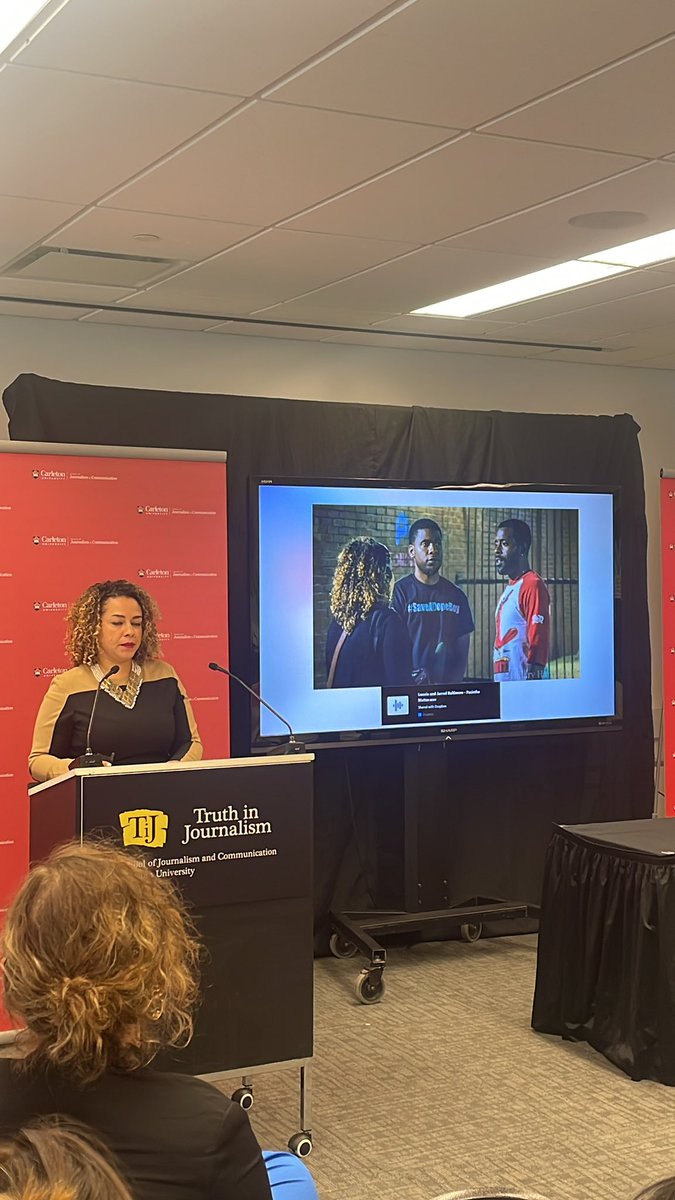
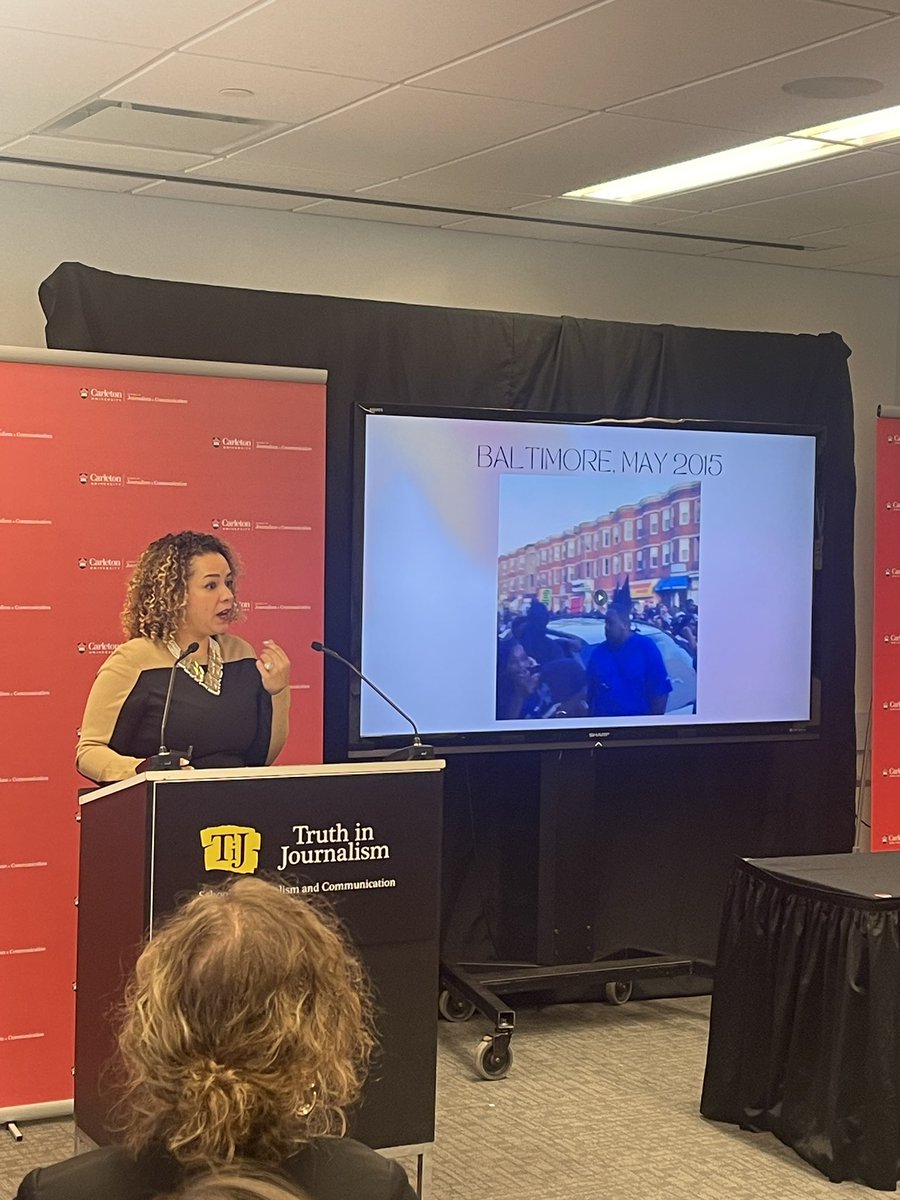
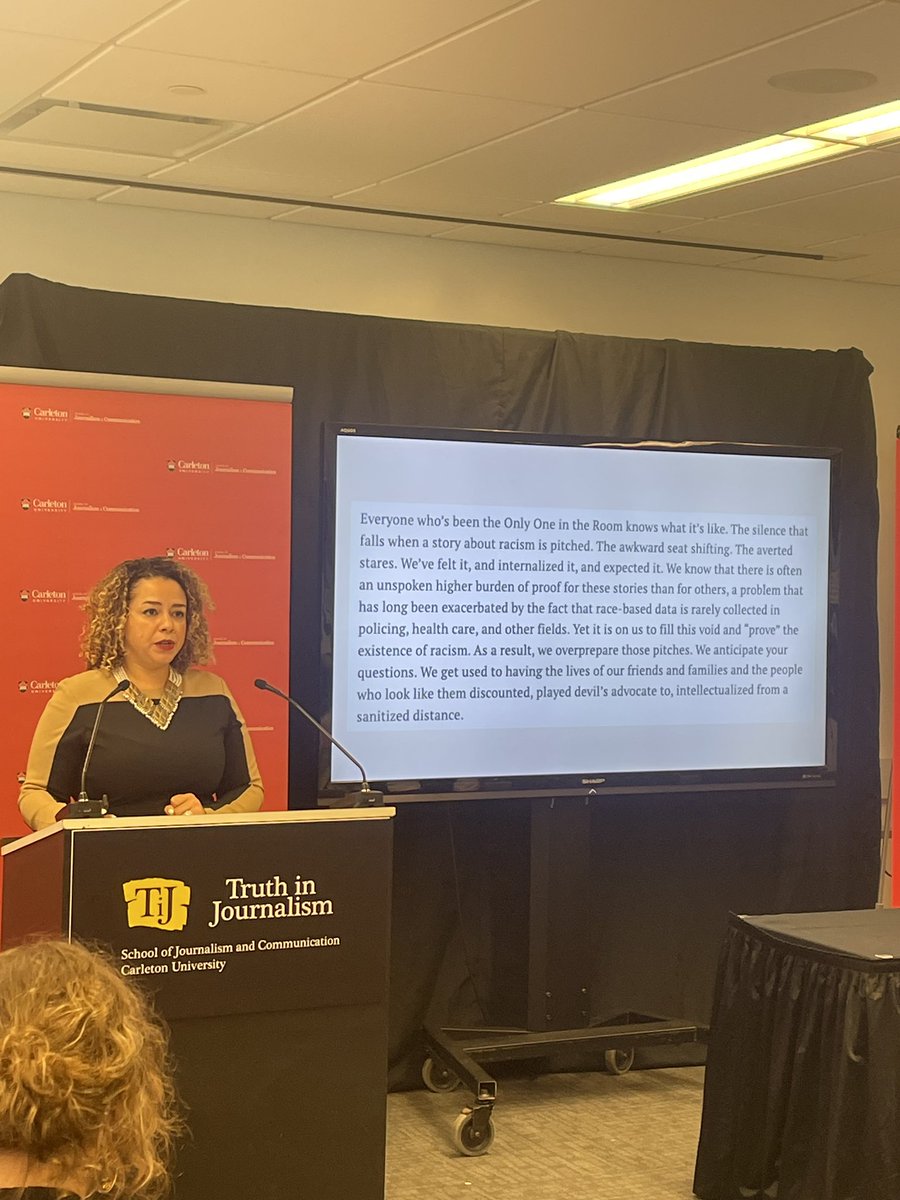
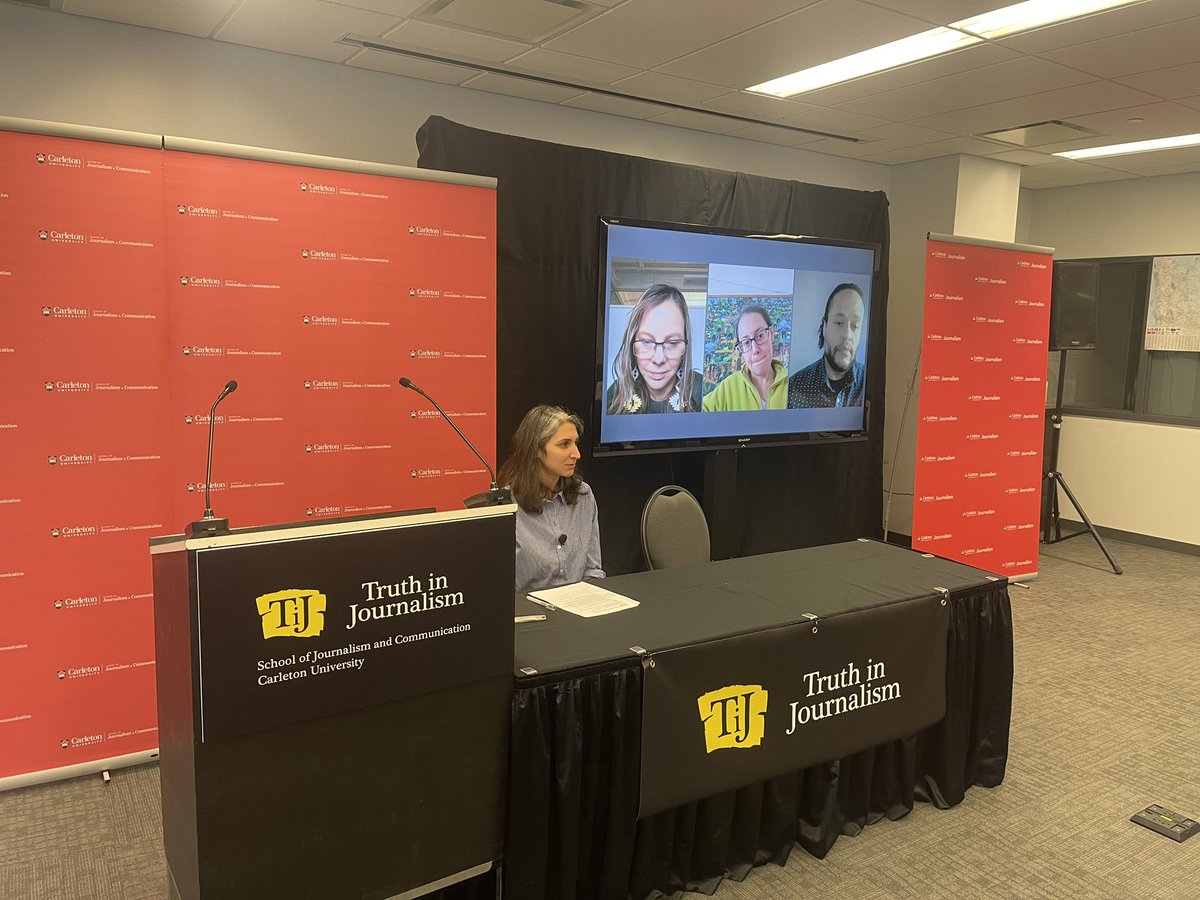
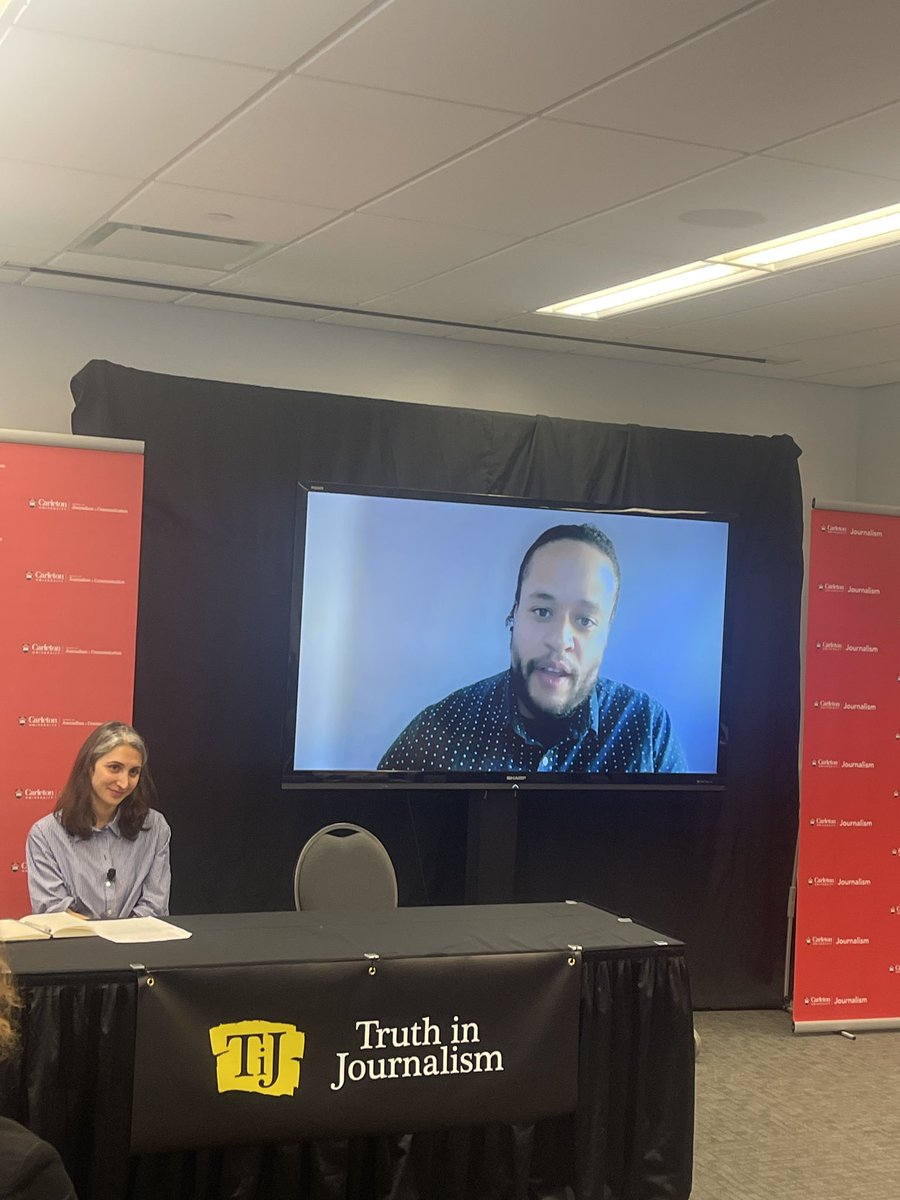
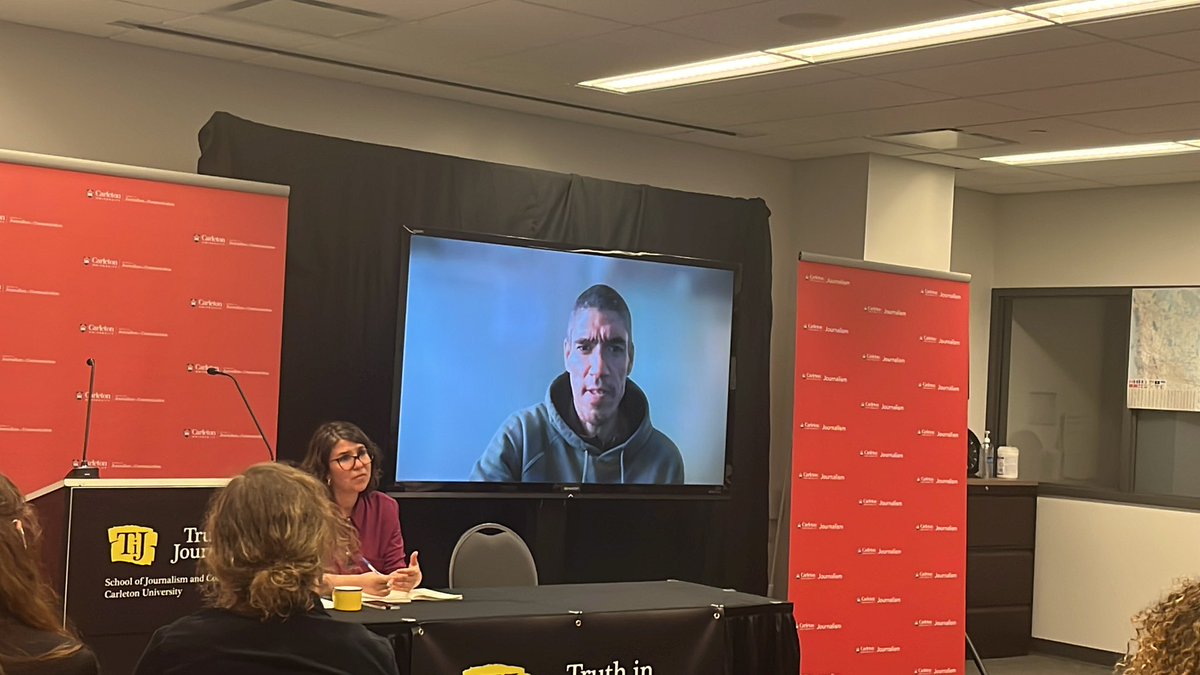
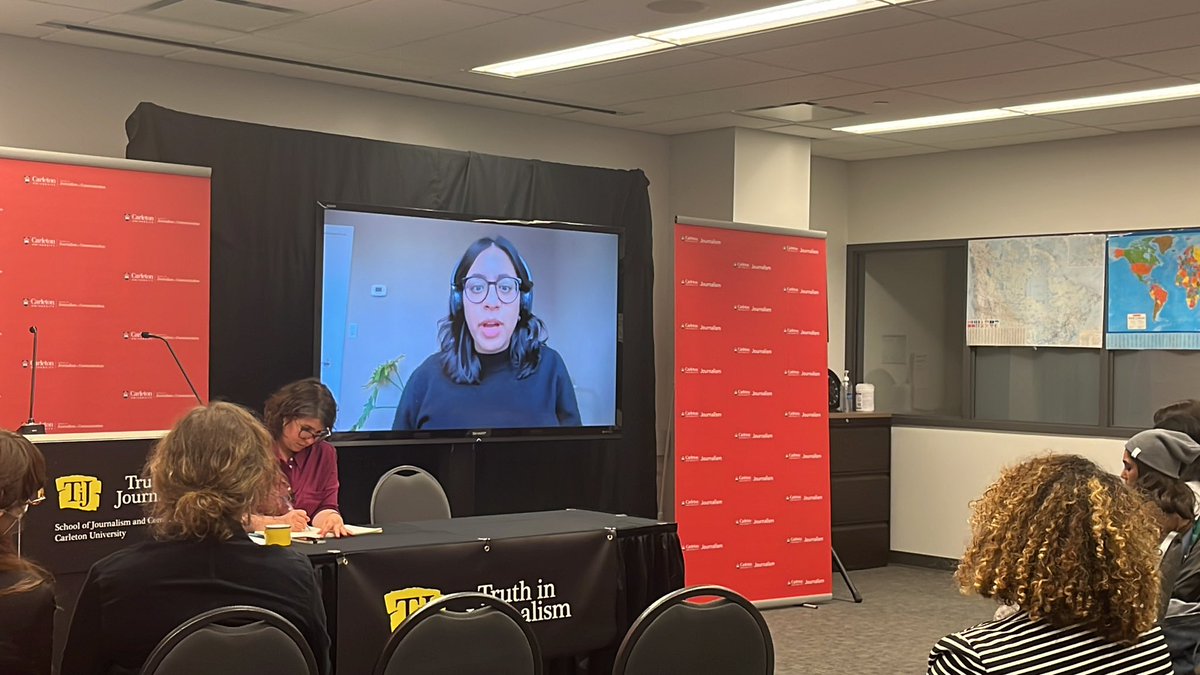
In 2015, @Pacinthe met two men who talked about how fraught the relationship is between Black communities and police. She played a part of that conversation for the #TruthInJournalism@JSchool_CU@CarletonFJI
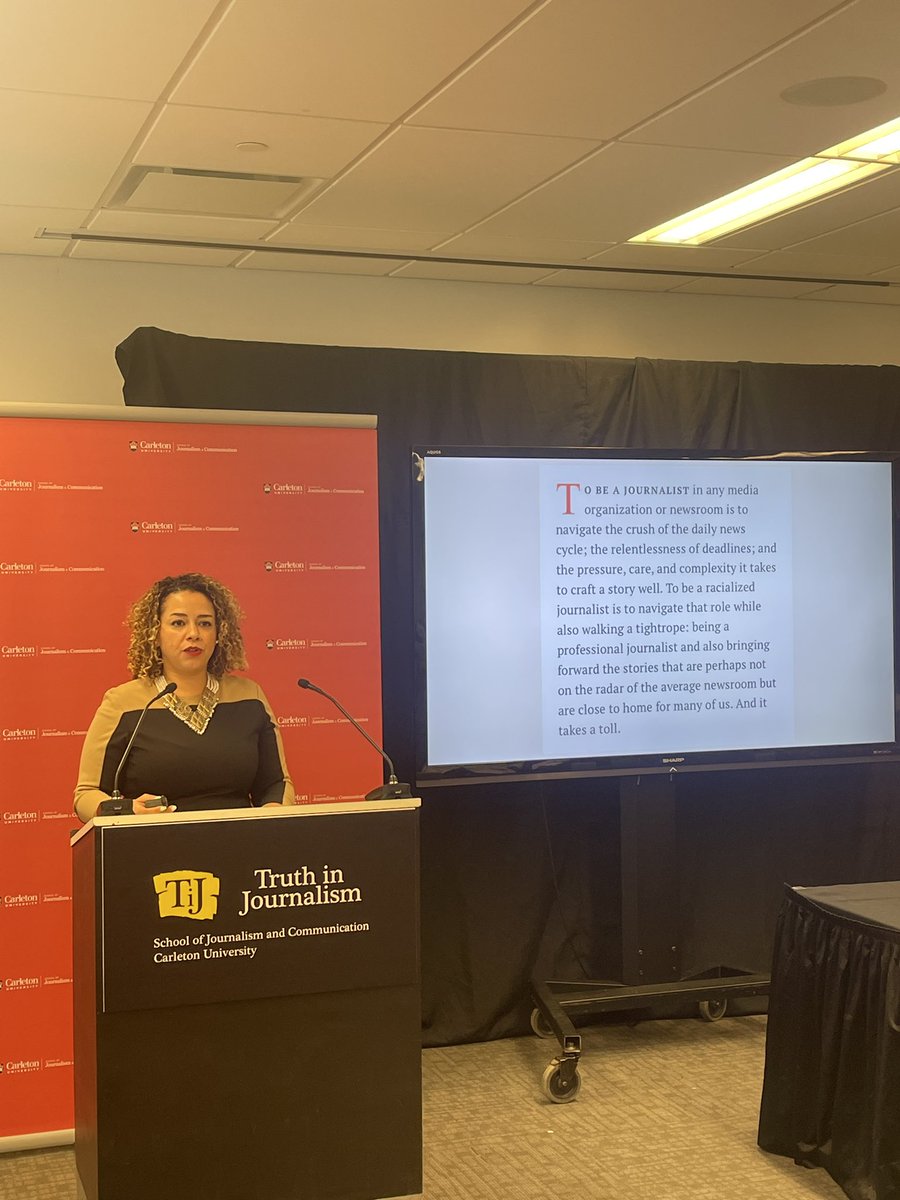
@Pacinthe is sharing her experience writing about objectivity, racism and power in Canadian media (https://t.co/hF735YYqhT), and the role fact-checking played in her incredibly important story.
#TruthInJournalism@CarletonFJI@JSchool_CU
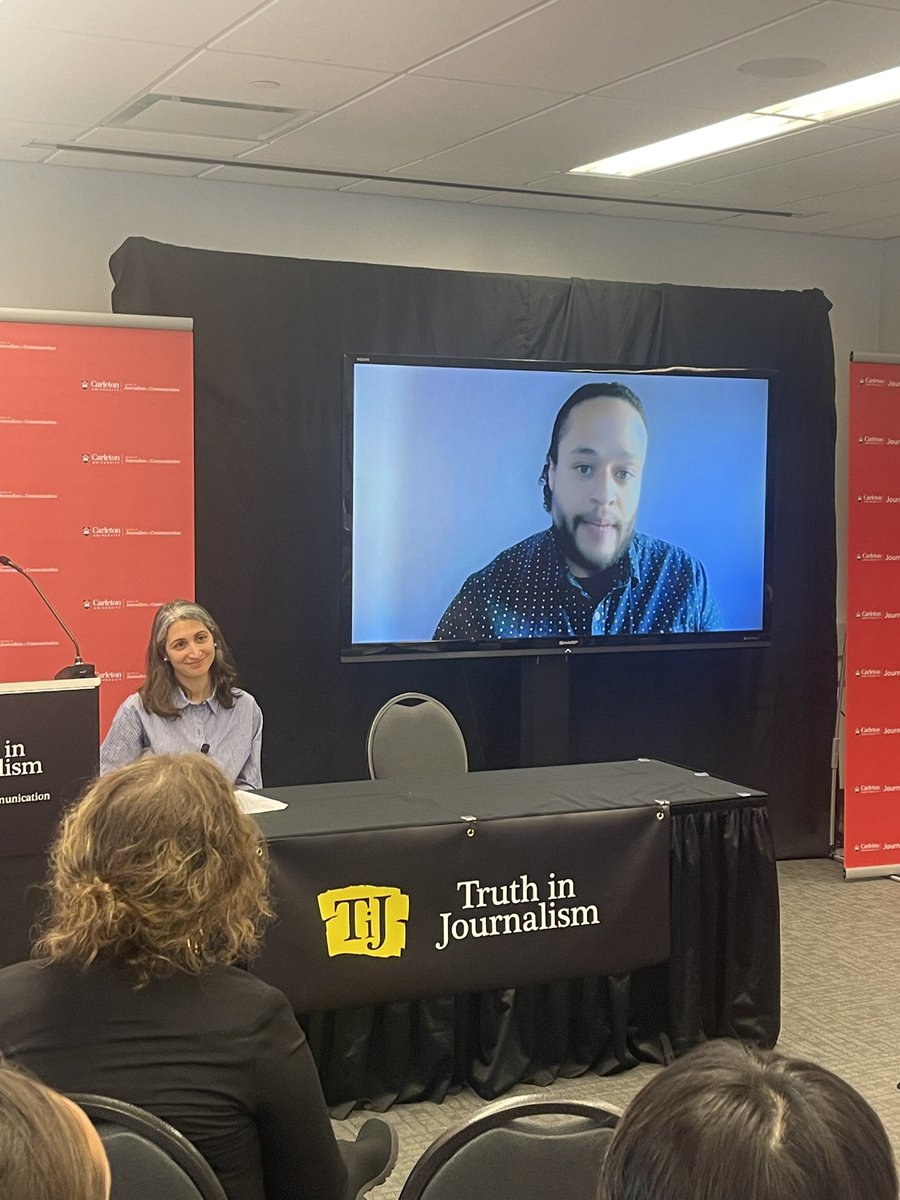
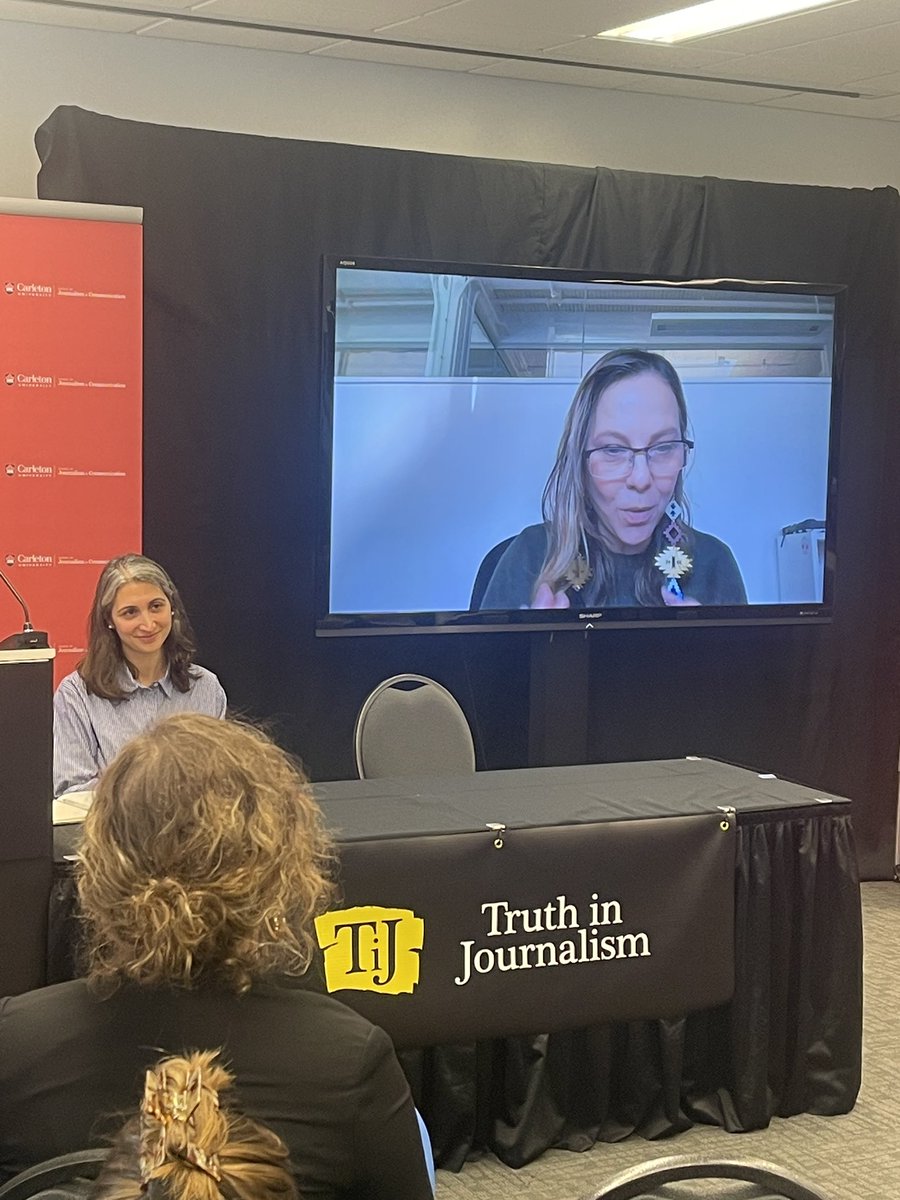
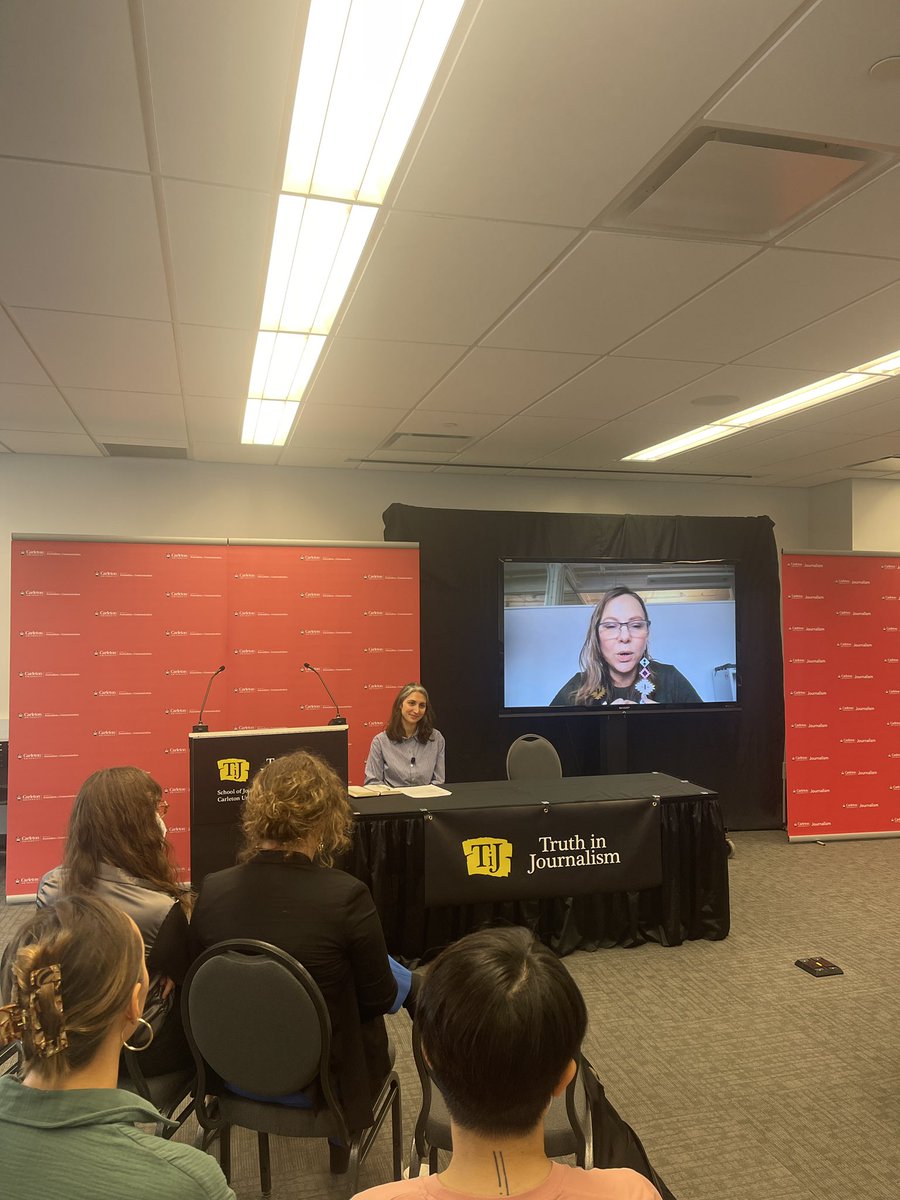
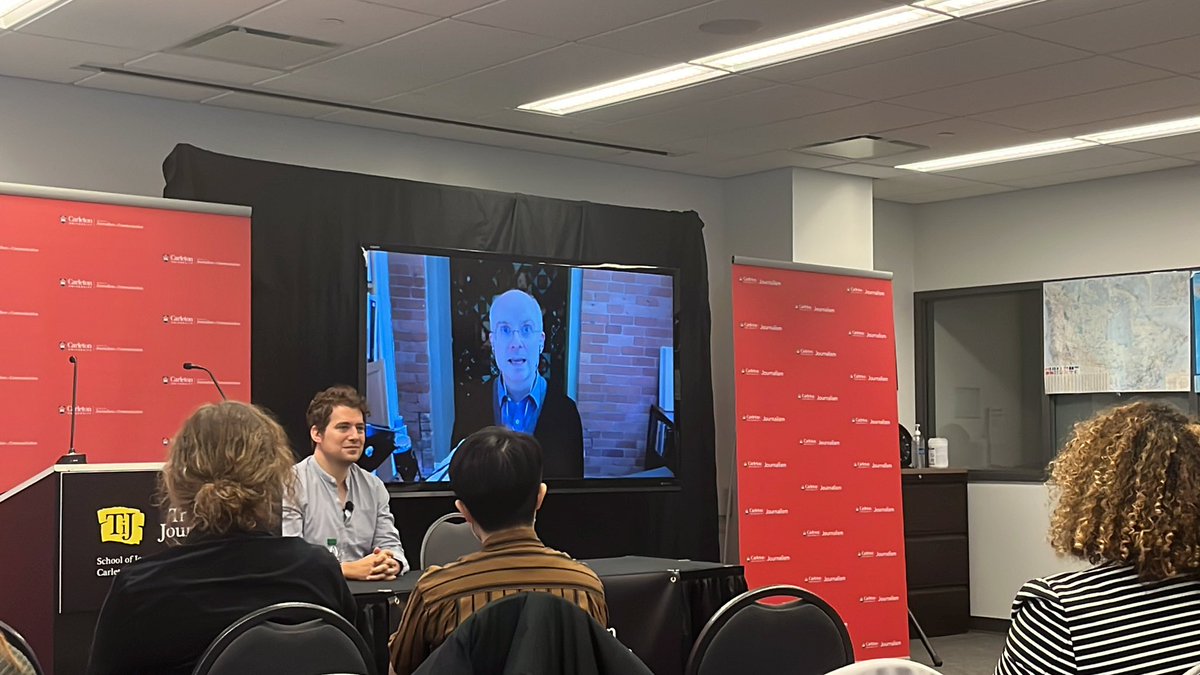
“Who’s voices are we listening to? Who’s voice is being regarded as credible?” @siegel_susanna says these questions are crucial when talking about the vocabulary around objectivity. #TruthInJournalism@JSchool_CU@CarletonFJI
“Most newsrooms in #cdnmedia would say they use objective methods of reporting, yet we end up with very different results in terms of what stories are covered & how they’re covered,” says @mdimera. #TruthInJournalism@JSchool_CU@CarletonFJI
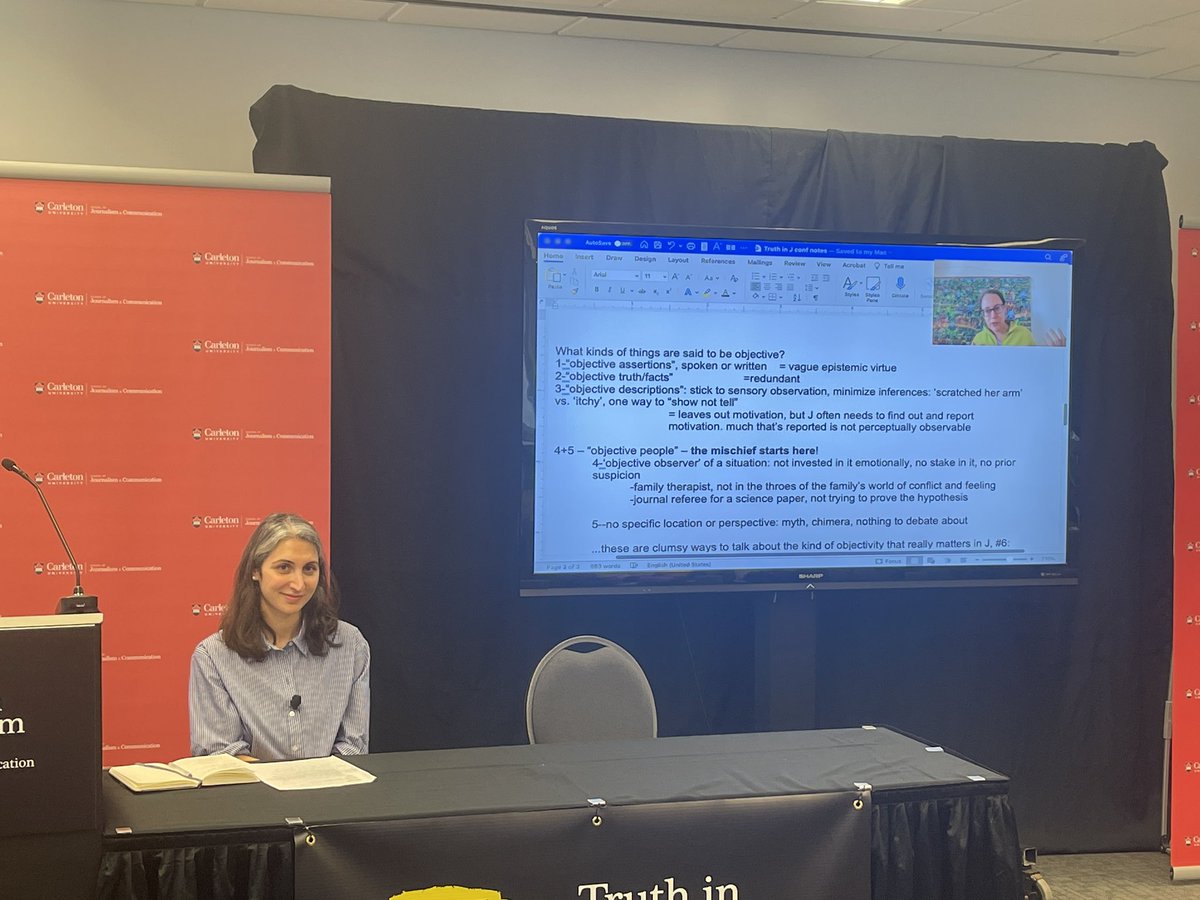
What’s the distinction between “objective assertions”, “objective facts”, “objective methods” on the one hand and “objective people” and “objective observers” on the other? @siegel_susanna breaks it down for the #TruthInJournalism conference! @CarletonFJI@JSchool_CU
@CrierNicolas: “Integrity is key if you’re gonna be talking about people or situations you’re not a part of.”
He adds it’s important to involve people who are part of said communities in the fact-checking process.
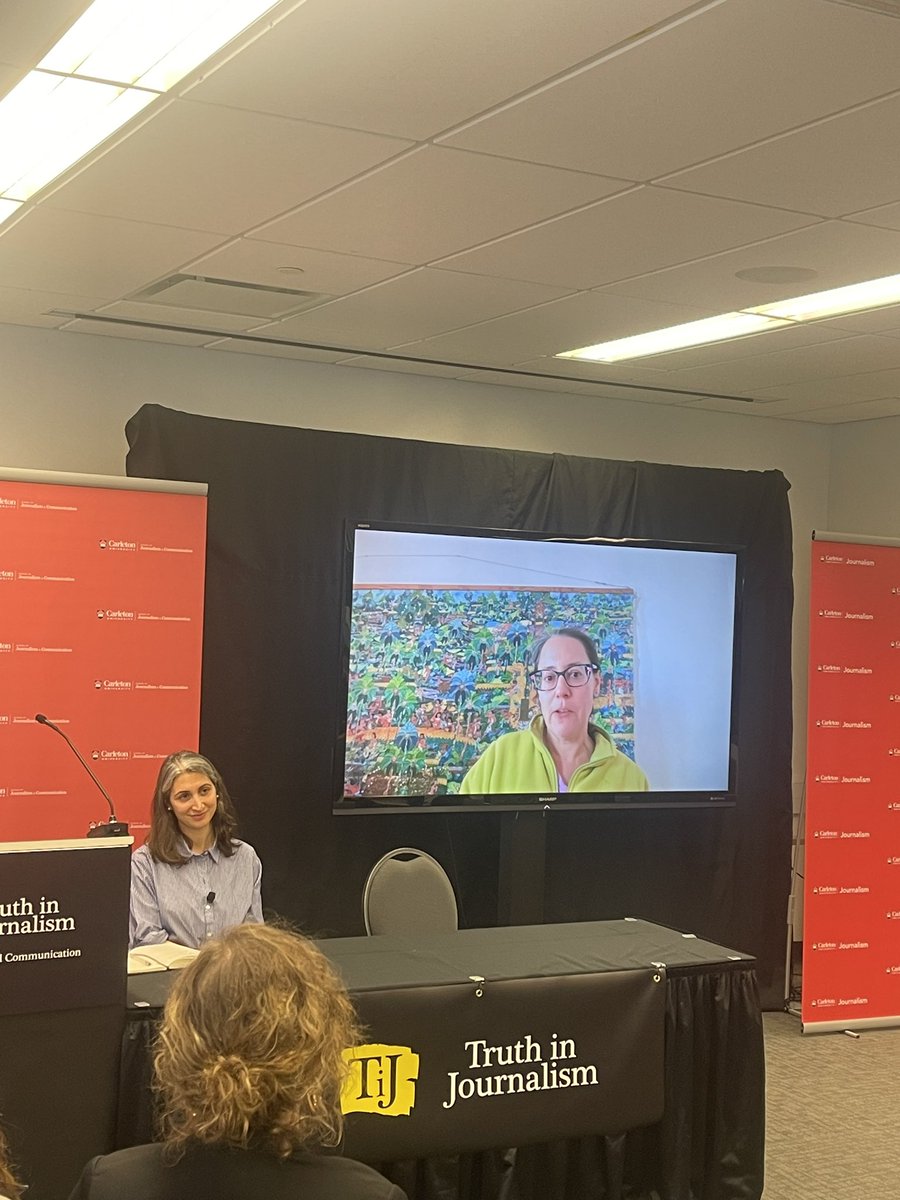
@carineabouseif, features editor @thewalrus, says having conversations about the fact-checking process prior to starting a story is essential to preventing harm.
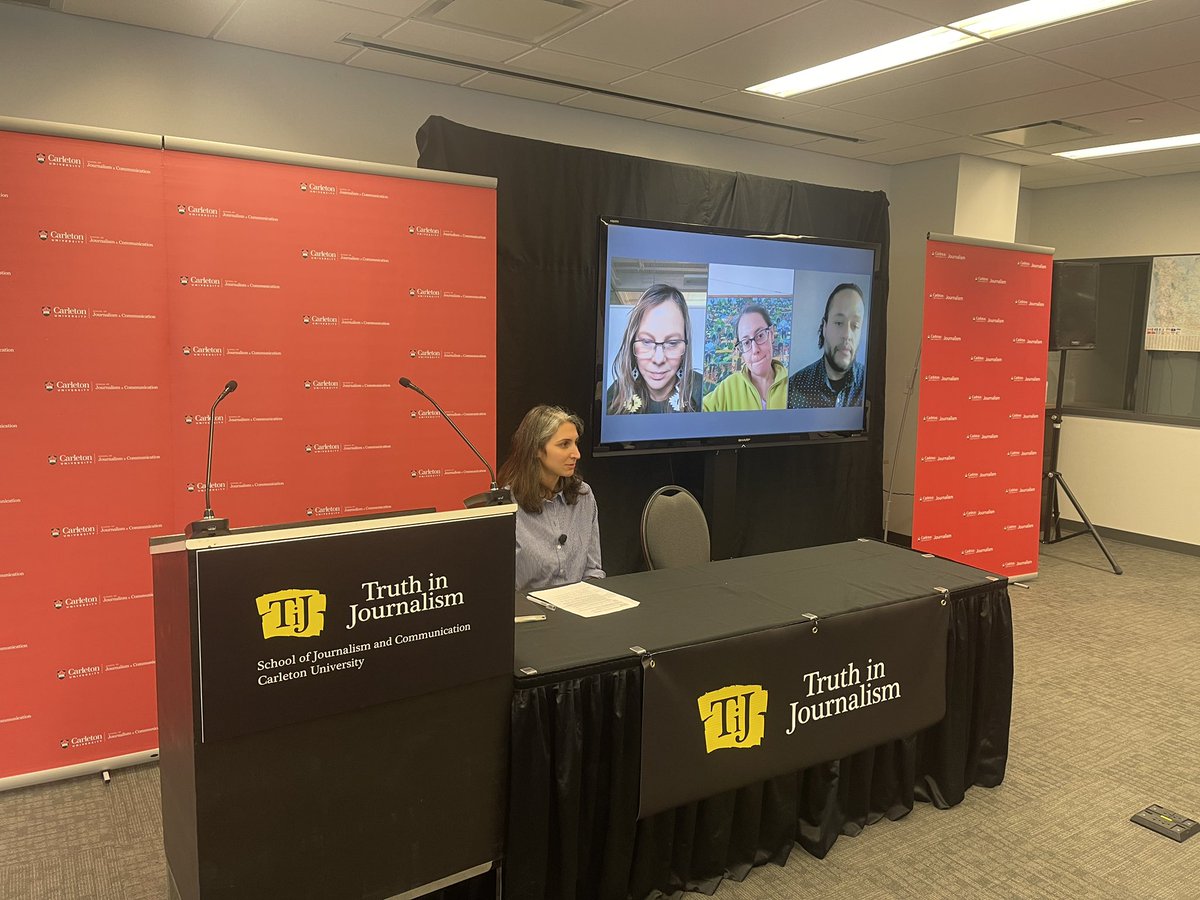
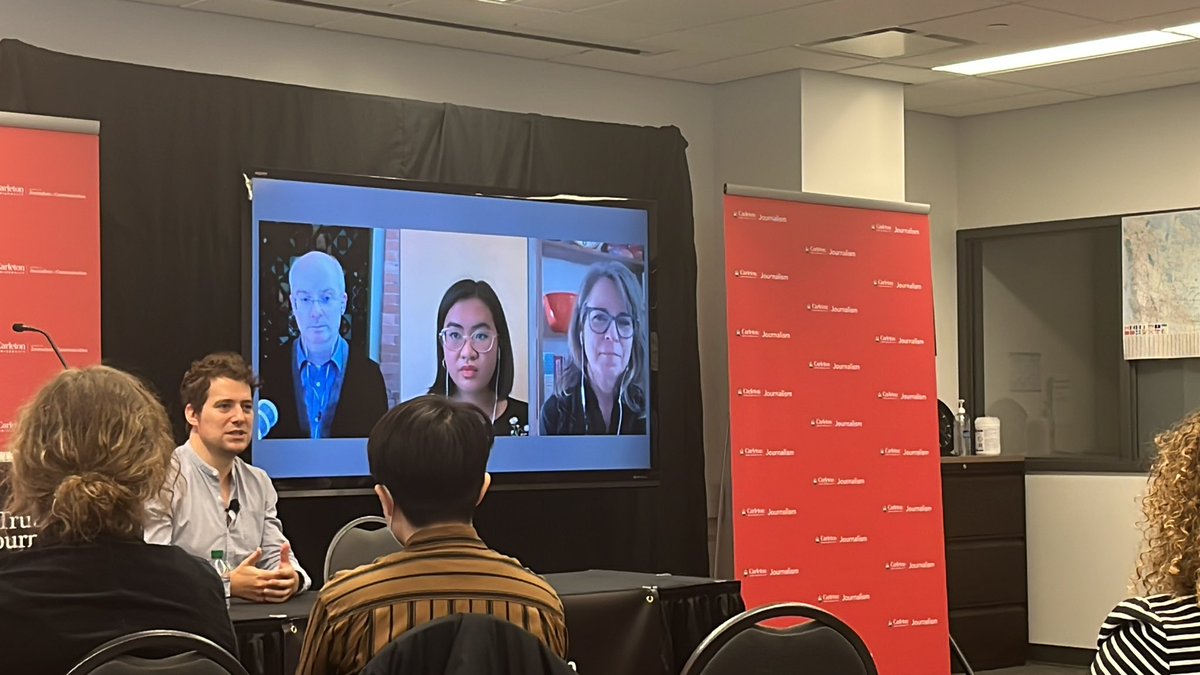
Following a question from the audience, the panelists clarify that while there is a power dynamic between reporters and sources, there’s also a power dynamic between editors and reporters. @SimonLewsen says publications have a large role in making this change. #TruthInJournalism
What are the ethics of sharing drafts with sources prior to publication? An often prohibited practice, @jadinengan@bgillesp @lisa_xsj @SimonLewsen agreed it’s something to consider when reporting on sensitive subjects and the source is an ordinary person. #TruthInJournalism
@bgillesp@jadinengan explain there is a fear among reporters that if they explained to people all the risks associated with being a source, they may back out.
In their experiences, however, that’s more often not the case.