$PLTR has been getting punched in the face lately because the market has convinced itself that OpenAI and Anthropic are coming for Palantir.
I think that is moronic.
Saying LLMs are eating Palantir is like saying paint brush manufacturers are putting painters out of business…
OpenAI and Anthropic are building the brains. Palantir is building the nervous system that actually connects the brain to the body.
Big difference.
The model can tell you what it thinks. Palantir helps a company decide whether that answer is using the right data, whether it fits the right workflow, whether the right human signed off, and whether the action actually gets pushed into the real system where money, logistics, defense, fraud, supply chains, hospitals, or governments operate.
That is the part people keep missing.
LLMs are insanely valuable, but as the major models keep improving, they are also starting to look more similar. GPT, Claude, Gemini, Grok, all of them are getting better. The gap between them is no longer the whole story.
For enterprises, the real question is not just, “Which model gives me the smartest answer?”
The real question is:
Can I trust this answer?
Can I trace where it came from?
Can I control who approves it?
Can I plug it into my existing systems?
Can I use it without blowing up compliance, security, privacy, or operations?
That is where Palantir lives.
OpenAI and Anthropic are trying to build intelligence. Palantir is trying to turn intelligence into operational outcomes.
Those are not the same business.
One is the engine. The other is the factory floor, the dashboard, the permission layer, the audit trail, the operator, and the process that turns the engine into actual production.
So when people say, “What if OpenAI replaces Palantir?” my answer is simple:
That is like saying Ferrari replaces roads because Ferrari makes a great engine.
Good luck driving that thing through a hospital procurement system, a defense agency, or a Fortune 500 compliance department.
That is why I have been doubling down on Palantir recently.
Not because Palantir has no risk. It absolutely does. Valuation risk is real. Execution risk is real. Expectations are sky high.
But the competition fear is misunderstood.
The market is treating Palantir like it is competing with the model companies.
I think Palantir is the company enterprises call when they want to actually use the models without setting the building on fire.
We took a jewelry brand from 2.25x ROAS to 3.28x ROAS in one month.
While increasing ad spend by 20%.
Usually when you increase spend, ROAS drops.
The difference was our sequencing creative strategy.
Every batch of ads we launched was designed as a journey:
> Set 1: visual hooks for top of funnel
> Set 2: customer feedback wearing the ring
> Set 3: the ring shown in different environments
> Set 4: reasons to buy beyond aesthetics
> Set 5: offer, urgency, scarcity
Each set connected to the next.
Meta's GEM optimised the sequence across all of them.
We did not find one winning ad. We built a winning funnel.
Sales up 30%. ROAS up 40%. On higher spend.
The creative diversification checklist we use before launching any new batch:
Does this batch include:
> At least 2 different formats (video, static, UGC, AI)?
> At least 3 different awareness stages?
> At least 2 different personas?
> At least 2 fundamentally different concepts (not just different angles)?
> At least 1 ad that would look completely different from everything else running?
If the answer to any of these is no, the batch is not diverse enough.
Meta's Creative Similarity Score will group similar ads together.
If your "new" ads look like your existing ads, Meta treats them as one test.
Diversity is not optional. It is how the algorithm learns.
Your Meta traffic is hitting 4 awareness levels at the same time. Each one needs a different funnel.
Sending everyone to one page is like having one conversation with 4 different people at once.
A stranger needs context.
A warm lead needs proof.
A ready buyer just needs a checkout button.
So here's the breakdown:
👤 Unaware → Meta → Advertorial → Product page → Checkout
👤 Problem Aware → Meta → Listicle → Product page → Checkout
👤 Solution Aware → Meta → Landing page → Checkout
👤 Most Aware → Meta → Product page → Checkout
@ecomwize builds these funnels with AI in minutes, not days or weeks.
Like + Comment "4" and I'll DM you 16 templates to implement right away (must be following)
A brand went from 1.2% to 6% CVR without touching their ads.
Your store gets 4 types of visitors:
→ The one who's never heard of you.
→ The one who knows the problem but not you.
→ The one comparing you to 3 other brands.
→ The one with their card out.
You're sending all of them to the same page.
That's not a traffic problem. That's a page problem.
@jurni__ai matches every visitor to the page they actually need - in minutes.
Comment "LEVELS" and I'll show you all 4. (must be following)
Tengo 5 agentes de IA trabajando para mí.
Ninguno olvida nada.
Ninguno repite errores.
Ninguno necesita que le explique el contexto dos veces.
Te explico cómo lo monté 🧵👇
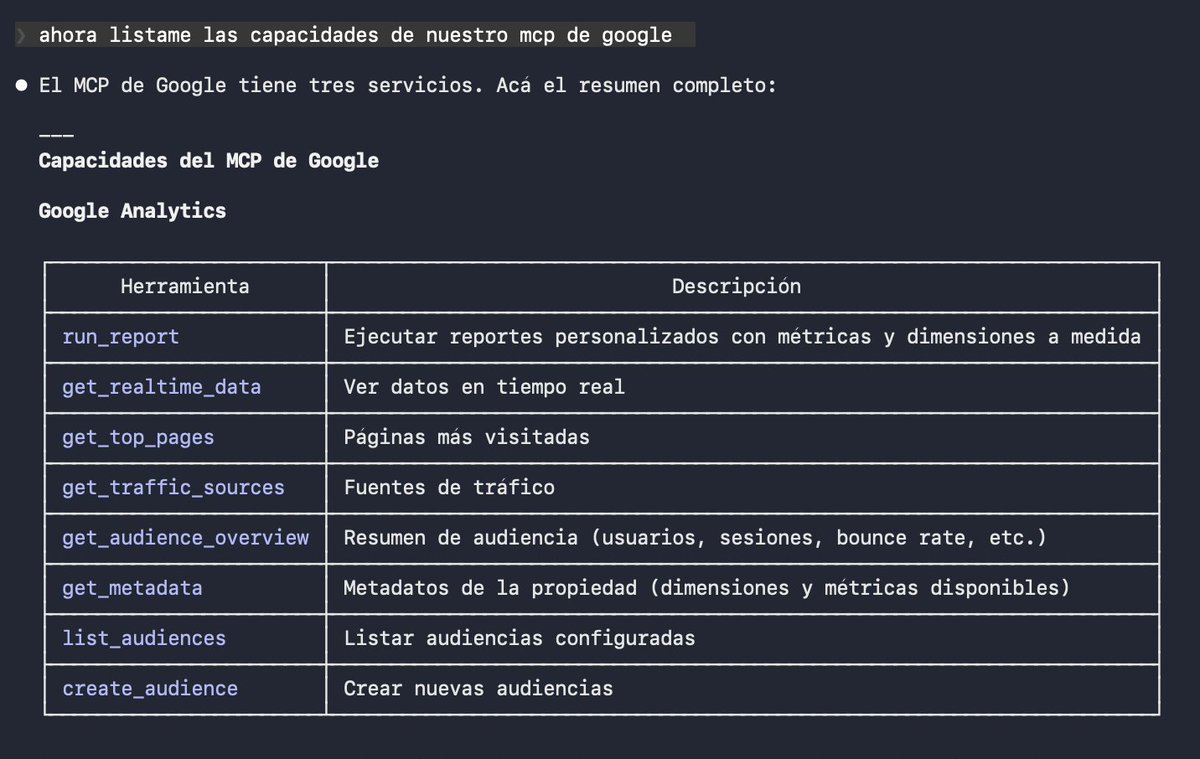
Conecte Claude a mis cuentas de Meta y Google Analytics y ahora puede:
- Ver campañas, audiencias y métricas en tiempo real
- Crear y editar anuncios, ad sets y audiencias lookalike
- Analizar tráfico, fuentes y top pages de Analytics
Qué lindo momento para emprender!
If you’re just looking to create Ecom pages from Claude to Shopify here is an easier method
Without needing to setup Shopify MCP and custom app
-Create a repo folder for your brand info and skills
-Install Shopify CLI in terminal (the dev tool use to create and modify theme locally)
-pull your a duplicate of your live theme to your repo using Shopify cli
-then you can ask Claude to make changes on it, creates pages and preview them locally
Its easier than you think
You don’t need to be a developer
just ask Claude to guide you through the process