The video from Slavyansk-on-Kuban is instructive. Not because the refinery is burning again, that's routine now. What stands out is the total absence of any firefighting effort. Flames just eat tank after tank while the smoke column climbs like a middle finger to the sky. Spare me the cope that "some fires can't be extinguished." Iraqis torched nearly a thousand Kuwaiti wells in 1991; specialists capped and killed every last one. BP's Texas City refinery explosion in March 2005 produced a blast that shattered windows 1.5 km away. They had the fire under control in two hours and fully extinguished in five. Technology exists. Equipment exists. What doesn't exist in this particular moscovian backyard is the will or the capacity to use it.
That's the real multiplier effect of Ukrainian long-range strikes. It's not merely the kinetic hit. It's the engineered reality that moscovia cannot protect, cannot repair, cannot even pretend to defend its own critical infrastructure anymore. Every refinery strike forces them into a choice: divert scarce air defense from the front, or accept controlled burn as national policy. They have chosen the latter. The economic bleeding is now structural. Refineries aren't just storage; they're the conversion mechanism turning discounted crude into usable fuel for the war machine. When you turn that into a perpetual bonfire, you don't need sanctions theater in Brussels. You create daily, compounding sanctions with better accuracy than any SWIFT cutoff.
This is precisely why the "just negotiate" crowd remains either stupid or on the Kremlin's payroll. There is no diplomatic off-ramp while moscovia retains the illusion that it can absorb these costs indefinitely. Every unextinguished fire in Kuban or Bashkortostan or wherever the next drone package lands proves the opposite. Their rear is porous, their repair capacity is exhausted, their ability to convert oil wealth into combat power is literally going up in smoke.
And before some isolationist genius in DC starts whining about American taxpayers, remember the math. These strikes cost Ukraine a fraction of what equivalent Western munitions would. They achieve what layered sanctions never could: direct, persistent degradation of the aggressor's warfighting economy. This is not charity. This is the cheapest European security insurance policy ever written. Moscovia wins in Ukraine and the next set of borders moves west at higher cost and higher risk. Every European capital that still treats aid as a favor rather than enlightened self-defense is simply advertising its own strategic illiteracy.
The fires will keep burning because Ukraine has decided they must. No amount of kremlin copium about "NATO escalation" changes the simple fact on the ground: an imperial project is learning, in real time, that aggression has a price tag it cannot pay. The only variable left is how quickly the West decides to stop treating Ukrainian victory as optional and starts treating it as the non-negotiable prerequisite for its own survival.
Our intelligence has obtained important findings regarding the situation in Crimea and in our other territories currently under Russian occupation. Ukraine’s Foreign Intelligence Service has obtained data indicating that the crisis with fuel, military logistics, and governance in Crimea is deepening on a virtually daily basis. The Russian occupation administration quite clearly and unequivocally acknowledges its inability to resolve the problems created by our mid-range sanctions against the occupier, as well as by the implementation of our long-range sanctions plan, primarily against Russian oil refining. A similar situation is unfolding in other Russian regions as well.
We have also obtained internal Russian documents assessing the public mood among citizens of the aggressor state. At present, the level of anxiety among Russians is already higher than it was during our Kursk operation: more than 50 percent. Already, 66 percent of Russians consider their financial situation difficult. More than 80 percent of Russians believe a large-scale economic crisis in Russia is inevitable. These are absolutely clear indicators that reflect the failure of Putin’s war policy.
Separately, Oleh Luhovskyi reported on measures being carried out in Belarus, under obvious Russian influence, to prepare for a potential expansion of aggression against Ukraine. Along our state border in Belarus, the construction of road infrastructure and storage bases for ammunition and fuel and lubricants is nearing completion. These facilities have no purpose other than a military one. These are the border directions of Kobryn–Kovel, Ivanava–Manevychi, Luninets–Sarny, Rečyca–Korosten, and Homieĺ–Chernihiv. We know that Russian documents describe this specifically in the context of the tasks of the so-called “SVO.”
Belarus has received the necessary signals from Ukraine regarding this activity, as well as regarding all other formats of its collaboration with Russia in the interests of prolonging and scaling up the war. Belarus knows what steps it must take for peace. The development of border infrastructure for aggression from Belarus must be stopped. It is the Belarusian side that must take steps toward de-escalation and peace. Thank you to everyone who helps us protect lives and our independence! Glory to Ukraine!
Our responses to Russia’s prolongation of the war and its attacks on our cities and communities are entirely justified. This time, Ukrainian long-range sanctions reached the Moscow region, and we are clearly telling the Russians: their state must end its war. Ukrainian drone and missile manufacturers continue their work. I am grateful to the Security Service of Ukraine and all the Defense Forces of Ukraine for their precision. The distance from Ukraine’s state border is over 500 km. The concentration of Russian air defense in the Moscow region is the highest. But we are overcoming it. Glory to Ukraine!
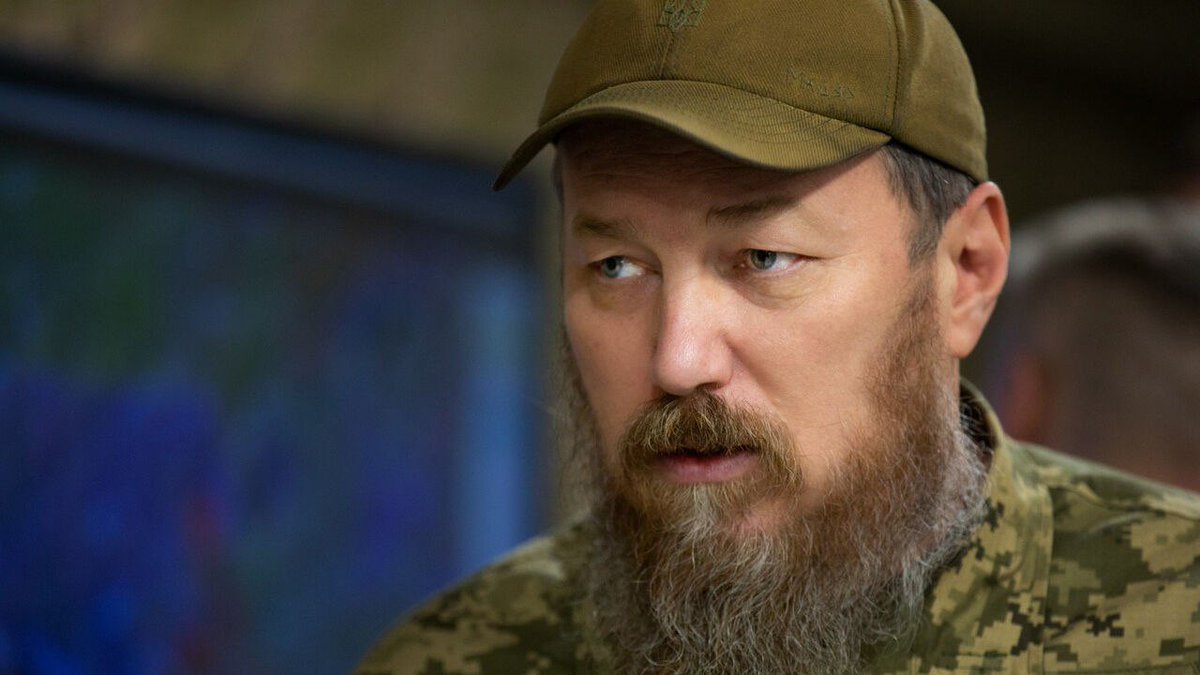
🇺🇦 Ukraine is already "depleting" the Russian army faster than it can replenish it, says Magyar in an interview with The Economist
▪️Since the beginning of winter, Ukrainian drones have killed or disabled at least 8,776 more soldiers than Russia has replaced.
▪️ SBS has an ecosystem of 15 interconnected functions – from jamming to surveillance, mining, and explosives production – that NATO generals have yet to comprehend.
▪️Thanks to Magyar's strict security protocols, the cumulative casualty rate in SBS does not exceed 1%.
▪️Enemy losses: 400 Russians for every Ukrainian; the cost of killing one Russian is $878.
❗️❗️"I don't feel any moral reservations. None. A man with a rifle in his hand is coming to kill me on my land. Either I kill him, or he kills me. Millions of Ukrainians, including my mother, draw strength from what we do," Magyar said.