Some people are invested in relationships
Some are invested in reenacting their drama. In place of authentic relationships, they cast others in the supporting roles necessary to stage it
After the script has played out, cast members are discarded and the new casting call begins
What British people have in their freezers:
-Frozen peas (some in a bag, some rolling around loose)
-Full bag of oven chips
-Another bag with three oven chips left in it
-Tupperware half-filled with unidentified brown stuff
-Half a scoop of mash potato that you saved for some reason
-An empty box that used to contain ice lollies that fools you every time you look in it but you still don’t throw it away
-Bag of hash browns
-Some sort of meat joint (possibly lamb) from 2014
-A near-empty ice cream tub
-Something that might be chilli or might be bolognese but you didn’t label it
-Some party food from three Christmases ago
-An empty bag that used to contain ice cubes
-A pack of chicken or fish that you needed to eat but you chucked it in the freezer because you ordered a takeaway instead
-One drawer that doesn’t open anymore
Women can experience hyperactivity, too. It just doesn’t necessarily look like jumping up and down and climbing walls. The internal feeling of restlessness and needing to be in motion to find calm (until the next time you feel the need to move to calm your system that doesn’t actually often seem to feel calm)—that is SUPER real and shouldn’t be minimized. XO, Dr. Jen
Self-love is one of the most important things in life. Believing in our hearts that we are enough just as we are is the key to a fulfilled life.
Instead of waiting around for someone to bring us flowers, we should learn to plant our own garden and decorate our souls.
The climate crisis affects every living being on this earth. We face a real need for greater global responsibility based on a sense of the oneness of humanity. If we fail to act, it is the children and grandchildren of today who will really suffer. For them we must act together.
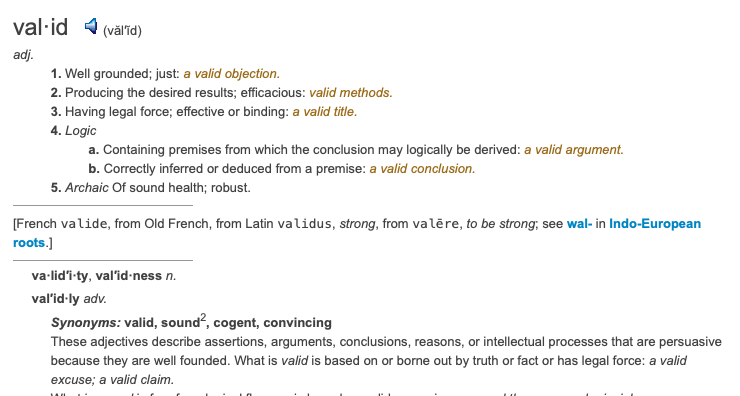
I’m not sure when people started using the word “valid” to describe feelings. It’s not clear what the phrase “Your feelings are valid” could even mean.
Let’s bring a little clarity about what feelings are, and are not.
✅Your feeling are feelings. They’re not right or wrong, correct or incorrect. They’re simply are. It’s legitimate that you have them, you’re having them for a reason, they don’t require logical justification, and they deserve to be taken seriously.
► Much of psychotherapy is about gaining awareness of feelings and understanding their meaning.
🚫 Your feelings are in no way a reliable guide to what is or isn’t true in reality. They are not a reliable guide to what’s true about anyone else. Feeling strongly about something does not make it more true
▶︎ This understanding is central to all established psychotherapy approaches.
Telling a client “your feeling are valid” is inherently confusing, because the word “valid” in the English language is often a synonym for logical or true. Too often, what clients hear “you are right.”
I don't know how the phrase “Your feelings are valid” ever became associated with psychotherapy. It doesn’t come from any mainstream therapy tradition. It comes from pop psychology and social media therapy “influencers,” not skilled psychotherapists. It’s “therapy speak,” not therapy.
Skilled psychotherapists don’t talk that way.
"I realize that if I were stable, prudent and static; I'd live in death. Therefore I accept confusion, uncertainty, fear and emotional ups and downs; because that's the price I'm willing to pay for a fluid, perplexed and exciting life."
Carl Rogers
The trees were talking. And no one had been listening. For decades, foresters believed trees were competitors—silent giants fighting for sunlight, water, and space. Cut down the weak ones, they said, and the strong would thrive. But Dr. Suzanne Simard, a Canadian forest ecologist, suspected something else was happening beneath the soil. So she did an experiment that would change how we understand forests—and life itself.She discovered that trees aren't isolated individuals. They're part of a vast, intelligent, underground network—a "wood wide web" where they share resources, warn each other of danger, and care for their young.The forest, it turns out, isn't a battlefield. It's a community.Suzanne Simard grew up in the forests of British Columbia, Canada. Her family were loggers. She spent her childhood among towering trees, watching them fall and new ones planted in their place.She became a forester herself, working for the logging industry in the 1980s. But she noticed something disturbing: when forests were clear-cut and replanted with a single species—usually Douglas fir—the new trees struggled to survive.Foresters blamed the birch trees growing nearby. "They're competing for resources," they said. "Cut them down so the firs can grow."But Suzanne didn't think that made sense. In natural forests, birch and fir grew side by side, thriving together. Why would they compete in replanted forests but not in natural ones?So she designed an experiment to find out. In the early 1990s, Suzanne planted birch and fir seedlings in a forest plot. She covered some with plastic bags to isolate them from each other. Others, she left uncovered.Then she did something radical: she injected tiny amounts of radioactive carbon into the trees—different isotopes for birch and fir—so she could track where the carbon went.If the trees were truly isolated competitors, the carbon would stay inside each tree.But if they were connected somehow, the carbon would move between them.Suzanne waited. Then she used a Geiger counter to measure where the radioactive carbon had traveled.The results were stunning.The carbon didn't stay in one tree. It moved. From birch to fir. From fir to birch. Through the soil. Through their roots.But not directly. The trees were connected by mycorrhizal fungi—thread-like organisms that attach to tree roots and extend for miles underground.The fungi act as a living network, linking trees together. In exchange for sugars the trees produce through photosynthesis, the fungi provide trees with water and nutrients from deep in the soil.But Suzanne discovered something even more remarkable: the fungi weren't just passively transferring nutrients. The trees were actively sharing resources with each other. In summer, when birch trees had full leaves and were photosynthesizing, they sent carbon to the fir trees, which were shaded and struggling. In fall, when birch leaves fell and they could no longer photosynthesize, the fir trees—still green—sent carbon back to the birch to help them survive the winter.The trees were cooperating. Helping each other. Balancing the ecosystem.Suzanne called these networks "mycorrhizal networks"—and the largest, oldest trees in the forest became known as "mother trees" or "hub trees."These mother trees act as hubs in the network, connecting hundreds of younger trees. They send nutrients to struggling saplings. They share information about drought, disease, and insect attacks through chemical signals.When a mother tree is cut down, the entire network weakens. Younger trees lose their support system.Suzanne's research showed that clear-cutting forests—removing all trees and replanting a single species—destroys these networks. The new trees are isolated, vulnerable, and far less resilient.Her work was revolutionary—and controversial.Logging companies resisted her findings. Some scientists were skeptical. The idea that trees "communicate" and "help each other" sounded too anthropomorphic, too sentimental.
I can honestly say, I can speak life into younger versions of me who thought she was broken. That feeling, that true, embodied, humble sense of worth is literally priceless. 10/10 recommend. There’s no perfection, only practice, and continued growth. This kind of healing is absolutely possible for you, too. XO, Dr. Jen
Man is condemned to be free. Condemned because he did not create himself, yet is nevertheless at liberty, and from the moment he is thrown into this world he is responsible for everything he does.
A boundary isn’t to control someone. It’s to show yourself self respect around what you will and will not accept.
Regardless of what the other person does, you choose how you respond.
That’s how you teach people how to treat you.