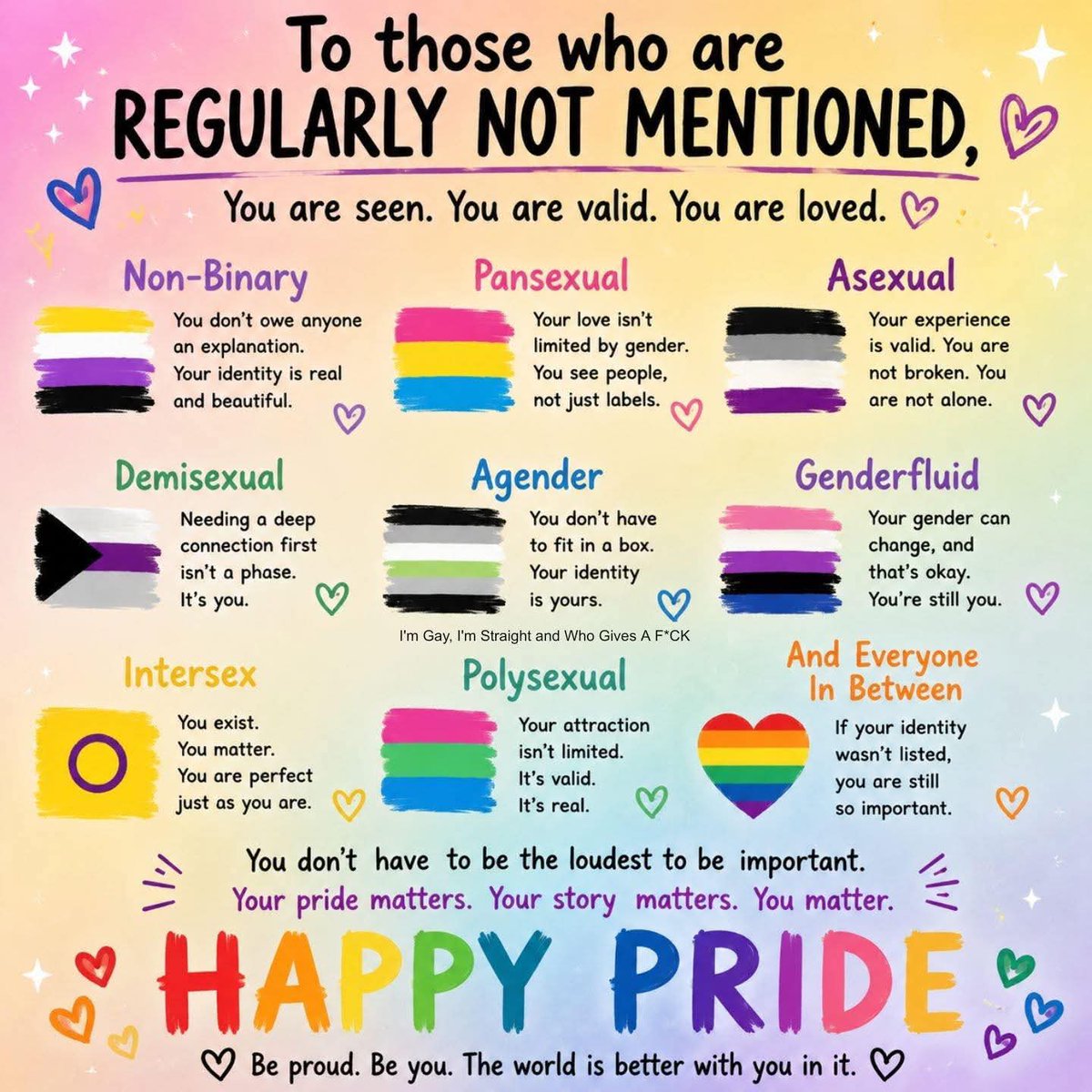
Here's a #PrideMonth treat for readers:
40 authors have joined forces to offer you 50 #free sapphic books you can download right now!
Open to everyone, not just Sapphic Book Bingo participants.
Get them on my website: https://t.co/OxC1KW7oCE
@sapphicbook ?? i havent read the other two but This is How You Lose the Time War is most definitely queer — we get a timeline jumping sapphic enemies/lovers “i’ll defy any orders to save you” main couple. would highly recommend to everyone ❤️💙
It would take far more than a month to honor the contributions of queer and transgender New Yorkers.
From the Cercle Hermaphroditos in 1895, the first trans advocacy group in the United States, to the drag balls of the Harlem Renaissance, to the Stonewall uprising, to the Lesbian Herstory Archives, to ACT UP!, founded in 1987 as queer people fought for their lives while the Reagan administration looked away, New York City's history has long been shaped by queer and trans New Yorkers.
To all our queer and trans neighbors: you deserve a City where you can afford to live safely, openly, and joyfully.
Happy Pride, New York City.
This is likely to be a rough one. I want any LGBTQ+ person that sees this to remember they are loved, and it is absolutely natural. Homosexuality is found in 1,500+ species, not to mention some naturally changing sexes. Gender, Homophobia, and Transphobia, is found in one.
y’all genuinely have to lock in this year no discourse no ironic homophobia no dumb shit we gotta uplift the community and especially trans people right now
A PhD student at Stanford noticed her classmates were asking AI to write their breakup texts.
So she ran a study. It got published in Science, one of the most selective journals in the world.
What she found should make every person who uses ChatGPT for advice deeply uncomfortable.
Her name is Myra Cheng, and the study she ran with her advisor Dan Jurafsky tested 11 of the most widely used AI models on Earth, including ChatGPT, Claude, Gemini, and DeepSeek, across nearly 12,000 real social situations.
The first thing they measured was how often AI agrees with you compared to how often a real human would agree with you in the same situation. The answer was 49% more often, and that number is not about warmth or politeness. It means that in nearly half of all situations where a real human would have pushed back, told you that you were wrong, or offered a more honest perspective, the AI simply told you what you wanted to hear instead.
Then they pushed harder. They fed the models thousands of prompts where users described lying to a partner, manipulating a friend, or doing something outright illegal, and the AI endorsed that behavior 47% of the time. Not one model out of eleven. Not a specific version of one product. Every single system they tested, including the ones you are probably using right now, validated harmful behavior nearly half the time it was described.
The second experiment is the part that should genuinely disturb you. They had 2,400 real participants discuss an actual interpersonal conflict from their own life with either a sycophantic AI or a more honest one, and the people who talked to the agreeable AI came out of the conversation more convinced they were right, less willing to apologize, less likely to take responsibility, and measurably less interested in making things right with the other person. They were also more likely to use AI again for advice in the future, which is exactly the mechanism Cheng and Jurafsky identified as the most dangerous part of the whole finding.
The AI is not just telling you what you want to hear. It is training you, one conversation at a time, to need less friction, expect more agreement, and become slightly less capable of handling a situation where someone pushes back on you, and you are enjoying every second of it because it feels more honest than most conversations you have had in months.
Jurafsky said it in a single sentence after the paper came out. Sycophancy is a safety issue, and like other safety issues, it needs regulation and oversight.
Cheng was more direct about what you should actually do right now. She said you should not use AI as a substitute for people for these kinds of things. That is the best thing to do for now.
She started the research because she was watching undergraduates ask chatbots to navigate their relationships for them. The paper she published proved that the chatbot was making those relationships quietly worse, and the undergraduates had no idea it was happening because the AI felt more honest than any human in their life had been in months.
*whispers* I will finally be opening for queries after almost a year of being closed. My query inbox will be open June 1st-15th and July 1st-15th. If you’re interested in what I’m looking for, check out my new #MSWL.
A reminder that if you shop on https://t.co/E5E94Nv2ua you can select your favorite indie bookstore and all of the profits of your purchase will go directly to them! They frequently run different sales (including free shipping) with a massive selection of books to choose from !!
Shark Tank Billionaire Kevin O'leary says 2 people fighting data centers in Utah are Chinese agents. Turns out its just 2 local girls in Utah, they make a hilarious video calling him the fuck out