Hot Take:
What if farmers, agronomists—or anyone who wanted to participate—built personal databases of everything they actually know—
and sold that knowledge directly to other farmers, without having to tie it to a product or service?
Fertility. Crop plans. Chemical strategy. Mechanical know-how. Precision ag. Drain tile. Grain marketing. High-yield strategy. Deep understanding of tissue, soil, or SAP data.
All structured in a way that a farmer’s own LLM setup (like ChatGPT, Grok, or Claude) could access through an API—
So your knowledge could plug into their system, and you'd get paid every time it’s used.
👉 A subscription model to your brain.
👉 Royalties on your wisdom.
👉 No sales pitch. No billable hours.
Because for most people with deep experience…
Giving away what you know only felt worth it if it helped sell a product or service.
This flips that.
Now, the value is the knowledge—and you finally own it.
Check out Kel Teck Ag's presentation from the Launch Pad stage at Canada's Farm Show:
My discussion on Soil test insights and farm data
https://t.co/0iVM0bIy1H
Kellen Huber on soil health and crop production
https://t.co/E4h8B4G6vv
#SoilHealth#precisionagriculture
Composite Sampling: The Lazy Shortcut?
"Let’s get one thing clear—I’m not calling anyone out here. But is a single composite soil sample really helping you? 🌱 Especially if you’re relying on the standard industry extracts."
👉 The problem? Standard tests are cheap and simple, but they don’t correlate well with plant nutrient uptake. Why? The harsh chemical extracts they use don’t mimic what roots actually do to cycle nutrients.
💡 What’s Better?
-Upgrade your test: Use one that includes root-mimicking extracts, biological metrics, and carbon data.
-Test smarter: Sample before planting and before major in-season fertilizer applications.
-Go further: Use zones or grids, sample the same spots every year, and test in both fall and in-season.
🌾 My Lesson Learned:
Switching from composites to zones gave me more data, but it didn’t really help until I moved to the Indicator Complete test. It showed me, forexample, that while my calcium base saturation was high, much of it was tied up and unavailable to plants. It also revealed that low Bray phosphorus didn’t mean low available phosphorus—insights I couldn’t have gotten from standard tests.
🚜 What I Do Now:
I test zones every fall and a couple key in-season points. If you stick with composites—or any method—at least upgrade to a test that correlates to plant uptake.
❓ What’s Your Take?
Are your soil tests giving you the full picture? 🤔 If you’ve switched to better methods, what’s been your biggest insight?
There is still time to register for the KelTeck Ag Ltd 2025 Soil Health Conference January 28-30th at the Grant Hall Hotel in Moose Jaw, SK! Here is the link to our website!
https://t.co/ETADYFMLAF
Here is my first attempt at creating some tutorials that I hope will help some farms understand how to get started. Any suggestions on topics or platforms would be appreciated.
https://t.co/Wt9UU21PTV
Hey 👋 combine operators. What's the rationale behind flipping out yer auger when you know the grain cart can't possibly be there that second. If it took 5 minutes for the auger to come out fine, but this just seems like bullying 🤣🤣 asking for a friend, IYKYK
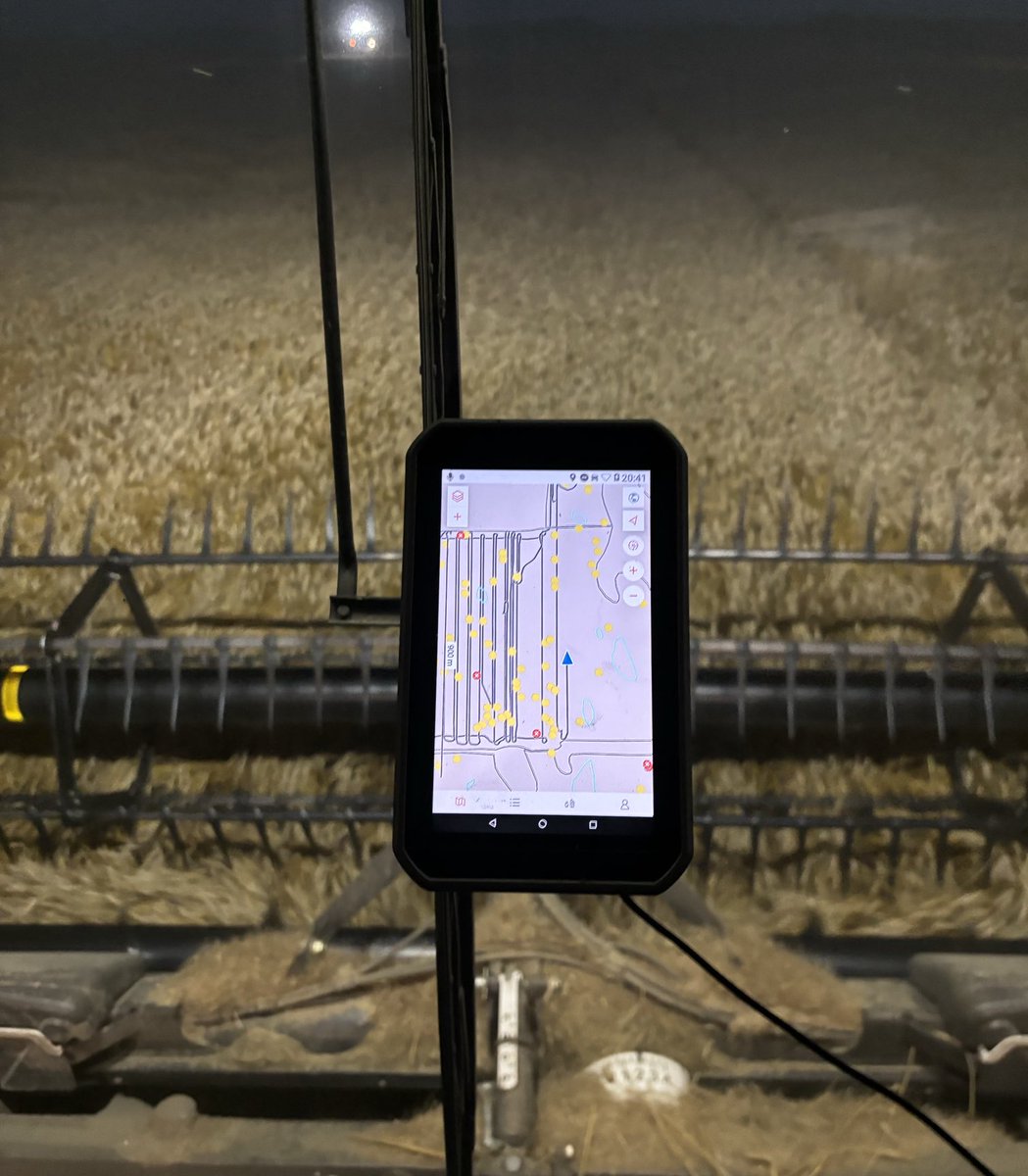
Mapped stone hazards reduce risk. Yellow are surface rocks mapped by ai during seeding pass in spring. Now picked, but still represent higher risk areas. Red are deadheads. Situational awareness decreases risk. #mapyourstones