Happy to see @AndreAssisCarmo leading a young and brilliant EP/arrhythmia team at the University Hospital of @ufmg. Management of arrhythmias in Chagas cardiomyopathy is still a challenge and his group is always a step ahead in bringing new solutions! https://t.co/DmgZlZcBDz
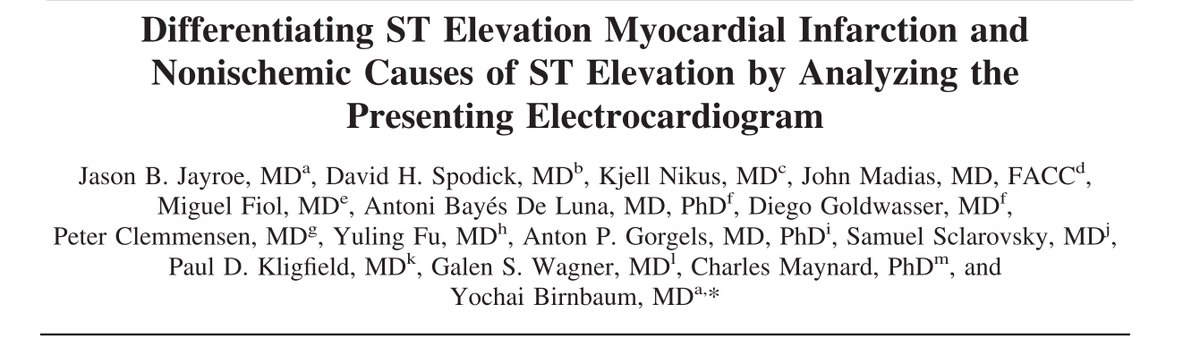
Whenever I make a OMI/not OMI error, I'm going to haul out this study to assuage my shame.
These authors have written the textbooks, and *they* can't always agree!
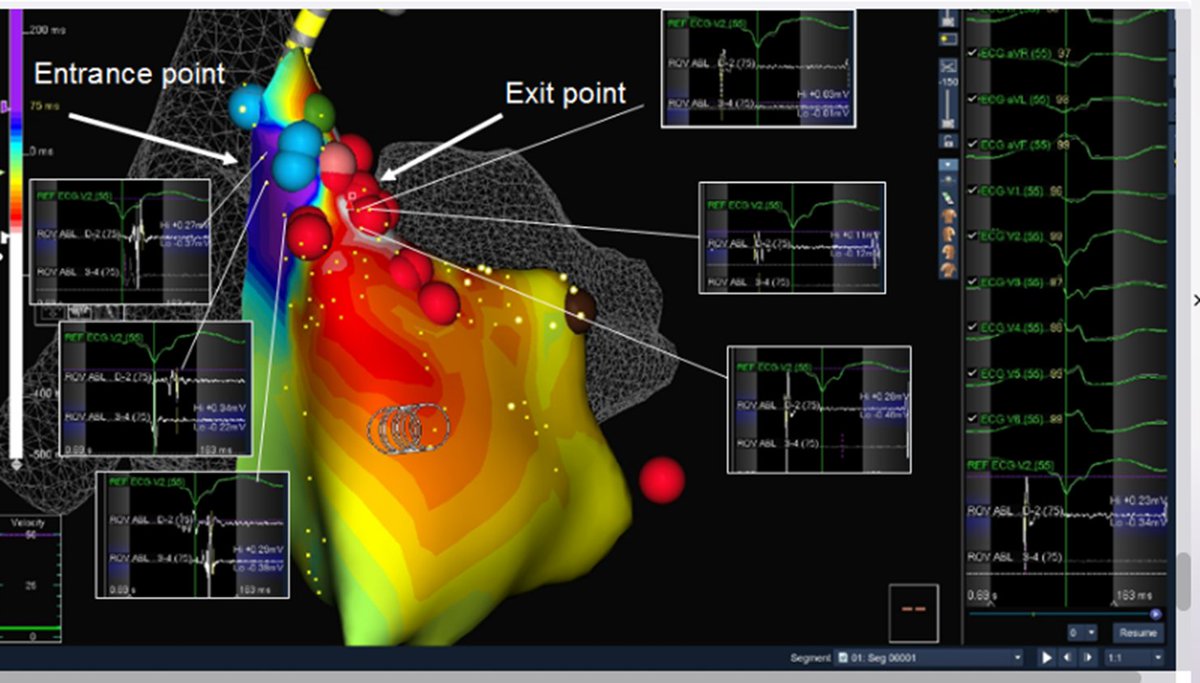
New personal best: accessory pathway block in 1.6 sec of ablation🔥. Open window mapping of left lateral AP courtesy of Meg W, Eric S, @NoodleMaps3 @BiosenseWebster. Turn sound up to hear an enthusiastic “woot” immediately after AP block 🤣😂🤣
A brief exploration of the rooster head sign
Fig 1: Tacticath 3.5 mm, Ap to accentuate preexcitation
Fig 2: Switch to 6 mm cryo for true mid septal
Fig 3: Off pacing to evaluate AH
Success at -24 degrees first freeze with @cm_beach (and @DrRoderickTung in spirit)
9/9
Concealed transseptal conduction underlies aberration in several situations:
1) Perpetuation of aberrant conduction during tachyarrhythmias.
2) Unexpected persistence of acceleration-dependent aberration.
3) Alternation of aberration during atrial bigeminal rhythm.
8/9
Phase 4 block often follows a delay caused by a compensatory pause after a PAC or PVC, spontaneous slowing of the sinus rate, or overdrive suppression of sinus rhythm upon termination of a fast supraventricular rhythm.
7/9
“Pause-dependent” or “bradycardia-dependent” block is caused by “phase 4 block.” Long intervals between activations allow for spontaneous depolarization and inactivation of Na+ channels & impaired conduction. Other proposed mechanisms include "source-to-sink mismatch".
6/9
Pause-dependent block (aka “phase 4 block” or “bradycardia-dependent block”) occurs when conduction of an impulse is blocked in tissues well after their normal refractory periods have ended.
5/9
Pathologic vs physiologic phase 3 block
Acceleration-dependent aberration is a marker of a diseased HPS when it:
(1) occurs at relatively slow heart rates (<70 bpm).
(2) displays LBBB.
(3) appears with gradual acceleration of the heart rate.
3/9
Aberration secondary to phase 3 block tends to be in the form of RBBB when premature excitation (and Ashman phenomenon) occurs during normal baseline heart rates and in the form of LBBB when it occurs during fast heart rates.
2/9
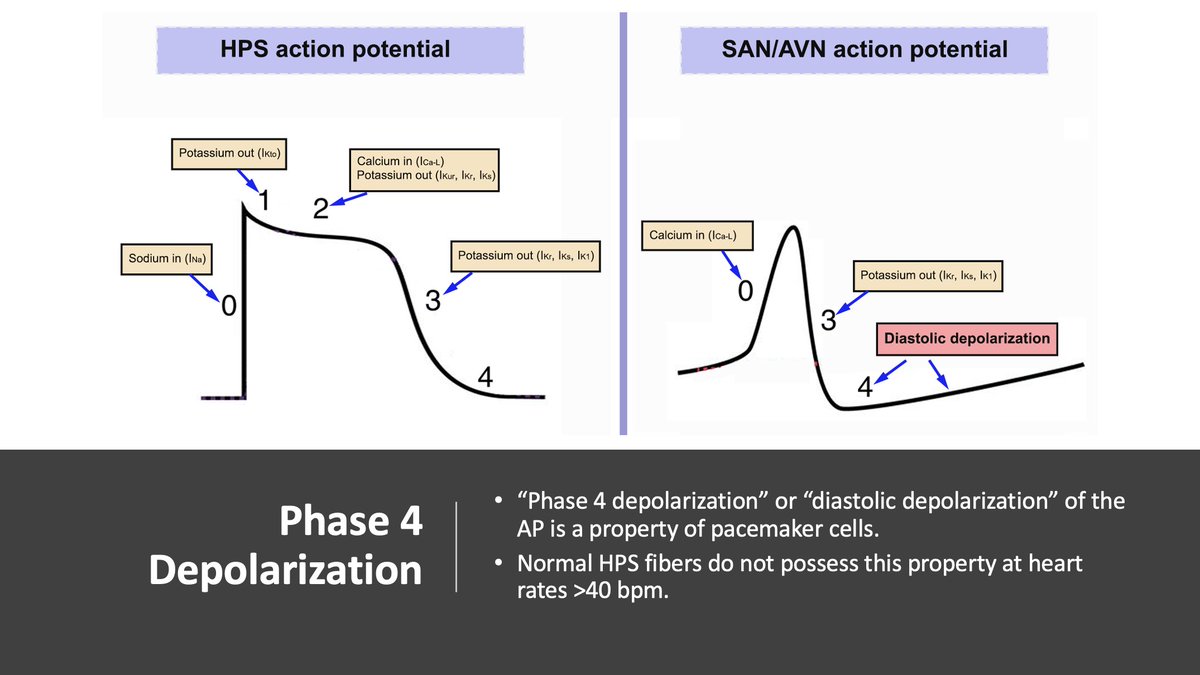
Acceleration-dependent BBB (aka “phase 3 block” or “voltage-dependent block”) occurs when an impulse arrives at tissues that are still refractory due to incomplete repolarization (during phase 3 of the action potential [AP]).
#IssaTweetorials
What is the mechanism of aberrant conduction?
1/9
“Aberration” describes transient bundle branch block (BBB) and does not include persistent QRS abnormalities caused by persistent BBB, preexcitation, or the effect of drugs.
#EPeeps#CardioTwitter#ECG









![ZiadIssaMD's tweet photo. 2/9
Acceleration-dependent BBB (aka “phase 3 block” or “voltage-dependent block”) occurs when an impulse arrives at tissues that are still refractory due to incomplete repolarization (during phase 3 of the action potential [AP]). https://t.co/C7phpJZ5Q5](https://pbs.twimg.com/media/FGQ_18rVQAQUWlT.jpg)





