So very proud of what WE are building in the 5th largest city in the US.
This is the Banner – University Medicine Phoenix Heart Institute.
https://t.co/GUCHFaXZJx
For nearly 20 years, our teams have worked to understand #AFib through the biology of the #atrial substrate. What began as a hypothesis around atrial fibrosis is becoming increasingly clear.
The question may no longer be simply: PVI versus substrate ablation?
The more important question is: Which AF patient has a modifiable atrial substrate, where is it, and can we reliably eliminate it?
DECAAF I established that atrial fibrosis matters and strongly predicts ablation outcome.
DECAAF II then tested MRI-guided fibrosis ablation in persistent AF. The overall trial was neutral, but the mechanistic lesson was important: identifying fibrosis alone was not enough. Intended ablation did not always translate into durable scar, and benefit appeared related to both disease extent and effective substrate coverage.
IDEAL-AF and COAST-AF now add another piece.
IDEAL-AF selected only patients with meaningful low-voltage substrate for randomization. When that substrate was specifically targeted with clear electrical endpoints, outcomes improved substantially over PVI alone.
COAST-AF tells a similar story. The overall trial was negative, but among patients who actually had low-voltage areas, substrate ablation significantly improved outcomes. Patients without demonstrable substrate did not appear to benefit.
These studies may therefore be defining the same biology from different directions:
No significant atrial substrate → PVI may be enough.
A demonstrable, modifiable atrial myopathy → PVI alone may be inadequate.
Advanced, diffuse disease → simply adding more ablation may not overcome the biology.
The next phase of AF ablation should move beyond “more ablation” toward precision substrate therapy: identify the AF fibrosis/myopathy phenotype, select the right patient, define the abnormal tissue accurately, and ensure that it is truly modified or isolated.
The future is not empiric substrate ablation. It is targeting the AF substrate in the right patient, at the right stage of disease.
@chris_sohns@PrashSanders@peterkistler3@S_NarayanMD@Phiso_de@netta_doc@TinaBaykaner@DrRoderickTung@Ed_Gerst@shivkumarmd@Siddmann@gautamsand@drjohnm@TulaneTriad
Presented at #ScientificSessions26:
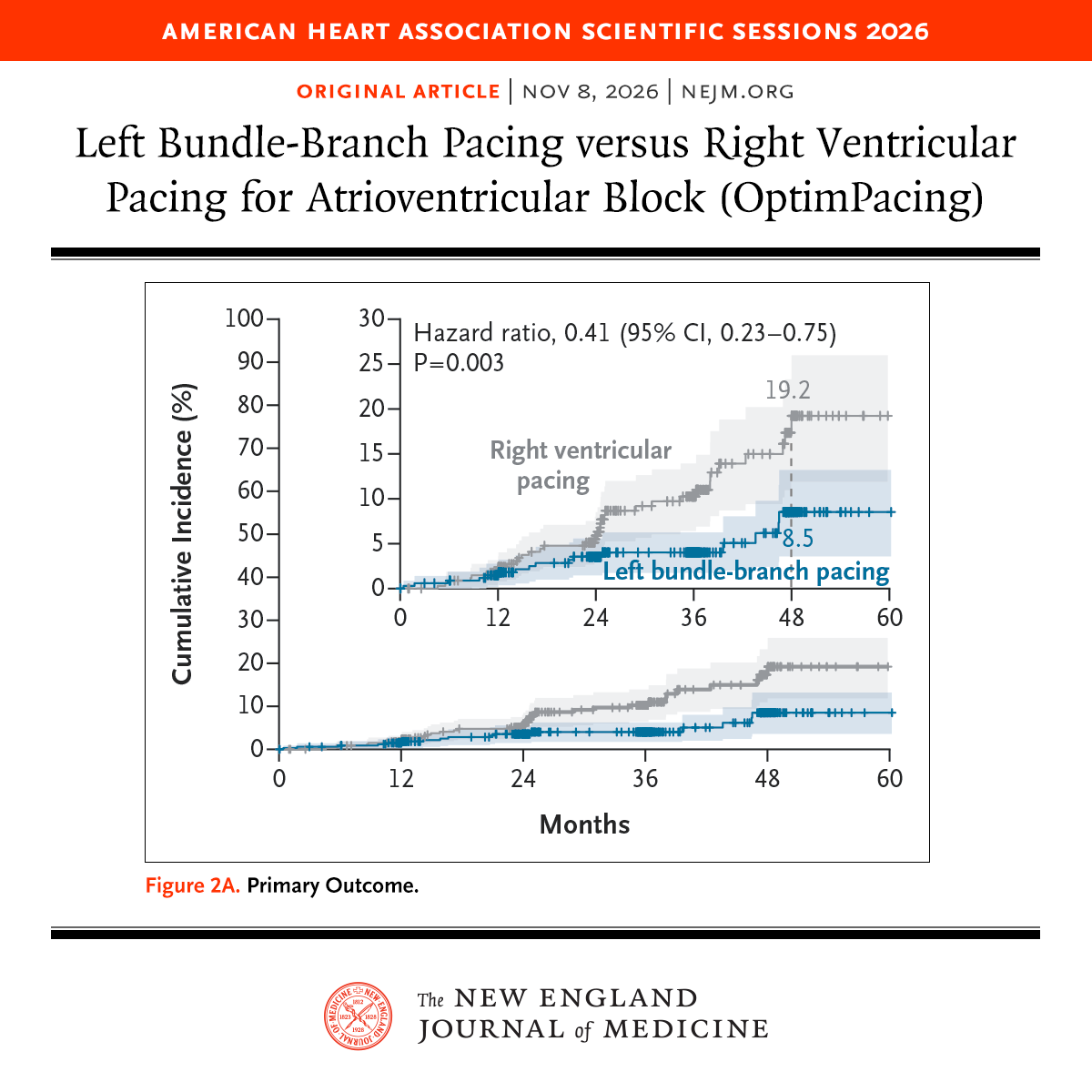
In patients with atrioventricular block, left bundle-branch pacing resulted in a lower incidence of a composite of death, hospitalization for heart failure, or pacing-induced cardiomyopathy than right ventricular pacing. Full OptimPacing trial results: https://t.co/Fg0lv9xcka
@AHAScience
First #PPS10, definitely not the last! Inspiring science, thought-provoking discussions, and more questions than answers (the best kind of meeting!). Especially grateful to @DrRoderickTung and @MargaridaPujol for making this journey into research so exciting!
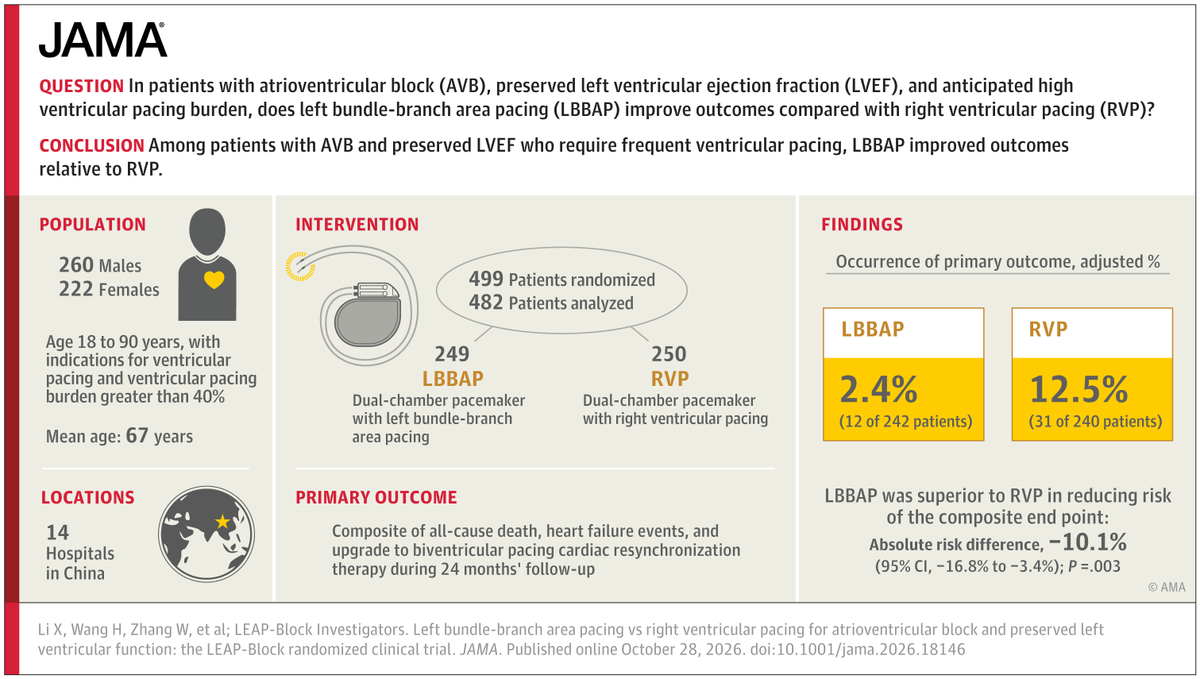
LBB Area Pacing vs RV Pacing for AV Block and Preserved Left Ventricular Function:
The #LEAP-Block Trial
📍499 patients with #LVEF ≥50% randomized to LBBAP vs #RVP across 14 Chinese hospitals.
📍 Primary endpoint: 2.4% vs 12.5% favoring #LBBAP (P=0.003).
📍 HF events: 3.4% vs 11.3% with LBBAP vs RVP.
📍 LBBAP ⬇️ the 24-month primary endpoint risk (HR 0.37, 95% CI 0.19–0.73), with no significant differences in mortality or device complications.
#LEAPBlock #Cardiology #HeartFailure #Pacing
https://t.co/WYk6J8JIny
@JAMACardio #JAMA
Among patients with #AtrioventricularBlock, preserved left ventricular ejection fraction, and anticipated high ventricular pacing burden, left bundle-branch area pacing reduced the 24-month composite of all-cause death, heart failure events, or upgrade to biventricular pacing vs right ventricular pacing.
Device-related complications were similar between groups, supporting clinical consideration of left bundle-branch area pacing for patients expected to require frequent ventricular pacing.
https://t.co/zFBEYrhEnx
Credit to the EP team in Bern for this excellent remapping study after either RF or PFA. Mandated remapping is much better than remapping for symptoms https://t.co/CrxPRG2Ed5
A) PFA no better than RF for durable PVI
B) Recapitulates GAP study showing that AF still occurs in one-third of durably isolated PVs and 72% of those with reconnected veins DID NOT have AF at one year
This is the crux of our problem in EP: we don't understand the pathophysiology of the condition. PVs get isolated because we can. @TobiasReichlin
La electrofisiología de Latinoamérica se reúne en la Ciudad de México 🫀
Del 18 al 20 de noviembre vive el Congreso Internacional LAHRS – SOMEEC 2026 en el Hilton Reforma: tres días de ciencia, casos en vivo y expertos de todo el mundo
#LAHRS2026
https://t.co/YcP4TGA3OY
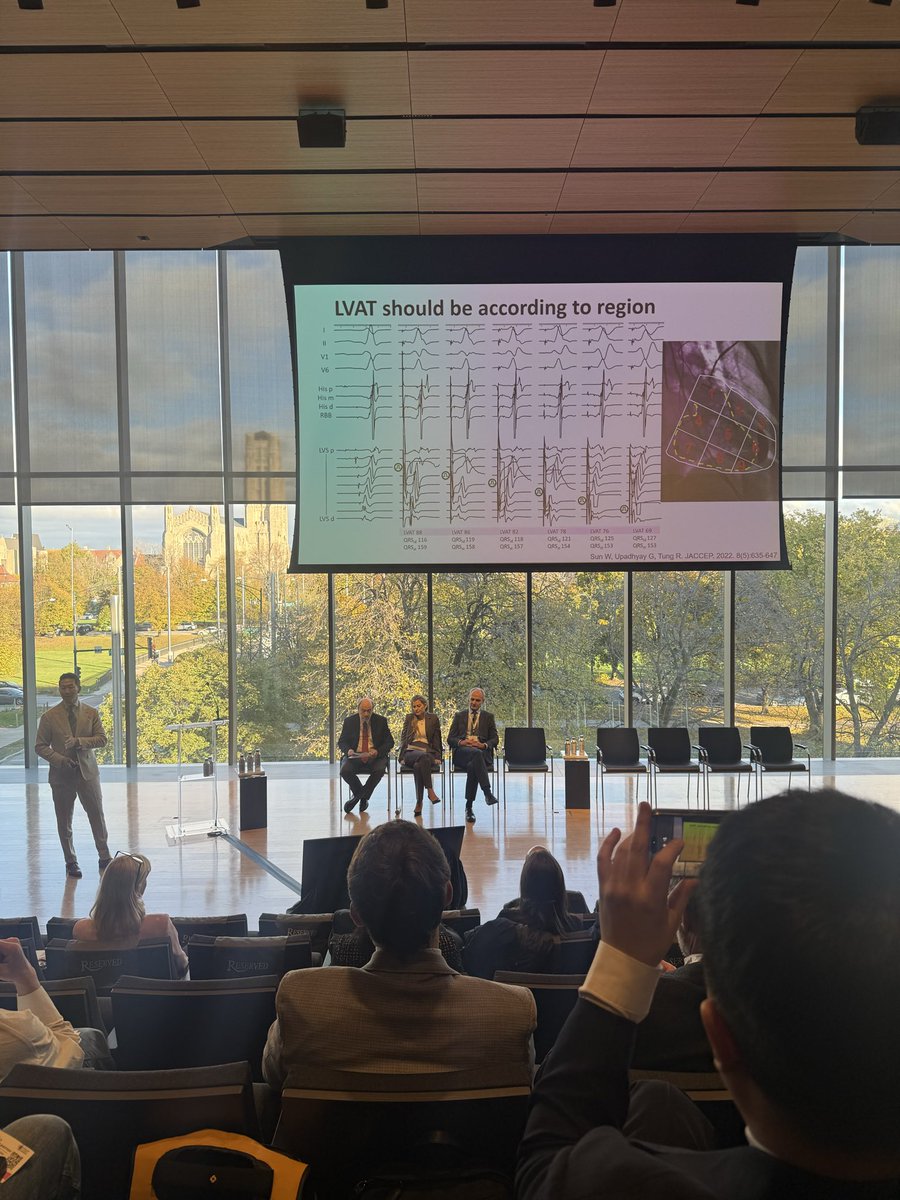
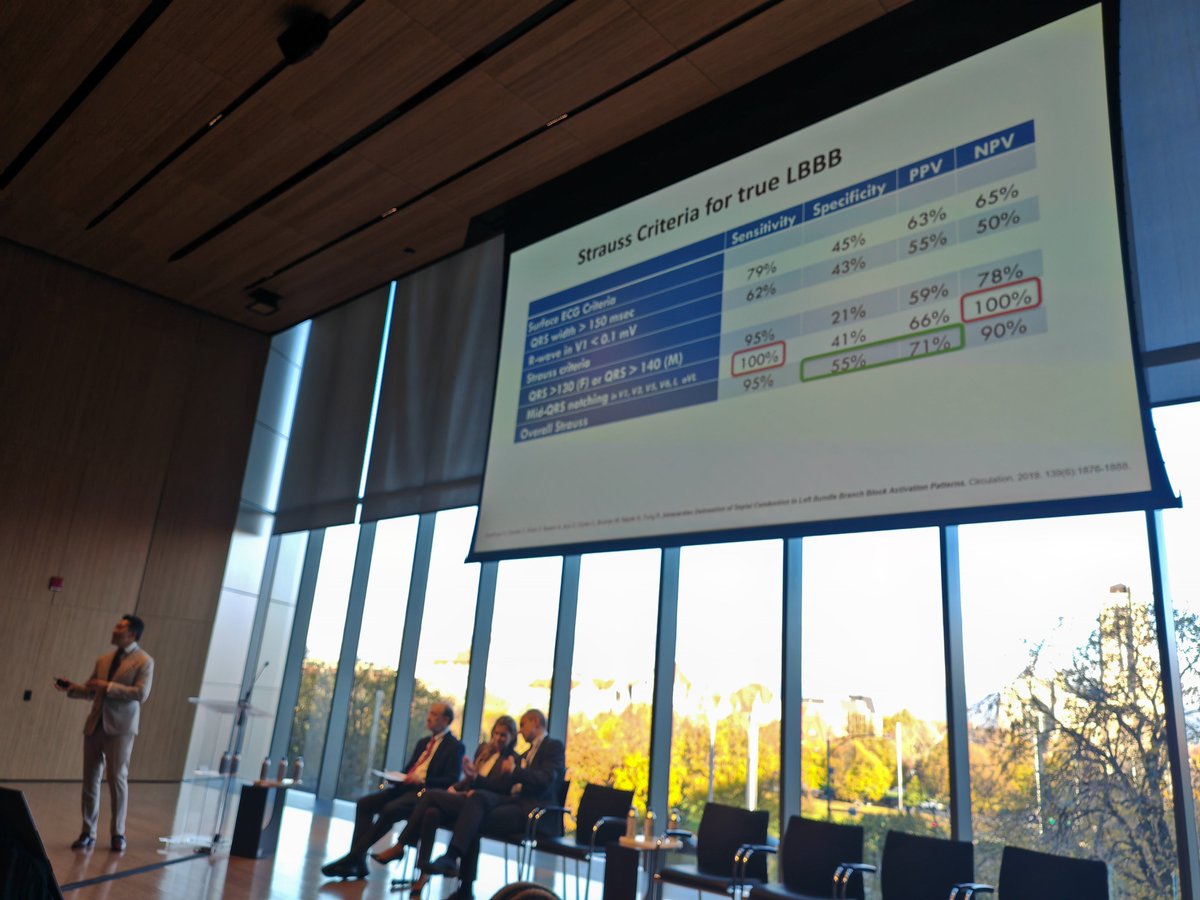
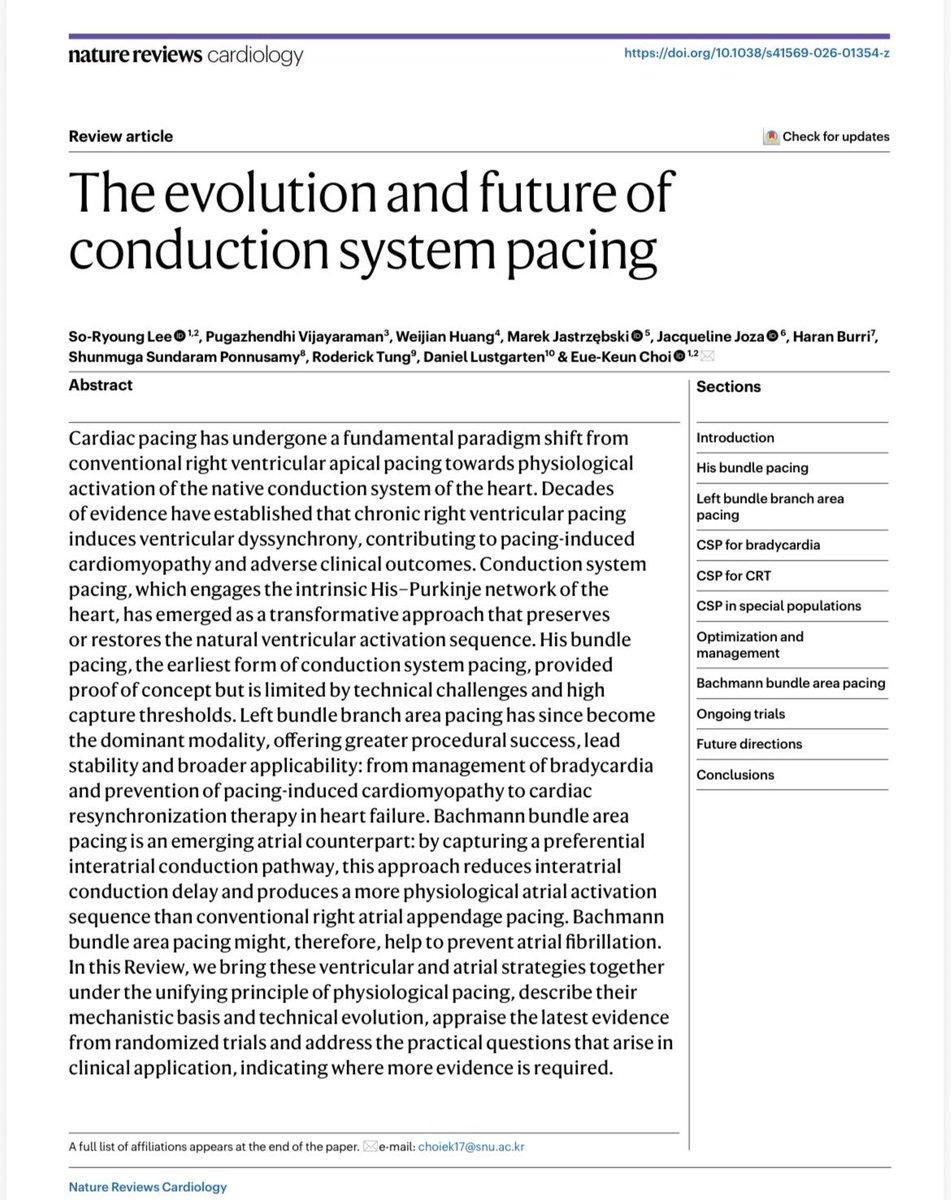
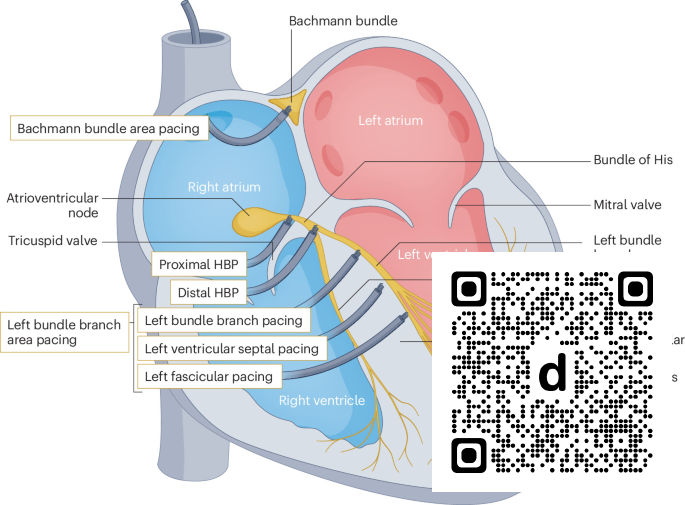
Where the evidence stands:
• High pacing burden → CSP prevents PICM; RCTs now support it as a primary strategy over RV pacing
• HFrEF + LBBB → CSP-CRT with confirmed capture
• AF “pace & ablate” → synchrony comparable to BiV pacing
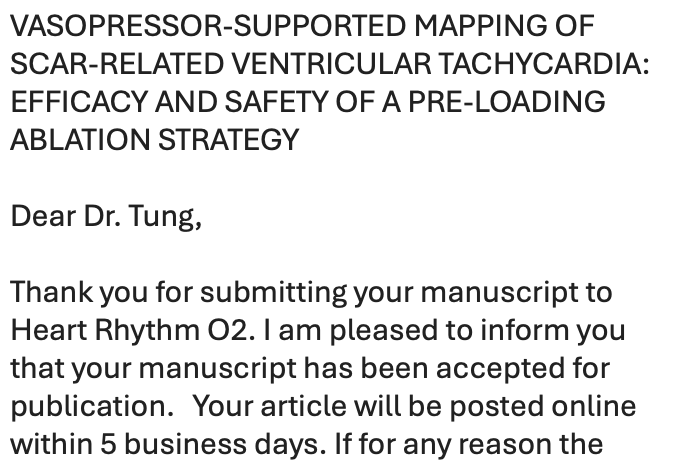
Very excited to see 8 years of work coming soon @HRS_O2Journal. The rationale for dopamine is to avoid alpha agonism at all cost in HFrEF.
The majority of VT is mappable with anticipation, strategic positioning, and pharmacologic manipulation.
Congrats @ZJameria@TakuroNishimu@gauravaupadhyay!