The inspiring & talented musician and composer 🎵🎵🎵 (in addition to Grade 10 student!), Mia Turakhia (who just happens to be the daughter of @leftbundle) presented today at #AHA26#ScientificSessions26 on the effect of music 🎶 exposure on preprocedural stress & anxiety 👏🏽👏🏽👏🏽
AF burden is increasingly being looked at as an outcome for clinical trials owing to the known limitations of time to event recurrence endpoints.
In the attached clinical trials workshop we critically examine the role of AF burden as an outcome for clinical trials of AF interventions, evaluating the evidence supporting AF burden as well as providing framework for an analytic strategy. We also delve into complementary metrics such as LEAF (longest episode of AF) and AF density.
@CardioUBC@DilawriCVI@VCHResearch
https://t.co/DRRgm5RqZC
Confusing recommendation for AF ablation in HFrEF with multiple consistent RCTs for ABL vs drugs yet LOE C! #2026ESC HF guidelines. Has there been a GDMT study in AF & HFrEF popn NOT inc substudies or secondary analysis? @drjohnm@nmarrouche@chris_sohns@escardio
Interesting piece. One question from the EP side: if interventional HF encompasses TEER, MCS, CCM, etc., shouldn’t CRT/CSP—one of the great success stories in HF—have a more central place? And if @HFSA@SCAI will co-own this emerging field, shouldn’t EP @HRSonline have a seat at the table?
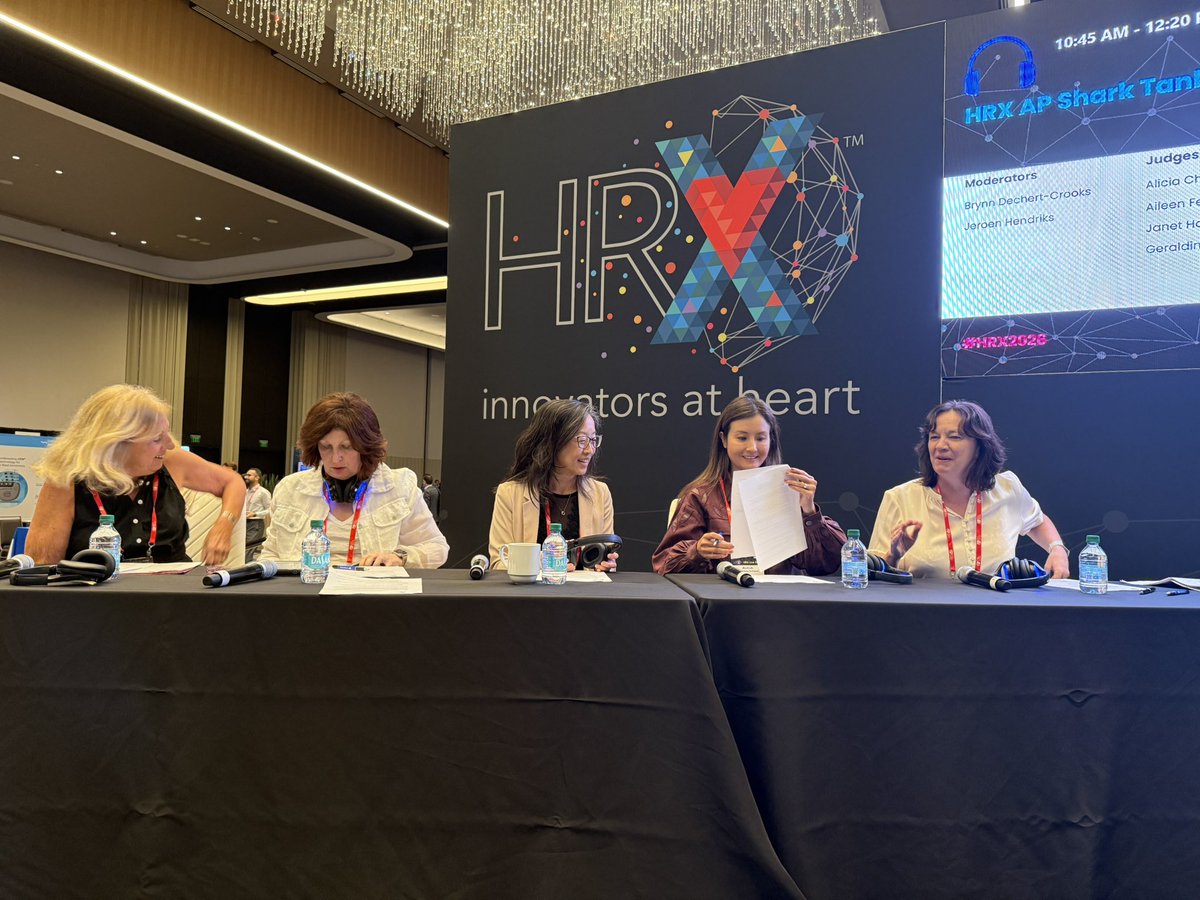
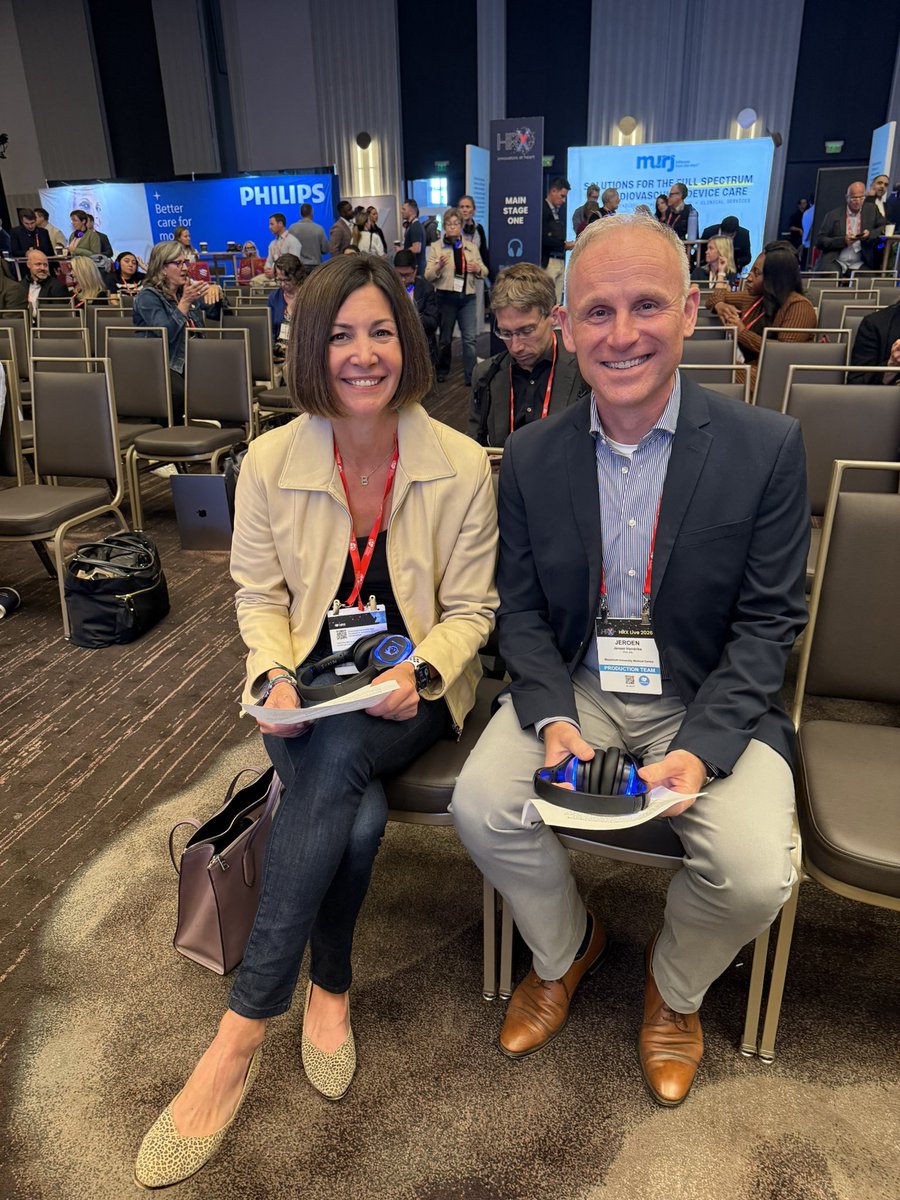
Day one at #HRX2026@experienceHRX is in the books! Looking forward to the next two days of this intentionally unconventional conference. Be there! #EPeeps
Very important message from our group. In patients with recurrent AF after a first ablation, what we do next matters. Repeat catheter ablation was associated with a 35% lower risk of death, stroke, or HF hospitalization compared with cardioversion, with an NNT of only 14.
This challenges the idea that management of recurrent AF should simply be based on operator preference. Recurrence after ablation should not be viewed as failure—it may be an opportunity to intervene again and improve meaningful clinical outcomes.
Congratulations to @mabou_khalil@HanFengGHD@QMarashly and the entire team. #AFib #Ablation #EPeeps
@PrashSanders@shivkumarmd@gautamsand@S_NarayanMD@Phiso_de@drsuneet@drjohnm@drluissaenz@leftbundle@KennethEllenbo1@DrBradleyKnight@DrRoderickTung@atulverma_md
Important PVI-SHAM-AF trial—but interpretation matters. This was not ablation vs “nothing.” The sham arm included deep sedation, an invasive cath-lab procedure, intensive follow-up and, importantly, cardioversion when patients were in AF—itself an effective rhythm-control intervention.
Yet ablation still produced substantially better rhythm control (73% vs 52% freedom from AF).
With QoL assessed at only 6 months, are we measuring the effect of ablation—or comparing two active rhythm-control strategies?
I would be cautious concluding that ablation does not improve symptoms. The study may instead demonstrate how difficult it is to design a truly inert sham for AF.
#AFib #CatheterAblation #RhythmControl #PVI #ESCCongress @PrashSanders@drjohnm@chris_sohns@peterkistler3@DJ_Lakkireddy@DrRoderickTung@TinaBaykaner@DrJasonAndrade@SteffelJ@netta_doc@TulaneHeart
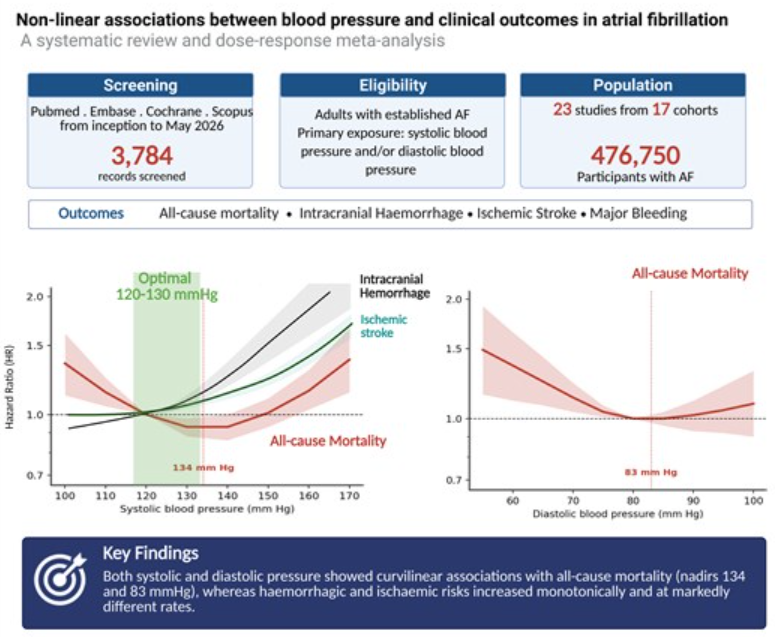
How low should we go with BP in atrial fibrillation?
Our #ESC2026 study, simultaneously published in @EuropaceEiC , suggests a “sweet spot”:
🔹 SBP ~120–130 mmHg
🔹 Avoid DBP <75–80 mmHg
🔹 Lower is not always better
In AF, both numbers matter.
https://t.co/c8DOEttImC
#AtrialFibrillation #Hypertension
@ElnazShmohamadi@melissaemm1@Elliott_AD@JonathanAriya
ENRICH-AF trial: In AF patients with prior ICH, edoxaban did not lower stroke or systemic embolism but increased major bleeding compared to non-anticoagulant therapy. Download slides here: https://t.co/30E9SFdhLj
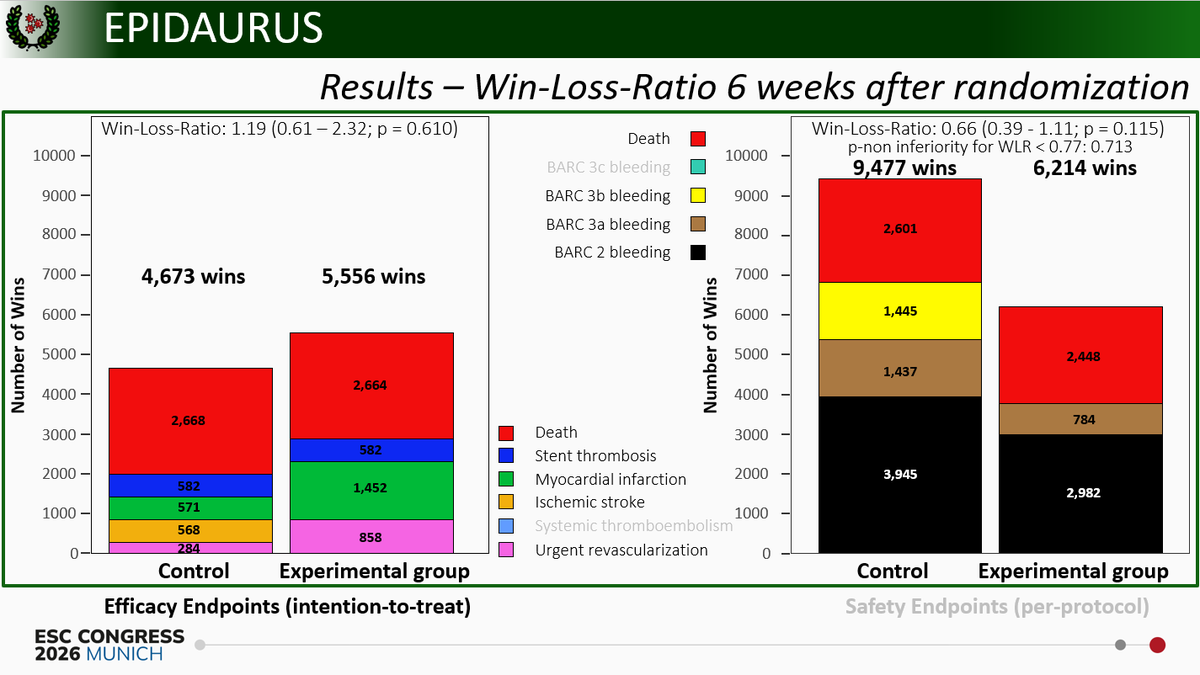
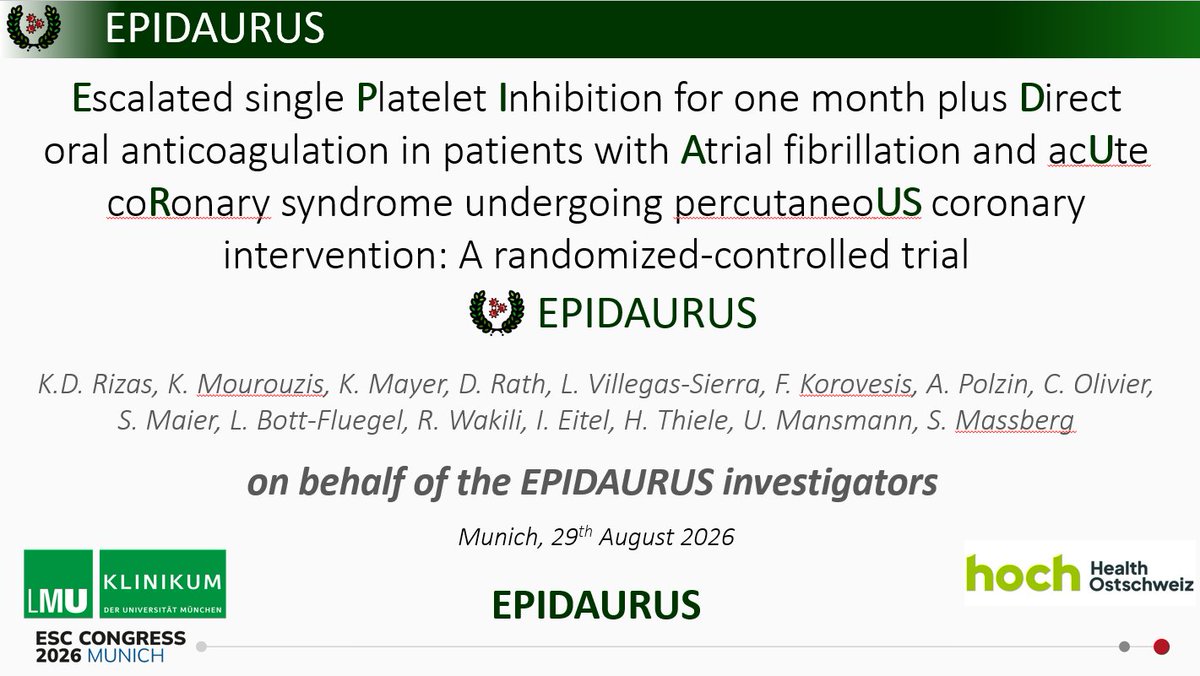
EPIDAURUS trial: In patients with AF and ACS, dual antithrombotic therapy with DOAC and intensified P2Y12-inhibition with prasugrel or ticagrelor for 1 month was associated with a higher bleeding risk without reducing ischemic events compared to triple antithrombotic therapy. Download slides here: https://t.co/i24tXyvKfP
📢 New in #Europace | #ESCCongress
In 476,750 AF patients:
🔹 Lowest mortality around SBP 134 / DBP 83 mmHg
🔹 Stroke and ICH increased with higher SBP
Pragmatic target: SBP 120–130, avoid DBP <75–80 mmHg 📊
🔗 https://t.co/rGVa3PDf72
@PrashSanders@ElnazShmohamadi
#CMRGUIDE at #ESCCongress
Should myocardial SCAR—not just EF—help determine who gets a primary-prevention ICD?
Patients with:
➡️ LVEF 36–50%
➡️ Ischemic or nonischemic cardiomyopathy
➡️ Scar/fibrosis on CMR
Randomized 353 pt, impacted by COVID, 82% Men
⏱️6.3 y
ICD vs implantable loop recorder
Primary Endpoint= SCD or hemodynamically significant ventricular arrhythmia
🌟RESULTS:
Primary: SCD or hemodynamically significant ventricular arrhythmia
➡️ HR 0.76 (95% CI 0.37–1.58), P=.47 ❌
Sudden cardiac death alone:
➡️ HR 0.26 (0.07–0.95), P=.04
All-cause mortality:
➡️ HR 0.91 (0.49–1.71), P=.78
🫀 CMR-guided ICD implantation did not reduce the primary composite endpoint. The reduction in SCD is intriguing, but as a secondary endpoint in a negative trial it should be interpreted cautiously.
CMR scar alone does not yet appear sufficient to expand ICD indications beyond current EF-based criteria.
📄 https://t.co/0gx5m5ygiN @JAMA_current
#WhyCMR #CardioTwitter #EPeeps #HeartFailure
Fun session to start off #ESCCongress2026!
An honor to join amazing friends from around the world for “#Artificialintelligence in #AFib care: smarter detection, safer treatment, better outcomes?” chaired by Drs. @g_andre_ng & Isabel Deisenhofer
Thanks @escardio for the invite!