“Whatever is true, whatever is honorable, whatever is just, whatever is pure, whatever is lovely, whatever is gracious, if there is any excellence and if there is anything worthy of praise, think about these things.” Phil 4:8
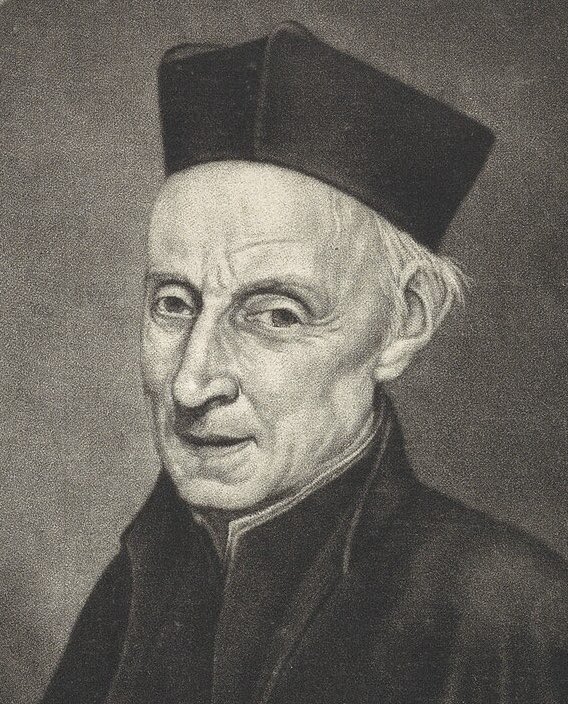
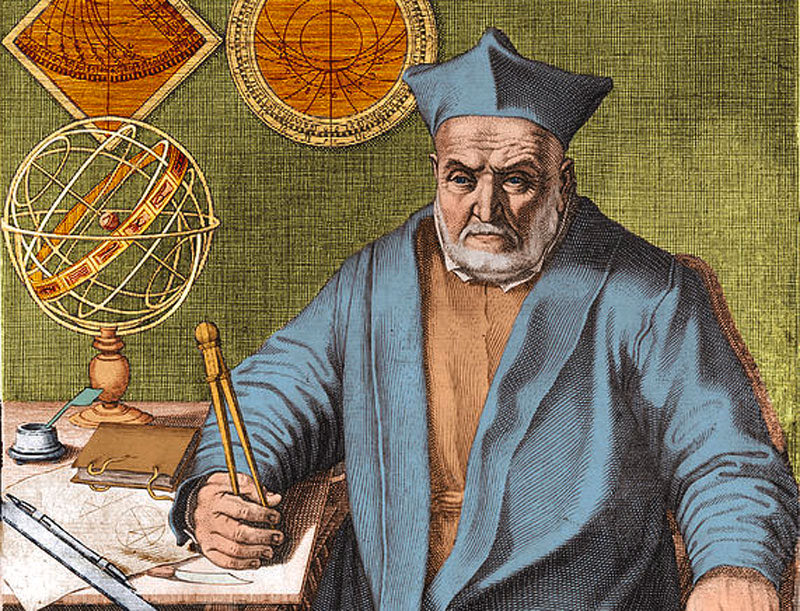
The Jesuit priest and scientist Giovanni Battista Riccioli died June 25, 1671.
The picture on the right is from his major work Almagestum Novum.
This passage from Jesuit Science and Republic of Letters captures his many contributions:
“Riccioli’s specific contributions to the development of modern science include measuring a terrestrial degree and the Earth’s radius, determining the proportions of land and sea in the northern hemisphere, observing a double star, observing the surface and libration of the moon (which made Grimaldi’s accurate lunar maps possible), establishing a new lunar nomenclature, contributing to the measurement of astronomical distances and the apparent diameter of planets, compiling astronomical tables of planetary motions, studying the pendulum, and experimentally determining the acceleration rate of falling bodies.”
Pope Leo XIV met with the members of the Jérôme Lejeune Foundation. Lejeune was a pioneering geneticist, husband, father, and pro-life advocate. In 2021, Pope Francis named him venerable.
The Dutch physicist Clemens Roothaan died June 17, 2019.
He developed a method for calculating atomic and molecular wave functions that led to the Hartree-Fock-Roothaan equations.
He returned to the Catholic faith in 2014 and was a member of the Society of Catholic Scientists.
I am currently reading The Traveling Anatomist: Nicholaus Steno and the Intersection of Disciplines in Early Modern Science by Nuno Castel-Branco. Steno was a pioneering anatomist and geologist who converted to Catholicism. He was beatified by Pope John Paul II in 1988.
The Hungarian astronomer Franz Xavier von Zach was born June 4, 1754. He encouraged the search for a missing planet between Mars and Jupiter, which contributed to the discovery of the asteroid belt. A biography states he has “a deep commitment to Roman Catholicism”
The German Catholic physician Gustav Killian was born June 2, 1860. He is considered the father of bronchoscopy. The picture shows him performing a procedure with a religious sister.
Did you know the terms “telescope” and “thermometer” were coined by Catholic churchmen?
In 1611, the Greek theologian Giovanni Demisiani gave the name “telescope” to Galileo’s optical instrument.
In 1624, the Jesuit priest Jean Leurechon first used the word “thermometer”
Today is the feast of St. Gianna Beretta Molla. She was and Italian pediatrician who was diagnosed with a uterine fibroma during her fourth pregnancy. She chose to forgo treatments that would have led to the death of the baby. She was canonized by Pope St. John Paul II in 2004.
Gaston Planté was born April 22, 1834. He invented the lead-acid battery in 1859. He also discovered the first fossils of the prehistoric flightless bird Gastornis parisiensis. Planté was a devout Catholic who requested that Masses be celebrated for him after his death.
The Jesuit scientist Giovanni Battista Riccioli was born April 17, 1598. Among his many achievements, he established a new lunar nomenclature. This picture of the Moon is featured in his famous work, Almagestum Novum (1651).
Happy Easter season! The Gregorian calendar (named after Pope Gregory XII) used world wide was created to ensure Easter was celebrated on the correct date. With the B.C./A.D. system initiated by the monk Dionysius Exiguus, the Church ensures Christ is the center of history!
Henri Poincaré is one of the great figures of mathematics and physics. While he held complex views throughout his life, he had a Catholic end. He died with the Sacraments of the Church, and his funeral Mass was held at Saint-Jacques-du-Haut PAs Catholic Church in Paris.
This image shows René Laennec, the devout Catholic scientist who invented the stethoscope, examining a patient. There is a religious sister on the right.
Amerigo Vespucci, born March 9, 1454, participated in four voyages of discovery. Derived from his name, the New World was named America in 1507. He made numerous scientific observations during his voyages.
The latest episode of The Catholic Scientist is very inspiring! It features Peter Kilpatrick, a Catholic convert and chemical engineer who serves as President of Catholic University of America.
https://t.co/aIXx9ExjH5
Pasteur. Ampère. Descartes. Fermat. Pascal. Thank goodness for France! France has produced the most Catholic scientists, 840 or 18.5% of the my project. I have been engaging French-language primary sources and uncovered some great finds.
The Jesuit priest Daniello Bartoli was born February 12, 1608. A scholar with broad interests, he made early observations of the equatorial belts of Jupiter and collaborated with fellow Jesuit Giovanni Battista Riccioli on pendulum experiments.
The German Jesuit priest Christopher Clavius died February 6, 1612. He contributed to the Gregorian calendar that is used throughout the world. He was considered the “Euclid of the Sixteenth Century.”
The latest episode of The Counsel of Trent is about 5 Priest-Scientists Who Changed the World.
Catholic priests have made monumental contributions to science. I have identified at least 1424 in my database.
https://t.co/3dhNF22Pua