What do the midterm results mean for AI and who are the winners and losers?
TLDR, fewer US data centers means compute scarcity gets worse and prices will keep climbing
Who loses?
(-) Smaller AI apps/labs/infra, who will need to raise prices or more capital as compute prices go up
(-) US data center developers without secured power, projects may stall or move elsewhere
(-) Anyone buying short-term compute contracts or selling long-term compute contracts, as prices are going to go up. Act accordingly
(-) Semis supply chain: Bottleneck transitions from memory+fab to power and site permitting
(-) American consumers: AI prices go up and data center-driven economic growth slows
Who benefits?
(+) Large AI apps/labs/infra with strong balance sheets: They can reserve long-term capacity. There will be short-term margin pressure, but over time they will pull further ahead
(+) Existing owners of powered data centers and GPUs
(+) International, modular, and space data center developers
(+) AI efficiency plays like small models, routers, and on-device AI
(+) AI-exposed jobs like customer support
Today, we’re announcing Infisical’s $40M Series B at a $600M valuation, led by @eladgil.
AI has made it 10x easier to write code, 10x easier to find vulnerabilities, and given autonomous agents access to some very sensitive systems.
The problem is that much of today’s security infrastructure wasn’t built for any of this.
We’re changing this with @infisical. Today, over 1,300 organizations trust us to secure their infrastructure, including Airbus, First American Financial, Hugging Face, OpenRouter, and Wise.
Proud of what our team has built so far. Even more excited about what we have ahead of us.
Back to work.
Today we’re launching Lumaril.
We’re an industrial autonomy company helping America’s existing factories run at their true capacity, with more production and less waste.
The US is home to hundreds of thousands of plants, run by senior operators with decades of tacit knowledge. Much of it is unwritten, and a growing wave of retirements is taking it out the door.
If we let these facilities go dark, we don't just lose great companies and the towns that depend on them. We lose the living blueprints for making the goods and materials this country can’t afford to do without.
Reindustrialization won’t come from new factories alone. The plants we already have are great American businesses, built over generations, with enormous potential to grow. We believe helping them scale is the fastest path to restoring industrial capacity.
Today, Long Lake completed our $6.3B acquisition of Amex GBT.
Long Lake acquires and transforms generational businesses with AI across the American services economy.
Amex GBT is the travel partner for 17,500 businesses in 140 countries. Last year, Amex GBT booked 35 million trips for 10 million travelers.
This marks Long Lake’s 40th acquisition, and our family of companies now employs nearly 30,000 people.
We founded Long Lake three years ago with the thesis that AI is going to change every company, but there’s a large overhang between AI capabilities and how most businesses leverage AI tools.
We partner with strong, profitable, and growing businesses to help them deploy AI and improve their customer service.
Our first cohort of companies has doubled their EBITDA in less than two years through topline and productivity growth, all while increasing headcount. (We’re proud to say that we’ve never conducted a layoff.)
We’re excited to share a bit more about what we’ve been up to.
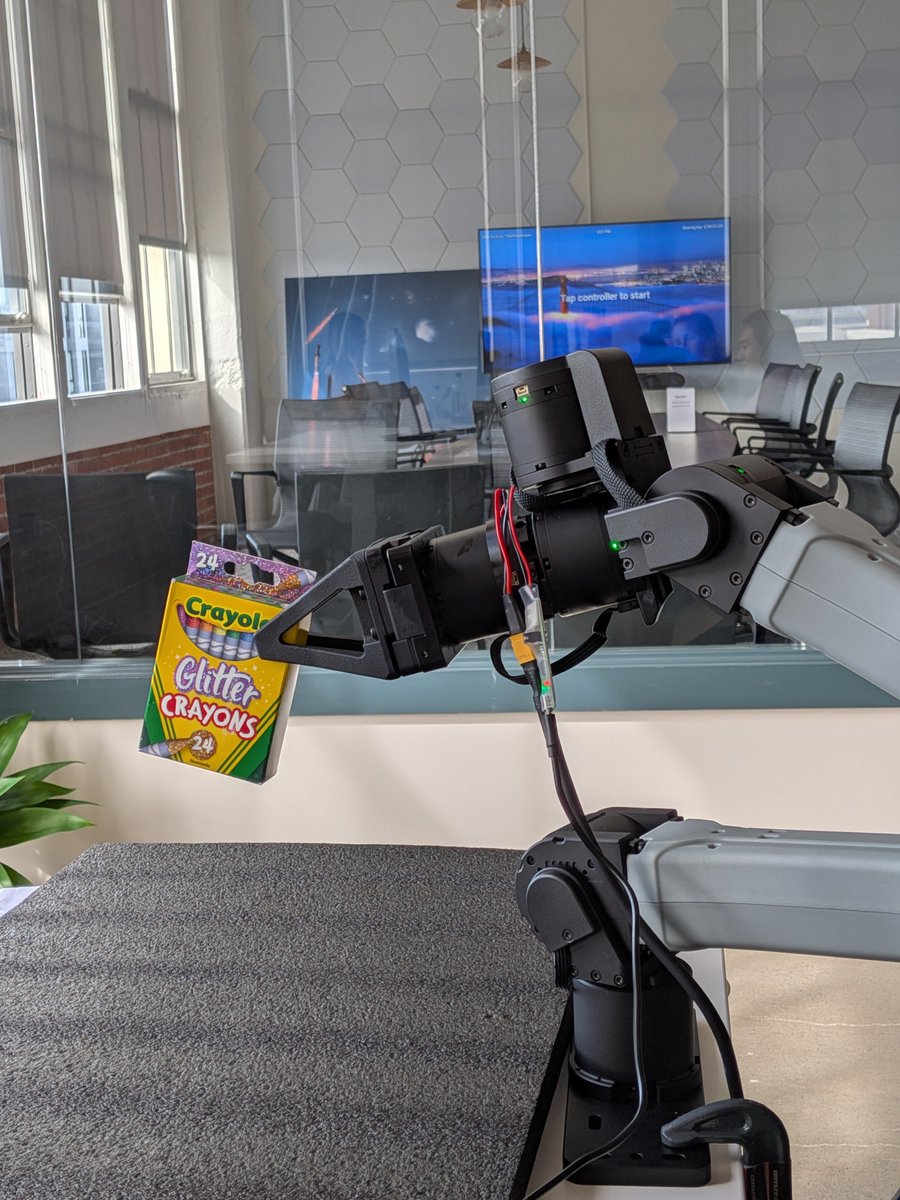
Robotics capabilities are finally breaking through, but buyers still have no cheap way to verify a system works in their environment before committing. Here’s why verification & validation gate demand. https://t.co/daHrflnsk9
This one doesn't really require an introduction.
Silicon Valley legend @eladgil is joining us for a chat at SPC on March 5th.
We have a few spots open.
RSVP below.
THE FINAL OFFSHORING
If you try to look to the past to understand the future of automation, the future is bleak.
On one hand, if we don’t go forward with robotics, then we’ll likely enter a stagnant, malthusian hellscape of a world.
But on the other hand, if we do go forward with robotics, then society might not survive the transition intact.
If these are the two default futures, then it's no wonder so many people are pessimistic. Is there an option to just have neither of these, please?
Yes, actually. But it won’t be easy. It won’t be simple. And it will require reading a lot of footnotes.