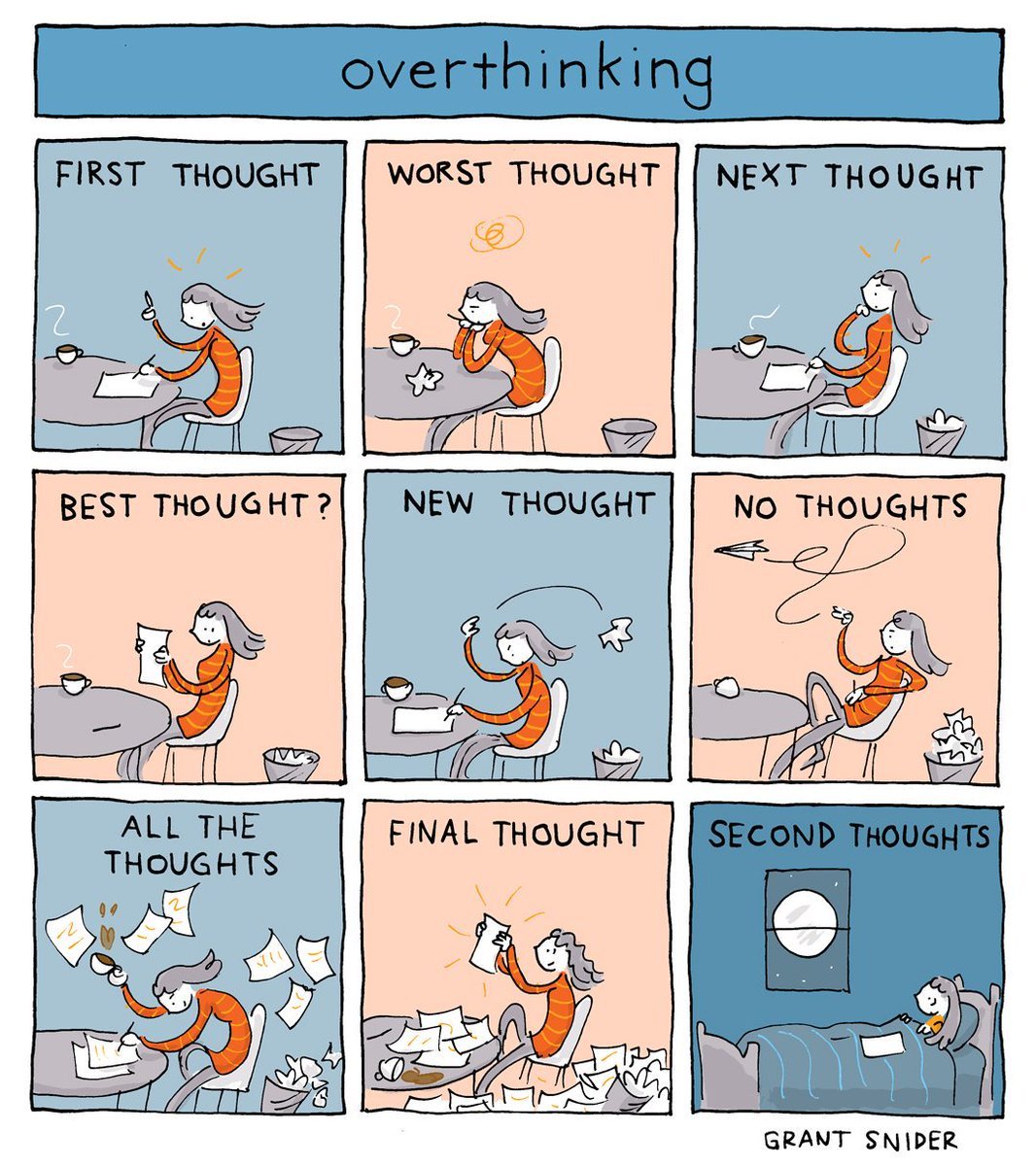
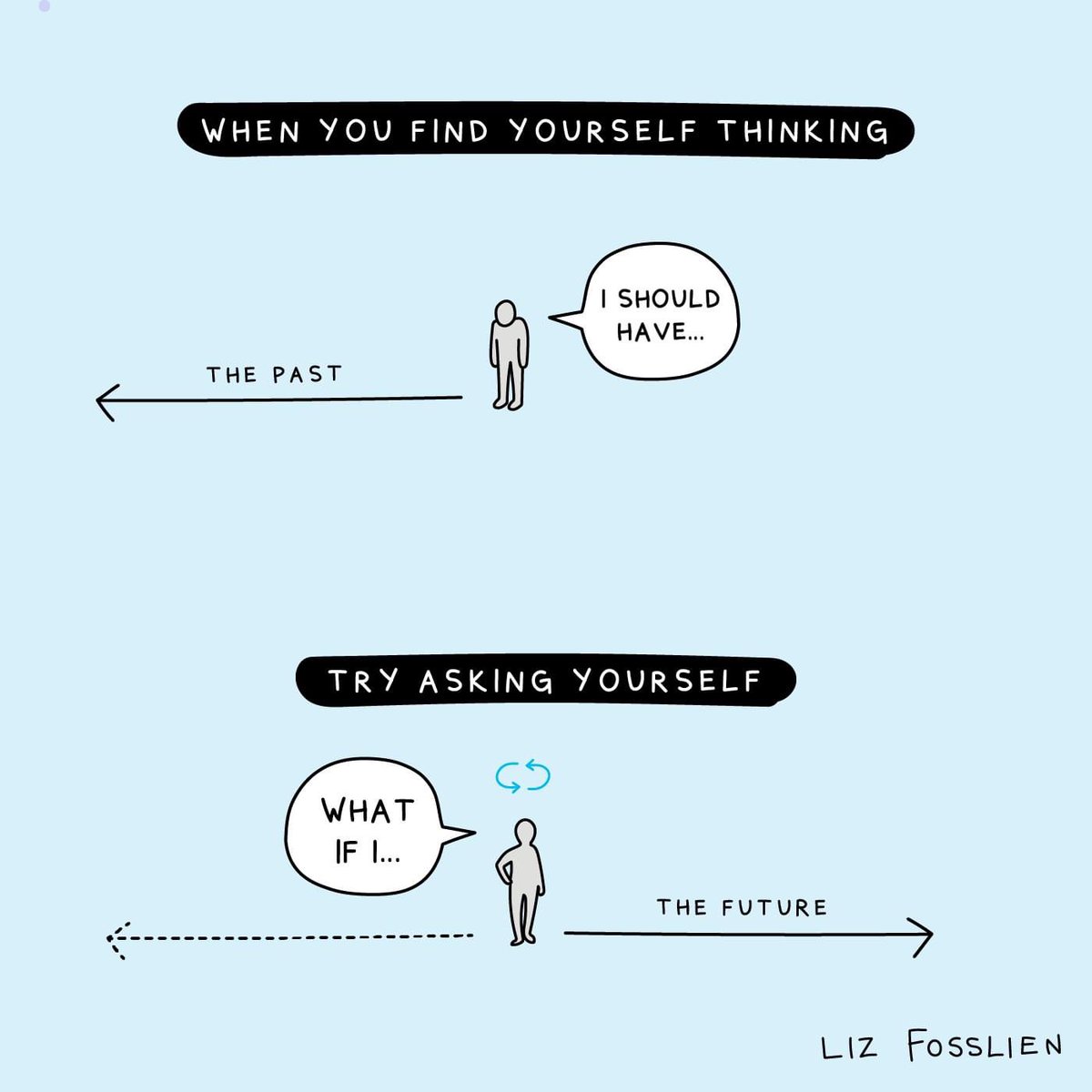
Overthinking is a big problem in organisations. When individuals & teams overthink, it creates a bottleneck. Decision making slows & a culture of risk-aversion can stifle opportunities. Recognise that there are 3 kinds of overthinking with different tactics to address them:
1) Rumination: dwelling on past events. Give it a scheduled slot
2) Future tripping: fear of what lies ahead & the uncertainty of what might happen. Look ahead beyond the point of worry ("temporal distancing")
3) Overanalysing: diving very deep into a topic. Aim for "good enough" rather than "perfection"
https://t.co/b8HDgSLx9W By @MelodyWilding. Graphic: @grantdraws
Many of the teams I work with are thinking about how their values & cultures can drive the ways they want to work together in future. One of the best used tools to help with this is the "culture design canvas" from @GusRazzetti. You can download it for free along with Miro & Mural templates for completing it remotely. You have to give your email address: https://t.co/qnkCnDW7nC
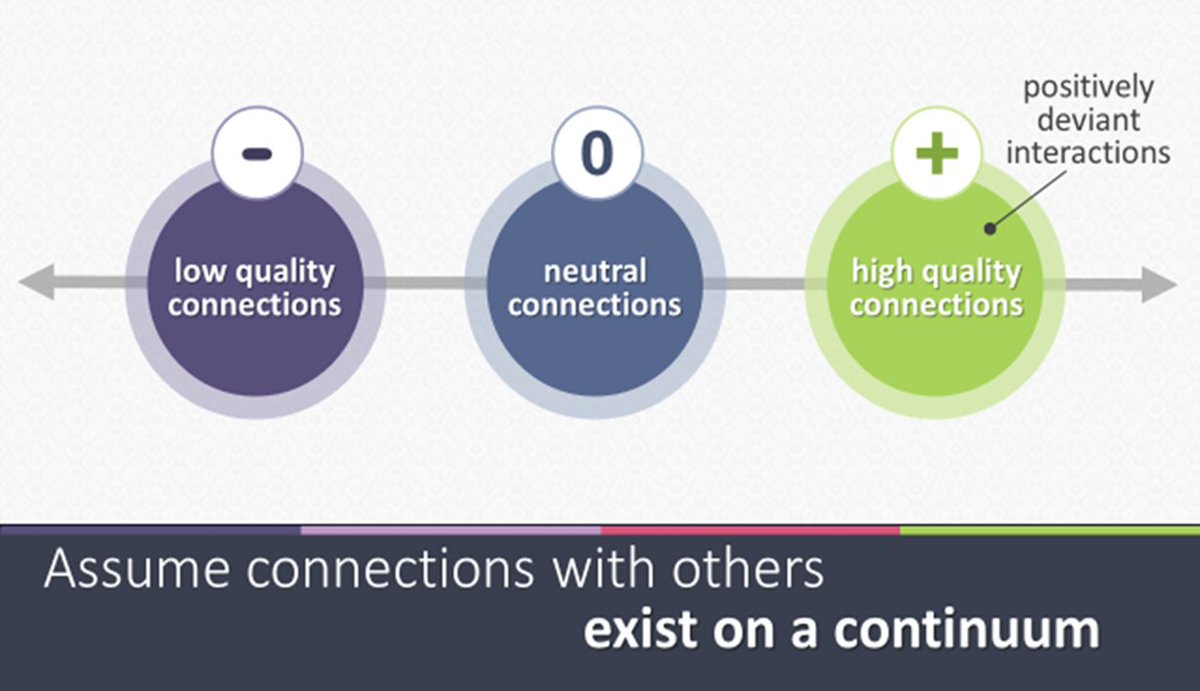
Having high quality connections with others increases our overall well-being & sense of belonging, bolsters our psychological safety & makes us & our teams more resilient. Connections are "micro-bits", moments of interaction that can be created in seconds that help shape strong working relationships. Four ways to build high quality connections:
1) "Respectful engagement": communicating respect in small moments
2) "Task-enabling": helping others succeed in what they're trying to do
3) "Trusting": small moves that signal trust
4) "Playing": creating small moments of playfulness or fun that fit with what we are doing in a momentary interaction
https://t.co/oxcKxcJsrR
Via @GreaterGoodSC
2023 CASN Awards winners have been announced @CASN43 and #UCalgary nursing assistant professor and assistant dean, graduate programs @lorelli_nowell received the Excellence in Nursing Education (TENURED) award. Congrats Lorelli! https://t.co/gqkerUHc3O
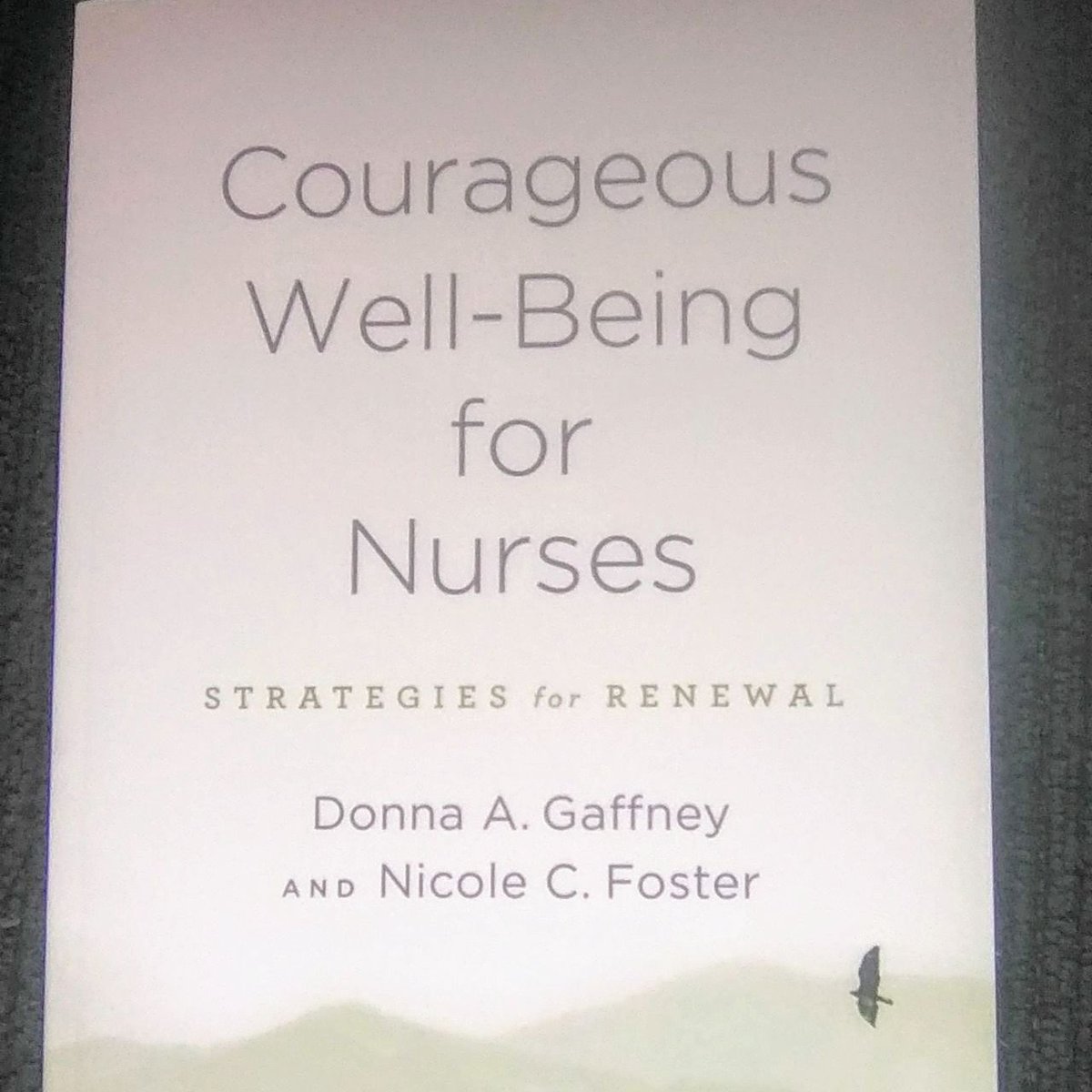
My ⭐️⭐️⭐️⭐️⭐️review of Courageous Well-Being for Nurses @donnaagaffney @JHUPress:
"An urgent call to action, this wayfinding both requires and builds courage, without hiding from the hard truths of nursing work."
When a shared vision is developed & held by people in an organisation, magic can happen. That collective picture of the future can help everyone move in the same direction towards shared goals. It can help create a sense of identity & unity that spreads across teams & can inspire people to accomplish big things. I really appreciate the spirit of this sketchnote by @LouWaters_QI #QITwitter #LeadingQI
One models I return to frequently in my change practice is the Prochaska & DiClemente "Stages of Change" model. It says that in planning change we should start from the stage that people are at. In health & care, people are often at pre-contemplation stage (not even thinking about it) but leaders plan the change as though people are ready for "action" & implementation fails. There's increasing research evidence to support these kinds of conclusions, eg: https://t.co/eJXWlEsoXU Via @TCI_ca
Learning about #cannabis use during #adolescence from Dr John Hopper. Cannabis obviously has an influence on the developing brain- I’d love to see less about the consequences and more about the SDOH/factors that lead to cannabis use in the first place.
Self-acceptance shouldn’t stand in the way of self-improvement.
Self-acceptance is refusing to be ashamed of your weaknesses. Self-improvement is striving to overcome your weaknesses.
Recognizing that you’re good enough today doesn’t prevent you from getting better tomorrow.
Genuinely caring about students should be a non-negotiable qualification for a career in academia. Full stop.
No amount of research achievement or creativity can substitute for caring about the professional development and well-being of those we teach and mentor.
Interested in Institutional Ethnography and meeting other IE folk based in the UK, Ireland and beyond? Come along to the online planning meeting for the UK and Ireland Institutional Ethnography Network: 3pm on 6th Oct - all welcome! Sign up here:
https://t.co/uhp1oDtx87
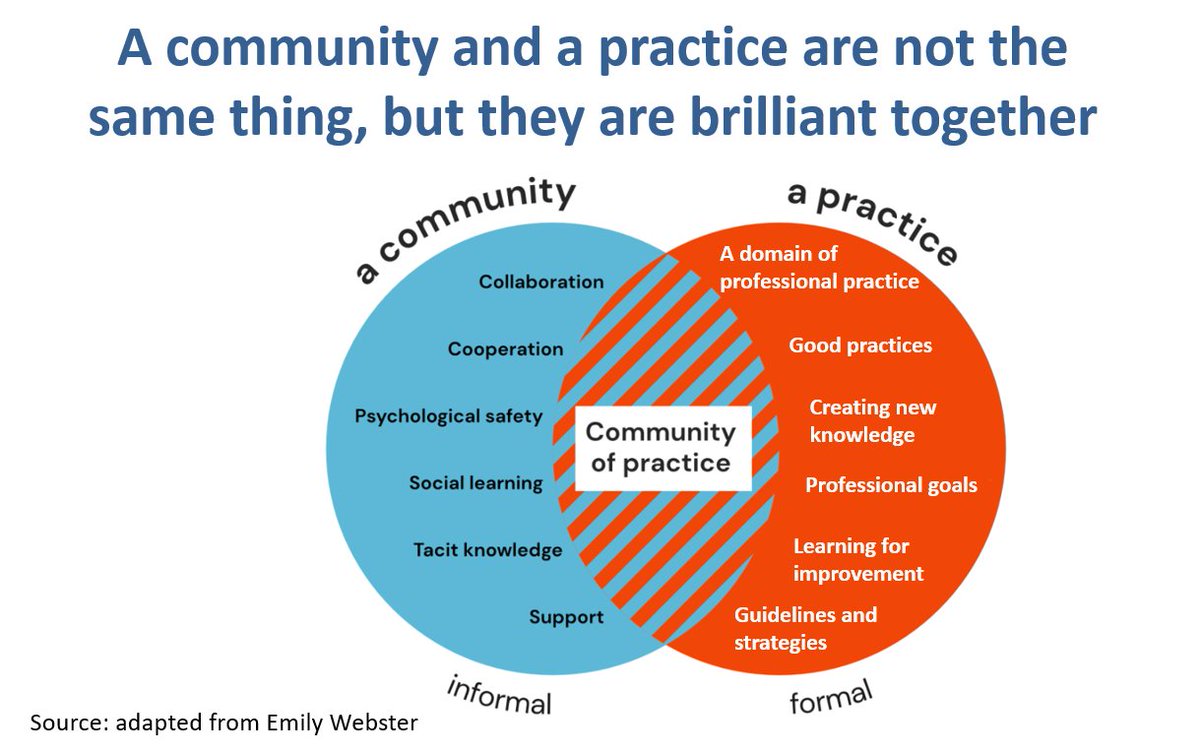
It's often lonely being a change agent. Communities of practice (CoPs) can give us a sense of belonging, support & courage. We don't need permission or formal power to create a CoP; just to connect with people who share our passion. Here's a straightforward guide to CoPs: https://t.co/wg54i4d8NH Via @Management30@FerraroRoberto
As an academic writing coach, here are the 7 mistakes I see supervisors and PIs make in the process of co-writing a paper with their PhD students or mentees.
A thread. 🧵
#AcademicTwitter#PIchat#newPI
"we encourage you to focus on “how do we ensure students are learning?” rather than “how do we stop students from cheating?”, with academic integrity skills being among the things that your students will learn." @loleen_berdahl
https://t.co/2KojdCpQ1l
Scrap the term mental health and replace it with mental fitness! @simonsinek Lean into our vulnerability @LeighChappy Lead by example - integrity takes courage - don’t be afraid to say you are not okay #pearlsofwisdom
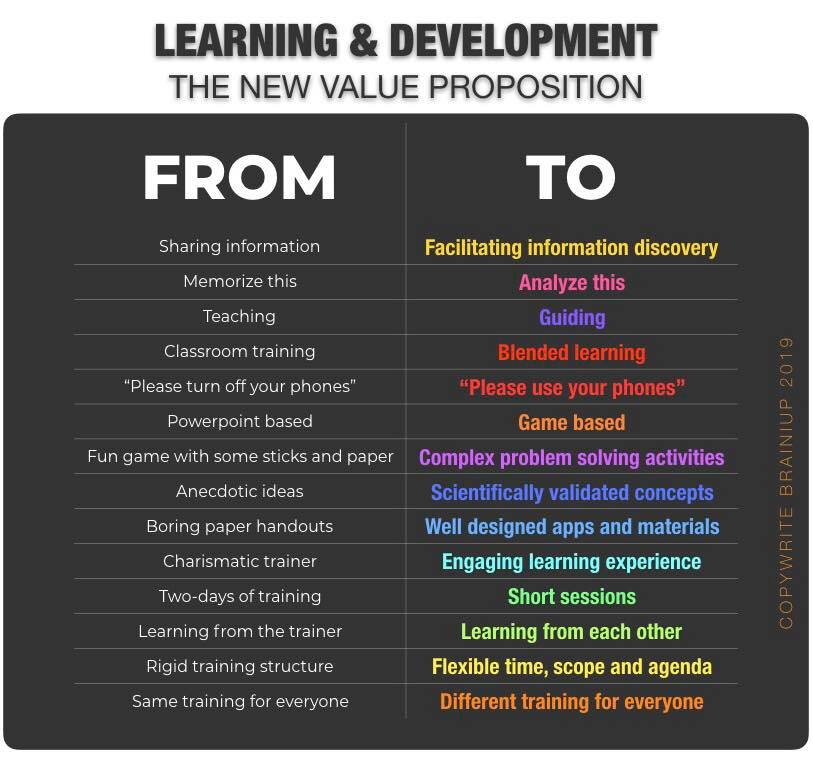
Our world is changing so quickly. It is a challenge for learning & development systems to keep up. All learning processes are having to change, from formal education, to workplace learning, to the way we organise big conferences & seminars. Here's a good overview of some of the key trends from @brainiup_play. Thanks @WiemanEmile.
Starting team meetings with a check-in &/or having regular team check-ins is such an important part of leadership practice. Check-ins prime the behaviours that make collaboration possible. Here's a website with some great check-in resources: https://t.co/OfADAtcfwZ & a framework for an end of week check-in, if you wanted to start tomorrow. Graphic: @heyamberrae via @TCI_ca