Cattlenomics is a commodity/insurance brokerage & cattle market consulting firm which focuses on cattle feeders and beef packing plants. Data.Strategy.Success
Mexico beef imports into the US are gaining momentum in 2026, with Jan.-Mar. volumes showing sharp increases across nearly every major cut category. Hip cuts and flank/plate cuts posted some of the largest year-over-year gains, while loin and chuck imports also moved well above recent historical levels.
China's new country-based safeguard quota system is expected to reduce 2026 beef imports by 9-18% year-over-year, substantially larger than the original targeted 4% reduction. Imports from the US have collapsed early in 2026, with shipments reportedly down roughly 98% year-over-year.
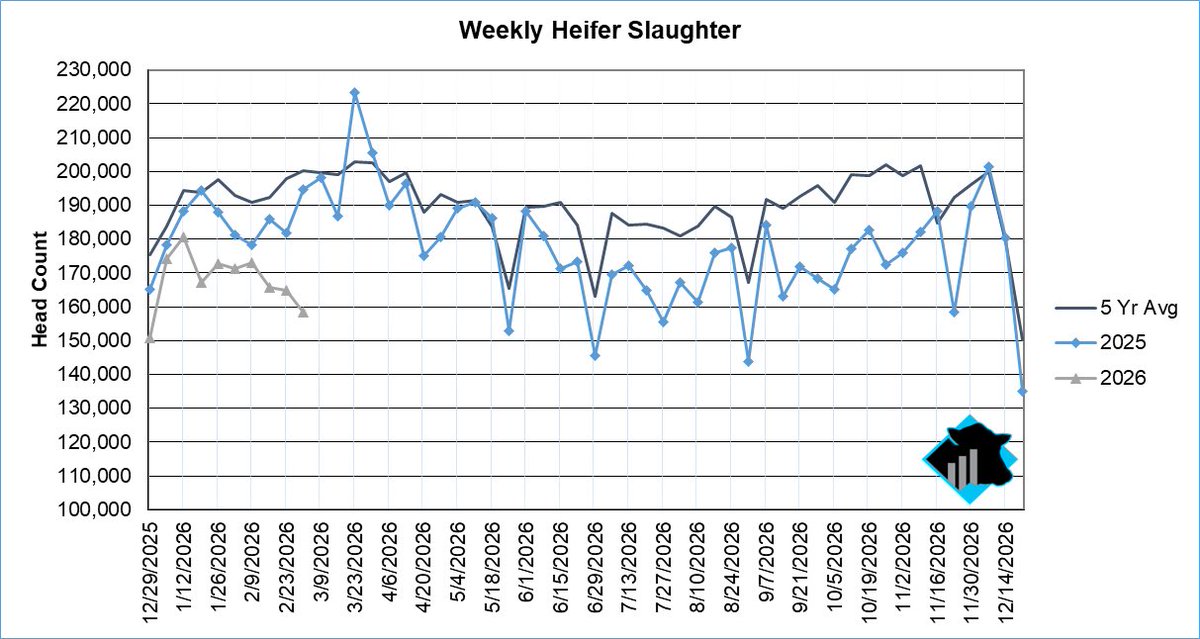
National Heifer Formula Volumes Continue to Trail Historical Levels ~
2026 heifer formula volumes remain well below both 2025 levels and the 3-year average. In recent weeks, volumes have fallen into the low-60K head range roughly 20–25% below historical seasonal movement levels.
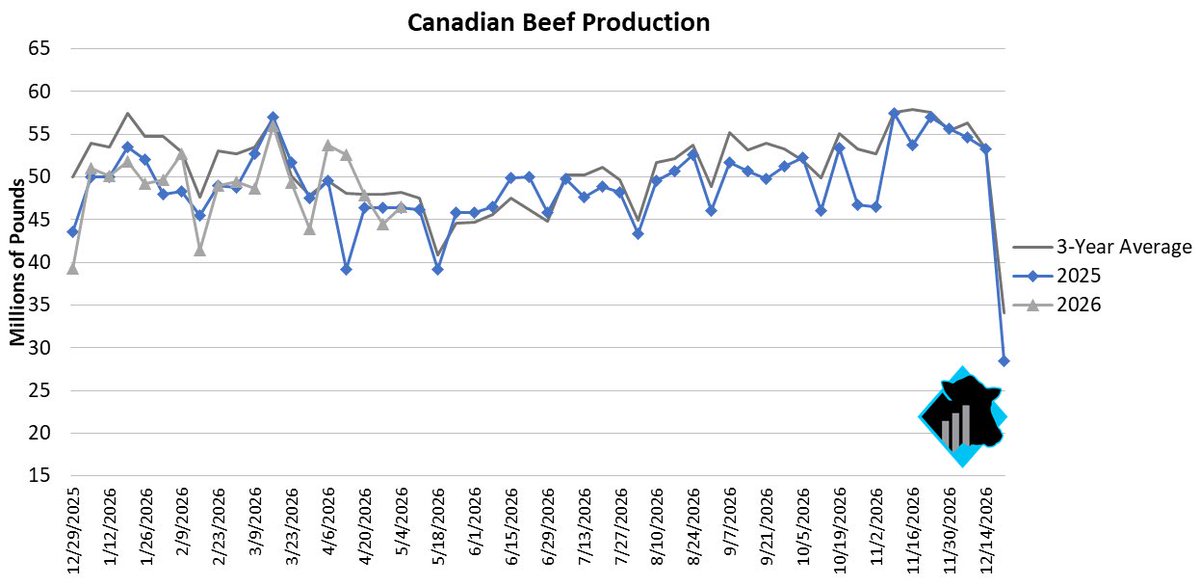
Steer weights in W. Canada have dropped sharply over the last several weeks, going from 975 pounds in early April to 893 pounds during the week ending May 9th. Declining weights has contributed to beef production being just 0.2% above last year in the latest report.
National Prime grading has pushed to a new high of 17.19%, rising for the fifth straight week. Levels are 6% above the 3-year average and 4.7% above year-ago levels.

The Commitment of Traders data, reflecting positions as of the close of business on Tuesday, April 28, showed that the Other Reportable Spread category for Live Cattle posted the largest weekly change, increasing by 11,361 contracts to a total position of 100,422, with roughly 7,000 of that weekly increase coming from options.

Through the week ending April 11th, the beef cow slaughter volume has been down ~126,000 head compared to last year. The weekly harvest volume has averaged 18% less than 2025. Is drought going to limit herd rebuilding this year?
As grading has improved over time, the amount of Select beef production has fallen. Select cutout prices have averaged 19% higher than last year via the negotiated market, and exceeded last year's high several times.
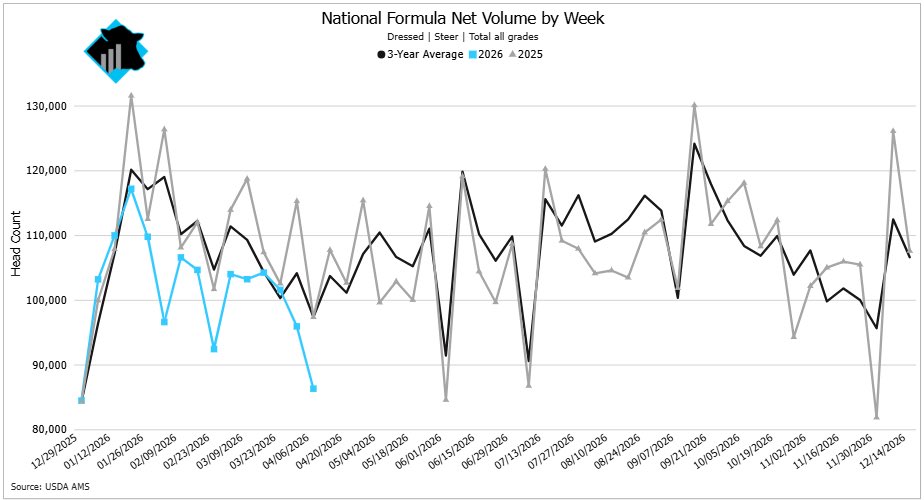
New low for 2026 dressed formula steer volume. Last week totaled 86,292 head, marking the lowest weekly level of the year and running more than 11% below both last year and the 3- year average.

The federally inspected slaughter report for the week ending March 21 indicated that steers accounted for 61.5% of weekly fed slaughter in the most recent week. On average, the share of steers has run 2.5% above year-ago levels over the prior four weeks.
The latest Commitment of Traders data, reflecting positions as of the close on Tuesday, March 24, shows the year-to-date change in net managed money positions at 300,974 contracts in corn and 16,148 contracts in live cattle.

National formula heifer volume had remained relatively steady near 67,000 head in recent weeks but declined in the most recent data. This week’s total came was 64,112 head, down 8% from the prior week’s volume of 69,705 head.
For the week ending March 13, heifer carcass weights in Western Canada rose 21 pounds from the previous week to average 909 pounds. The Canadian national average was 904 pounds for the same week, 29 pounds above 2025 levels.