Who changed the scores?
Was my bid opened early?
Can anyone outside this room check?
Most procurement files cannot answer. We decided they should.
Published. Recognised. Working.
CAYPAX, on the record. @Brit_blockchain
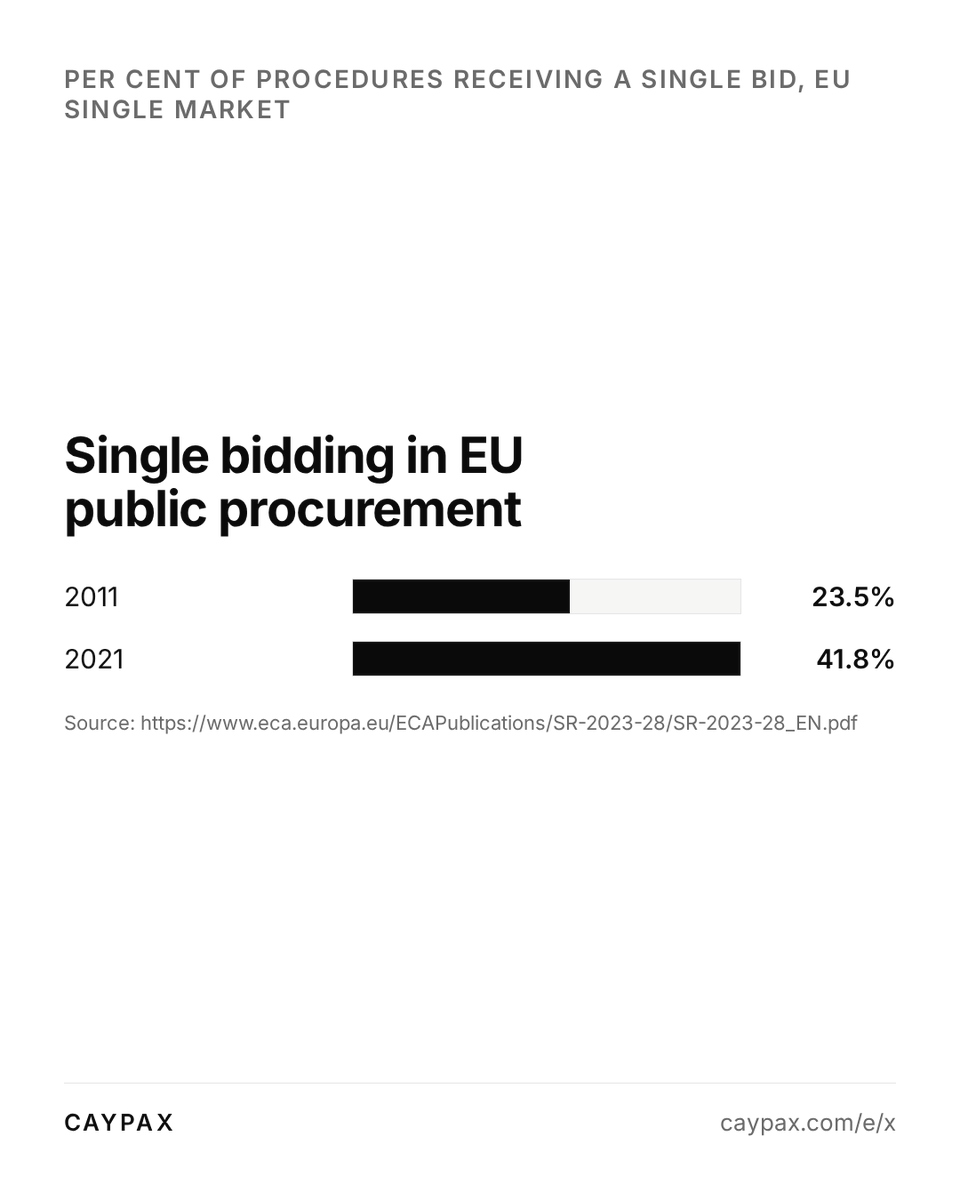
Source: European Court of Auditors, Special Report 28/2023, Public procurement in the EU, paragraph 36 and Figure 5. The same report puts single-bid procedures at 41.8 per cent in 2021. A pilot on one category: https://t.co/kG2lPLrkfW
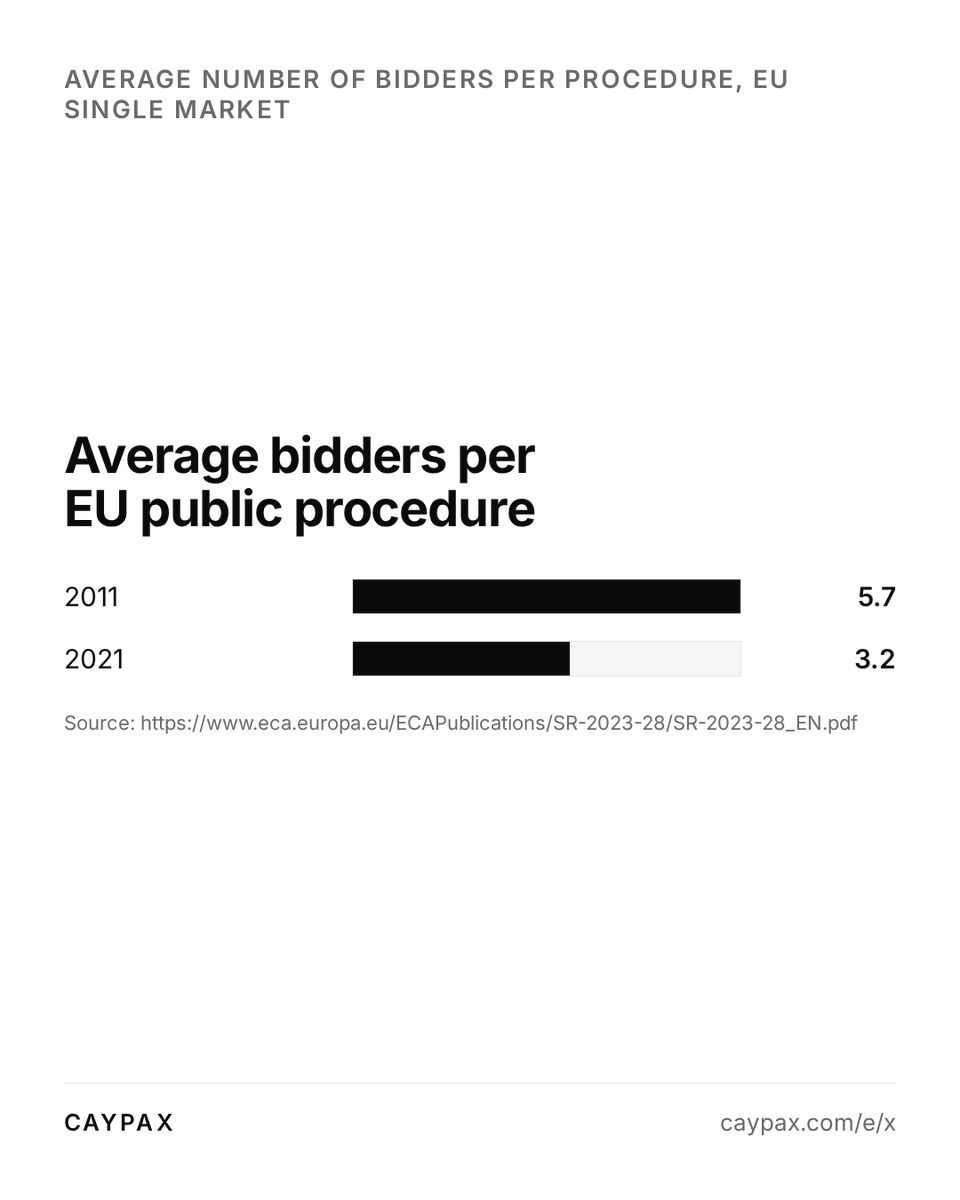
EU public tenders attracted an average of 5.7 bidders per procedure in 2011 and 3.2 in 2021 (European Court of Auditors).
Fewer bidders means each award leans harder on the record behind it. If a losing bidder asked to see yours verified, not stored, how long would it take?
Why we build an evidence layer rather than another procurement system.
The systems already store everything. What they cannot do is let an outsider verify it. That is a different job, and it should sit beside what you run, not replace it. Add a layer or replace a system?
Open contracting and verifiable evidence are complementary: one tells the public what happened, the other lets an auditor confirm it. How a public body pilots the second: https://t.co/kG2lPLrS5u
Public bodies publish more procurement data than ever. Publishing shows what was decided. It does not show that the record behind the decision is intact.
Transparency without verifiability is a louder version of stored. How does your office prove the record, not just publish it?
@Brit_blockchain F-Procure: peer-reviewed in The JBBA, second place in the ISC2026 Abstract Awards, and a working MVP. The first scoped pilots start with a half-day Evidence Discovery Workshop: https://t.co/kG2lPLrkfW
Who changed the scores?
Was my bid opened early?
Can anyone outside this room check?
Most procurement files cannot answer. We decided they should.
Published. Recognised. Working.
CAYPAX, on the record. @Brit_blockchain
5. The end of the pilot is a decision, not an obligation: you have seen what verified looks like on your own file. Which category would you choose to start with?
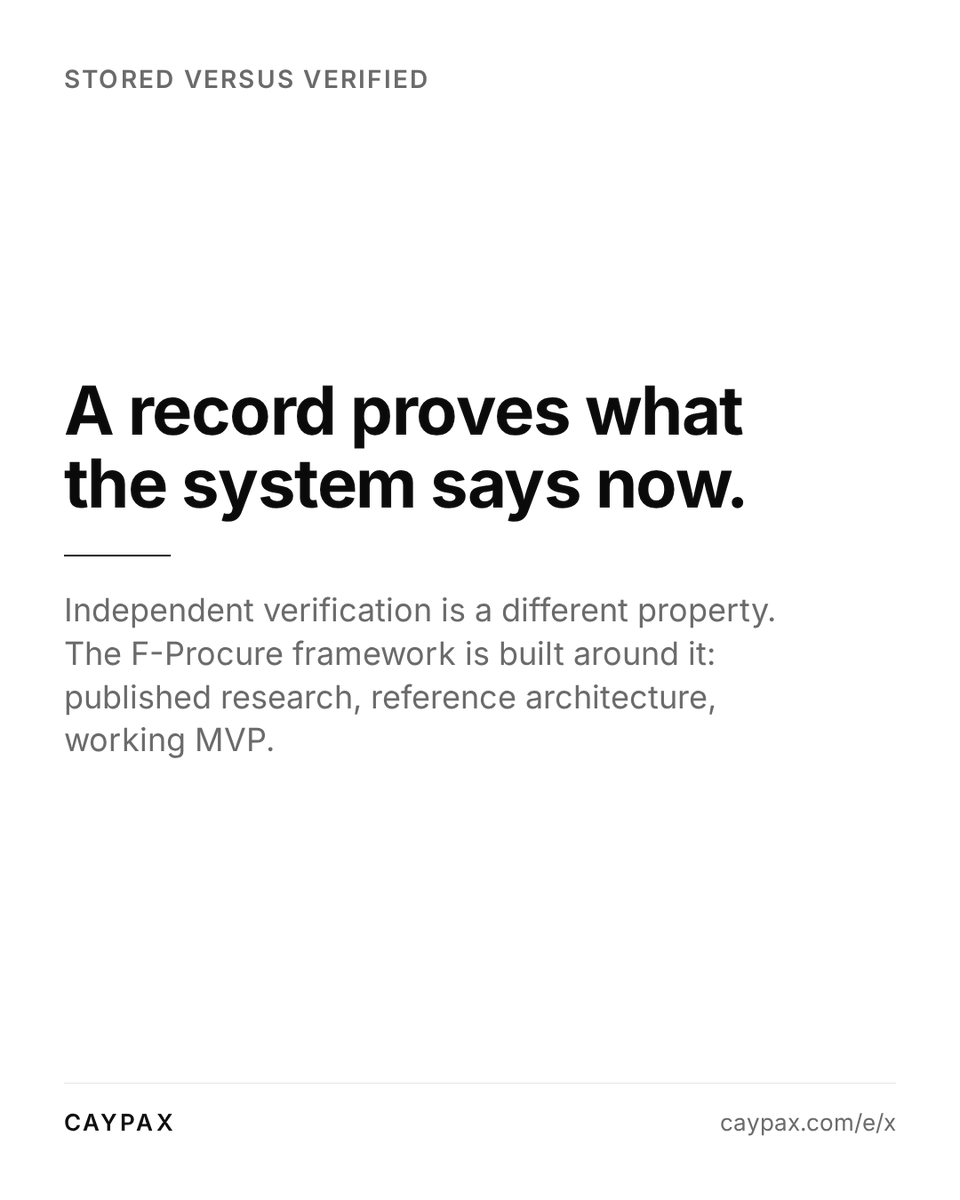
A procurement record stored in a system you administer proves one thing: that the system currently says so.
The published F-Procure framework starts from that gap and asks what it takes for a third party to verify the record instead. Where would your records fall?
Source: European Court of Auditors, Special Report 28/2023, paragraph 36 and Figure 5; average bidders per procedure fell from 5.7 to 3.2 over the same period. A single-bid award is exactly the decision an auditor later asks to see verified: https://t.co/kG2lPLrS5u
Across the EU single market, 41.8 per cent of public procedures received a single bid in 2021, up from 23.5 per cent in 2011 (European Court of Auditors).
With one bid on the table, the award rests on the team's judgement and the record behind it. How would yours hold up?