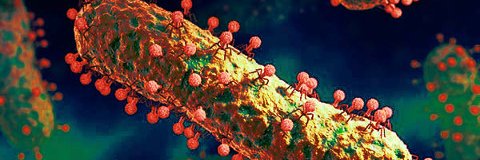
I'm pleased to share our work
@cazares_adr@wfigueroac3@linsalrob@pvinmex
published in @mSystemsJ about a new group of promiscuous phages existing in rivers and the dynamics of their infection in hosts of multiple genera 🧪🧫🧬
https://t.co/padoLvWECk
Uhuuu! I won a Cambridge wildlife photography competition @ChurchillCol for the picture of this little fella! WARNING: Be prepared to have your heart melted!🥺
Are you interested in #antiCRISPR, #Phages, and molecular #Evolution? Then take a look at @wfigueroac3 first-ever preprint👇🏽and get in touch if you have any feedback or questions.
First preprint as first-author on my #antiCRISPR work and I couldn’t be happier! 😁🤩😭We studied the molecular evolution of the AcrIF7 family and how sequence diversity and length within the family impact its function. Suggestions? Feel free to DM me!
https://t.co/M4guc7AXOn
@wfigueroac3 Nice start as first author🙌, very interesting exploring of the #antiCRISPR proteins and their #Evolution by implementing microbiology🧫, molecular🧬, and bioinformatic💻 approaches, congratulations dear friend!!!👩🔬
#Bacteriophages#CRISPRCas
"Using transferrin as an iron chelator imposes simultaneous selective pressure for the loss of pyoverdine and exoprotease production"
Fantastic piece of work from @Larvberg and @cazares_adr 👏 you guys are amazing!
Phages are generally described as species-specific or even strain-specific, but how often do we really check? @cazares_dan & colleagues pitted phages against a diverse collection of 600 bacteria and found more host promiscuity than you’d expect https://t.co/0n90ctpN4L
If you are attending @MEEvirtual and love #phage research, the community have created the channel for you to discuss all about phages! We have also compiled talks and posters around the topic so you can find them easily!
You can join from this link 👇 https://t.co/NQ3oN5lqfR
We share our work in preprint @Phage_Oddity @wfigueroac3@linsalrob@pvinmex about
#Promiscuous_phages
We wondered if the phages would show the typical range of infection (narrow) with bacteria from their same community and this is what we found 👇
Dynamics of infection in a novel group of promiscuous phages and hosts of multiple bacterial genera retrieved from river communities https://t.co/UfpuworgXX #bioRxiv
Final version of our paper is out and it made it to the @ASMicrobiology#JVirology SPOTLIGHT. What we did?
We discovered a novel Superinfection Exclusion mechanism, i.e. a prophage-encoded phage defense system, that uses two phage genes to instruct the host to block DNA entry! RT