BREAKING: SpaceX has released a new blog post about breaking ground on Terafab in Texas.
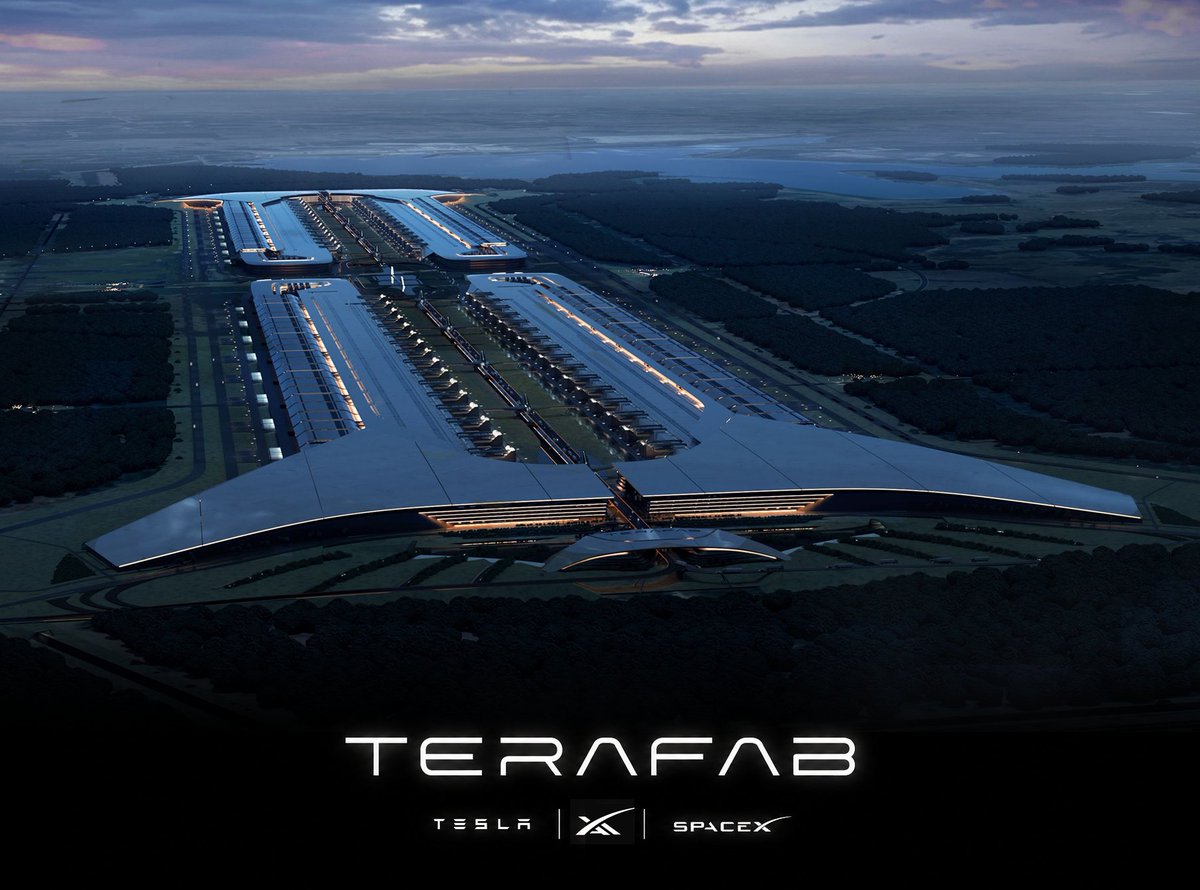
The foundations for an exciting future are being built in Texas. Earlier this year, SpaceX and Tesla announced Terafab – the most epic-chip building effort in the world – combining logic, memory and advanced packaging all under one roof. In April, Tesla broke ground on a new research fab on the North Campus of Giga Texas – the precursor to Terafab. And today, we are announcing that Terafab will be built in Grimes County, Texas. The facility will be an advanced semiconductor fab that will bridge the divide between current global chip supply and the compute demand of the future.
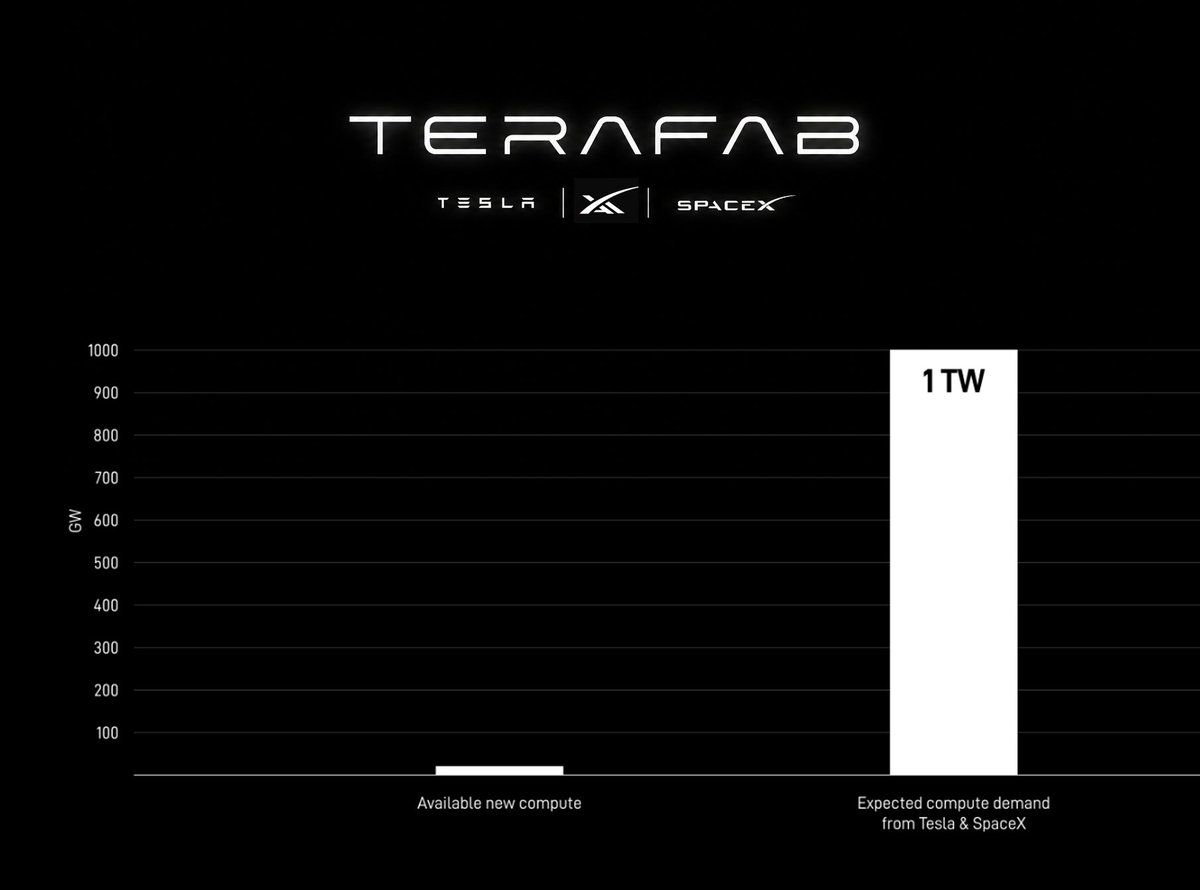
The combined SpaceX and Tesla demand for chips is expected to be in excess of 1 terawatt (TW) of compute, which is significantly larger than the current global supply. While we are deeply appreciative of our current chip suppliers, and encourage them to expand production whenever possible, this looming gulf between supply and demand is at the core of Terafab’s necessity.
Terafab will be epic in both its mission and in its sheer size, designed to build new compute at an unprecedented scale and speed. A vertically integrated factory with more than 100 million square feet of manufacturing space is planned. This facility will house the manufacturing, packaging, and testing of advanced logic and memory devices. Bringing these aspects together in one location will enable fast, recursive improvements and accelerate new compute deployed. Terafab will produce chips optimized for edge computing and inference for use in hardware like Tesla’s Optimus robots and self-driving Cybercabs, along with high-power chips designed for operating SpaceX’s space-based data centers.
Bringing Back Advanced Manufacturing to America
Advanced chips are becoming foundational infrastructure for the modern economy. AI systems, satellites, secure communications, and advanced manufacturing all depend on reliable access to compute hardware. Much of the world’s semiconductor production remains concentrated overseas, and the United States has recognized the importance of rebuilding advanced manufacturing capacity domestically. Terafab aligns with that broader national effort by expanding high-end manufacturing capacity in Texas.
Texas has become central to our operations through Starbase, Bastrop, and McGregor, thanks to its commitment to innovation, manufacturing, and American leadership. SpaceX’s growing Texas footprint alone has already generated more than 56,000 direct and indirect jobs, over $28 billion in estimated economic impact since 2024, and hundreds of millions in indirect tax revenue since 2024.
The initial phase of Terafab is estimated to require approximately $16.8 billion in capital investments from SpaceX and Tesla, with potential future expansion phases bringing total investment much higher. This facility will employ at least 3,000 people, many of whom will be from Grimes and nearby Brazos County — continuing the trend of our other Texas sites where between 60% and 80% of new hires are local residents.
Grimes County offers strategic advantages for long-term industrial investment, including infrastructure access, available land, and proximity to major Texas markets. This project represents a significant opportunity for skilled trades, construction employment, suppliers and contractors, and long-term technical workforce development. We intend to work with local schools and workforce partners to help create pathways for future employment opportunities, responding to the unique needs of each community.
SpaceX and Tesla also take our role as being good stewards of the environment seriously. The Terafab site is committing to the use of Gibbons Creek Reservoir water for industrial operations rather than local groundwater; planned on-site wastewater treatment facilities; water reuse and conservation efforts; compliance with all applicable environmental and pollution control laws; and management of hazardous materials, chemicals, and industrial byproducts in accordance with all applicable regulations—while striving to exceed them.
Building an Exciting Future
We believe continued progress and leadership in space, AI, and advanced manufacturing will depend on the ability to build critical technologies domestically. By building and operating the largest chip manufacturing facility on the planet, we’re continuing down a path where future humans can compete over building the largest facilities in the solar system, and eventually the galaxy.
NVIDIA CEO Jensen Huang: Elon Musk is in a phenomenal position to lead the future of AI, autonomous vehicles, and humanoid robotics.
“Collecting world data is very expensive, and Elon has a great advantage because, number one, his AI factory for his cars is fantastic, has a lot of NVIDIA gear in it, and he has a very large fleet of cars on the road that allows him to collect a lot of data. So I think he has just a phenomenal position, and he's been working on this for a long time, and so he's going to be in a great position to take advantage of it.
I know Elon's attitude towards AI, and he's very optimistic about its future, and obviously he's working on some of the most important AI areas. xAI is working on foundation, cognitive intelligence AI. Tesla's working on autonomous vehicles, and Optimus is for humanoid robotics. These three areas of AI are the three most important areas.”
Tesla Sentry Mode captured three suspects trying to steal a Dodge Charger outside a Dallas movie theater.
The owner deliberately parked beside a Tesla for protection, and it recorded everything, including a clear view of one suspect’s face. Dallas Police are investigating.
"If civilization is not strong, if civilization doesn't grow, then nothing else matters. Profits don't matter if civilization collapses. We cannot exist absent civilization. You have to be pro civilization, because you cannot exist without civilization."
— Elon Musk
ELON MUSK: "If there are no babies, humanity will come to a halt. And we've seen now for many years, very low birth rates in almost all of the world. Even India recently went a lower replacement rate.
If you look at China, for example, they are roughly at half replacement rate, I think maybe 60% or something like that. So that means, call it something like 600 million people will be lost in the end of this generation. Where are you going to get 600 million immigrants? That would require almost two Americas to move to China? That's impossible."
BREAKING: The birth collapse is not just happening in Europe, it is happening across the world.
🇺🇸 USA: Fertility hit a record low of just 1.60 children per woman in 2024, far below the 2.1 replacement level. In 2025, the general fertility rate fell again to 53.1 births per 1,000 women, the lowest in national records going back to 1909.
🇨🇦 Canada: Fertility fell to a record-low 1.25 children per woman in 2024.
🇲🇽 Mexico: Only 1.67 million births were registered in 2024. The registered-birth rate dropped to 47.7 per 1,000 women.
🇨🇴 Colombia: Fertility fell to just 1.0 child per woman in 2025. Births declined another 4.5%.
🇨🇱 Chile: Fertility dropped below one child per woman for the first time, reaching 0.99 in 2025.
🇧🇷 Brazil: Fertility fell to 1.55 children per woman, the lowest ever recorded by the country’s census.
🇨🇳 China: 7.92 million births were recorded in 2025, compared with 11.31 million deaths. The population shrank by 3.39 million.
🇯🇵 Japan: A record-low 671,236 births among Japanese nationals in 2025. Fertility fell to 1.14, with over 918,000 more deaths than births.
🇰🇷 South Korea: Fertility recovered slightly to 0.80 in 2025, but remained among the world’s lowest. Deaths still exceeded births by 108,900.
🇹🇼 Taiwan: A record-low 107,812 births in 2025, compared with more than 200,000 deaths.
🇸🇬 Singapore: Fertility fell to 0.87 in 2025. Total births dropped 11% to just over 30,000.
🇹🇭 Thailand: Around 416,000 births in 2025, the lowest number in 75 years.
🇻🇳 Vietnam: Fertility reached 1.93 in 2025, remaining below replacement level despite a small rebound.
🇮🇳 India: Fertility has fallen to around 2.0 children per woman, below the usual replacement benchmark of 2.1.
🇹🇷 Türkiye: Fertility dropped to 1.42 in 2025, marking the ninth consecutive year below replacement.
🇦🇺 Australia: Fertility fell to a record-low 1.48 in 2024 and has remained below replacement since 1976.
🇳🇿 New Zealand: Fertility fell to 1.53 in the year ending March 2026, while births declined by roughly 1,500.
Globally, fertility has fallen from 2.9 children per woman in 1994 to 2.2 today.
Around 55% of countries, home to more than two-thirds of humanity are already below replacement level.
This is no longer only a European story.
It is a global demographic turning point.