Outnumbered at least 6 to 1, the 1st Minnesota Volunteer Infantry suffered 82% casualties when they heroically charged headlong into enemy forces to shore up a gap in Union lines during the Battle of Gettysburg on this date in 1863.
The role these brave Minnesotans played in preserving the United States of America cannot be overstated.
General Winfield Scott Hancock said that "no soldiers on any field, in this or any other country ever displayed grander heroism," and insisted that "there is no more gallant deed recorded in history."
In a speech in Cannon Falls, MN on the Fourth of July 1928, President Calvin Coolidge said these men's heroism that day entitled them to the rank of "saviors of their country."
Think about THAT next time you see a Confederate symbol displayed on Minnesota soil.
The next day, the survivors from the 1st Minnesota helped repel Pickett's Charge and lost another 17 killed and wounded.
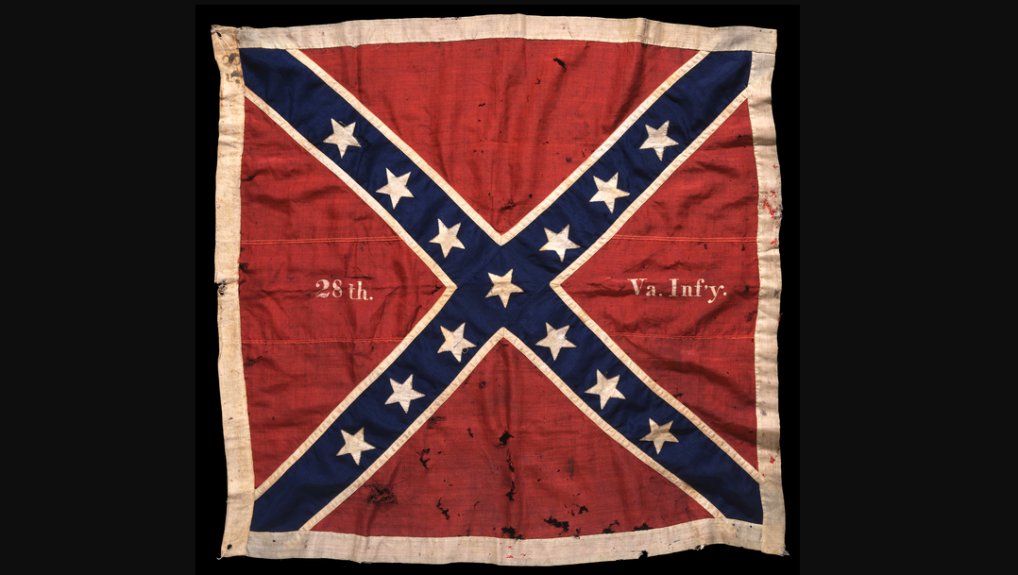
Minnesota is in possession of a blood-stained, bullet-pierced Virginia battle flag captured July 3rd.
Virginia has been asking for it back for over 100 years.
Governor Jesse Ventura's response at the @WhiteHouse in 2000: “Why? I mean, we won. … We took it. That makes it our heritage.”
Speaking of leaders surrendering, Confederate general Robert E. Lee surrendered to Ulysses S. Grant on this date in 1865, effectively ending the Civil War.
The Minnesota Historical Society possesses a blood-stained, bullet-pierced Virginia battle flag captured by the 1st Minnesota Volunteer Infantry at the Battle of Gettysburg on July 3, 1863.
Virginia has been asking for it back for over 100 years.
When asked about it at the White House in 2000, Governor Jesse Ventura said, "Why? I mean, we won. … We took it. That makes it our heritage.”
The previous day, the 1st Minnesota had suffered 82% casualties when they heroically charged headlong into enemy forces to shore up a gap in Union lines. It is not an overstatement to say that their gallantry possibly saved not only the battle, but the war.
Of their sacrifice on July 2nd, General Winfield Scott Hancock said that "no soldiers on any field, in this or any other country ever displayed grander heroism," and insisted that "there is no more gallant deed recorded in history."
In a speech in Cannon Falls, Minnesota on the Fourth of July 1928, President Calvin Coolidge went so far as to say that these men's heroism that day entitled them to the rank of "saviors of their country."