La gripe aviar arrasa la mayor población de elefantes marinos del mundo: la mitad de las hembras ha desaparecido. El Servicio Antártico Británico calcula que faltan más de 50.000 ejemplares en las playas. “Es estremecedor”, alerta @ccgbam
https://t.co/2VzBgVD7JT
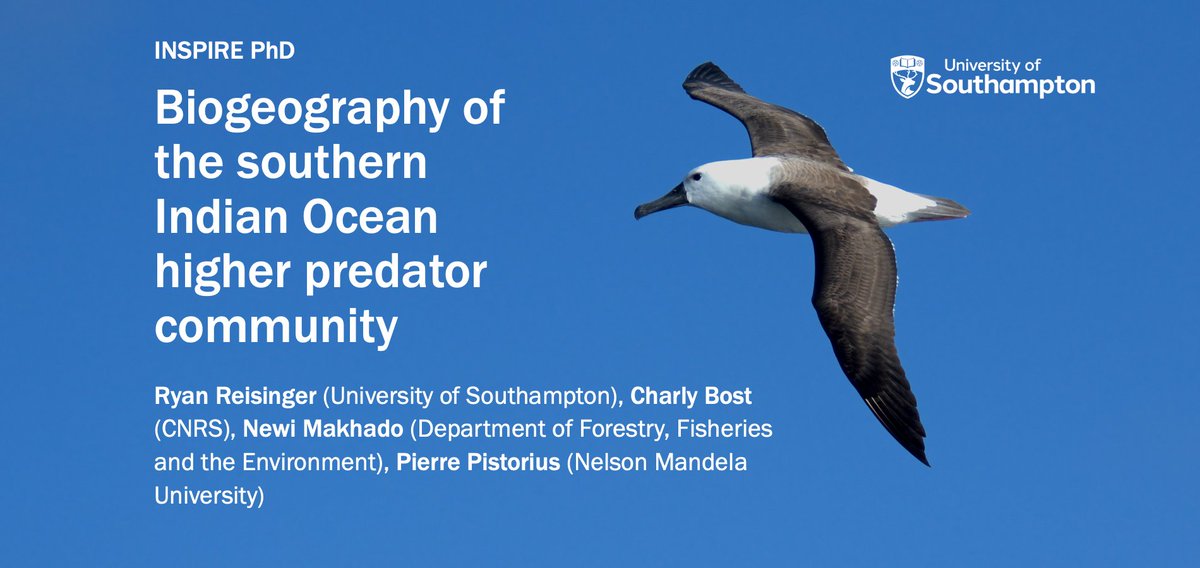
"Biogeography of the southern Indian Ocean higher predator community"
Funded INSPIRE PhD project @unisouthampton@OceanEarthUoS with me and others.
More at https://t.co/7TkT1ERqng
Apply at https://t.co/Ck52GS4AwE
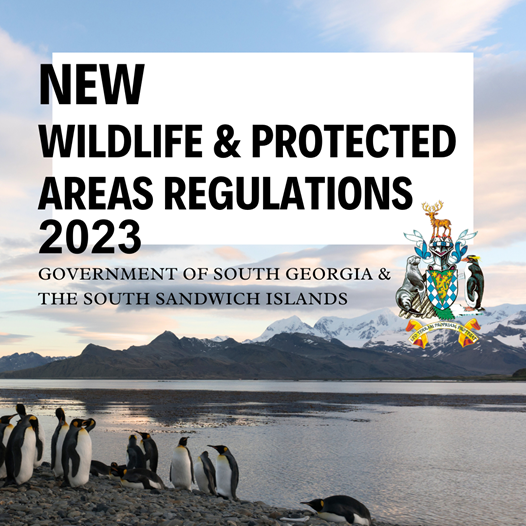
It is #EnvironmentDay in South Georgia & the South Sandwich Islands.
Today we announce the coming-into-force of new Regulations that will ensure the entirety of the Territories, land and sea, are managed for the continued conservation of globally-unique #biodiversity.
We equipped marine ecologist @ccgbam with a Rothera Down Jacket for his recent research expedition to the Western Antarctic Peninsula.
Learn more about his crucial research ➔ https://t.co/408Y8EjF9d
#Shackleton#ForTheChallenge@BAS_News
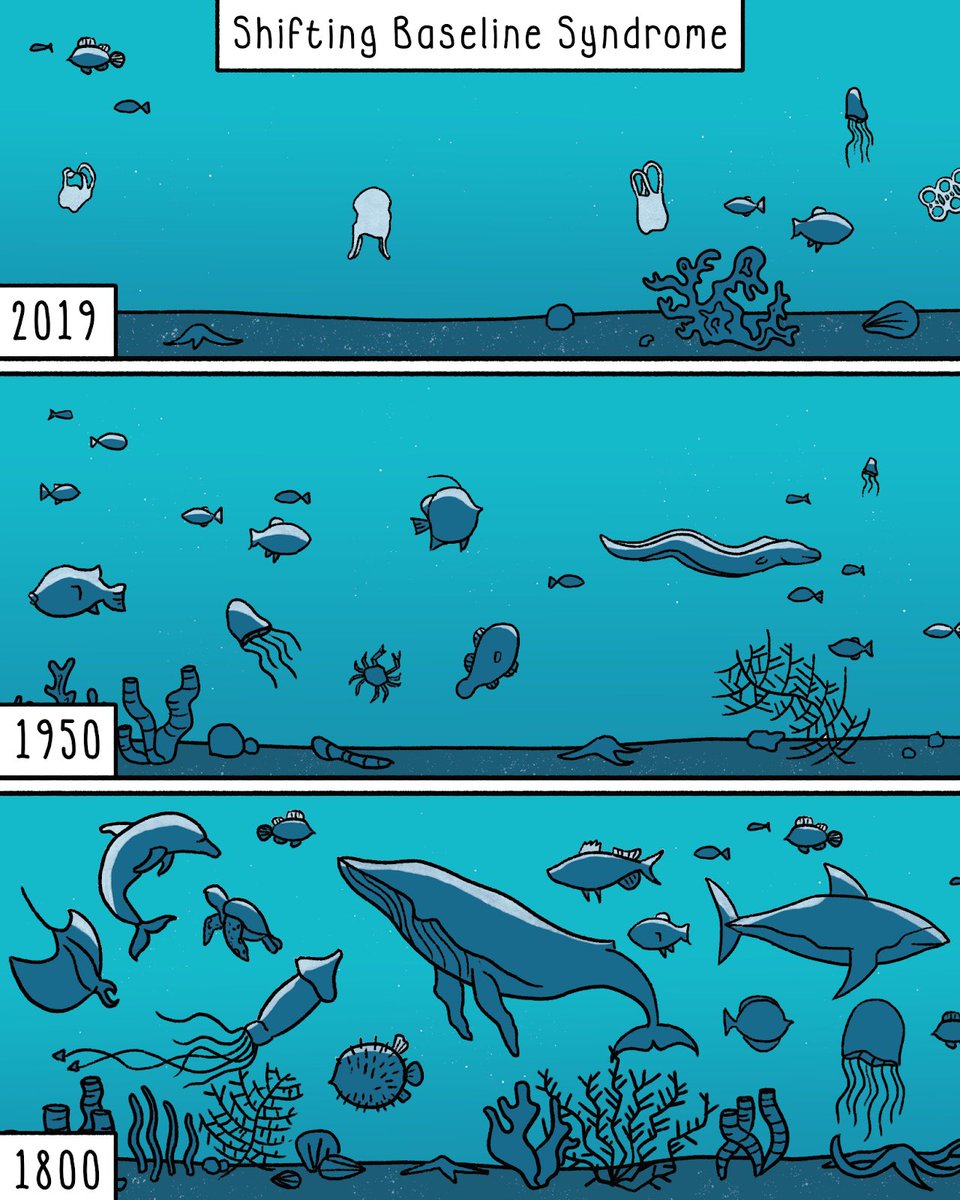
There is a curious phenomenon that results from the relatively brief window of time a single human lifetime provides: we perceive the current state of the natural world as “normal”.
This is known as the Shifting Baseline Syndrome. 🧵
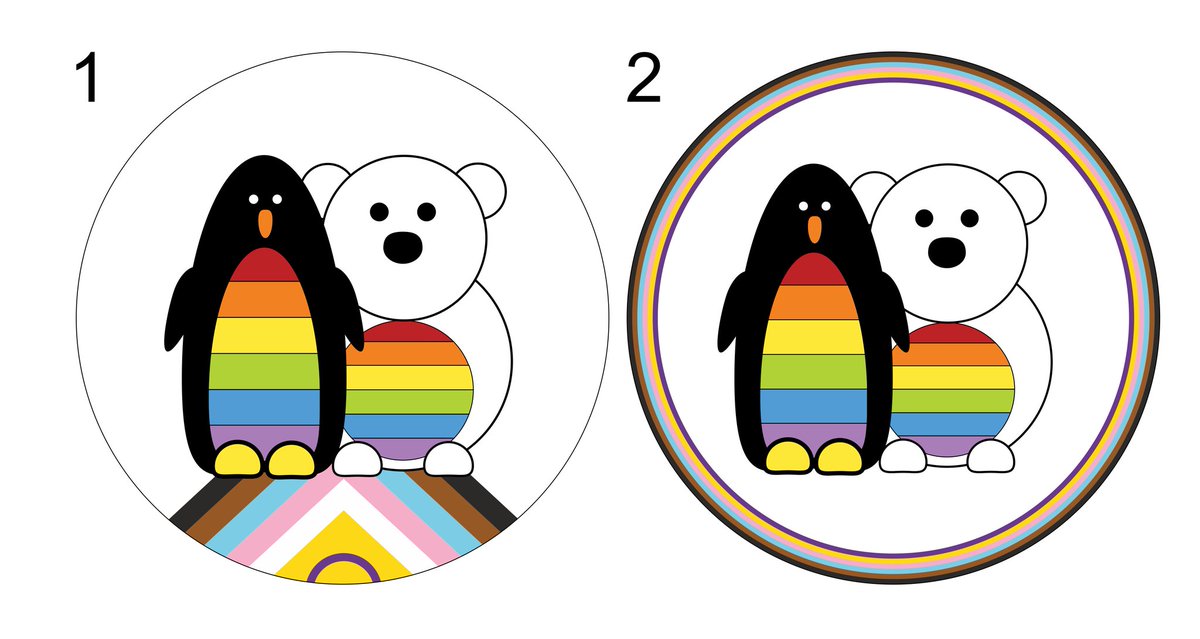
It may not be #PolarPride for another 5 months, but #PrideMonth2022 has got the #DiversityInPolarScience team all creative! 🇦🇶🌈🥶🐧 With so many thanks to @Antonarctica and @griffiths_huw which of these sticker designs would you prefer to display on your laptop?!
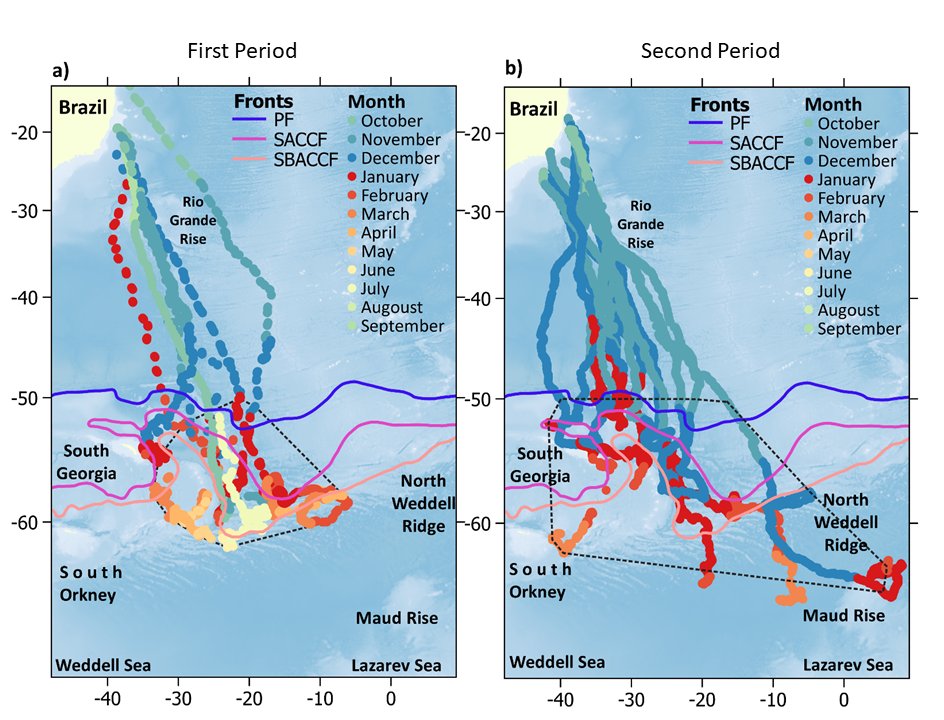
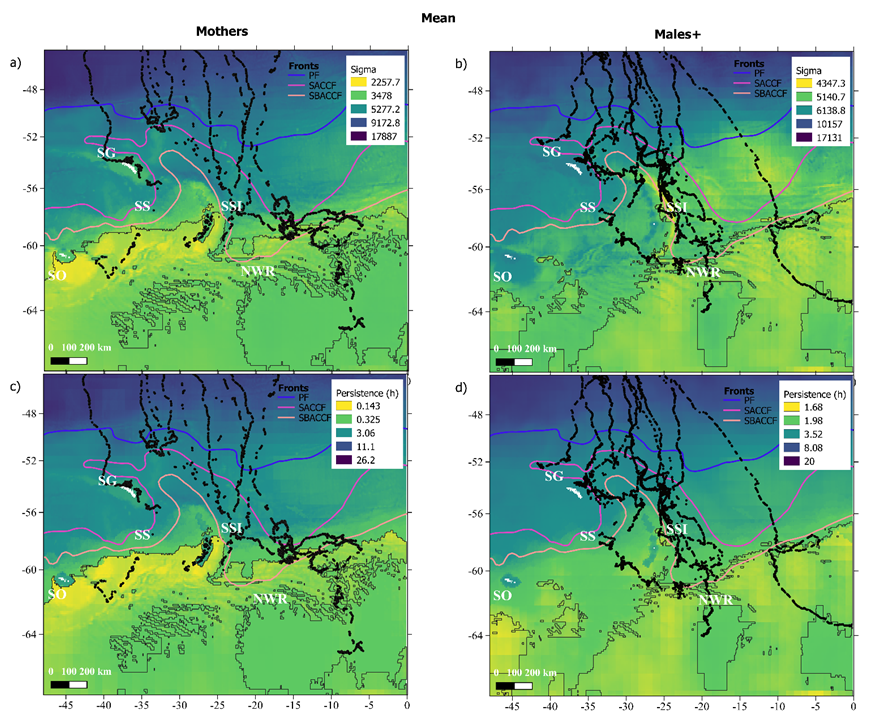
During the second tagging period whales tended to explore further south. Although currently the effect of sex can not be separated from the period effect, alternative models indicated that whales might be showing early signs of a shift in their distribution
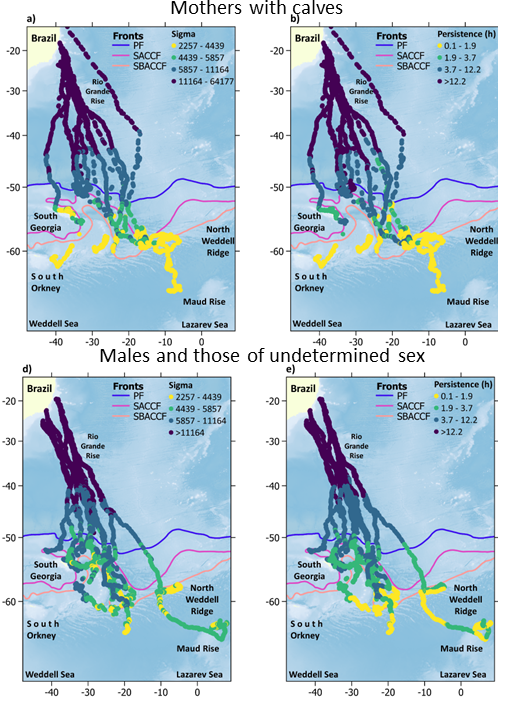
Our work explored how movement characteristics were related to environmental conditions, sex, and tagging periods (2003-2012 vs 2016-2019). Best model showed that depth, temperature, ice, wind, and whales´ sex, better explained the movement patterns.
[New Paper🧵] Watch humpback whales migrating from Brazil to the Southern Ocean. Change in their colors indicates switch from a transit behavior (purple) to a "search for food" behavior (yellow). @alex_zerbini A Andriolo @FedericoSucunza@dani_danilewicz
https://t.co/r7oV4pf9Qf
Finally, model´s results were used to predict how Southwest Atlantic humpback whales might use their habitat in the Southern Ocean. For more on this matter check a related paper by @ccgbam https://t.co/yUKytbTVjL