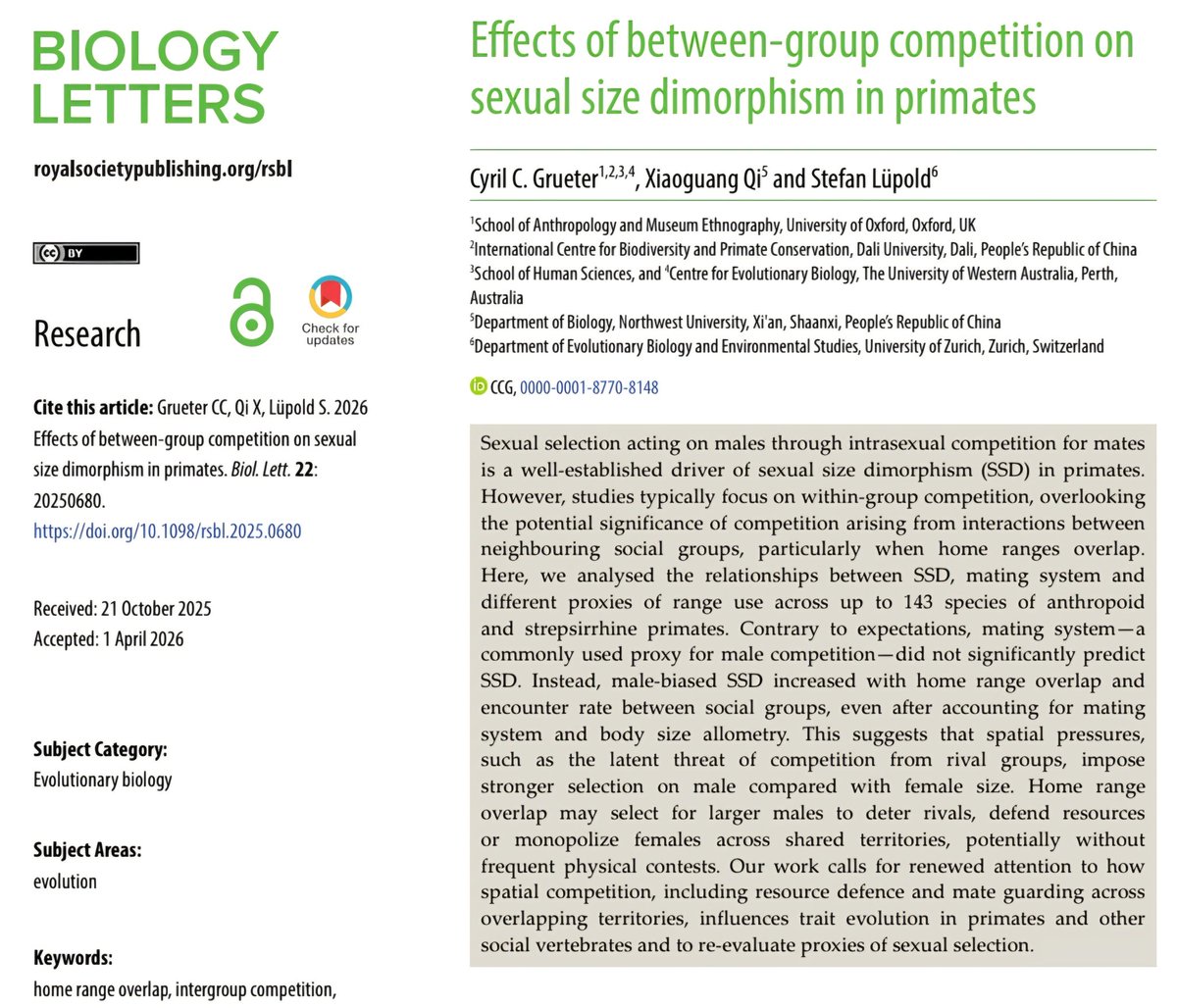
Nice to see media coverage of our new @BiologyLetters paper in Science News: “The persistent threat of altercations may supercharge size evolution in male primates via a kind of chronic cold war.” @UniofOxford@UWAhumanscience@uwanews
https://t.co/eCZj8YrGkv
New paper out (@BiologyLetters, OA): in primates, male-biased size differences are better predicted by between-group competition than by mating system. Time to look beyond the group in studies of sexual selection. @UniofOxford
https://t.co/KQivF0ofXw
In this paper I argue that xenophilia has deep evolutionary roots (trade, intermarriage, shared defense) and explains how humans uniquely scale and sustain cooperation across groups-crucial for today’s global challenges.
@UniofOxford
https://t.co/XtP3p8wToL
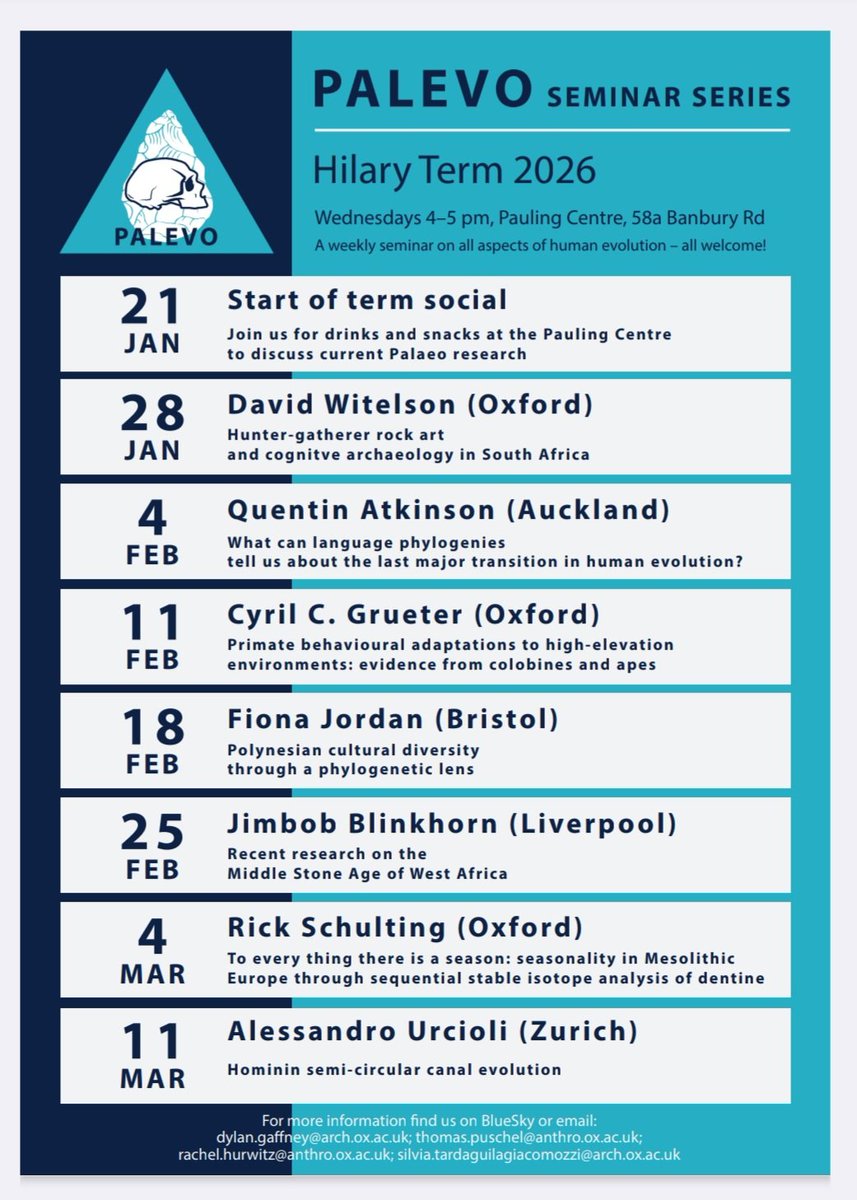
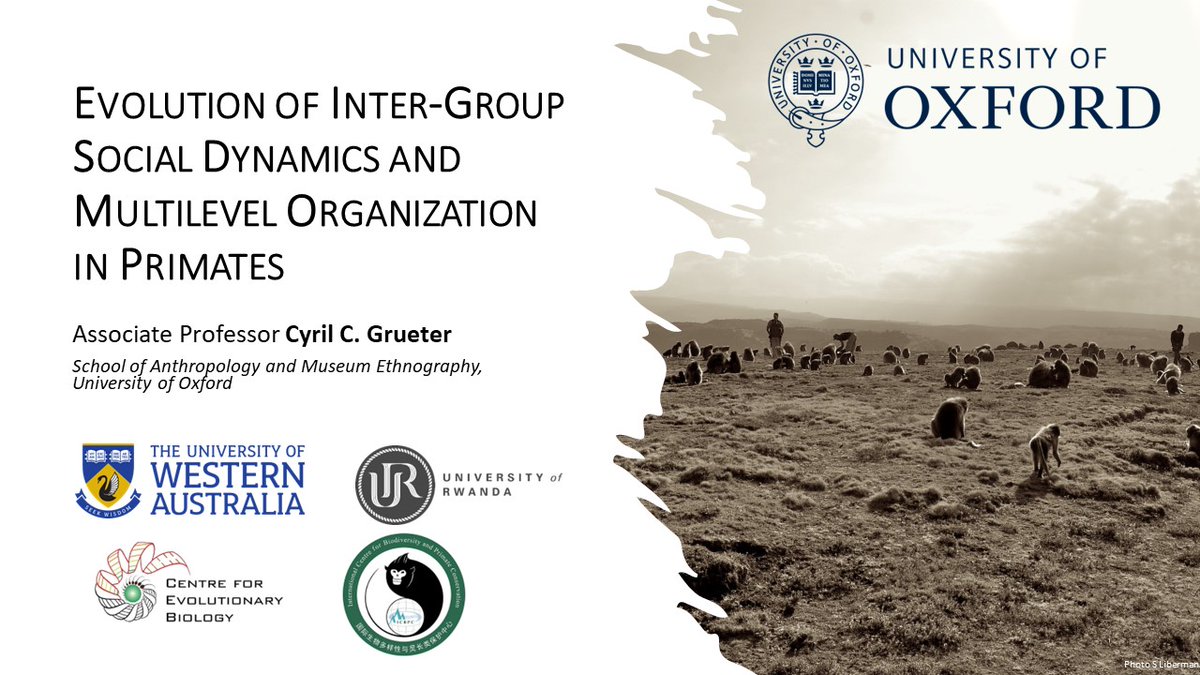
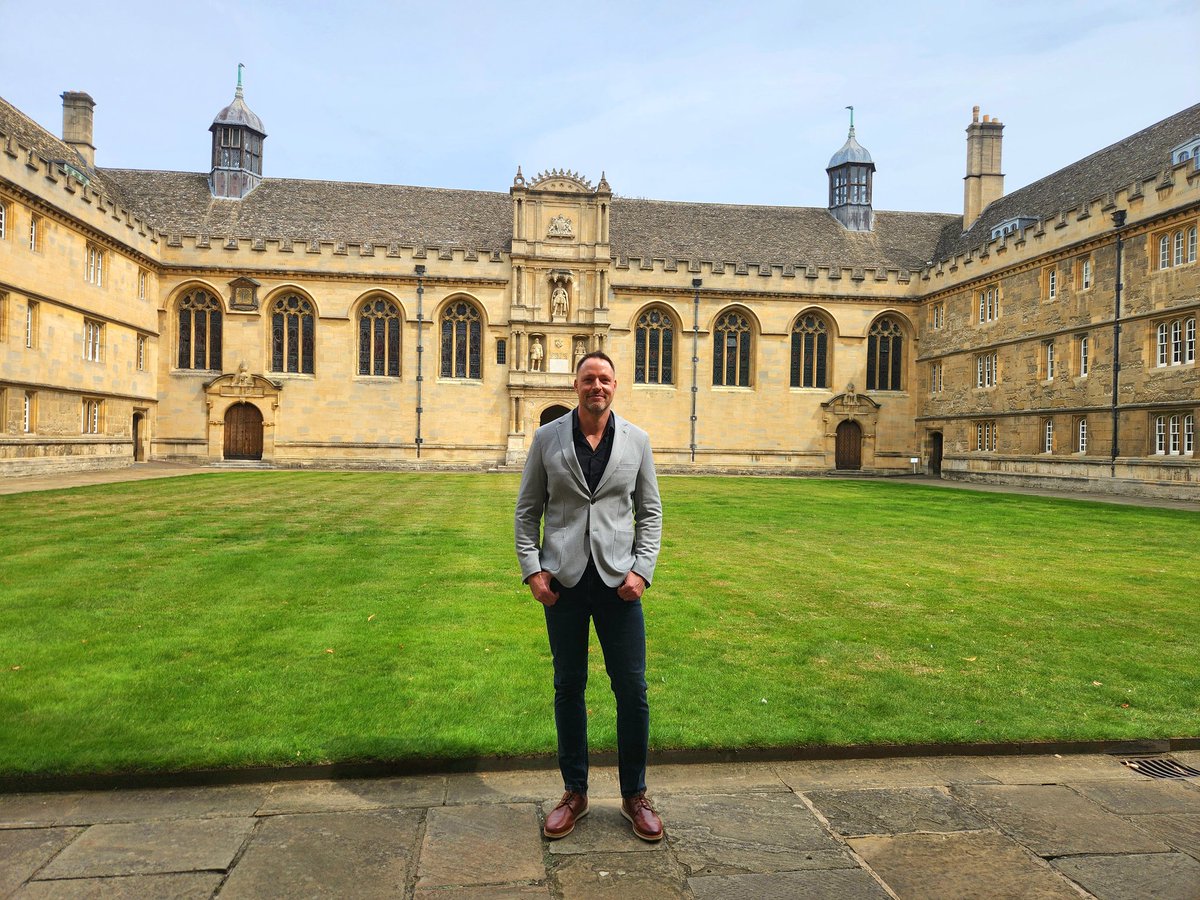
This week I presented my work at Wadham College (symposium on FORCE) and at the School of Anthropology & Museum Ethnography (PalEvo seminar). Thanks for the invitation and stimulating discussions. Oxford is a great place for interdisciplinary exchange.
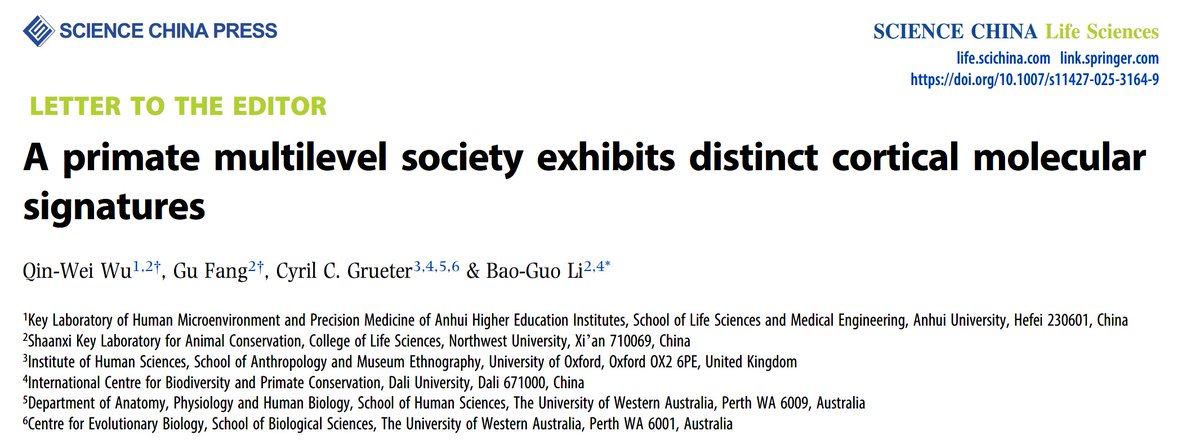
New paper out!
Single-nucleus RNA-seq shows that golden snub-nosed monkeys have distinct prefrontal cortex gene expression linked to oxytocin & dopamine signaling. The molecular signature scales with social complexity across primates.
https://t.co/Ux52z0dKWI
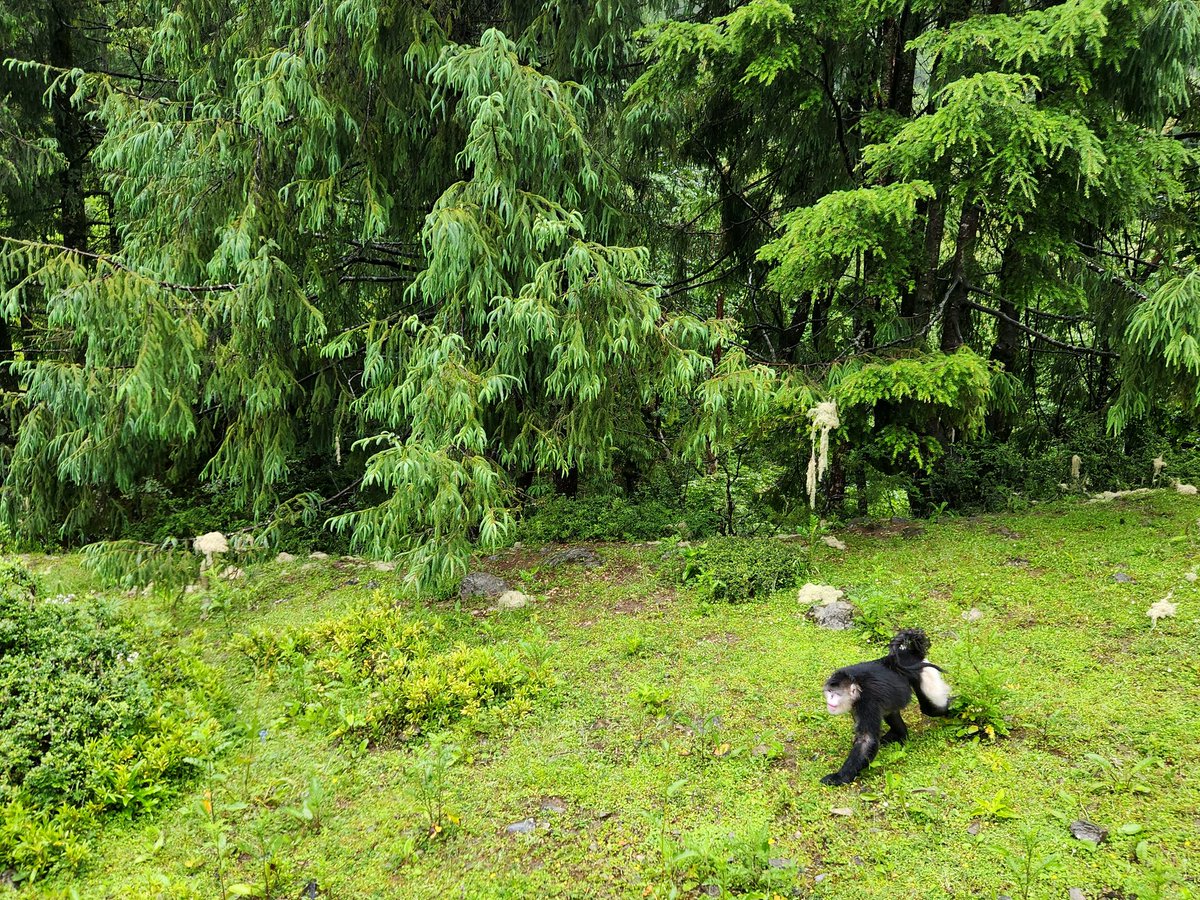
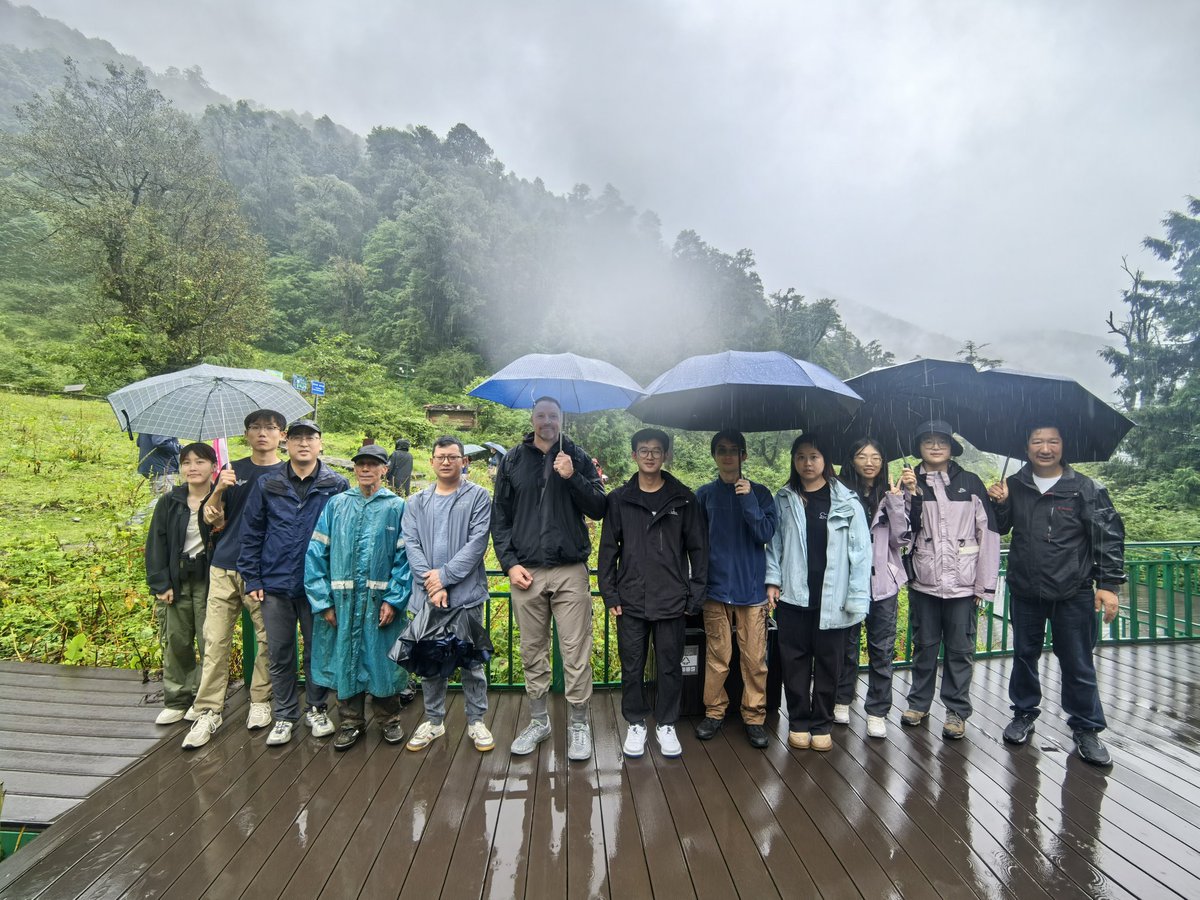
New paper out: Endangered Yunnan snub-nosed monkeys do more than eat lichen. By feeding on lichen, they help prevent lichen overgrowth that damages trees. Losing these monkeys risks destabilizing forest health. @UWAresearch@IntPrimate
📖 https://t.co/smlrK8YeKI
New paper: Intelligence drives switching to better solutions; openness drives exploration, even when it’s suboptimal. Familiarity keeps us conservative. What this means for social learning and cumulative culture. @UWAresearch
https://t.co/qEPwwcphqs
Had a great time discussing my research at today’s FINE (Frontiers in Social Evolution) seminar. Big thanks to Carsten Schradin for the invitation and for hosting me!
@UWAresearch@UniofOxford@IntPrimate
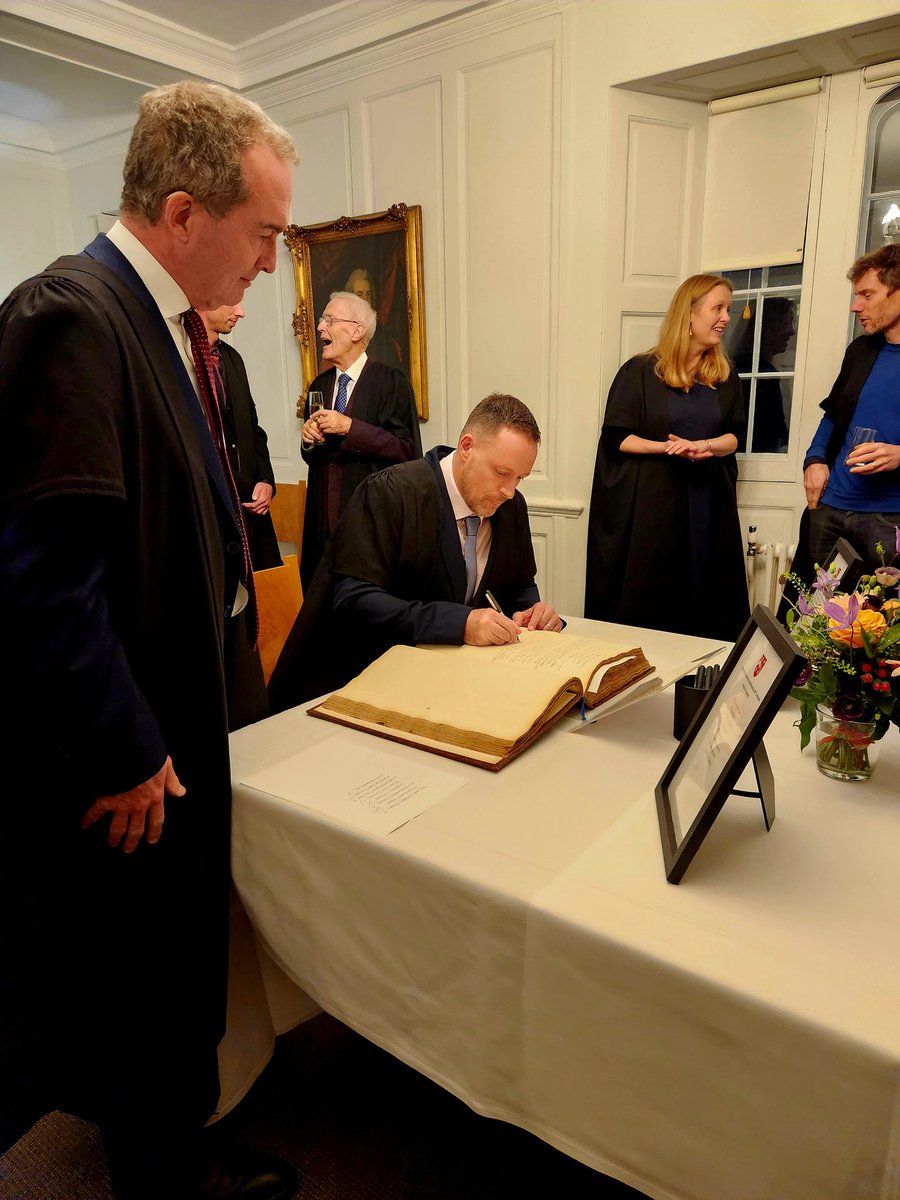
Last night, I was officially sworn in as a Fellow at my Oxford College. Signing Wadham College’s Fellows’ Book today, the very same book that has been in use for over 400 years, was a true honour.
Our new paper shows that the endangered black-and-white #snubnosedmonkey in Yunnan engineers the forests it inhabits. By breaking branches and opening the canopy, it fosters plant diversity and helps mountain forests remain resilient to change. @IntPrimate
https://t.co/Rh1lbyeImu
Attending a session at the IUCN World Conservation Congress @iucn_congress
where our Centre, the International Center for Biodiversity and Primate Conservation (ICBPC) @IntPrimate, was formally welcomed as a member of the #GlobalGibbonNetwork
Excited to share that I’ve joined the University of Oxford @UniofOxford as Associate Professor of Evolutionary Anthropology and Wadham College @wadhamoxford as a Tutorial Fellow in Human Sciences. Grateful for everyone who’s supported so far. Looking forward to this new chapter!
13+ years @uwanews shaped me in so many ways. I grew as a researcher, teacher, and mentor, launched new projects, and saw my students thrive. Grateful for the people, opportunities, and lessons. @UWAhumanscience
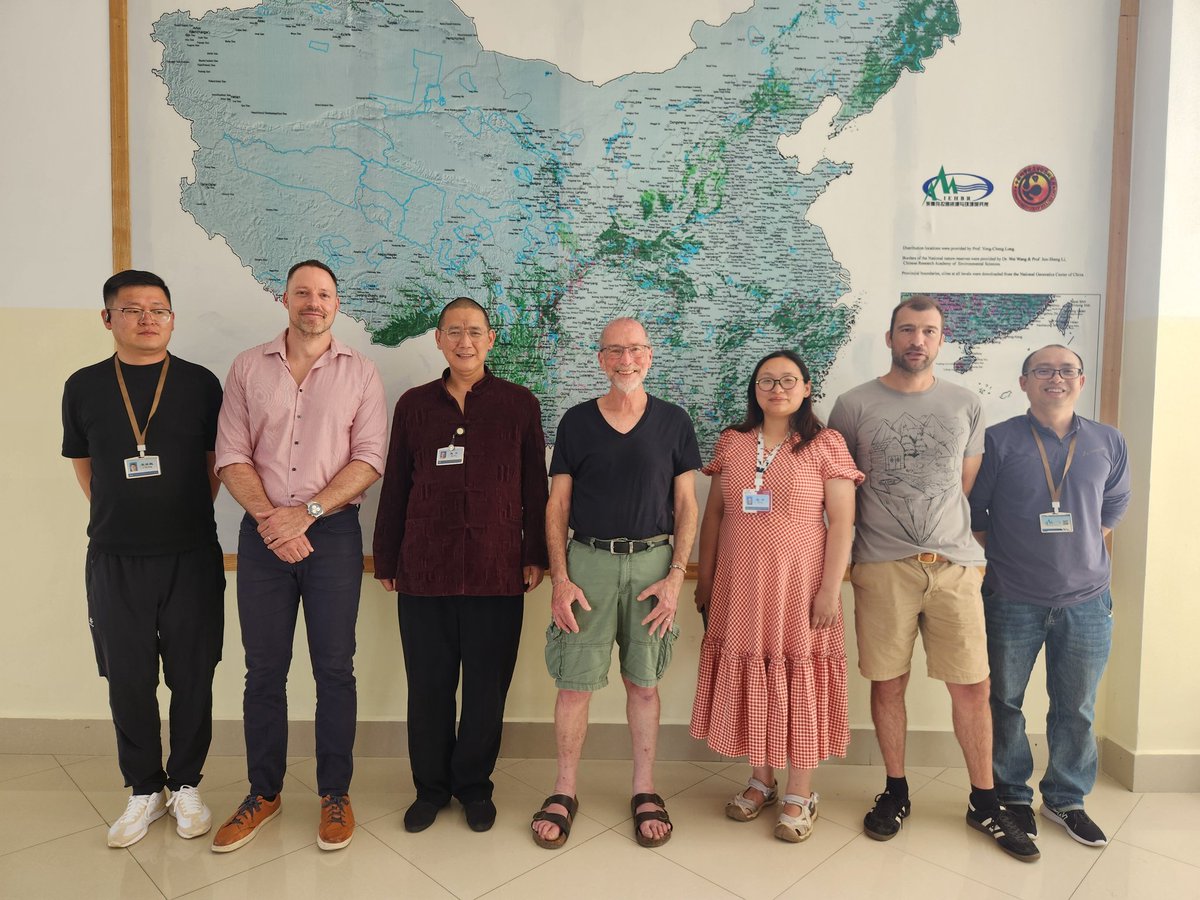
@IntPrimate leadership met this week in Dali/China to discuss progress on human–wildlife conflict research, student exchanges, outreach, and new partnerships in Rwanda and Kenya. Big steps ahead!
Just out in Biological Reviews!
My new paper highlights #intergrouppeace in primates: tolerance, affiliation etc. We propose a new framework for understanding these interactions, with insights into the roots of human cooperation. @UWAresearch@uwanews
📖 https://t.co/LSxNnsPQvL
New paper alert!
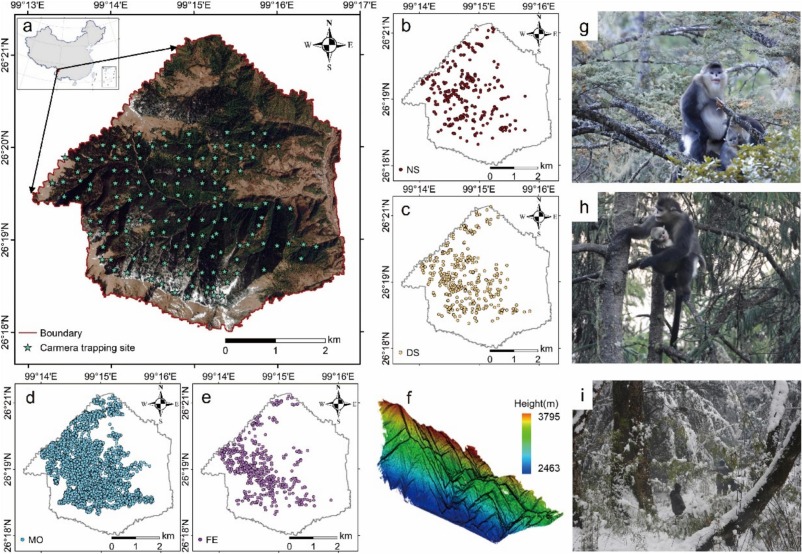
How does forest structure shape primate behavior? 🐒🌲 We studied black-and-white snub-nosed monkeys in Yunnan’s high-elevation forests using 10 years of observations, camera traps, and LiDAR (laser scanning of forest structure).
https://t.co/561aqqqEuP
New paper out!
Here we show that mountain gorilla groups in different parts of Rwanda’s Volcanoes National Park eat strikingly different diets but the nutritional quality of their key foods is surprisingly similar. @SavingGorillas@UWAresearch
https://t.co/MK8tGov0hB