Creative work often starts before we can describe what we're looking for. What role can generative models play at this stage?
🌱Our new work, Inspiration Seeds, reveals hidden visual connections between images, creating a purely visual exploration space.
🔗https://t.co/gE9MRvbKcV
This is absolutely shameful. Agents of a federal agency unnecessarily escalating, and then executing a defenseless citizen whose offense appears to be using his cell phone camera. Every person regardless of political affiliation should be denouncing this.
As tens of thousands across America protest the violence that ICE sows with impunity, federal agents shot and killed another person in Minneapolis today. ICE terrorizes our cities. ICE puts us all in danger. Abolish ICE.
One of my former research assistants was killed by ICE in Minneapolis today😢
Alex was the kindest, sweetest human and a ICU nurse with a bright future ahead of him
May his soul rest in peace and this senseless carnage stop💔
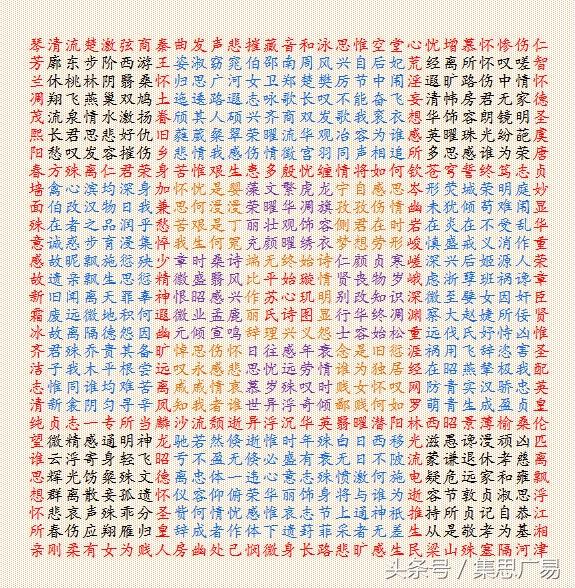
This strange square 👇 is undoubtedly the most extraordinary work of literature in human history. Yet, unfortunately, barely anyone in the West has ever heard of it.
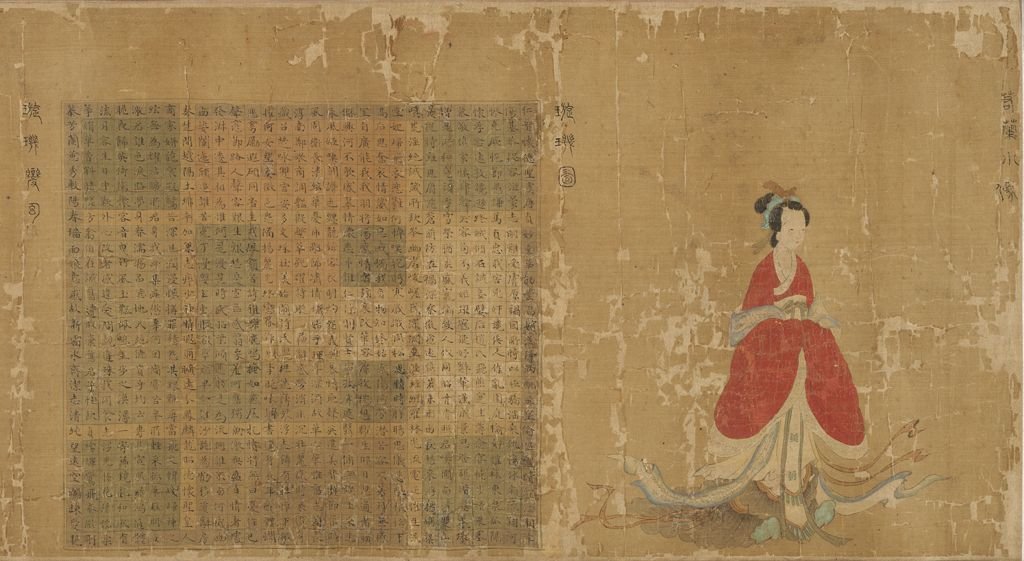
There was this woman poet in 4th century China called Su Hui (蘇蕙), a child genius who had reportedly mastered Chinese characters by age 3.
At 21 years old, heartbroken by her husband who left her for another woman, she decided to encode her feelings in a structure so intricate, so beautiful, so intellectually staggering that it still baffles scholars to this day.
Came to be known as the Xuanji Tu (璇璣圖) - the "Star Gauge" or "Map of the Armillary Sphere" - it's a 29 by 29 grid of 841 characters that can produce over 4,000 different poems.
Read it forward. Read it backward. Read it horizontally, vertically, diagonally. Read it spiraling outward from the center. Read it in circles around the outer edge. Each path through the grid produces a different poem - all of them coherent, all of them beautiful, all of them rhyming, all of them expressing variations on the same themes of longing, betrayal, regret, and undying love.
The outer ring of 112 characters forms a single circular poem - believed to be both the first and longest of its kind ever written. The interior grid produces 2,848 different four-line poems of seven characters each. In addition, there are hundreds of other smaller and longer poems, depending on the reading method.
At the center a single character she left implied but unwritten: 心 (xin) - "heart." Later copyists would add it explicitly, but in Su Hui's original the meaning was even more beautiful: 4,000 poems, all orbiting the space where her heart used to be.
Take for instance the outer red grid of the Star Gauge. Starting from the top right corner and reading down, you get this seven-character quatrain:
仁智懷德聖虞唐,
貞志篤終誓穹蒼,
欽所感想妄淫荒,
心憂增慕懷慘傷。
In pinyin, it is:
Rén zhì huái dé shèng yú táng,
zhēnzhì dǔ zhōng shì qióng cāng,
qīn suǒ gǎnxiǎng wàng yín huāng,
xīn yōu zēng mù huái cǎn shāng.
Notice how it rhymes? táng / cāng / huāng / shāng
The rough translation in English is: "The benevolent and wise cherish virtue, like the sage-kings Yao and Shun, With steadfast will I swear to the heavens above, What I revere and feel - how could it be wanton or dissolute? My heart's sorrow grows, longing brings only grief."
Now read it from the bottom to the top and you get this entirely different seven-character quatrain:
傷慘懷慕增憂心,
荒淫妄想感所欽,
蒼穹誓終篤志貞,
唐虞聖德懷智仁。
The pinyin:
Shāng cǎn huái mù zēng yōu xīn,
huāngyín wàngxiǎng gǎn suǒ qīn,
cāngqióng shì zhōng dǔzhì zhēn,
táng yúshèngdé huái zhì rén.
It rhymes too: xīn and qīn, zhēn and rén
And the meaning is just as beautiful and coherent: "Grief and sorrow, longing fills my worried heart, Wanton and dissolute fantasies - is that what you revere? I swear to the heavens my constancy is true, May we embody the sage-kings' virtue, wisdom, and benevolence."
That's just 2 poems out of the over 4,000 you can construct from the Xuanji Tu!
At the very center of the grid, the 8 red characters wrapped around the central heart, she "signed" her poem with a hidden message:
詩圖璇玑,始平蘇氏。 "The poem-picture of the Armillary Sphere, by Su of Shiping."
Or reversed:
蘇氏詩圖,璇玑始平。 "Su's poem-picture - the Armillary Sphere begins in peace."
Many scholars, and even emperors, throughout Chinese history have been completely obsessed by Su Hui's puzzle.
For instance, in the Ming dynasty, a scholar named Kang Wanmin (康萬民) devoted his entire life to the poems (https://t.co/4exP9zpqbc), ending up documenting twelve different reading methods - forward, backward, diagonal, radiating, corner-to-corner, spiraling - and extracting 4,206 poems. His book on the subject ("Reading Methods for the Xuanji Tu Poems", 璇璣圖詩讀法) runs to hundreds of pages.
Empress Wu Zetian herself, the legendary woman emperor of the Tang dynasty, wrote a preface to the Xuanji Tu around 692 CE (https://t.co/yW7aR73MPc).
Incredibly, there's even far more complexity to the Xuanji Tu than just the poems:
- The name 璇玑 (Xuanji) - Armillary Sphere - is astronomical in meaning and the way the poems can be read mirrors the way celestial bodies orbit around a fixed center. It's a model of the heavens.
- Her original work, with the characters woven on silk brocade, was in five colors (red, black, blue/green, purple, and yellow) which correspond to the Five Elements (五行) - the foundational Chinese philosophical system that explains how the universe operates. So it's also a model of the entire cosmic order according to ancient Chinese philosophy.
- It's also of course deeply mathematical with this 29 x 29 perfect square grid, with sub-squares, lines and rectangles, and a structure which allows for symmetrical reading patterns in all directions
- Last but not least, the content of the poems themselves contain multiple registers. On top of expressing her personal grief and longing for her husband, it's also filled with accusations against the concubine (Zhao Yangtai) he left her for, reflections on politics (with many references to sage-kings) and philosophical reflections.
So the Star Gauge is simultaneously:
- A love letter (expressing personal longing)
- A legal brief (arguing her case against her rival)
- A cosmological model (structured like the heavens)
- A Five Element diagram (encoding the fundamental structure of the world according to ancient Chinese philosophy)
- A mathematical construction with perfect symmetry and precision
And yet, for all this complexity, we should not forget this was all ultimately in service of the simplest human message imaginable: a 21-year-old woman asking the love of her life "come back to me".
Her husband did, eventually. According to what empress Wu Zetian herself wrote in her preface to the Xuanji Tu, when he received Su's brocade he was so "moved by its supreme beauty" that he sent away his concubine and returned to his wife. As the story goes, they lived together until old age.
The heart at the center was filled after all.
Billie Jean King on the comparisons between the original Battle of the Sexes in 1973 and the upcoming one between Aryna Sabalenka and Nick Kyrgios:
"The only similarity is that one is a boy and one is a girl. That's it. Everything else, no. Ours was about social change; culturally, where we were in 1973. This one is not.
I hope it's a great match - I want Sabalenka, obviously, to win - but it's just not the same.
I played Bobby (Riggs) three out of five sets, I played on a court and didn't change anything. I said, 'look, I play straight up or else I'm not going to play'. And Bobby loved it."
(Source: BBC)
Thrilled to announce I'll start in 2026 as faculty in Psych & CS @UAlberta + @AmiiThinks Fellow!! 🥳 Recruiting students to develop theories of cognition in natural and artificial systems 🤖💭🧠. Find me at #NeurIPS2025 workshops (talk at @CogInterp & organising @DataOnBrainMind)
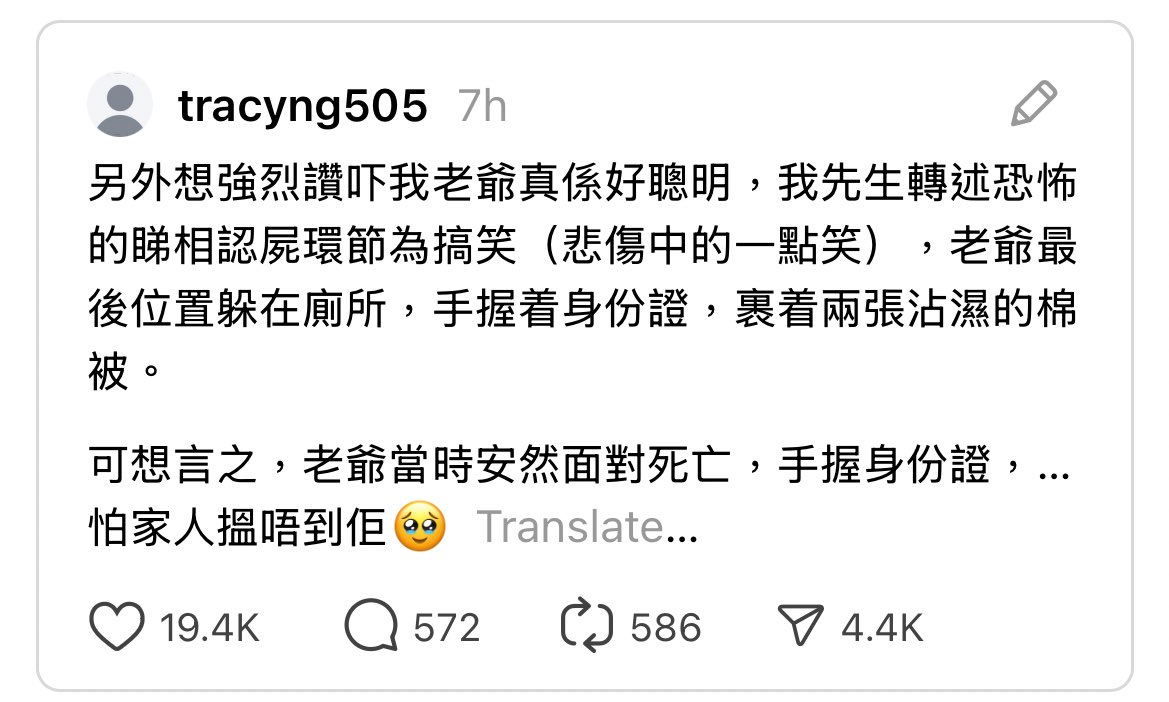
It’s so Hong Konger to find a little bit of humour even in the darkest day.
The long process of identifying dead body began and here’s a story shared on thread:
OP: I want to give a big applause to my smart father in law. My husband told me the identify process( through photo from the scene) was kinda hilarious (a little laughter through the pain). My father in law was found in the toilet, covered himself with two wet duvets with his ID in hand. We can tell he accepted his fate. By holding his ID, his last worry was that we might not be able to find/ identify him after the fire.
RIP the smartest old man🕊️
📢 Some big (& slightly belated) life updates!
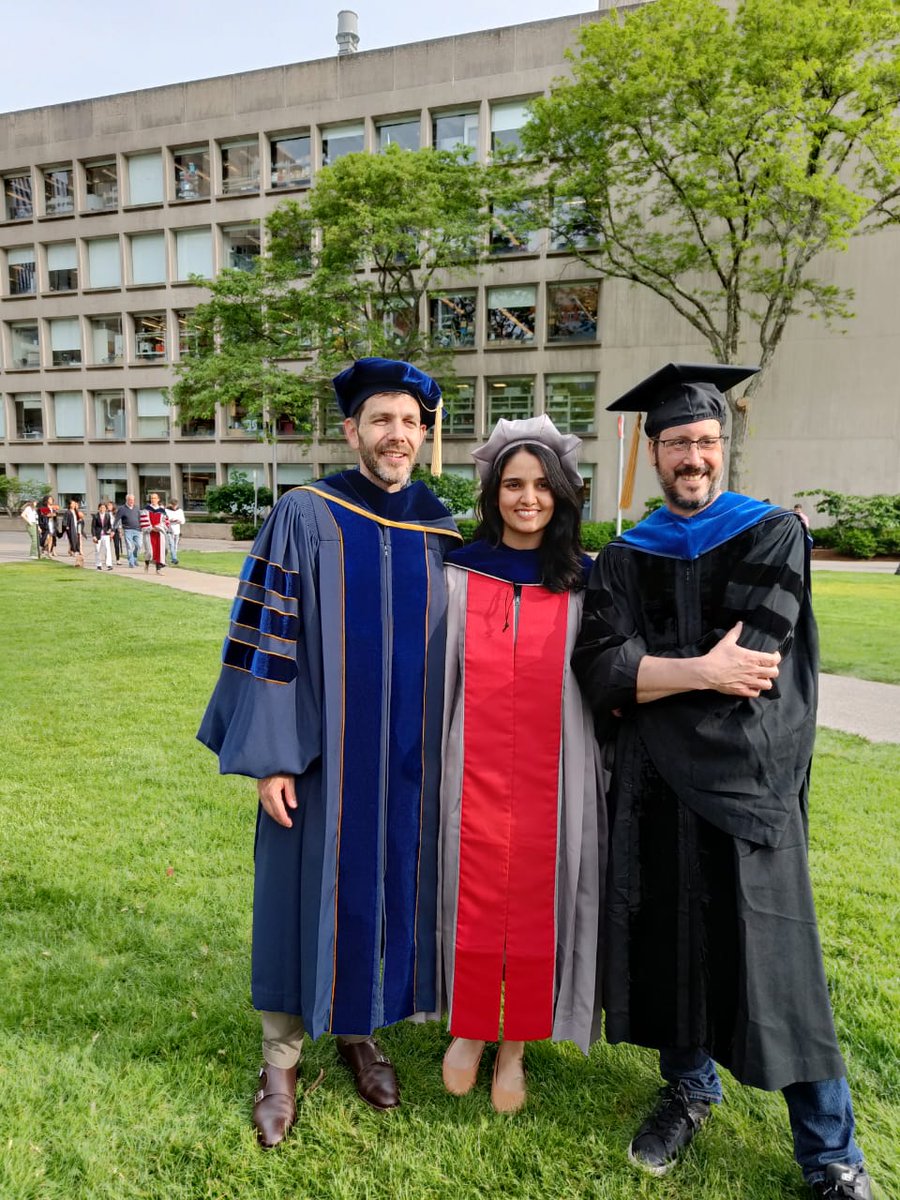
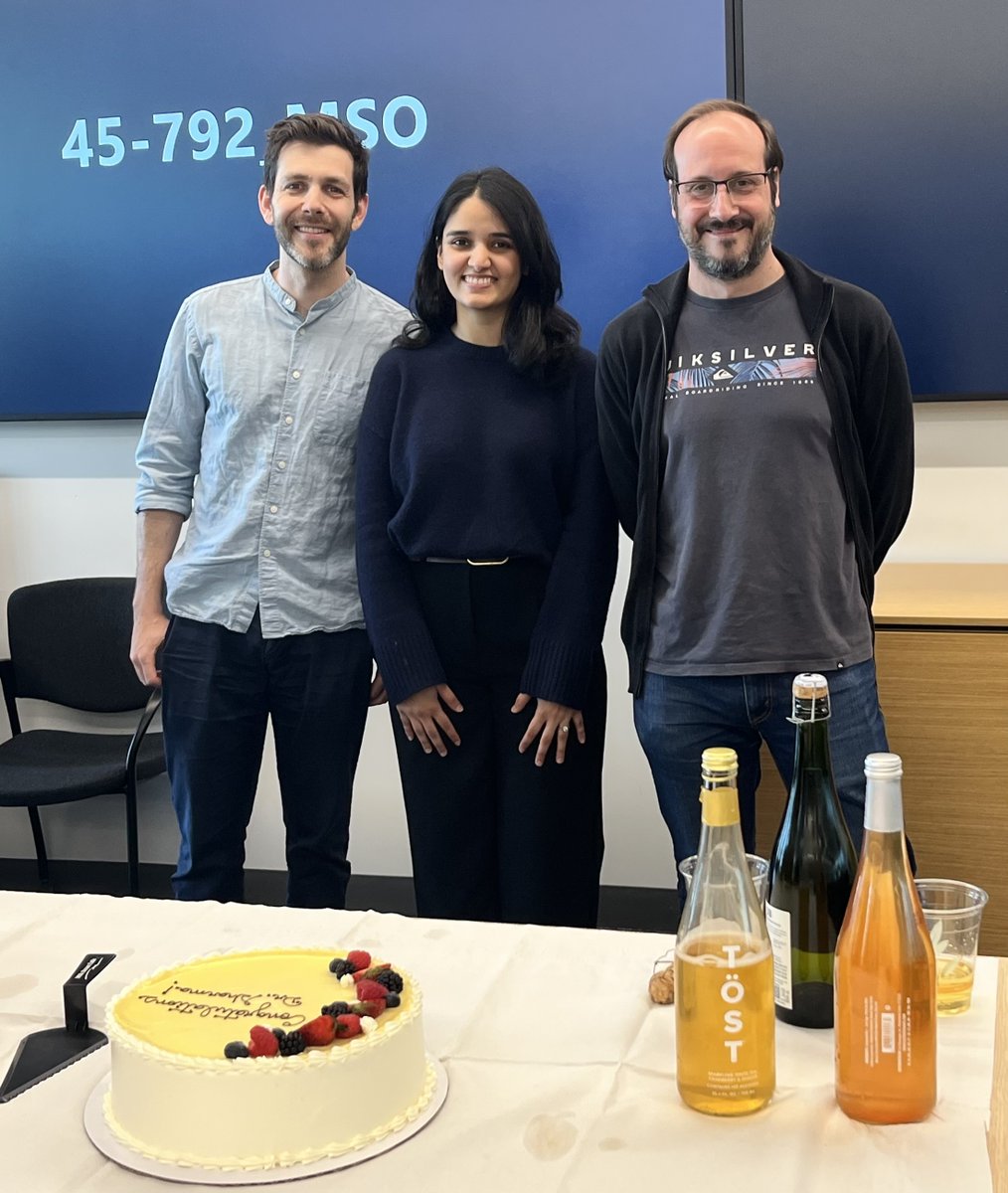
1. I defended my PhD at MIT this summer! 🎓
2. I'm joining NYU as an Assistant Professor starting Fall 2026, with a joint appointment in Courant CS and the Center for Data Science. 🎉
🔬 My lab will focus on empirically studying the science of deep learning and applying deep learning to accelerate the natural sciences.
Very broadly interested in questions at the intersection of language, reasoning and sequential decision making. (Plus any other fun problems that catch our eye along the way!)
🚀 I am recruiting 2 PhD students for this cycle! If you're interested in joining, please apply here: https://t.co/8suHESvsqI https://t.co/qlEQr2k5oi
What I learned from attending the 18K Super-Computing flagship conference SC'25 @Supercomputing - to give a keynote on Egocentric Video Understanding as a heavy SC user...
Lessons that might be of value to @CVPR@ICCVConference and others in the Computer Vision domain
🧵1/N
@kotekjedi_ml@yangyang1056945 ahaha, we also got an LLM one that complained about missing references that don't exist. They must've used quite a bad model!
Breaking news: Meta’s chief artificial intelligence scientist Yann LeCun, a Turing Award winner who is considered one of the pioneers of modern AI, has told associates he will leave the Silicon Valley group in the coming months. https://t.co/t9D3gV7K0Q
📢 We are excited to release the call for papers for #ICML2026, held in Seoul, South Korea next year!
📅 Key Dates
Abstract deadline: Jan 23, 2026 AOE
Full paper deadline: Jan 28, 2026 AOE
Main Track ➜ https://t.co/dqslP9J6GT
Position Papers ➜ https://t.co/gEVOpkuydy