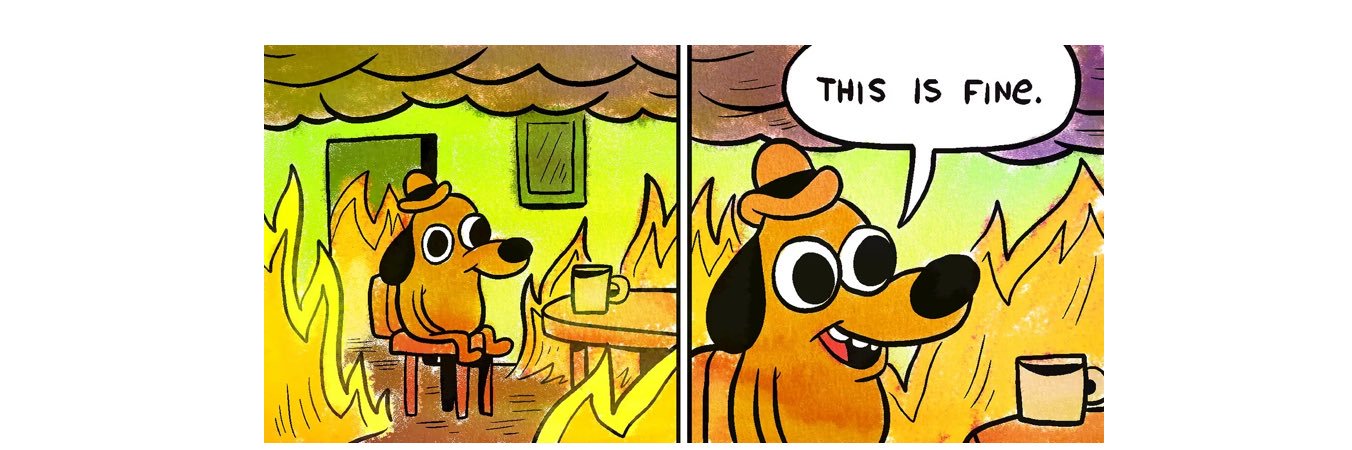
Bond markets win contests against political rhetoric. They always have.
In today’s Globe and Mail, I explore what the bond market is telling us and what this might mean for a global financial system already showing the architecture of a polycrisis.
https://t.co/8mgNrJ2TB4
@theallinpod This is a really important story, @friedberg. And the harm from El Niño will be made by worse by the spike in global fertilizer prices and high levels of debt around the world. I wrote about this a few weeks ago in @newrepublic
https://t.co/BEF2mUyFwE
@HurricaneAddict this is a major risk, and the interconnection between these two shocks may make the total harm worse than the sum of its parts. I wrote about this last month in the @newrepublic
https://t.co/BEF2mUyFwE
Just so everybody is clear, it's not the El Nino alone that's so uniquely problematic. It's the combination of the strength of the El Nino with the coming fertilizer shortage. Both of these are slow moving and enormously impactful events that have already been set in motion and won't fully manifest until the back half of the year. However, once they show their face, their impacts will feed off each other and exacerbate shortages around the globe.
The introduction of Carney’s Canada Strong Fund appears to be more of a symbolic gesture rather than a strategic move with immediate impact. While the concept of a sovereign wealth fund is a promising idea on paper, its potential to significantly boost domestic investments in the near term seems doubtful.
The fund’s structure and approach lack the necessary detail and immediate actionable plans to make a discernible difference in the country’s investment landscape. This initiative seems to serve more as a public relations exercise rather than a concrete step toward long-term economic enhancement.
It’s crucial for any strategy aiming to bolster national financial resilience to have clear objectives and timelines—a factor seemingly absent in the current iteration of the Canada Strong Fund. Until more robust and immediate measures accompany this idea, its ability to move the needle remains limited.
The latest from the Globe's business commentary, by Eric Reguly: https://t.co/iPpaTD7CgI
Traditional risk models often treat threats in isolation, and may miss the feedback loops between fiscal, monetary, geopolitical, and technological systems. In the @globeandmail I argue that “polycrisis” framing offers a helpful lens understanding these interconnected risks.
The current financial system is precariously poised, likened to a giant polycrisis in the making. Individual economic and financial concerns might be manageable on their own, but together they form a tangled web of potential catastrophe. Markets have historically been able to endure and even thrive amid uncertainties, a phenomenon often described as climbing a 'wall of worry.'
However, this resilience has its limits when facing an overwhelming confluence of crises, akin to a maelstrom. The global economy is fraught with complex interdependencies that exacerbate vulnerabilities when shocks occur simultaneously. Instead of isolated issues, we are witnessing a compounding of challenges: geopolitical tensions, inflationary pressures, climate-related disruptions, and the lingering impacts of the COVID-19 pandemic.
This intricate convergence of risks may overwhelm financial systems that have historically found ways to persevere through less convoluted troubles. The lesson is clear: while individual problems can be navigated, a polycrisis demands urgent, coordinated, and innovative responses. Without strategic preparation and collaboration, the financial system may find itself unable to scale this unprecedented blend of crises.
The latest from the Globe's business commentary, by Christopher Collins: https://t.co/iRk20fco5E
“Sultanism with American characteristics.” To explain American foreign policy under the Trump administration, I turned to the work of Max Weber — the OG economic sociologist.
https://t.co/6jzkKUMCIu
1/9
Brilliant article by Martin Wolf on global imbalances. Wolf is one of the few economists who have an intuitive sense of the global economy as an economic system, which means he is also one of the few who understands how global imbalances work.
https://t.co/ZUieevOun5
Read George Packer's profile of David Sacks if you want to understand how a part of Silicon Valley turned against American democracy
https://t.co/VWz6USvWR8
Reading @danwwang’s fantastic Breakneck. While he’s talking about California here, this could also easily be applied to Canada. Especially as we debate our own high-speed rail project.
Really worth reading @PaulBlustein on the history of Saudi et al investments in USD assets (including the bit about the West Germans and Japanese actively discouraging diversification into deutschmarks and yen)
https://t.co/un9KDlBf6V