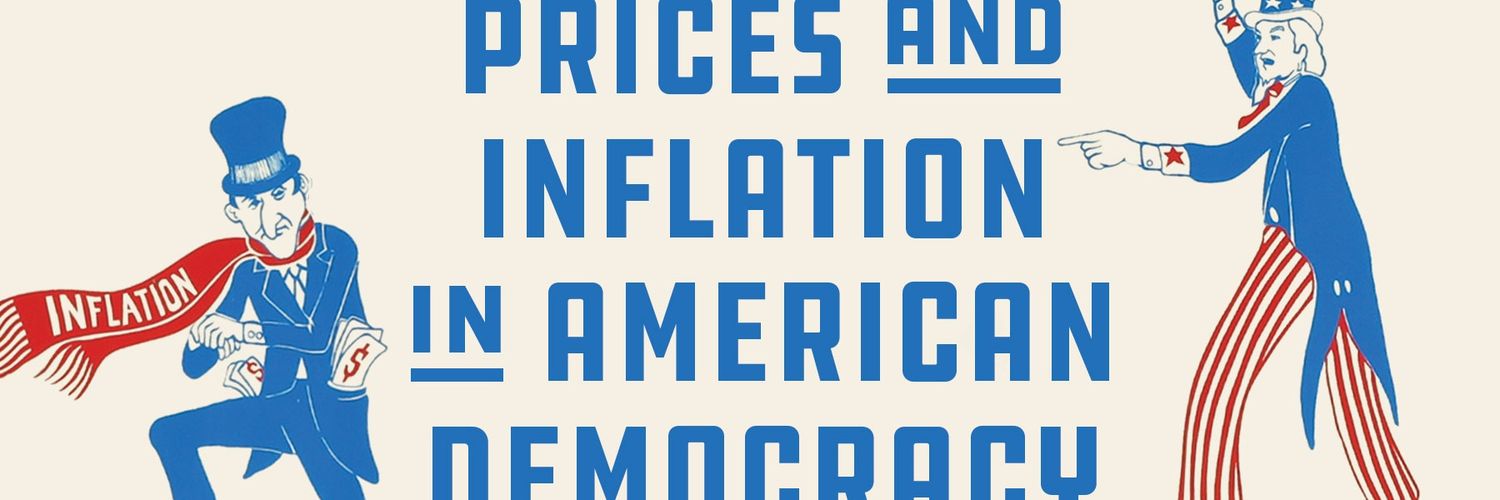
Associate Prof of Civic Leadership and Economics at UT Austin. Author of Shock Values: Prices and Inflation in American Democracy. Catholic wife and mom of 6.
"I visited [UT Austin's] School of Civic Leadership. It offers courses like “Excellence of Character: The Virtues,” “Great Thinkers in Realism and Geopolitics,” and “Truth and Persuasion.” I met faculty who had left other universities from across the country to do the sort of teaching that had inspired them to go into the profession in the first place. I was impressed by how hard they were trying to prevent this program from becoming a conservative ghetto. The students I met were all over the political map. They said they got involved in the program because they wanted to find a space on campus where they can argue things out. Some of them came from Classical Christian schools where they’ve been debating Aristotle since they were 11, and others came from normal public high schools where they had never heard of Aristotle, but they were mixing it up together now. One freshman told me, “This week alone two separate professors accused me of being a Neoplatonist.” I don’t know exactly what they meant by that, but it sounds like he’s getting a good education."
"Something Big is Happening on Campus," writes David Brooks, in a major new @TheAtlantic Monthly essay. In it, he explores the revival of civic and humanistic education across the country and argues that students are hungry for serious engagement with the "Great Conversation--the debate, stretching back centuries" about meaning, citizenship, character formation, and living a good life.
Read the essay here:https://t.co/wO48RkAHhH
We have updated our Recent Faculty Publications wall, this go-round featuring recent articles from Bill Evans, David Phillips (@PhillipsEcon), and former grad student Tim Spilde; Christian Matthes (@cmatthes_econ); Jane Ryngaert; and Enrique Seira (@SeiraEnrique)
Hoover Senior Fellow Ross Levine and @EconTalker examine Adam Smith's insight that humans desire not only to be loved but to be genuinely praiseworthy.
Watch the full episode of EconTalk here: https://t.co/l35Hf8f5m5
This was a fun one! RCTs, vignettes, and event studies rely on totally different sources of identifying variation. Will the estimates be the same? Reassuringly, yes! Un-reassuringly, all three find that a rate cut LOWERS inflation expectations.
Estimates of the effects of monetary policy announcements on expectations are similar across three common identification strategies, from @cconces, Dimitris Georgarakos, Pei Kuang, and Li Tang https://t.co/KP4gFIUVRn
Estimates of the effects of monetary policy announcements on expectations are similar across three common identification strategies, from @cconces, Dimitris Georgarakos, Pei Kuang, and Li Tang https://t.co/KP4gFIUVRn
Last night, John Yoo and William A. Galston took part in a debate moderated by Sanford Levinson on the question: Is the American presidency a constitutional dictatorship?
The conversation centered on a question first raised in Clinton Rossiter’s classic 1948 study "Constitutional Dictatorship." In the closing discussion, the speakers took questions on checks and balances, the growth of executive power, and the shifting role of Congress.
This debate is part of a growing series at SCL designed to foster thoughtful conversation on serious questions affecting our country.
If you’re interested in future events like this, click the link below.https://t.co/S07jvSxDyL
What is Civic Leadership? What is our school, and what do we do? Our new video gives a closer look at the School of Civic Leadership at The University of Texas at Austin and what we’re building. Watch the full video now on YouTube.
https://t.co/EuKYWSwqkB
🌍💰 If tariffs are rolled back, will prices actually fall?
It seems like they should — but the reality may be more complicated.
As SCL Associate Professor @cconces explained in @thehill, tariffs are only one piece of the pricing puzzle. Even if some tariffs are reduced and certain goods become cheaper, the overall price level may still remain relatively high.
Once higher import costs move through supply chains and retailer markups, prices can become “sticky,” meaning they don’t always fall as quickly as they rise.
It raises an interesting question: how much relief do consumers actually see when tariffs disappear?
Read the article here: https://t.co/iH1OVVpus5
In the fall, I'm returning to @UTAustin to help build the premier strategy and statecraft program. I'll join as an Asst Prof of Security Studies in @UTCivics and at the @ClementsCenter, where I'll serve as the Director of Research. Stay tuned for new positions and initiatives!
My favorite Warsh speech: "Challenging the Groupthink of the Guild", which I saw Kevin give in 2016 in DC. Prescient in many ways. It was Fed Groupthink that brought us Team Transitory & slow response to 2020s inflation. Challenging that kind of Groupthink is needed at the Fed.
From the WSJ editorial board:
"Mr. Warsh is known as an inflation hawk, which makes Mr. Trump’s nomination especially notable. Mr. Trump wants lower interest rates, but the paradox of monetary policy is that someone with hawkish inflation credentials has more credibility with financial markets and can often find it easier to keep rates lower than easy-money men."
https://t.co/3Y4SThNkp8
However, the current Trump-Fed dynamic might be breaking this pattern. Binder’s recent work suggests that when a President explicitly attacks the Fed, the heuristic breaks. Instead of "My President runs the Fed," voters hear "The Fed is the Enemy." https://t.co/9B0Gn7xXHG
One thing I appreciate about @cconces' _Shock Values_ is showing just how non-obvious the concept of the price level, and its use as a policy target, was.
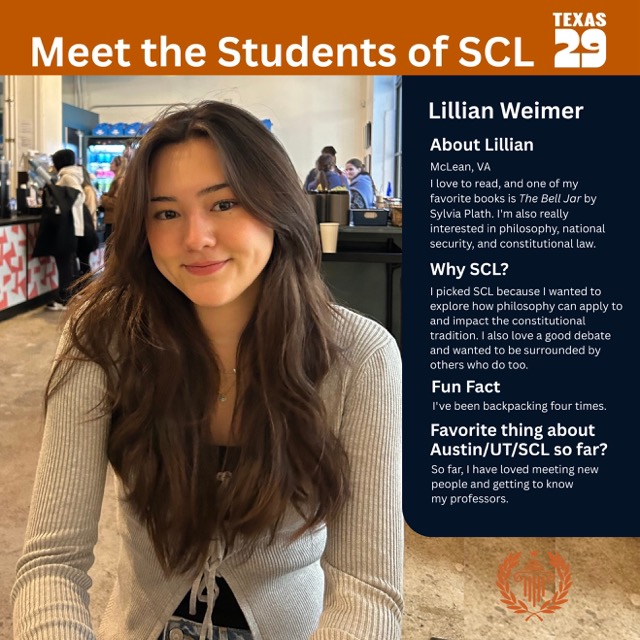
Meet Lillian, who is part of the inaugural class of the School of Civic Leadership!
Lillian chose SCL to explore the relationship between philosophy and our constitutional tradition.
In Finland, some speeding fines are income-based: "a $250 offense for a low-income speeder can cost $100,000 for the rich." Interesting JMP by Payne and Kaila evaluates usefulness and voter preferences for this kind of policy: https://t.co/smPEyx7Klz