U-M biologists & colleagues have uncovered a neural network that enables fruit flies to convert stimuli into a “yes or no” decision about when to act. The research, published in @CellPressNews, could help AI machines learn to categorize information.
https://t.co/bbvsMA2bIf
Is the brain a big combination of sigmoid functions? Nobody knows for sure, but here is some evidence that some neural networks indeed conduct a sigmoid-like transformation of input signals. Look at our new work!
Excited about sharing this study, which is the result of a close and enjoyable collaboration between neurobiology and computational science.@yu_guoqiang@ccwang1992 https://t.co/Z17CVtJOs1
Excited about sharing this study, which is the result of a close and enjoyable collaboration between neurobiology and computational science.@yu_guoqiang@ccwang1992 https://t.co/Z17CVtJOs1
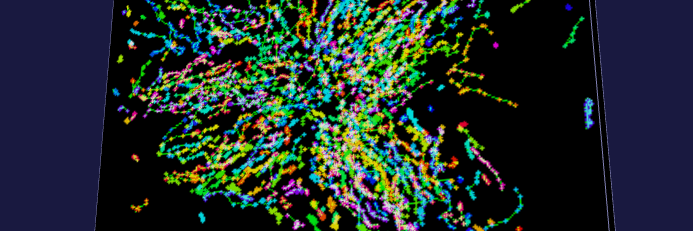
Our MOT paper got accepted by IEEE Trans. on PAMI 🥳. Try it if you want to build your tracking framework! Theoretical and practical efficiency guaranteed. Early access here: https://t.co/qnCwJi9d31
We have developed a new framework for multiple-object tracking. Have the best theoretical complexity. And empirically more efficient than current approaches, with 50 to 1,000 folds of improvement. Try it! Source code https://t.co/PIHu5h2ff3 and arXiv paper
https://t.co/Z7iQMwAGXW
Come to visit our poster (172) at #NeurIPS this afternoon. We present an exact and efficient solution for multiple object tracking from image series. Full paper and source code are at the github link. https://t.co/EWI1bt68rl
We have developed a new framework for multiple-object tracking. Have the best theoretical complexity. And empirically more efficient than current approaches, with 50 to 1,000 folds of improvement. Try it! Source code https://t.co/PIHu5h2ff3 and arXiv paper
https://t.co/Z7iQMwAGXW
I am looking for Ph.D. students in #ComputerVision and #MachineLearning!
Please RT and help spread the info. Thanks🙏! More information at https://t.co/17BHmGoicd
Check out our work from my and Poskanzer's labs. New tool for quantifying astrocyte activity and others'.
https://t.co/O1h8eCbJmT
See the precise review from Santello's lab. https://t.co/7I42Qrmv0f
Devoted to make this tool better. Feel free to contact for request/suggestion.
Check out our work from my and Poskanzer's labs. New tool for quantifying astrocyte activity and others'.
https://t.co/O1h8eCbJmT
See the precise review from Santello's lab. https://t.co/7I42Qrmv0f
Devoted to make this tool better. Feel free to contact for request/suggestion.
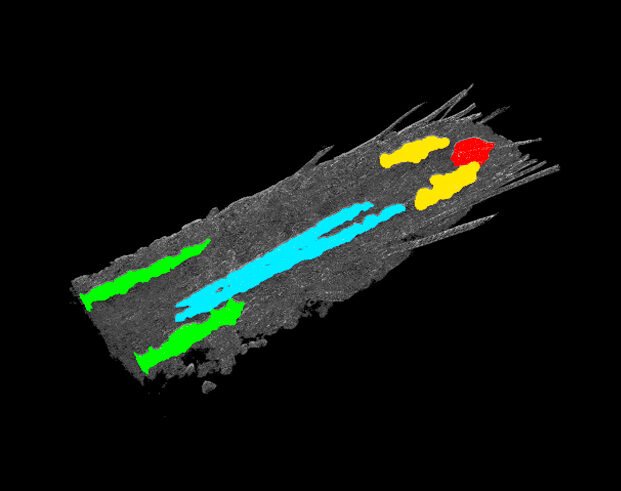
Please RT. New version of SynQuant for synapse quantification. Request data sets to test, to make it more robust and accurate. BioRXiv link: https://t.co/4pafdt3apw
GitHub link: https://t.co/rKtUWbo2az Happy to give talk at your place. Contact: [email protected]
Yoshua Bengio, Geoffrey Hinton and Yann LeCun, the fathers of #DeepLearning, receive the 2018 #ACMTuringAward for conceptual and engineering breakthroughs that have made deep neural networks a critical component of computing today. https://t.co/KQTKkVI2om
Happy to release our software AQuA on analyzing and quantifying calcium or glutamate imaging data. Completely new framework. Source code and user guideline are available at https://t.co/3KHVXy6ctI Tests and feedback are welcome!
Our new paper proposed a new model, Asymmetric Independence Model (AIM), to identify gene-environment interactions. Theoretically sound and more powerful than conventional methods. https://t.co/SeQwAKyOfj