Pi Founder Chengdiao Fan’s talk at Consensus 2026 was centred on a simple but important challenge:
The frequent misalignment between token design and real product innovation.
Her presentation, “Aligning Web3, AI, and Blockchain for Utility,” explored how tokens can be treated as tools that can support user acquisition, product engagement, and long-term utility.
One implementation of this approach is Pi Launchpad, Pi’s design for ecosystem tokens and launch mechanisms that aims to help products acquire real users who can engage, provide feedback, and use those tokens within actual product experiences.
As AI makes it easier to build applications, the limiting factor is no longer creation.
It is distribution and usage.
Pi’s approach combines blockchain infrastructure, innovative token and launch mechanisms, identity verification, and a large engaged network of real users to address that gap directly.
Enjoy the full talk & leave your thoughts on Pi’s approach to tokens and launch mechanisms!
https://t.co/YiYqcxo0jJ
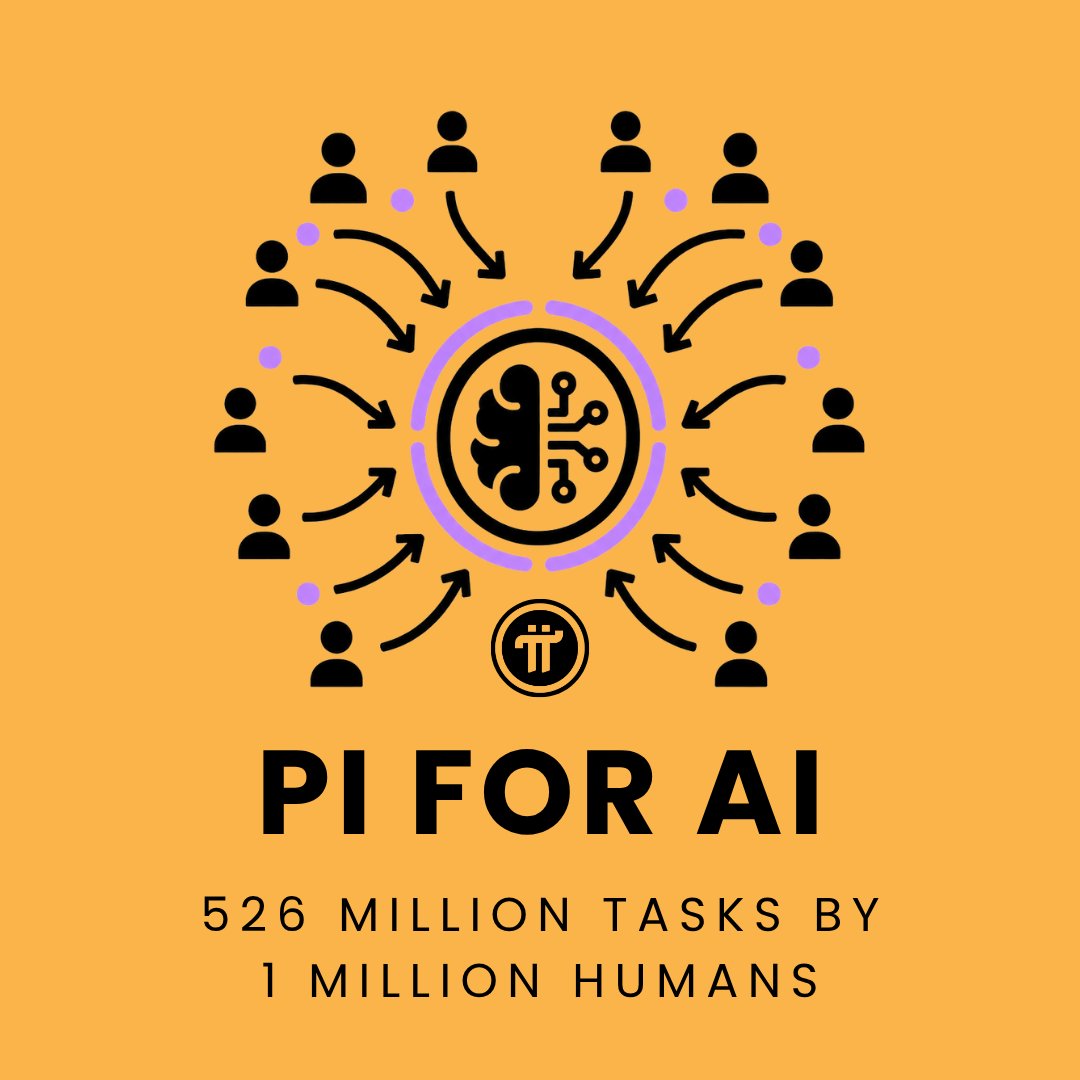
526 million human KYC validation tasks have already been completed on Pi.
By over 1 million verified people.
AI is advancing quickly.
But the hardest part of building reliable systems is still deeply human.
Models don’t improve from compute alone.
They improve from:
Judgment
Correction
Context
Nuance
Pi represents something different.
A globally distributed, identity-verified human workforce that has already demonstrated coordination at scale, already active in the Pi ecosystem.
This is real infrastructure, it’s already been used to process hundreds of millions of real tasks.
For AI systems, that changes what’s possible.
Go to the Pi mining app home screen to learn more.