The #PulseChain opportunity is not complicated.
A working blockchain. Cheaper than Ethereum. Faster than Ethereum.
Priced like it has no future.
Held by people who know exactly what it’s worth.
Ignored by a market that hasn’t done the research yet.
That gap between knowledge and price is where generational wealth is created.
We’re living in that gap right now. 💚🫡🚀
$PLS $PLSX $HEX $INC
There is a specific kind of person who buys $HEX at these prices.
Not the trader looking for a quick flip.
Not the speculator chasing the next narrative.
The person who reads the whitepaper twice.
Who understands exactly what they’re buying and why.
Who has already done the math on what happens if they’re right.
That person isn’t hoping.
They’re waiting.
And waiting, when you know what you’re waiting for, is the most powerful position in finance. 💚🫡🔥
$HEX $PLS $PLSX $INC
Crypto has created a lot of loud personalities.
Then there’s @RichardHeartWin
Luxury watches. Ferraris. #HEX. #PulseChain. One of the most loyal communities in crypto.
Love him or hate him, nobody ignores Richard Heart.
@graminitha1 breaks it down👇
Cappy early website is up: https://t.co/lnvhzelcDi
Cappy X account: @CappyWallet
Just wanted thank you guys for all the support on this. This is just the tip of the iceberg, there are a lot of things I plan to do in as short as possible of order. Couldn't do it without you guys.
I'll be splitting updates between my personal / Cappy X accounts. I've been asked many times how people can help, I put some info on the site for now.
Anyways, less talking more doing. The roadmap on the site is accurate as of right now. But I'm moving fast.
I want this wallet to exist so I can enjoy it too.
Ran Neuner of Crypto Banter proposes interview with PulseChain founder Richard Heart amid discussions on developer SIN3R6Y's infrastructure work
Ran Neuner publicly invited PulseChain founder Richard Heart for an interview on Crypto Banter, generating significant community engagement.
Independent developer SIN3R6Y, also known as Alex, shared details on building PulseChain infrastructure including the Cappy wallet and a modified Blockscout block explorer. The posts highlight strong PulseChain community support for ongoing development efforts.
When PulseChain launched, the one thing I knew we were going to be missing was infrastructure.
Not hype.
Not another token.
Not another chart.
Infrastructure.
Ethereum had years to build out the tooling, RPCs, indexers, data services, dashboards, wallet support, integrations, and all the invisible pieces that make a chain actually usable.
PulseChain needed a lot of that on day one.
So that’s where I focused.
It is a relatively thankless part of the ecosystem. Most people only notice infrastructure when it breaks. It does not really have a flashy narrative. It does not pump because a node stayed online. It does not trend because a backend service quietly handled traffic for another app.
But a lot of projects depend on it.
That work was hard, and for the most part, I do not really make anything from it. I did it because I thought it needed to be done.
At this point, I consider a lot of that infrastructure work done. Or at least done enough that I can start shifting more attention toward the next missing pieces.
Software is like an onion.
There are layers upon layers.
Most people only see the final app, the interface, the button they click, or the thing they directly use. But underneath that are all the other pieces that have to exist first: RPCs, APIs, data services, indexers, contracts, routing logic, security assumptions, UX standards, integrations, and a dozen other things nobody really wants to think about until something breaks.
Some software cannot properly exist until other software exists beneath it.
And when those lower layers are missing, someone has to build them.
That is a lot of what my work on PulseChain has been. Not just building the thing people see, but building the things the visible thing depends on.
That also means I have had to put my own personal opinions aside in a lot of cases.
There is software out there that I do not personally agree with. There are projects I would not use myself. There are decisions I may not like, products I may not believe in, and approaches I may think are wrong.
But infrastructure has to be agnostic.
If you are building foundational layers for an ecosystem, you cannot only support the things you personally like. You cannot alienate every project you disagree with. You cannot build in a way that says, “This only works for my corner of the chain.”
That is not how we grow.
A real ecosystem needs room for different products, different opinions, different strategies, and different types of users. Even when I disagree with someone, that does not automatically mean they should be cut off from the infrastructure layer.
That is not always easy.
But I think it matters.
And to be clear, I see a lot of devs working very hard on a lot of things.
I do not like shitting on people who are actually building good things. I can personally disagree with someone’s direction and still respect the work they are putting in. Those two things are not mutually exclusive.
There are projects I might not use myself. There are design choices I might not make. There are products I might think should go a different direction.
But if someone is showing up, writing code, solving problems, and trying to make the chain more useful, I respect that.
The beauty of software is that none of this has to be winner-take-all.
If another dev does not like Cappy, but they like a feature in it, they can implement that idea in their own way. If they think I missed something, they can improve on it. If they think my approach is wrong, they can prove it by building something better.
That is how this should work.
And in cases where there is strong overlap, I will even help where I can, as time allows.
That is how you grow.
That is how you get taken seriously as a chain.
In my opinion, anyway. I can be wrong.
That is part of why I’m building Cappy.
If you do not like Cappy, you do not have to use it. I mean that sincerely. I am not building a wallet because I think everyone has to agree with my taste, my priorities, or my product decisions.
I am building the wallet I personally would want to use.
That may not be the wallet you want to use. That’s fine. Some people like Microsoft Word. Some people like Google Docs. Some people like Rabby. Some people like MetaMask. Some people want something simple. Some people want something powerful. Some people want every possible feature. Some people want as little friction as possible.
There is no single perfect answer for everyone.
But the wallet I wanted to use on PulseChain did not exist in the form I wanted it to exist, so I decided to build it.
A lot of the pieces of this chain, I honestly thought other people would eventually figure out. In some cases, they did. In other cases, not really.
I thought we would attract more external devs. I thought more projects would port over. I thought more teams would support their forks. I thought more of the obvious gaps would get filled over time.
Maybe I was wrong to expect that.
Maybe I should have seen it differently from the beginning.
Either way, it is what it is.
At some point, I stopped waiting for other people to build the things I wanted to see exist.
That does not mean I think I am always right. I am not infallible. I am sure I will make decisions some people disagree with. I am sure some people will not like the way I build things. I am sure some people will think I should be working on something else.
That is fine.
You can dislike the software I write and not use it.
It really is that simple.
But I am going to keep building the things I believe are important.
People ask, “What about Sigma?”
I am working on it in parallel with Cappy.
People ask, “What about Cross Chain IcosaHedron?”
I am working on it in parallel with Cappy.
People ask, “What about the other ten pieces of software the ecosystem still needs?”
That is exactly the point.
These things are not always separate in the way people think they are. A wallet needs infrastructure. Cross-chain systems need reliable data. DeFi products need tooling. User-facing apps need lower-level services that most people will never directly touch.
Some things need other things to exist before they can function properly.
And if those other things do not exist, someone has to make them.
I am not randomly jumping between projects.
I am building the layers that make the next layer possible.
I have been told many times that I should run a foundation, or try to organize things, or try to be some kind of public face for the ecosystem. I do not know if I would even be good at that. Maybe I would. Maybe I would not.
What I do know is that I am at least decent at software.
So that is where I am putting my energy.
I can try to do the things I wish more people were doing.
Am I the happiest with Richard right now? No.
Do I respect what he has built? Yes.
Am I still hopeful for the future? Yes.
Those things can all be true at the same time.
I have more or less put everything on the line to move quickly and build things I think matter. The infrastructure phase was the first big priority, and I think that work is now far enough along that I can focus more heavily on actual products people can touch, use, critique, and hopefully benefit from.
Many of you support me, and I see that.
I do not take it lightly.
All I can really promise is this: I am going to keep trying to give this ecosystem the best software I can.
Not because everyone has to use it.
Not because I think I am the answer to every problem.
Not because I agree with every project.
But because I still believe PulseChain deserves better tools, better infrastructure, better user experiences, and more people willing to actually build the missing pieces.
That is what I am trying to do.
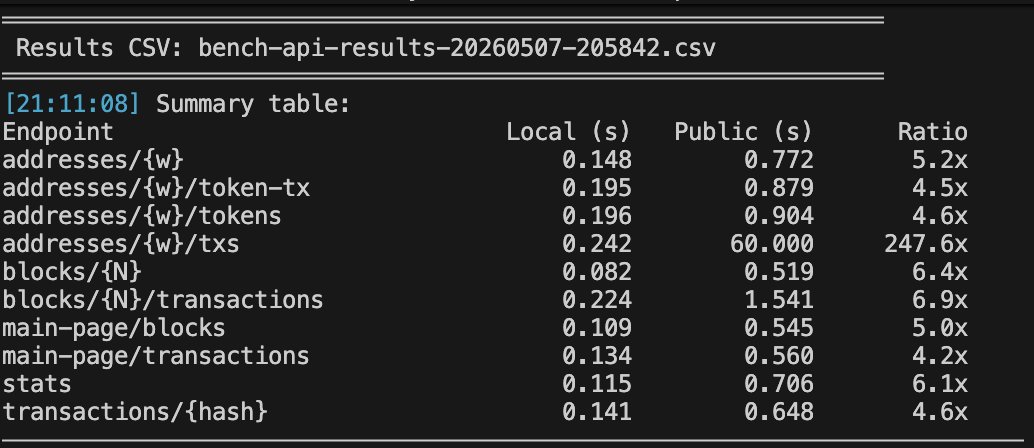
Thanks for coming to my Ted Talk. I hope you like the things I do. None of this is any kind of advice, especially financial and P.S. Cappy comes with a block explorer that (hopefully) people find fast and functional enough to like. It was a requirement to make Cappy work. Modified Blockscout fork.
Rabby was the wallet I wanted to use. The simulator, the native DeFi tools, the way it got out of your way and let you use the chain. Then they dropped PulseChain support.
People kept using it anyway, half-broken, because nothing else came close. I thought about building a replacement. Honestly, I didn't want to.
I already run RPC nodes and data services for several PulseChain products, so the ops weren't the part that scared me. The moral weight of running a wallet itself was. People trust this kind of software to act consistently every time, and getting that wrong has different consequences than getting most other software wrong.
Then a well-known community member got drained. Using Rabby on PulseChain, in that half-broken state. The simulator was one of the things that stopped working when Rabby left. If it had still been alive that day, the malicious transaction would have flagged before signing. They would have seen the hack coming, and walked away.
I asked the obvious question: why are they still using Rabby? Other wallets objectively work better on PulseChain right now. Then I looked at my own Chrome extensions. Why am I still using Rabby too?
Because it's the wallet I want to use. The wallet I wish worked the way it did before.
Cappy is that fix. I am keeping everything that made Rabby good, and rebuilding the parts #PulseChain needs.
PulseChain $PLS is superior software, with more security and functionality than $XRP, $DOGE, $ADA, $BCH, $XLM, $LTC. But all those are worth billions and billions. What's more likely, PLS moves up in rank or they move down?
With Ethereum $ETH as PulseChain's testnet, the security is so cozy.
Yo @Trezor, the #PulseChain community is grinding hard with PLS at ultra-low fees, sacrifice rewards, and real on-chain freedom!
PulseChain is already supported via Ethereum app + MetaMask, but now it's time for the big leap:
FULL NATIVE INTEGRATION in Trezor Live for PLS, PRC-20 tokens
The community would really love this collab and we would like to ask you to take this into consideration. @Trezor
$PLS $PLSX $HEX $PRVX
DeFi didn't get hacked. AdminKeyFi got hacked. HEX, PulseChain, PulseX, & ProveX coins have no admin keys. Stop calling admin key crap and DAO controlled by a few dudes (admin keys, but with extra steps.) DeFi. It's not DeFi. Oh, and Arbitrum seized $70M of the hackers coins, and another chain introduced privacy (but with a view key they say they'll hand to the government if asked right.)
Some small portion of you figured out the solution. Follow me, learn from me, be saved. I can't save you from others choosing to click red instead of green, but I can teach you what's real and how to do things better. Much, much better.
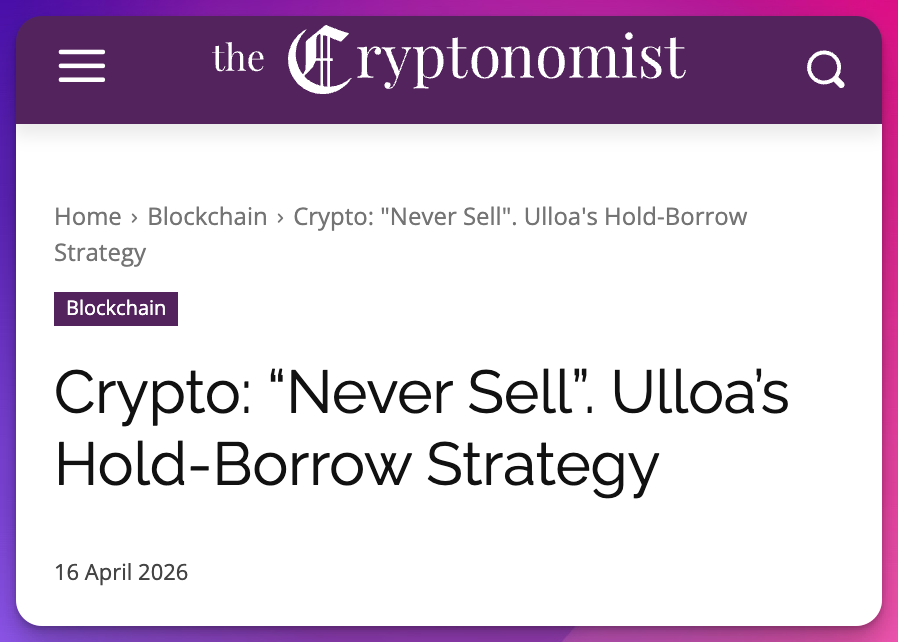
The press at #PBW2026 was paying attention.
@Crypto_Crazey took the stage at @ParisBlockWeek and walked a packed room through one of the most contrarian ideas in crypto right now:
"Wealth in crypto is not built by selling."
Most investors don't lose because they pick the wrong assets.
They lose because they sell too early.
Read the full feature by @Cryptonomist_en and share it with someone who needs to hear this.
🔗https://t.co/hHXXf9QLXJ