I have been iterating on smart contracts that function as both artworks and economic objects for three years now. This year, with Artificial After All, I combined a neural network and an embedded marketplace within the work. Today, I’m open sourcing it in the hope that it becomes useful for others exploring the World Computer as a medium.
Github: https://t.co/2lKwbB9wQq
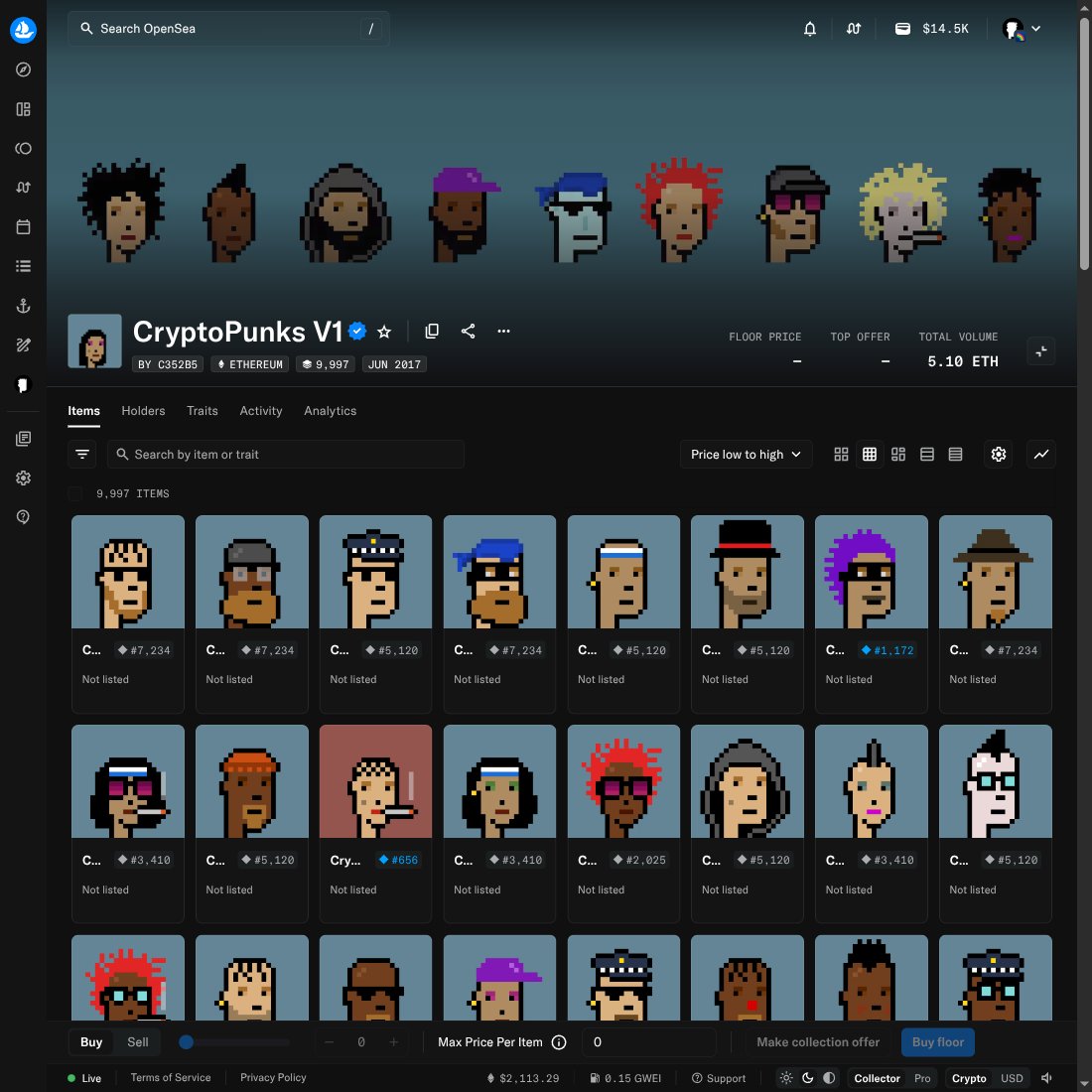
suggestion for Marketplaces // and the V1 punks
adopt my glitch aesthetic suggestion from https://t.co/7IBT8PPLFF across all displays of "V1" punks.
unwrapped V1s are transparent.
wrapped V1s are purple as per @frankNFT_eth.
all V1s are glitched.
zero confusion as to what CryptoPunks as intended by LarvaLabs are vs V1 contract enjoyers.
the colors are nowhere defined in the contract. so why copy it for the V1 display.
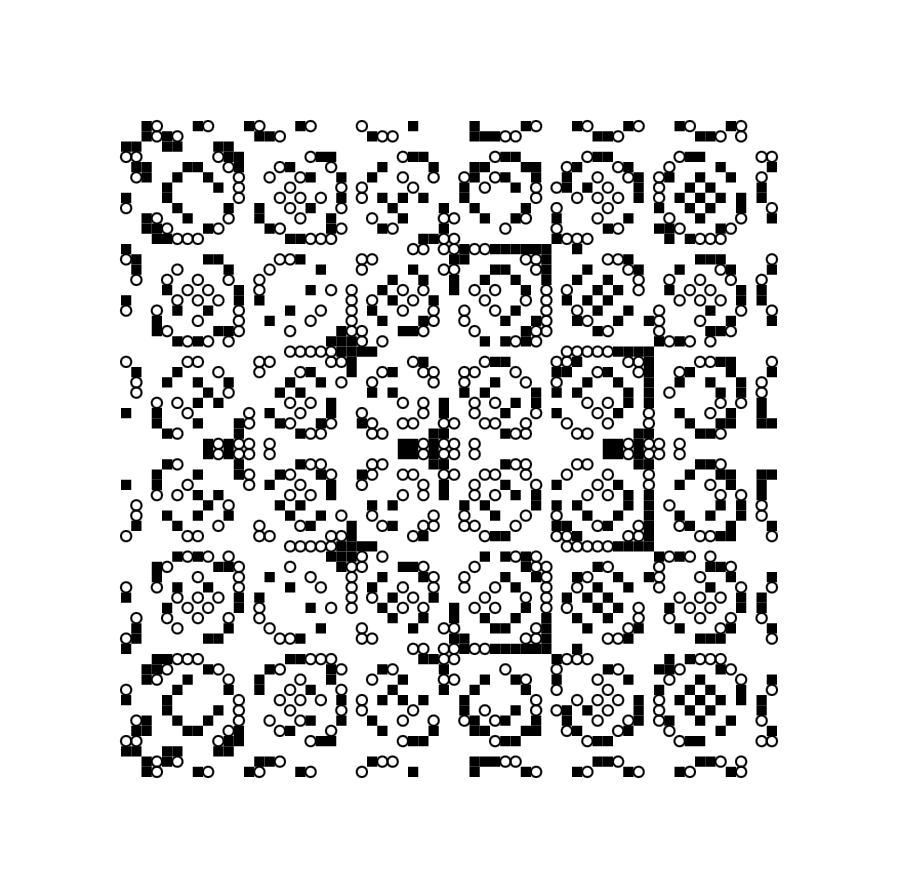
Ringers #498 & #783 by @dmitricherniak
"On the surface it may seem like a simple concept but prepare to be surprised and delighted at the variety of combinations the algorithm can produce."
An expression sits inside a machine that spans the planet, waiting to be called. When it's called, it executes. That's all it does. That's all it will ever do.
Not an expression the way we think. A mathematical one. A function that takes a number and passes it through layers and produces time, something that watches you back.
Artificial After All gave the world computer something it was never designed to have, intelligence. These four pieces give it something it always had but never felt:
"Time"
The machine doesn't ask what you put inside it. It doesn't care if it's moving money or growing a tree or counting sand for a century. You give it instructions, it runs them. Permissionless. That's what makes it powerful. That's what makes it strange.
Each one a standalone idea deployed once and left to exist. Those taught me what disappears when you strip everything away and what remains. What remains is surprisingly alive.
https://t.co/dgJPnEWBld
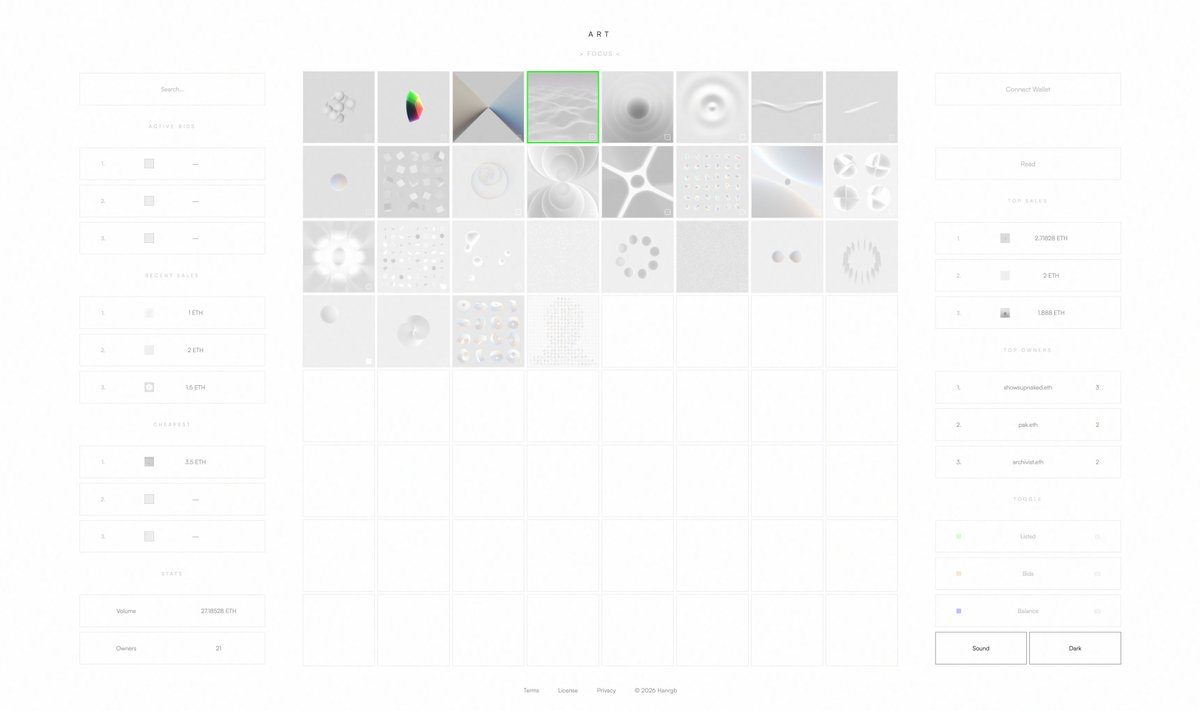
Each one consuming time at a different pace. 👇
On Failures
I've been trying to put my mind inside the world computer for a while now. The standalone smart contracts as 1/1 artworks started in 2023. Each one a self-contained piece living directly on Ethereum.
Previous collectors of mine would remember, I bought back all my 1/1 ERC-721s from them so the new works could exist on its own terms. Released 28 pieces so far, each exploring a different idea. Forms, time, movement, light.
That body of work taught me two things. First, what you gain. When you strip away everything the industry has built, the token standards, the marketplaces, the metadata, the infrastructure, what's left is surprisingly powerful. A smart contract is an object that owns itself. It doesn't need permission to exist. It doesn't need a platform to be seen. It doesn't need consensus from anyone.
And second, what you lose. These pieces aren't visible on main platforms. They don't show up in your wallet gallery. There's no social consensus around them. No ERC-721, no collection page. They exist, quietly, on the world computer, and you either know they're there or you don't.
Some people see that as a limitation. I see it as the point. As my artistic statement.
The idea for Artificial After All came from wanting to push this further. Not just a single contract as a single artwork, but a system of contracts, 256 of them, each containing a compressed neural network that computes its own image. An entire collection where every piece thinks for itself.
Getting there took many failures.
The first deployment, I expected 256 unique faces. Out came one. The same ghost, repeated 256 times. Months of teaching this model to see, and when it was placed inside Ethereum, it went blind. Understanding why meant starting the entire training from zero.
The second time, the faces came back. All different. The euphoria lasted about an hour. Then a closer look. They were hollow. Faded. Like someone had erased the personality from each one. The compression had destroyed most of the model's memory. Three days to find the problem. The fix was one line of code.
The third time, Ethereum told me the artwork was too big. 24 kilobytes, that's the limit. Roughly the size of a short email. The entire neural network, the inference engine, the marketplace, the ownership logic, everything had to fit. Weeks of cutting, compressing, rewriting. Got it down with 511 bytes to spare.
There were more failures I haven't numbered. Faces with no eyes. Faces that were all eyes. Models that produced beautiful noise and nothing else. Versions that worked perfectly on my machine and produced garbage onchain.
That constraint became an obsession. A single photo on your phone is a thousand times larger. And yet inside 24 kilobytes lives something that learned what a face looks like by studying many of them. Something that computes, in its own small way, every time it's called.
You could argue, from an engineering standpoint, that all those platforms and standards exist for good reasons. That ERC-721 gives you visibility, that OpenSea gives you liquidity, that metadata gives you context. And you'd be right. But look where some of those platforms are now.
My 1 of 1 pieces at https://t.co/dgJPnEWBld will continue, each one unique, each one exploring something different.
Artificial After All is the first time the smart contracts became a collection rather than individual works.
For now, 256 faces, computed by mathematics, living on a machine that was never designed to think. Each one artificial. The intelligence that made them, artificial. The permanence that holds them, maintained by machines.
And yet they look back at you.
https://t.co/ja4dpuaa3e