Has deep interest in Religion, Dharmasashtra and Political Economy of International Relations. Trained in some parts of अपरा विद्या. All tweets are personal.
Comprehensive JPR. Quite confident that things will improve for the better, this lays down a prerty good foundation and truly opens doors for the negotiation !!!
PM's visit to India went very well. Liberation from rhetorics of professional politicians to practical lifeworld of common ppl was needed & JPR lays foundations in that regard. Implementation is what would matter most now. Though, still need to come down @ppls's level .
Very interesting:
“The horse made the state,” by Mongolian academic Lhamsuren Munkh-Erdene.
https://t.co/nwKnzvuASN
Indirectly supports my view in The Once and Future World Order, that civilizations are not autonomous, but develop by learning from each other. True as much of the West as of China and the East. I argue that the concepts of Mandate of Heaven and Tianxia -now a staple of discourses about a Chinese centric IR and world order, was an import from Central Asia or were deeply influenced by it.
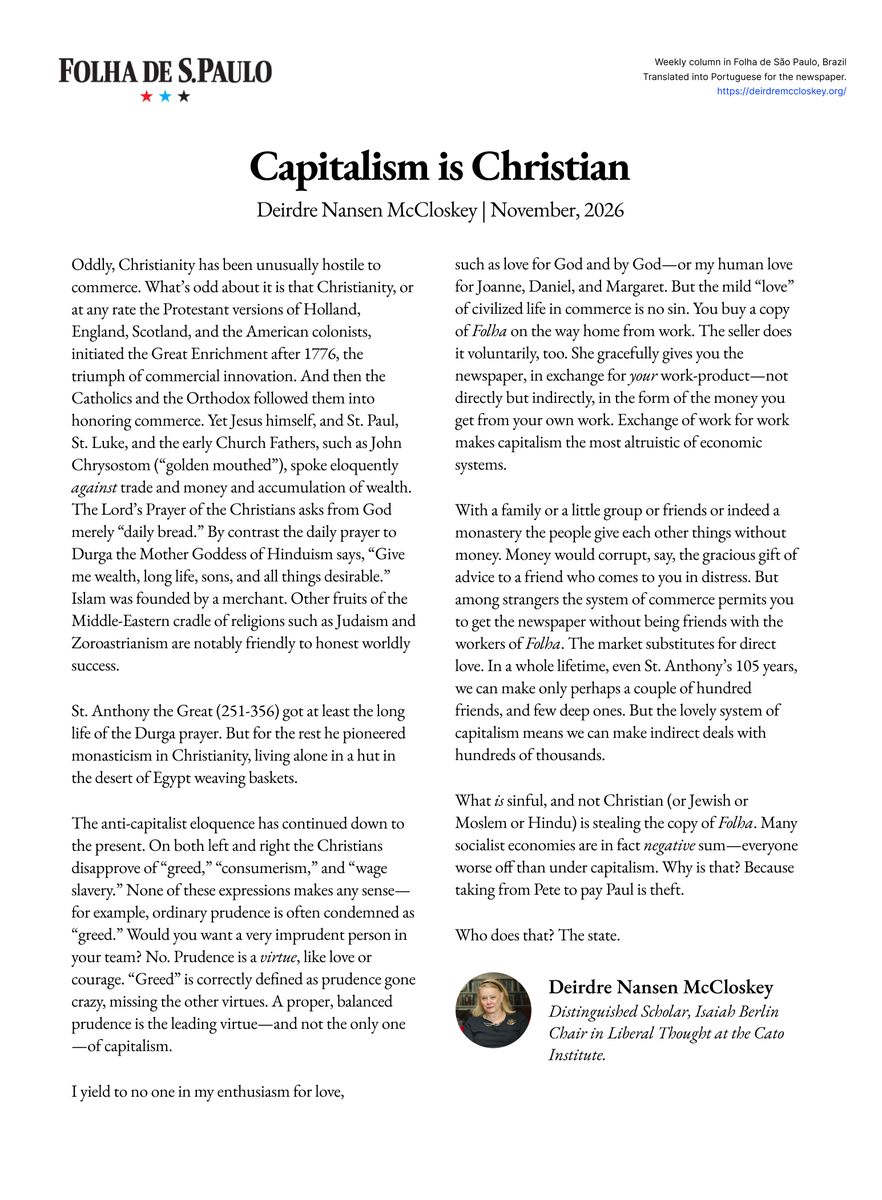
"With a family or a little group or friends or indeed a monastery the people give each other things without money.
Money would corrupt, say, the gracious gift of advice to a friend who comes to you in distress.
But among strangers the system of commerce permits you to get the newspaper without being friends with the workers of Folha.
The market substitutes for direct love. In a whole lifetime, even St. Anthony’s 105 years, we can make only perhaps a couple of hundred friends, and few deep ones.
But the lovely system of capitalism means we can make indirect deals with hundreds of thousands."
My latest column for @folha
On #ThePrintOpinion, here comes Ibn Khaldun Bharti @IbnKhaldunIndic on the latest AMU polls
First, a few highlights…
1. During the Students’ Union elections at Aligarh Muslim University, every speech resembled every other in its religious rhetoric, rabble-rousing, pompous invocations of past glory, and thinly veiled threats of what might happen should the community not be kept in good humour.
2. The entire discourse at AMU is so marinated in Islamic idiom that it is impossible for a non-Muslim to be a part of the process—for neither can he speak this language, nor is any other language spoken, heard, or understood on the campus.
3. Therefore, it’s no surprise that not a single non-Muslim was elected to any of the 28 seats contested across the Students’ Union, Women’s College Students’ Union, and AMU Court, even though Hindus comprise no less than 20 per cent of AMU’s student body.
4. Contrast the elections at AMU with those at other universities. At JNU, Allahabad University, and the Tata Institute of Social Sciences, Muslims regularly contest and win elections to unions and other elected bodies.
A Hindu can’t win in AMU student polls. JNU, TISS, Allahabad University Muslims do often win
https://t.co/SAgoakGwrF
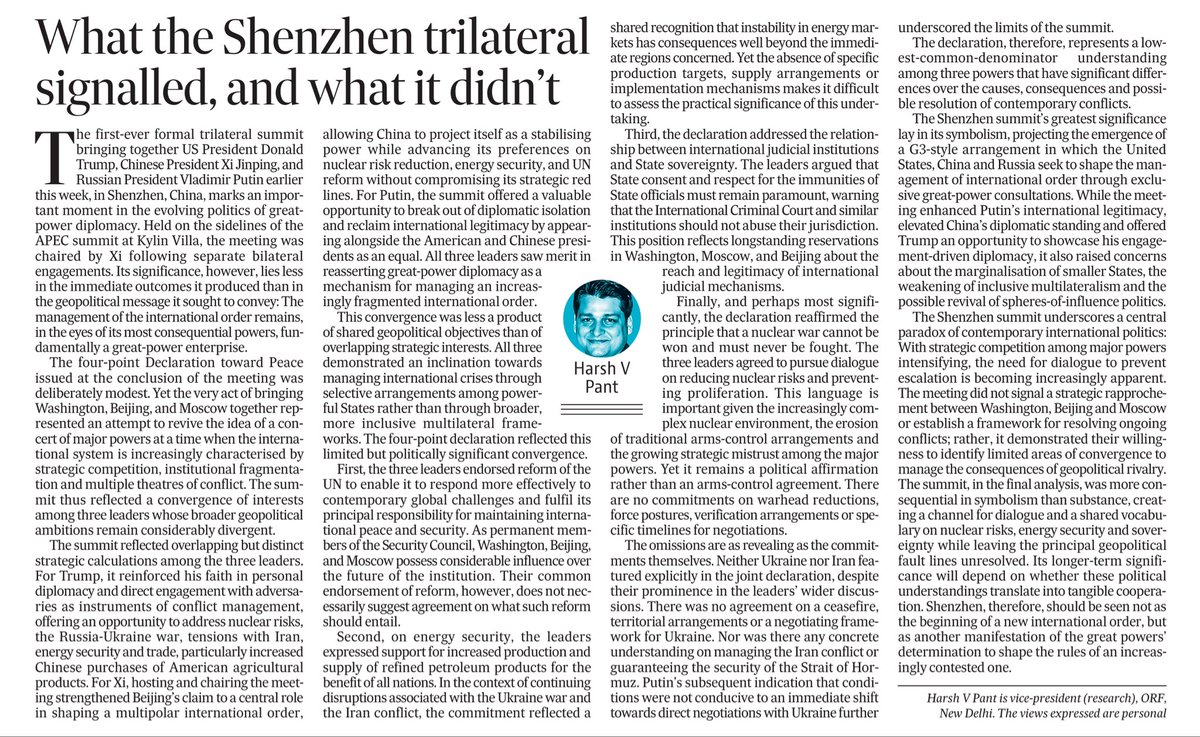
The very influential Russian scholar Dmitriy Trenin says the current three-way “Shenzhen system” could eventually include a “civilisational state” like India!