4 y 5 de julio: dos aniversarios de independencia, muchas tareas pendientes.
Leopoldo Martínez Nucete (@lecumberry) señala los retos que Estados Unidos y Venezuela tienen por delante, en las fechas históricas de este fin de semana.
https://t.co/bgWkEg7Hl3
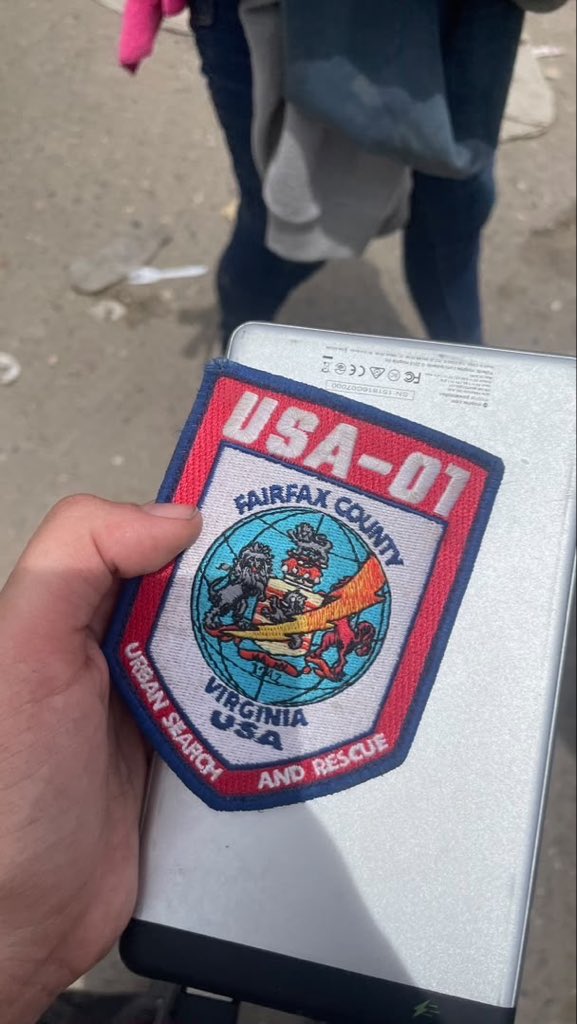
La tragedia por la que atraviesa #Venezuela en este momento, como consecuencia del terremoto del 24 de Junio, nos convoca a todos.
Para apoyar desde el exterior a movimientos ciudadanos y organizaciones que están involucradas en la tarea de salvar vidas, y dar respuesta a comunidades, familias y personas afectadas por esta tragedia, @IQLatino y @cddamericas se unen a los esfuerzos de @aidforlifeintl. Puedes sumar tu apoyo aquí: https://t.co/k9iN2WjGC6
We’re proud to partner with @aidforlifeintl to scale the life-saving work of grassroots & volunteer rescue teams in #Venezuela.
We’re empowering local heroes, expanding emergency response capacity, and delivering hope where it’s needed most.
🙏🏾Donate 👇🏾 https://t.co/1kLzw1fN8k
A propósito de la aprobación en primera discusión de la Ley Orgánica del Sistema y Servicio Eléctrico, mi columna con propuestas sobre el tema 👇🏾
Ideas para una #transición exitosa en #Venezuela
The remarks on behalf of Venezuela were delivered by Arturo Uslar Pietri, whose role as the country’s representative conferred particular republican significance on the ceremony from its outset. Uslar had been a prominent civilian figure in the Medina Angarita administration, which was overthrown during the 1945 Revolution led by Acción Democrática, and in 1958 he aligned himself with the URD faction that opposed Rómulo Betancourt’s presidential candidacy. The URD candidate in that election was Wolfgang Larrazábal, the transitional president and military officer who, before breaking with the dictatorship, had served under the deposed ruler Marcos Pérez Jiménez in several important positions. Nevertheless, Betancourt’s newly established democratic government selected Uslar to represent Venezuela at the dedication of Bolívar’s statue in Washington. This decision rendered the event a clear expression of national reconciliation: by assigning such a symbolic responsibility to a distinguished public intellectual and political opponent, the government emphasized that the Bolívar monument belonged to the Republic rather than to any political party or faction. In this sense, it constituted a collective tribute capable of transcending historical and partisan divisions in recognition of Venezuela’s shared civic heritage.
The gesture must also be understood in the political climate opened by the Pacto de Punto Fijo, signed in 1958 after the fall of the Pérez Jiménez dictatorship. That agreement among Venezuela’s principal democratic parties — Acción Democrática, COPEI, and URD — sought to stabilize the new constitutional order through mutual recognition, respect for electoral outcomes, and shared commitment to democratic governance. Although Uslar Pietri himself stood outside Acción Democrática and embodied political traditions that predated and often contested it, his selection reflected the broader spirit of the Punto Fijo moment: the construction of a democratic republic capable of incorporating adversaries into a common national project.
That democratic transition did not emerge from foreign tutelage or external design. It was the consequence of disciplined Venezuelan leadership across the political ecosystem: civilian parties, transitional authorities, intellectuals, labor and social actors, and sectors capable of choosing negotiation, institutional restraint, and national purpose over revenge or exclusion. In that context, Uslar’s presence in Washington symbolized more than diplomatic protocol; it embodied the capacity of Venezuelans themselves to transform rivalry into republican coexistence and to project abroad a democratic order built from within.
The Simón Bolívar statue in Washington, D.C. was a gift from the Republic of Venezuela to the United States. It was formally dedicated on February 27, 1959, during the Eisenhower administration, when Rómulo Betancourt — founder of Acción Democrática and one of the central figures of Venezuela’s democratic era inaugurated in 1958 — was President of Venezuela.
President Betancourt would later work closely with President John F. Kennedy through the Alliance for Progress, a relationship grounded in shared democratic commitments and in Venezuela’s early post-dictatorship experience as a regional reference point for constitutional democracy and development.
#EleccionesLSV2026 | Así quedó el mapa de la primera vuelta presidencial.
Es la imagen habitual de las últimas elecciones, la derecha gana en el centro y oriente del país, mientras Cepeda en la periferia y Bogotá.
Todos los resultados aquí https://t.co/Jb68f38yez
This news makes it timely to revisit what our Founder, @lecumberry, proposed months ago: #Venezuela needs a broad national agreement to restore sovereignty, rebuild institutions, lift sanctions responsibly, and define a credible electoral path.
#Opinión Trump puede provocar con mapas y frases estridentes. Pero la historia constitucional de Venezuela no cabe en una imagen viral. Venezuela no será el Estado 51. Venezuela será una República democrática, soberana y reconciliada consigo misma, por Leopoldo Martínez Nucete @lecumberry Profundiza en los temas que te interesan. Visita la sección Opinión
https://t.co/Jh2HIzpgOw
Muy bien expuesto por @lecumberry en su columna dominical: “Lo del Estado 51 es una provocación de Trump pero merece una respuesta inequívoca.”
#Leer: https://t.co/tuXUg3vmW9
Más detalles en