When we understand that each day
isn’t one more day, but one less, we start
giving more value to what truly matters.
Going deeper on that.
Most of us intuitively think of life in “additive” terms:
“I have today, plus tomorrow, plus the weekend…”
We treat days like points on an ever-growing scoreboard.
Each sunrise is one fewer day remaining in your unknown total.
If you live to 85, and you’re 40 right now, you’ve already spent roughly 14,600 of your ~31,000 total days.
Every new day is another subtraction from that fixed (but unknown) pool.
This isn’t morbid fatalism, it’s liberating clarity.
When you truly internalize that the clock is counting down, trivialities lose their grip.
The endless scroll, the petty argument, the “I’ll do it later” habit suddenly look absurd in the face of a shrinking remainder.
We are not given a short life, but we waste a lot of it.
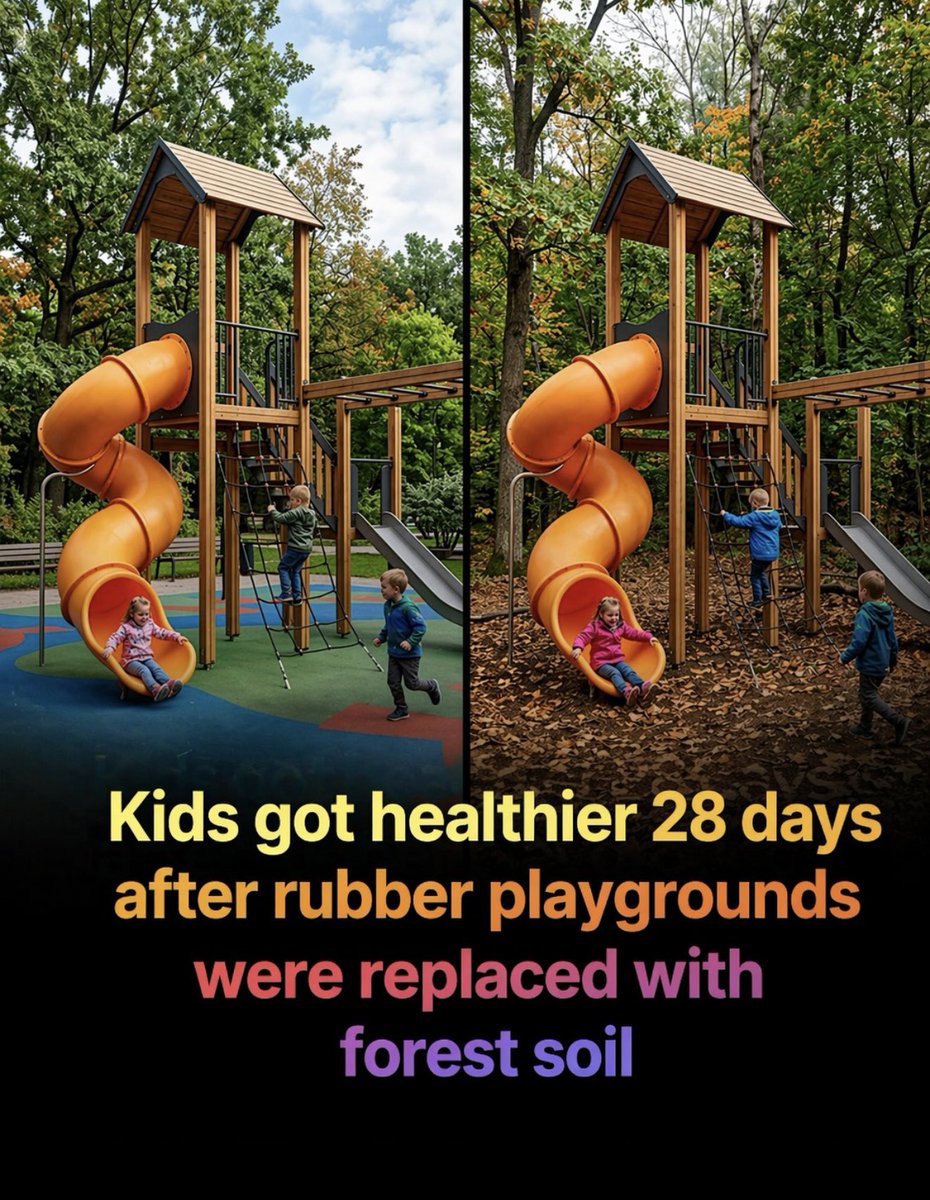
Research in Finland found that simply changing what children play on can quickly influence their immune system.
Scientists redesigned parts of nursery playgrounds by swapping gravel and asphalt for natural forest materials, soil, moss, leaf litter, and native plants, so kids would be exposed to the microbes found in nature. After just 28 days, clear biological differences emerged.
Children who played in these “rewilded” spaces developed a richer mix of microbes on their skin and in their gut. They also showed higher levels of regulatory T-cells, which help the body manage inflammation and reduce the risk of immune overreactions like allergies. These changes were not observed in children who stayed on conventional playground surfaces.
The findings support the biodiversity hypothesis, the idea that limited contact with natural environments, especially in urban life, may be linked to rising allergies and autoimmune conditions.
What stands out is how simple the intervention was. This wasn’t extreme outdoor exposure-just everyday play in a more natural setting. Even small, regular contact with soil and vegetation appears to shape the body’s internal ecosystem and how the immune system develops.
Learn more:
"Dirty Playgrounds: How Rewilding Finnish Schools Transformed
Children's Health." LettsSafari
New UK screen time rules just dropped — and they’re stricter than most parents expected.
From 27 March 2026, England says: zero solo screens for under-2s (except quick video calls with family), and max one hour a day for 2–5 year olds — no screens at meals or the hour before bed. Co-view everything, stick to slow-paced content, and ditch fast social-media clips and AI toys completely.
The science is sobering: toddlers’ brains process info up to 10 times slower than adults. Fast-paced screens push them into fight-or-flight mode — racing heart, surging energy — while they’re sitting still. Researchers at the University of East London say this mismatch can wire kids for more tantrums and emotional struggles later. Using screens to calm meltdowns? It often backfires long-term.
As a parent, it’s brutal — we all know that explosion the second you take the tablet away.
But this feels like evidence finally catching up with what our gut has been telling us.
How are you handling screens with little ones — strict limits, co-viewing, or mostly winging it?
Always ask, but never expect.
Always ask for what you want. Many people are happy to help—if the request is direct and specific. In a surprising number of cases, something remarkable is possible if you have the courage to ask.
Never expect people to say yes. Everyone is busy and balancing multiple priorities. Your request is not their responsibility. When you're told no, move on lightly and freely. The world is full of opportunity.
You should always be rooting for the people you know. Not only because you may need their support tomorrow, but also because it feels good to celebrate something.
Celebration can rescue your day—even if it is someone else's victory. Envy will ruin your day—even if you're actually winning.
After a certain age, your parents slowly become your children.
They ask simple questions, repeat stories, and depend on your patience the way you once depended on theirs. Very few understand this role reversal. What looks like innocence or inconvenience is really time coming full circle. Don’t correct them harshly. Don’t rush them. Care for them the way they once protected you. This is not a burden. It is repayment, quietly wrapped as love.
Habits that have a high rate of return in life:
- sleeping 8+ hours each day
- lifting weights 3x week
- going for a walk each day
- saving at least 10 percent of your income
- reading every day
- drinking more water and less of everything else
- leaving your phone in another room while you work
In the big scheme of things, our time on earth is a blip on the radar
If we’re lucky, 2-3 generations will remember us when we’re gone
And then, 99% of us will be forgotten.
It’s a realization that’s both scary and freeing. So:
Quit that job you hate
Book that trip
Start that business
Make that phone call
Write that book
Have those kids
Get in shape
Whatever it is that’s been calling your name, do it now and don’t look back 💯
This man who grew up in middle class India literally built the only startup outside US/China/Japan that sent rockets to space.
Here's the never-before-shared crazy story of Pawan Chandana:
> be middle class kid growing up in Vizag
> terrible student, get 51 marks in maths
> ambitious dad doesn't give up, puts you in IIT coaching
> fall in love with math and science
> go from worst to best in school
> crack IIT first attempt
> 2007: go to IIT KGP for mechanical engineering
> everyone around you chasing big packages, consulting, going abroad
> you just love rockets
> 2012: join ISRO as scientist straight out of campus
> pays peanuts
> loves it
> doing so well you want to retire here
> but entrepreneurial bug from IIT days never left
> dreams of building a global space company from India
> but no policy allowing private rockets, no funding environment for space
> 2018: quit anyway, ready to survive in rags
> googles "what is equity"
> zero connections
> cold DM Mukesh Bansal on LinkedIn
> he writes a $1.5M check
> COVID hits, seed capital running out
> Series A is a brutal struggle
> no fund invests
> founders of renewable company Greenko invests
> 2021: PM Modi opens up space sector to private players
> become first company to sign MoU with ISRO
> get largest check in Indian DeepTech, $51M
> Nov 18, 2022: launch Vikram-S: India's first suborbital private rocket
> reaches 90km
> Prime Minister Modi inaugurates your new facility
> grow to 1000 employees
> build India's largest private rocket factory at 200,000 sq ft
> valued at $527M
> first orbital launch, Vikram-1, planned in 2026
> will be one of ~5 companies globally regularly launching to orbit
> next: reusable spaceships
> Open Space for All
We talk a lot about Elon Musk and SpaceX, but imagine having NO prior wealth. Being in a developing country. Constantly saying no to money. Being unable to raise any venture funding multiple times. Being called crazy by everyone. And still having the perseverance to dream beyond the stars.
I'd call Pawan's story inspirational, but honestly it's more than that. It's beyond what I can fathom.
When you see someone successful, don't say "Must be nice."
Say "That will be me" 💪
Wealth can be contagious if you let it inspire instead of intimidate.
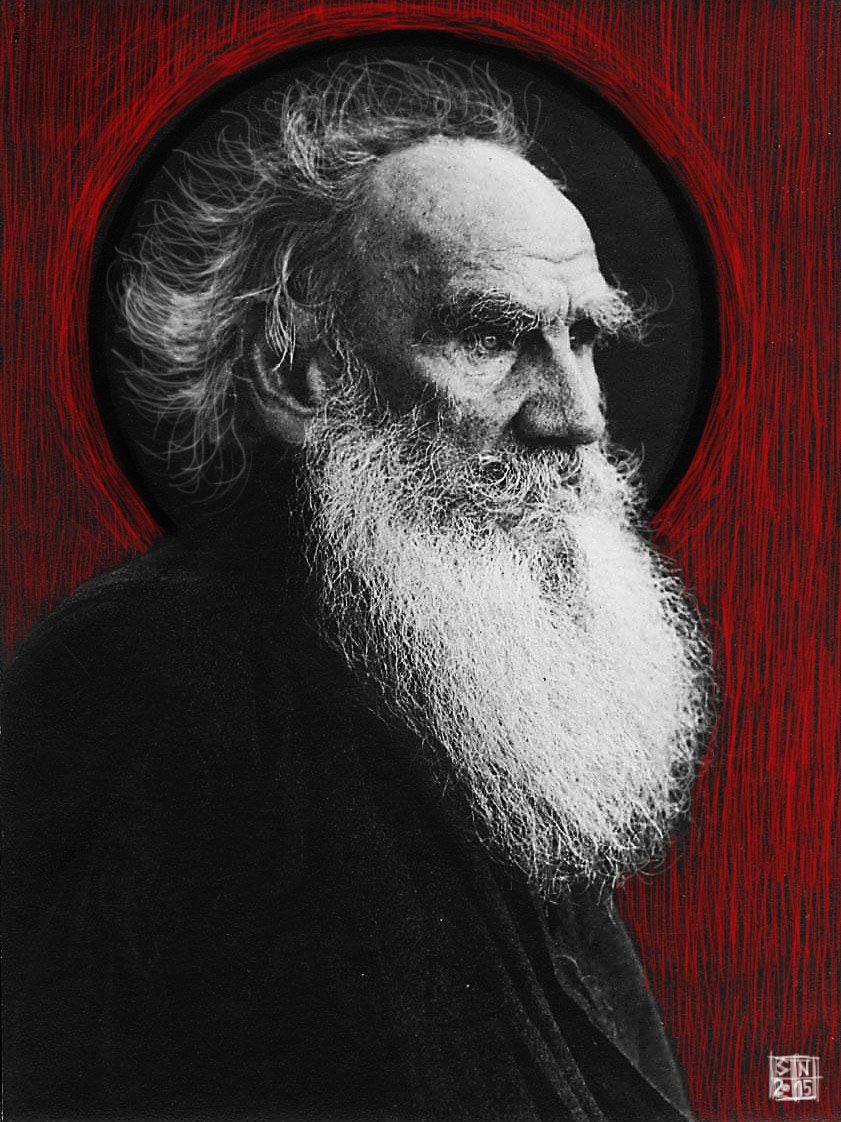
This man reveals what most therapists hide:
Leo Tolstoy.
Over 100 years ago, he exposed how modern life was designed to secretly keep you stressed, depressed, and full of regret.
Here's his chilling warnings and how to break free (according to neuroscience): 🧵