Fred Rogers met with a child psychologist every week for 22 years to build his show. She shaped everything: every script, prop, and song. The whole point was to give a child's nervous system time to slow down. In 1984, a single regulatory decision ended all of it.
The psychologist was Dr. Margaret McFarland, who co-founded the Arsenal Family and Children's Center alongside Benjamin Spock and Erik Erikson. She and Rogers understood that the prefrontal cortex in children, the part of the brain that controls impulse, emotion, and attention, takes decades to fully develop. At the start of every episode, Rogers tied his sneakers and changed his sweater while children settled in. Those pauses were intentional, designed to help a child's nervous system shift into a calmer, more focused state.
What ended it had nothing to do with child development science. In 1984, Reagan's FCC chairman Mark Fowler abolished the advertising limits that had protected children's programming from commercial pressure. Toy companies moved within months. Between 1984 and 1985, cartoons tied to toy lines increased by 300%, from a handful of shows to more than 40 animated series. In almost every case, the toy was designed first. The cartoon was built to sell it.
Researchers later put numbers to what parents were already noticing. A 2011 study in Pediatrics from the University of Virginia tested 60 four-year-olds across three groups: one watching SpongeBob, which cuts scene every 11 seconds; one watching a slow PBS show, which cuts scene every 34 seconds; and one drawing. Nine minutes later, all three took tests on attention, impulse control, short-term memory, and problem-solving. The SpongeBob group scored significantly worse across every measure.
In the 1970s, children began watching television around age 4. Research from pediatrician Dimitri Christakis found that by 2009, the average age of first screen exposure had dropped to 4 months, as the content got faster and the audience got younger. Researchers separately found that each additional hour of daily screen time at ages 1 or 3 raised the risk of attention problems at age 7 by 9%.
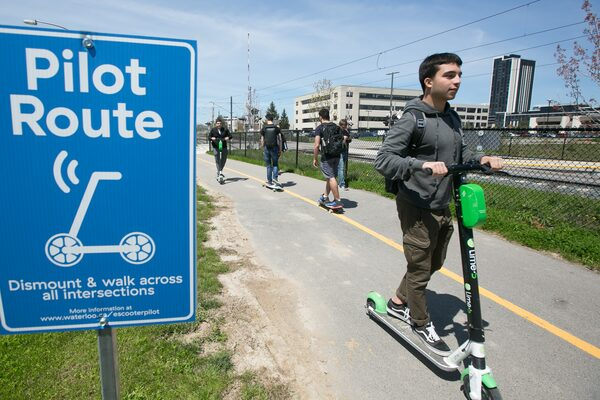
ER doctor here. E-scooters are only for people over 16 years - by law. Don't let your youths ride them. Everyone using them needs a helmet. You want to enjoy your summer and not end up in the ER. The Ontario Highway Traffic Act cab apply penalties of $250-$2500 for violations.
I'm sorry... WHAT?!?
"Eight of the province’s biggest regional governments in Ontario will have their leaders directly APPOINTED by the province."
This is a Trump-style attack on democracy.
This is NOT OKAY.
https://t.co/AKdutNFXJ8
@LynetteCorbett@ColinDMello I’m not disagreeing about the bloat in senior management. But I disagree that the outcome of a supervisor being appointed (who is even more expensive than the current head) is going to end up with a better outcome for students. Education is a service industry it runs on people.
@LynetteCorbett@ColinDMello It’s not about best interests. It’s just about the $. There will be less supports, not more, not even status quo. Since 2018 there have already been so many cuts and the conditions make it unfavourable for people to want to get into the profession.
@SticksofmanMan@grumpyarchitect@TinaYazdani Not sure if this is tongue in cheek or a real question, but in case somebody else has that question: All elementary curriculum except the arts and French has been updated since 2019 by the Ford government. The new K document was delayed this year.
@ColinDMello The Hurontario LRT is succumbing to the same fate. Already 1 year past its “service date” and no where NEAR half completion. A BRT lane would have sufficed. A monorail above the 410 could have been built by now. Waste of $$$. #metrolinx#LRT#fordfailed