Former CEO GlobalActiontoEndSmoking, VP Tobacco Control, American Cancer Society, Advisor to US Asst. Sec. for Health & Surgeon General. Consultant on THR
When circumstances present an opportunity, let us pursue dialogue and education. If this invitation to an understandably skeptical state legislator leads to a constructive exchange, I will be honored to celebrate it here.
The best time to start talking is now.
@AuforGA@ChaunceyGardner@jgitchell@imaracingmom@DaveDobbins1970
Dr. Au, I would like to invite you to a facilitated Zoom conversation with Dr. Gardner and 1-2 other experts in this field, including myself — whom you may at this juncture understandably view with skepticism based on the information you have been provided — simply to discuss the science and related policy issues. I would be delighted to arrange this with your staff if you would be so kind as to have them contact me at [email protected].
Respectfully,
Cliff Douglas
Physicians are speaking out to correct widespread misunderstanding in the public and among doctors themselves regarding the now well-proven fact that alternative, non-combustible nicotine products are far safer than cigarettes and can save people’s lives.
Lung cancer specialist Dr. David Gerber says it’s time for health professionals to intervene and correct dangerous misperceptions about vaping. But would that mean correcting years of FDA messaging? @cdoug@ChaunceyGardner@alli_vapes@VaporTechAssoc@INNCOorg@GFNicotine
https://t.co/4QDHtovwNZ
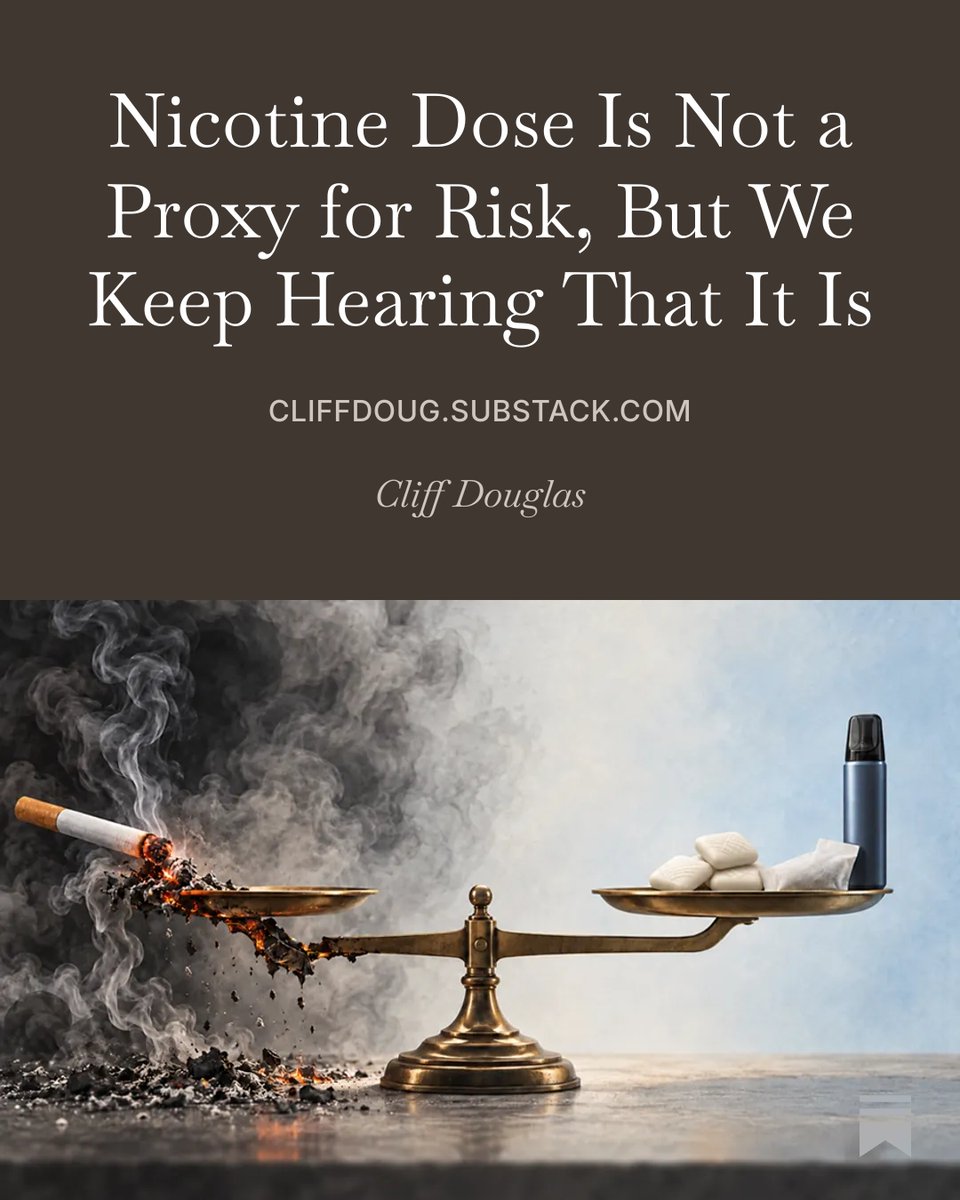
From @cdoug's outstanding new Substack, "Nicotine Dose Is Not A Proxy For Risk, But We Keep Hearing That It Is".
Please continue reading below:
https://t.co/0TQjXt3Ajx
Dr. Au, I would like to invite you to a facilitated Zoom conversation with Dr. Gardner and 1-2 other experts in this field, including myself — whom you may at this juncture understandably view with skepticism based on the information you have been provided — simply to discuss the science and related policy issues. I would be delighted to arrange this with your staff if you would be so kind as to have them contact me at [email protected].
Respectfully,
Cliff Douglas
Enough nicotine to satisfy cravings can help a product replace lethal cigarettes and save lives. More nicotine does not automatically mean more harm.
My new article examines why confusing nicotine delivery with smoking-related harm matters so much.
https://t.co/8zlk8xQ0h9
New report: "Use of e-cigarettes for smoking cessation remained common from 2018 to 2023. Perceived lower harm and social exposure were consistently associated with this behavior, highlighting the influence of cognitive and social factors on cessation-related decisions among adults who smoke cigarettes."
Link: https://t.co/R6GPqyV6B5
In other words: Tell the truth. If you give people who smoke accurate information about the fact that nicotine vaping (and use of other noncombustible nicotine products) is safer than smoking cigarettes, they will be more likely to stop smoking through the use of these products.
Today at the 14th Annual Conference of the Vermont Center on Behavior & Health (theme: "Cigarette Smoking in Combination with Other Tobacco Products & Other Addictive Substances"), Dr. Richard Miech shared the latest data from the Monitoring the Future (MTF) survey on U.S. trends in adolescent nicotine vaping, alcohol use, and cannabis use since the COVID-19 pandemic.
Great news: All three categories have simultaneously fallen by at least 40%.
MTF is the gold standard of epidemiological research on youth behavior and public health.
Re-upping this post: Importantly, @FDATobacco’s leadership is now owning and promoting the fact that the agency has the responsibility and the capacity to communicate much more effectively and directly to the public about the continuum of risk and the value of switching from combustible cigarettes to the far safer products authorized by the agency. Dr. Bret Koplow just said so. (Note: They didn’t use to say that.)
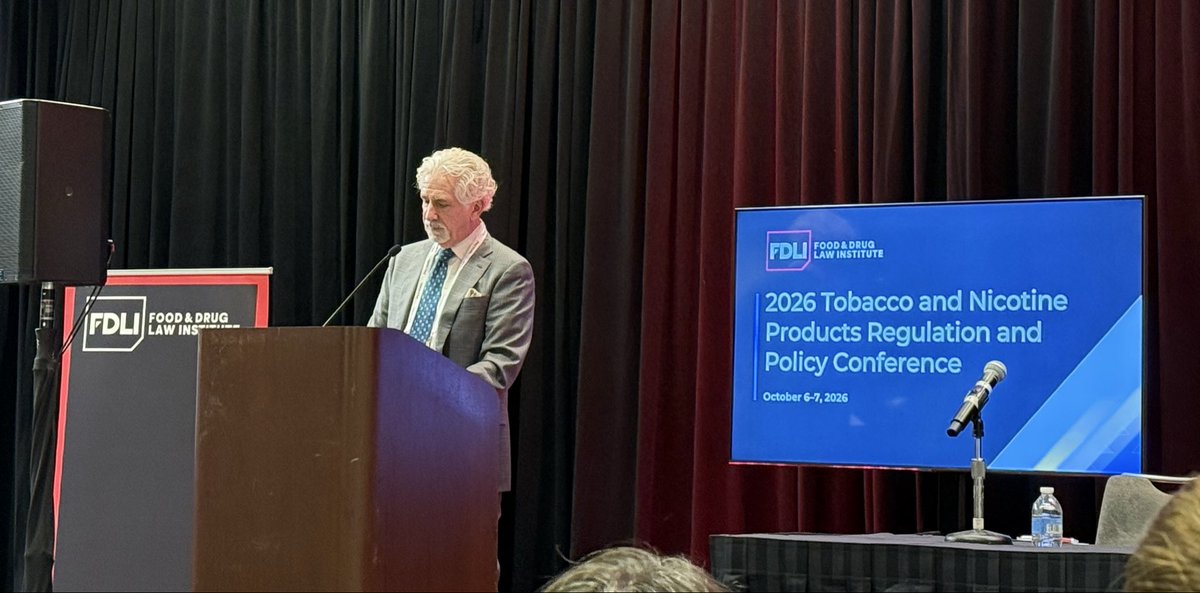
“There is a gap between the science and the belief.” Very important observation — and lament — from @FDATobacco director Dr. Bret Koplow, who emphasized today in his keynote at FDLI’s annual tobacco and nicotine conference that adults who smoke can significantly benefit their health by switching to reduced-risk products like FDA-authorized vapes. But a majority of Americans, including PHYSICIANS, don’t understand this. He said that FDA will partner with academic researchers, scientific organizations, and other stakeholders in turning this around.
Could FDA’s proposed PMTA overhaul mark a turning point? I joined @RegWatchCanada to discuss the prospects for reform—and why success requires both access to a robust marketplace of authorized lower-risk alternatives and accurate information for adults who smoke. Recent moves by newly appointed permanent director of @FDATobacco, Dr. Bret Koplow, suggest essential action in that direction.
You raise a real concern, Jim, relating to the many places the agency provides information and guidance. Clearly, a systematic effort is needed to review and modify messages that are inaccurate, out-of-date, confusing and/or susceptible to misinterpretation or over-interpretation.
“There is a gap between the science and the belief.” Very important observation — and lament — from @FDATobacco director Dr. Bret Koplow, who emphasized today in his keynote at FDLI’s annual tobacco and nicotine conference that adults who smoke can significantly benefit their health by switching to reduced-risk products like FDA-authorized vapes. But a majority of Americans, including PHYSICIANS, don’t understand this. He said that FDA will partner with academic researchers, scientific organizations, and other stakeholders in turning this around.
Must watch: Dr. Bret Koplow, Director of @FDATobacco, speaking at the Harvard Club during the New Approaches Summit... saying mostly good stuff.
https://t.co/snKOSfzdja
addiction = dependence + harm
Coffee drinking = dependence-forming; no harm; so not "addictive"
Nicotine vaping: SAFER than cigarettes according to @FDA; EFFECTIVE for smoking cessation according to @cochranecollab.
Vaping REDUCES harm
"Highly addictive" = propaganda tactic, not truth