When a Patient Constantly Smells a Bad Odor That Nobody Else Can Smell
A patient may sometimes complain of smelling a foul or unusual odor even when there is no identifiable smell around them. This symptom requires a careful history, examination, and appropriate differential diagnosis.
The first step is detailed history-taking. Ask:
When did the smell start?
Is it continuous or episodic?
Does it occur throughout the day or only at specific times?
How long does each episode last?
What type of smell does the patient perceive—foul, burnt, chemical, or something else?
Are there any triggers such as smoke, stress, certain activities, or changes in bowel habits?
Does the taste in the mouth change when the smell occurs?
Next, assess associated nasal and ENT symptoms. Ask about nasal obstruction, nasal discharge, thick mucus, sneezing, allergy or dust exposure, loss or reduction of smell, facial pain, dental pain, and post-nasal drip.
These questions can help identify possible ENT causes, such as nasal polyps, chronic rhinosinusitis, infection, or dental pathology.
However, if there are no significant ENT findings, neurological and psychiatric causes should also be considered. A false perception of smell is called phantosmia. It can occur in certain neurological conditions, including temporal-lobe seizures, and occasionally with other brain disorders.
The patient’s mental state should also be assessed. Ask about anxiety, irritability, changes in mood, social withdrawal, suspiciousness, unusual beliefs, hallucinations, or other psychotic symptoms. Olfactory reference syndrome is another important psychiatric differential, where a person becomes excessively concerned that they emit an unpleasant odor.
Depending on the history and examination, further evaluation may include ENT assessment, nasal endoscopy, CT of the paranasal sinuses, neurological evaluation, EEG, or brain imaging when clinically indicated.
The key message: Do not assume that every complaint of smelling a bad odor is psychiatric. A systematic ENT, neurological, and psychiatric evaluation is essential to identify the underlying cause.
#Phantosmia #OlfactoryDisorder #ENT #Neurology #Psychiatry #Olfaction #ChronicRhinosinusitis #TemporalLobeEpilepsy #OlfactoryReferenceSyndrome #MedicalEducation #ClinicalHistory
Dr. Abhishek Shukla, Geriatrician, Explains: Why Does Urine Leak in Bed at Night?
Many adults, particularly older people, come to the OPD with an embarrassing complaint: “Doctor, I pass urine in my bed at night.” This involuntary passage of urine, or nocturnal enuresis, should not simply be considered a normal part of ageing. It may indicate an underlying medical problem that requires evaluation.
One important cause in older men is prostate enlargement (BPH). An enlarged prostate can obstruct urine flow and prevent complete emptying of the bladder. Checking post-void residual urine (PVR) by ultrasound can help identify urinary retention and bladder dysfunction.
Diabetes is another important cause. Poorly controlled blood sugar can increase urine production, while diabetic nerve damage may reduce bladder sensation and control.
Neurological conditions such as Parkinson’s disease, stroke, and multiple sclerosis can interfere with the normal communication between the bladder and brain, causing urgency, reduced sensation, or involuntary urination.
Urinary tract infection (UTI) may cause burning, urgency, frequent urination, and urinary leakage. Obstruction or significant urinary retention can also lead to bladder distension and overflow leakage.
Another frequently overlooked cause is obstructive sleep apnea (OSA). Severe snoring, obesity, and repeated breathing interruptions during sleep can increase nighttime urine production and prevent a person from waking when the bladder is full.
Finally, disturbances in antidiuretic hormone (ADH/vasopressin) regulation can increase nighttime urine production.
The key message is that nighttime bedwetting in an adult deserves proper assessment. Identifying the underlying cause—whether prostate disease, diabetes, neurological illness, infection, sleep apnea, or hormonal disturbance—allows appropriate treatment and timely referral to a urologist or other specialist when required.
#UrineLeak #BedWetting #NighttimeUrination #UrinaryIncontinence #NocturnalEnuresis #UrineLeakage #BladderProblems #OveractiveBladder #ProstateEnlargement #BPH #Diabetes #UTI #SleepApnea #GeriatricCare #ElderlyCare #SeniorHealth #GeriatricMedicine #PalliativeCare #MensHealth #WomensHealth #BladderHealth #UrinaryHealth #HealthAwareness #MedicalEducation #DoctorExplains #DrAbhishekShukla #AasthaGeriatricCentre #PeshabKiProblem #रातमेंपेशाब #पेशाबलीक #बिस्तरपरपेशाब #बुजुर्गोंकीदेखभाल
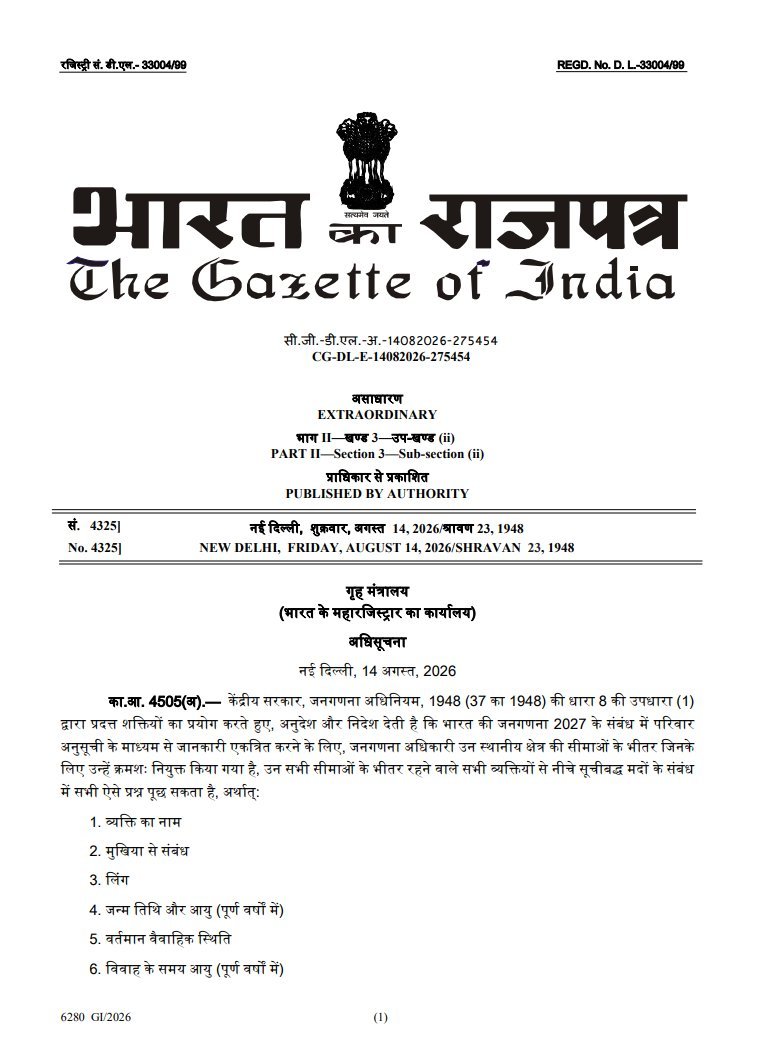
गृह मंत्रालय के तहत भारत के रजिस्ट्रार जनरल के कार्यालय ने जनगणना 2027 के लिए 'हाउसहोल्ड शेड्यूल' प्रश्नावली (household schedule questionnaire) की अधिसूचना जारी की है।
40 सवालों वाली इस प्रश्नावली में माता-पिता, आधार, मोबाइल नंबर, बैंक खाते, काम की जगह तक आने-जाने, धर्म और जाति से जुड़ी जानकारी शामिल है।
@CensusIndia2027 #Census2027 #जनगणना2027 @HMOIndia
Diabetic Ketoacidosis (DKA) is a serious medical emergency caused by severe insulin deficiency. Without enough insulin, glucose cannot enter the body's cells for energy, so the body starts breaking down fat. This process produces ketones, which accumulate in the blood and lead to severe metabolic acidosis. DKA commonly occurs in people with uncontrolled diabetes, missed insulin or medications, infections, or other major illnesses.
A patient may present with extremely high blood sugar (often above 400 mg/dL), dehydration, low blood pressure, rapid heart rate, deep and rapid breathing (Kussmaul respiration), dry mouth, nausea, vomiting, abdominal pain, weakness, fruity-smelling breath, drowsiness, and altered consciousness. If left untreated, DKA can rapidly progress to shock, coma, and death.
Diagnosis is based on hyperglycemia, positive blood or urine ketones, metabolic acidosis (low blood pH), and electrolyte abnormalities. Treatment should begin immediately with aggressive intravenous fluid resuscitation, continuous intravenous insulin infusion, careful electrolyte replacement—especially potassium—and treatment of the underlying cause. Frequent monitoring of blood glucose, ketones, blood gases, electrolytes, urine output, and vital signs is essential. In severe acidosis, bicarbonate therapy may be considered in selected patients under appropriate clinical indications.
Early recognition and prompt management can be lifesaving and significantly improve patient outcomes.
#DiabeticKetoacidosis #DKA #DiabetesEmergency #CriticalCare #EmergencyMedicine #InsulinTherapy #Hyperglycemia #MetabolicAcidosis #IntensiveCare #MedicalEducation #CriticalPatient #PatientCare #Medicine #Healthcare #Endocrinology #ICU #ClinicalLearning #NursingEducation #MedEd #SaveLives
A phobia is more than just a simple fear. It is an intense and persistent fear of a specific object, situation, activity, or place that may pose little or no actual danger. People with phobias often experience overwhelming anxiety, rapid heartbeat, sweating, trembling, or an urge to avoid the feared situation completely. Common examples include fear of heights, flying, closed spaces, spiders, or social situations.
Phobias can affect daily life, relationships, work, and emotional well-being if left untreated. The good news is that phobias are treatable. With proper evaluation, counseling, cognitive behavioral therapy (CBT), relaxation techniques, and, in some cases, medication, individuals can learn to manage their fears and regain confidence.
Seeking professional help is a positive step toward better mental health. Early intervention can prevent phobias from becoming more severe and help people live a happier, more fulfilling life.
Dr. Nirupanma Jaiswal, Psychiatrist, encourages everyone to understand that mental health is just as important as physical health. If fear is limiting your life, don't ignore it—support and effective treatment are available.
#MentalHealth #Phobia #MentalWellness #AnxietyAwareness #Psychiatry #CBT #MentalHealthMatters #DrNirupanmaJaiswal #EmotionalWellBeing #HealthyMind #OvercomeFear #SelfCare #MentalHealthAwareness
Dr. Abhishek Shukla speaks with Dr. Deen Bandhu Prasad, DM Critical Care (KGMU) about the life-saving role of Extracorporeal Membrane Oxygenation (ECMO) in the Intensive Care Unit (ICU).
Dr. Deen Bandhu Prasad explains that ECMO is an advanced life-support system used when the lungs, the heart, or both are unable to sustain life despite maximum medical treatment. When a patient remains critically hypoxic even after optimal ventilator settings, ECMO temporarily takes over the function of the lungs by removing blood from the body, adding oxygen, removing carbon dioxide, and returning oxygen-rich blood back to the circulation. This provides the lungs with time to rest and recover.
There are two major types of ECMO. Veno-Venous (VV) ECMO is used primarily for severe respiratory failure, where the heart is functioning adequately but the lungs cannot provide sufficient oxygenation. Veno-Arterial (VA) ECMO supports both the heart and the lungs. In patients with severe cardiogenic shock, when blood pressure cannot be maintained despite maximum doses of inotropes and vasopressors, VA ECMO not only oxygenates the blood but also pumps it back into the arterial circulation under pressure, helping maintain adequate cardiac output and mean arterial pressure. ECMO can therefore be a crucial bridge to recovery, definitive treatment, or transplantation, saving the lives of critically ill patients.
Dr. Abhishek Shukla Explained: What is Anasarca?
When a https://t.co/jLND7YizOg. Nursing student asked about the term anasarca, Dr. Abhishek Shukla explained that it refers to severe, generalized edema across the entire body. It occurs when excess fluid accumulates in subcutaneous tissues. Upon clinical examination, pressing the skin leaves a persistent indentation, indicative of pitting edema.
Dr. Shukla outlined four primary systemic causes:
Heart Failure: Reduced cardiac output leads to venous congestion, shortness of breath, orthopnea, and systemic fluid retention. Diagnosis involves echocardiography and ejection fraction evaluation.
Kidney Disease: Chronic kidney failure impairs urine excretion, triggering fluid build-up. Key diagnostic markers include BUN, serum creatinine, eGFR, and renal ultrasound.
Liver Failure: Cirrhosis—stemming from fatty liver disease, obesity, or alcohol abuse—causes fluid leakage into the abdomen (ascites) and tissues.
Severe Malnutrition: Hypoalbuminemia decreases intravascular oncotic pressure. Using the analogy of a raisin absorbing water, Dr. Shukla demonstrated how low albumin causes fluid to shift from blood vessels into surrounding tissues.
He emphasized distinguishing generalized, bilateral swelling from localized, unilateral edema. While bilateral swelling signals systemic disease, single-limb swelling suggests localized issues like deep vein thrombosis (DVT), cellulitis, or trauma. Advanced malignancies can also present with anasarca in late stages. Accurate diagnosis remains crucial, as effective treatment directly depends on treating the underlying etiology. #anasarca #edema #generalizededema #internalmedicine #pathology #nephrology #cardiology #meded
Rekha asked Dr. Abhishek Shukla why a milk-like white fluid is administered to patients via an IV drip. Dr. Shukla explained that this liquid is not milk, but a specialized complete nutritional preparation called Total Parenteral Nutrition (TPN).
Just as a complete meal provides balanced energy, a standard TPN bag delivers roughly 1,400 to 1,500 calories directly into the bloodstream. It supplies essential carbohydrates, fats, proteins, vitamins, and minerals like sodium, potassium, calcium, zinc, and magnesium.
Key Indications for TPN
Normally, food passes through the gastrointestinal (GI) tract to be digested and absorbed. However, TPN bypasses the GI system completely via a central venous line when the digestive tract cannot be used. It is indicated when:
The GI tract is non-functional: In conditions like severe abdominal distension or acute intestinal obstruction.
Bowel rest is required: Following major abdominal surgeries (e.g., intestinal anastomosis) or during abdominal cancer management.
Enteral feeding fails: When oral food or tube feedings (enteral nutrition) are not tolerated, risking severe malnutrition and protein deficiency.
Dr. Shukla emphasized that while treatment often focuses on antibiotics and machinery, proper caloric intake is vital. Leaving critically ill patients on basic IV saline alone leads to a catabolic state, swelling, and delayed recovery. TPN ensures patients maintain necessary nutrition while their digestive tract heals. #TPN #TotalParenteralNutrition #ParenteralNutrition #IntravenousNutrition #MedicalScience #healtheducation #NutritionSupport #GutFailure #invisibleillness #ChronicIllnessAwareness #ParenteralNutrition #IntestinalRehab
In this informative discussion, Dr. Abhishek Shukla speaks with Dr. Abhishek Yadav (MCh, Liver Transplant Surgeon) to answer the most common questions about liver transplantation in simple language.
Learn who may need a liver transplant, including patients with chronic liver failure (cirrhosis), acute liver failure, liver cancer, and severe liver injury (trauma). Dr. Yadav explains who can become a liver donor, why the blood group of the donor and recipient must be compatible, and whether a healthy person can safely donate part of their liver.
One of the most fascinating facts is that the liver has a remarkable ability to regenerate. Unlike a lizard's tail, it does not grow as a new organ, but the remaining liver in both the donor and recipient can grow back to near-normal size within a few months.
The discussion also covers the cost of liver transplant surgery, why it is considered one of the most complex operations, and how surgeons reconnect four vital structures—the hepatic artery, portal vein, hepatic veins (or inferior vena cava), and bile duct—to the transplanted liver. You will also understand what a cadaveric (deceased donor) liver transplant is and how it saves lives.
If you or a loved one is planning a liver transplant, this video provides clear, practical information to help you make informed decisions.
#LiverTransplant #LiverFailure #Cirrhosis #LiverCancer #OrganDonation #LivingDonor #CadavericTransplant #LiverSurgery #HealthEducation #DrAbhishekShukla #DrAbhishekYadav #MedicalEducation #TransplantSurgery #HealthyLiver #PatientAwareness
During a clinical interaction, Dr. Abhishek Shukla, Geriatrician, provided a foundational overview of dyselectrolytemia (electrolyte imbalance) to students.
Electrolytes—primarily sodium, potassium, calcium, and magnesium—are essential minerals that regulate body fluids, nerve signaling, and muscle contraction. When serum levels deviate outside normal reference ranges, critical physiological functions are disrupted:
Sodium (135–145 mmol/L): Low sodium (hyponatremia) or high sodium (hypernatremia) frequently stems from dehydration, diuretics, or gastrointestinal losses (vomiting/diarrhea). Severe sodium shifts impair brain function, requiring gradual correction to prevent severe neurological complications.
Potassium (3.5–5.0 mmol/L): Low potassium (hypokalemia) causes severe muscle weakness, whereas high potassium (hyperkalemia) risks life-threatening cardiac arrhythmias and cardiac arrest. Hypokalemia may be managed with potassium-rich foods (bananas, spinach, nuts) or careful, diluted intravenous replacement—never direct IV push.
Calcium & Magnesium: Imbalances (hypo-/hypercalcemia and hypo-/hypermagnesemia) affect cardiac rhythm and neuromuscular stability, treated using targeted agents like IV calcium gluconate or magnesium sulfate in emergencies.
Clinical Presentation & Diagnosis
Patients with dyselectrolytemia present with fatigue, muscle weakness, breathlessness, confusion, nausea, cramps, or seizures. Diagnosis requires ordering an electrolyte profile that specifically includes calcium and magnesium alongside standard sodium and potassium testing.
Dr. Shukla emphasized that electrolyte disturbances are particularly frequent in elderly adults, ICU patients, and children. Nurses must recognize early symptoms, review contributing medications, and ensure corrections are administered strictly under medical supervision based on the underlying etiology.
#Electrolytes #hydration #StayHydrated #WaterBalance #Dehydration#HealthTips #Na+ #K+ #cal #mg #electrolyteimbalance #electrolytebalancel
"न्यायपालिका में मेरिट नहीं, जातीय प्रभुत्व और भाई-भतीजावाद हावी है। 85% आबादी का प्रतिनिधित्व करने वाले समुदायों के मात्र 1% जज ही उच्च न्यायालयों में क्यों हैं? अब कोलेजियम व्यवस्था पर पुनर्विचार कर उसे समाप्त करना होगा।"
— RJD के राज्यसभा सांसद संजय यादव ने न्यायपालिका में प्रतिनिधित्व को लेकर उठाए तीखे सवाल।
The Education Ministry has told the Supreme Court that a migration of the NEET-UG exam from pen-and-paper mode to Computer Based Testing (CBT) is under “active consideration by all stakeholders”. The affidavit, dated August 4, was served to parties late on Tuesday (August 4, 2026).
✍️@kdrajagopal
https://t.co/fxMUbWMWIY
आज़ाद समाज पार्टी (कांशीराम) के प्रमुख और उत्तर प्रदेश की नगीना सीट से सांसद चंद्रशेखर ने कॉकरोच जनता पार्टी के आंदोलन और उसके भविष्य, उत्तर प्रदेश में आगामी विधानसभा चुनाव, मायावती और इस चुनाव में गठबंधन की संभावनाओं जैसे मुद्दों पर बीबीसी संवाददाता दिलनवाज़ पाशा से ख़ास बातचीत की.
शूट- मोहम्मद महरोज़, मीर मुसव्विर शाबिर
एडिट - मोहम्मद महरोज़
Welcome home dear @mirabai_chanu after Glorious Victory in Commonwealth Games, Glasgow! She made India proud once again by winning the Gold medal in Weightlifting! Thanks for presenting a T-shirt signed by all the Weightlifting players 🙏
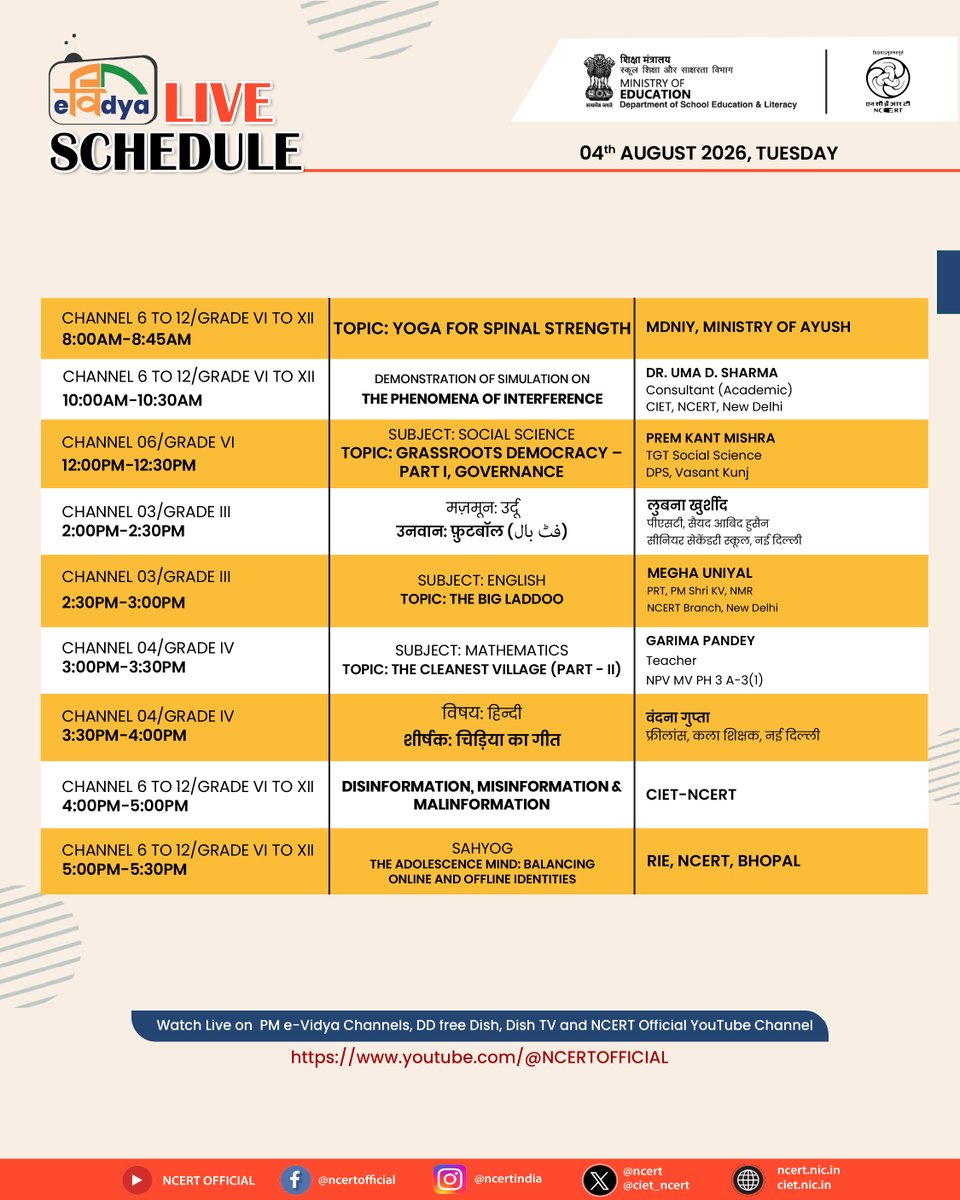
Get ready for a full day of engaging and interactive sessions across various subjects!
𝐋𝐈𝐕𝐄 𝐨𝐧 𝟎𝟒 𝐀𝐮𝐠𝐮𝐬𝐭 𝟐𝟎𝟐𝟔
Expert-led interactions for classes 1st–12th—completely FREE to help you enhance your learning and understanding.
Tune in LIVE on PM e-Vidya Channels & NCERT YouTube!
Watch here on NCERT YouTube:
https://t.co/BKcElbGwPk
𝐃𝐨𝐰𝐧𝐥𝐨𝐚𝐝 𝐏𝐌 𝐞𝐕𝐈𝐃𝐘𝐀 𝐌𝐨𝐛𝐢𝐥𝐞 𝐀𝐩𝐩𝐬:
Apple / iOS: https://t.co/qQhOOccMoX…
Android: https://t.co/cVYrgSyCzs…
Don’t miss out-let’s learn, grow, and explore together!
#ncert #LiveSession #EducationForAll #pmevidya #live
“The Opposition seems to have mid-read the Bill. This legislation is not limited to paper leaks alone, it covers the entire spectrum of possible unfair practices in public examinations”.
My intervention in discussion on “Public Examinations (Prevention of Unfair Means) Amendment Bill, 2026,” in #RajyaSabha.