✨💫 This was #CEBC2026 💫✨
Thank you to all participants, speakers, presenters, the scientific committee, session chairs, sponsors, partners and helping hands for making this event so magnificent!
All pictures are finally online 👉https://t.co/ixvEGi2Zrq
Looking forward to CEBC2029 in Graz again 🥳
#cebc #cebc2026 #cebcgraz #biomass #bioenergy #RenewableEnergy #bioeconomy
Bioenergy with carbon capture and storage (BECCS) enables permanent carbon removal, whereas bioenergy with carbon capture and utilisation (BECCU) supports fossil carbon substitution through the production of renewable fuels and materials. Deciding whether to store or utilise biogenic CO₂ depends on a range of economic, policy, technological and infrastructural factors.
To explore these considerations, a strategic IEA Bioenergy project was established jointly by Task 40 (Deployment of Biogenic Value Chains and Carbon Management) and Task 45 (Climate and Sustainability Effects of Bioenergy within the Circular Bioeconomy). Researchers from both tasks produced a report examining the key dimensions of biogenic carbon management from the perspective of CO₂-emitting sites. The analysis draws on emerging policy frameworks and early implementation experiences in Sweden, Denmark and Norway.
Key takeaways:
▶️ BECCS is essential to achieving net-negative emissions and compensating for residual emissions in hard-to-abate sectors.
▶️ Long-term financial support is crucial to scaling deployment, including per-tonne CO₂ subsidies, reverse auctions, EU funding (e.g. the Innovation Fund) and voluntary carbon markets.
▶️ Public–private partnerships play a decisive role in making projects financially viable by combining corporate offtake agreements with public support.
▶️ Policy alignment across the Carbon Removal Certification Framework (CRCF), EU Emissions Trading System (ETS), Renewable Energy Directive (RED) and industrial carbon management frameworks is needed to ensure consistent incentives.
▶️ Cross-border CO₂ infrastructure and cooperation, particularly between Sweden, Denmark and Norway, are enabling the development of regional BECCS value chains.
▶️ BECCS currently has a stronger business case than BECCU, while BECCU offers transitional benefits through fossil carbon substitution. However, willingness to pay for e-fuels remains insufficient to support widespread commercial deployment.
Read more and download the full report 🔗 https://t.co/P80pyQvx74
#EUBCE2027 Focus on Topic 3.3: Resource Efficient Bioeconomy
This topic focuses on maximizing #biomass value while ensuring #circularity and #sustainability through five core pillars:
💧 Resource Stewardship: Sustainable management of land, water, nutrients, and ecosystem services.
♻️ Circular Systems: Prioritizing cascading biomass use, circular-by-design frameworks, and end-of-life recovery.
💡 Strategic Allocation: Balancing biomass use across food, feed, materials, fuels, and energy to manage trade-offs.
🌲 Cross-Sector Integration: Fostering collaboration between agriculture, forestry, industry, and the bioeconomy to drive green growth and jobs.
📊 Metrics & Assessment: Establishing standardized indicators to track resource efficiency, circularity, and sustainability.
📅 You're still in time to participate to EUBCE 2027! Send your abstract by tomorrow, 6 November 2026!
▶️ https://t.co/kL8oPkysl2
📢 EUBCE 2027: Abstract Submission Extended to 6 November
Thank you to all authors who have already submitted their abstracts and shared their research, innovations and industry experiences with #EUBCE2027.
📅 To accommodate requests for additional time, the abstract submission deadline has been extended to 𝐅𝐫𝐢𝐝𝐚𝐲, 𝟔 𝐍𝐨𝐯𝐞𝐦𝐛𝐞𝐫 𝟐𝟎𝟐𝟔.
There is still time to contribute to the Scientific and Industry Tracks and join the international #biomass and #bioeconomy community in Reims. We welcome research findings, technological developments, case studies and deployment experiences across biomass, #bioenergy and the bioeconomy.
📌 Take this final opportunity to submit your work for review by the EUBCE Programme Committee and help shape the 2027 programme.
▶️ https://t.co/kL8oPkysl2
📣 Programm & Anmeldung ONLINE 📣
"Sicher ist sicher: Bioenergie als Stärke der Energieversorgung" ist heuer das Motto des
26. Österreichischen Biomassetages in Linz.
Und am Heizwerke-Betreibertag dreht sich alles um "Gemeinsam stark durch Wissen, Erfahrung und Vernetzung"
📣
Jetzt Plätze sichern unter 👉 https://t.co/G4b0vzAwnq
#Biomasse #Bioenergie #ErneuerbareEnergie #Heizwerk #Nahwärme #Energiesicherheit
As the transition toward #renewableenergy accelerates, #Hydrogen as a Synthetic Carrier is moving rapidly from innovative research into full-scale industrial application.
From #greenhydrogen derived from #biomass to its crucial role as a synthetic vector in e(bio)-fuels and e(bio)-chemical production, industry conversion technologies are transforming how we produce #sustainableenergy and materials.
📚 If you are working on advancing these technologies, we would like to hear from you! At #EUBCE2027, Industry Topic 7: Hydrogen as a Synthetic Carrier will explore key advances in this sector.
💡 Not working directly on Topic 7? EUBCE 2027 features a wide range of topics spanning the entire biomass, #bioenergy, and #bioeconomy value chains!
📅 Call for Abstracts Deadline: 30 October
🎤 Don't miss the chance to present your work to a global network of academic and industry leaders.
👇 Submit your abstract or explore all available topics here:
🔗https://t.co/kL8oPkysl2
📣 Programm & Anmeldung jetzt ONLINE 📣
"Sicher ist sicher: Bioenergie als Stärke der Energieversorgung" ist heuer das Motto des
26. Österreichischen Biomassetages in Linz.
Und am Heizwerke-Betreibertag dreht sich alles um "Gemeinsam stark durch Wissen, Erfahrung und Vernetzung"
📣
Jetzt Plätze sichern unter 👉 https://t.co/G4b0vzAwnq
#Biomasse #Bioenergie #ErneuerbareEnergie #Heizwerk #Nahwärme #Energiesicherheit
Organic wastes, such as #wastewater sludge, animal manure, and food waste present both a management challenge and an opportunity to recover energy and valuable materials.
IEA Bioenergy Task 36 (Material and Energy Valorisation of Waste in a Circular Economy) therefore compiled a report of use cases showing different technological pathways for #OrganicWasteValorisation for local solutions.
Key findings:
- Successful projects typically combine reliable feedstock, local product demand, and simple site integration, with co-location helping reduce logistics costs and risks.
- Common approaches include coordinated operators, phased commissioning, strong product-quality focus, and compact footprints.
- Policy support can strengthen project viability, including biomethane incentives in Denmark and the UK.
- Financing models vary from private equity and multilateral loans to public concessions and private service contracts.
Read more and download the full report 🔗 https://t.co/opPi9mpvMw
#circulareconomy #anaerobicdigestion #carboncapture #wastetoenergy
🌍 How can biomass drive a just transition and build public trust?
#EUBCE2027 𝐓𝐨𝐩𝐢𝐜 𝟐.𝟏: 𝐒𝐮𝐬𝐭𝐚𝐢𝐧𝐚𝐛𝐢𝐥𝐢𝐭𝐲, 𝐬𝐨𝐜𝐢𝐨-𝐞𝐜𝐨𝐧𝐨𝐦𝐢𝐜 𝐢𝐦𝐩𝐚𝐜𝐭𝐬 𝐚𝐧𝐝 𝐩𝐮𝐛𝐥𝐢𝐜 𝐚𝐜𝐜𝐞𝐩𝐭𝐚𝐧𝐜𝐞 explores the environmental, social and economic dimensions of biomass applications, with a particular focus on #sustainability, equity and public engagement, delivering local socio-economic benefits, supporting just transitions and enhancing #societalacceptance of #biobasedsolutions through responsible biomass production and utilisation.
What we’re looking for:
🔹 Sourcing, certification & land-use sustainability
🔹 Rural development & SDG contributions
🔹 Managing biomass trade-offs & food security
🔹 Building public trust & stakeholder engagement
🔹Best practices & social impacts in construction & housing
Ready to share your research with the global #biomass community?
🔗 Submit your abstract now: https://t.co/kL8oPkysl2
🗓️ Submission Deadline: 30 October 2026
IPCC invites govts & experts to review the second draft of the 2027 Methodology Report on Short-Lived Climate Forcers
Experts interested in reviewing the draft can register until 23:59 CEST 18 October 2026 👉 https://t.co/yVXMtMicLL
🔗 https://t.co/0BNGIlXVfr
What does @34_IEABioenergy (Direct Thermochemical Liquefaction), and who are the people behind its work?
‘Direct Thermochemical Liquefaction’ is the controlled thermal degradation of biomass in any form to derive valuable energy and chemical products. It includes thermal and catalytic fast pyrolysis, hydrothermal and solvo-thermal liquefaction.
The objective of IEA Bioenergy Task 34 is to advance the international implementation of bioenergy technology through strategic information analysis and dissemination in the areas of direct thermochemical liquefaction of biomass (including bio-based waste) for bioenergy applications such heat, power, transportation fuel, and the production of chemicals.
📝 Are you researching on fuel synthesis routes, innovative conversion processes, carbon recycling and integrated biomass-hydrogen systems?
Topic 5.4 at EUBCE 2027 focuses on the cutting edge of #biofuels and #syntheticfuels, bridging the gap between #biogeniccarbon, electrochemical pathways, and #hydrogen integration.
We are looking for groundbreaking research across key areas:
🧬 Hybrid Pathways: #PBtL, #BtL, #BtG, and biomass-hydrogen integration
⚡ Power-to-X & E-Fuels: Recycled carbon fuels, PtL, and PtG using biogenic $\text{CO}_2$
🔬 Hydrogen & Electrochemistry: Biological, thermochemical, and electrolytic $H_2$ production, plus high-value bio-chemicals
📈 Scale & Logistics: Techno-economic analysis, infrastructure, and transport for methanol, ammonia, and synthetic hydrocarbons
If your work is driving the scalable transition to renewable carbon fuels, we want to hear from you. Present your findings to a global network of industry leaders, researchers, and policymakers.
🗓️ Submit your abstract by 30 October 2026!
🔗 https://t.co/kL8oPkysl2
Are you advancing research in #sustainableforestbiomass, digital monitoring, or ecosystem resilience? 🌲
Forests play a pivotal role in #climatemitigation, #biodiversity conservation, and the #circularbioeconomy. As we work toward sustainable bio-based value chains, accurate quantification, responsible mobilization, and advanced monitoring systems are more critical than ever.
At #EUBCE2027, new Topic 1.5: Forest Biomass Resources and Sustainable Forest Management focuses on bridging scientific innovation with sustainable practice.
In particular:
📊 Forest Biomass Quantification & MRV: Methodologies for carbon stock assessment, monitoring, reporting, and verification systems.
📡 Digital Forest Monitoring: Remote sensing, GIS, and advanced digital technologies for resource tracking.
🚛 Resource Mobilization & Supply Chains: Sustainable supply chains for wood resources, forest residues, and wood-processing side streams.
🌱 Ecosystem Services & Climate Resilience: Sustainable #forestmanagement strategies that support biodiversity, #climateadaptation, and multifunctional forest use.
Share your latest findings and solutions with a global audience of biomass professionals, policymakers, and industry leaders.
📅 Abstract Submission Deadline: 30 October 2026
🔗 Submit your abstract here: https://t.co/kL8oPkysl2
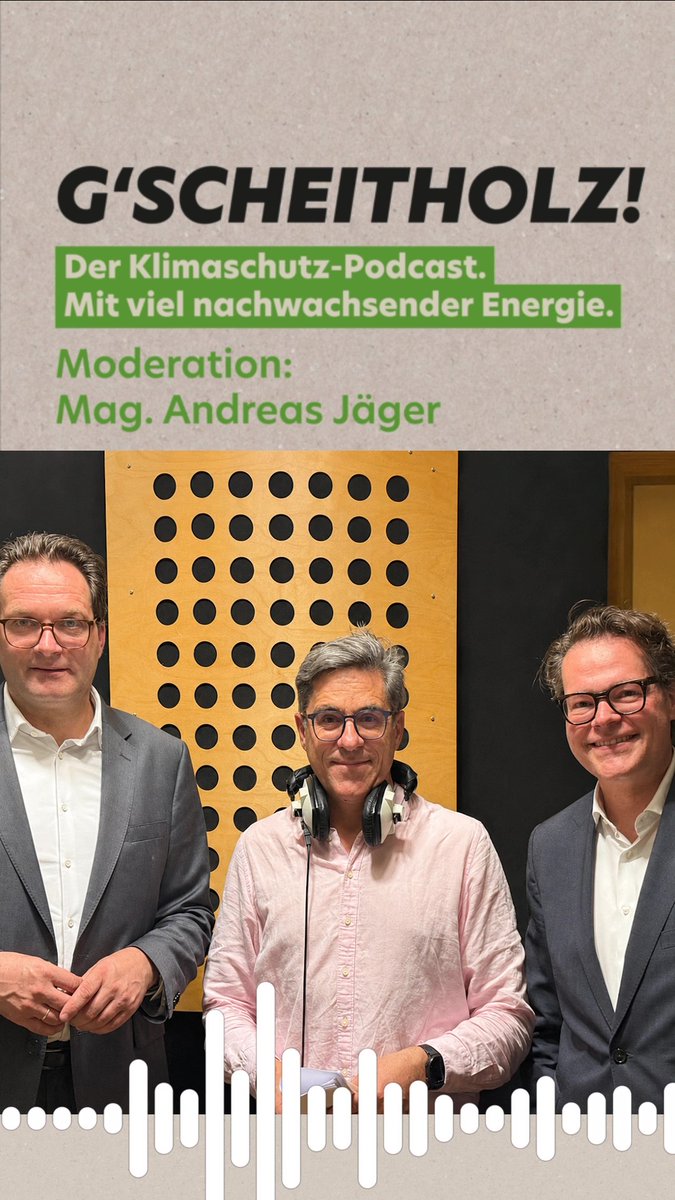
#Stadt, #Land, #Klima: Wie kann man gemeinsam die Transformation zu einer besseren Klimazukunft gestalten? Neue Folge von G'SCHEITHOLZ! - mit Mag. Norbert Totschnig, BM im @BMLUK_gv_at und Stadtrat @ChairNoHorseKey im Dialog über Interessengrenzen hinweg mit Klimajäger Andreas Jäger.
Jetzt reinhören! https://t.co/6eCIjt25wZ
#BECCS traditionally combines biomass combustion for heat and power with CO₂ capture and storage. However, #biomass processing can also generate carbon rich byproducts or waste streams, such as biogenic CO₂, animal feed residues, seed expeller, or lignin. While some of these can be used in valuable non energy applications, others, particularly biogenic CO₂, can be captured and permanently stored underground, contributing to carbon dioxide removal (CDR).
This report by @34_IEABioenergy examines how direct thermochemical liquefaction can contribute to carbon dioxide removal within BECCUS. Fast pyrolysis bio oil can be used as a fuel or to produce advanced fuels and chemicals, but it could also be permanently stored in geological formations. Because bio oil contains a high proportion of carbon, storing it underground could offer a potential pathway for CDR, although it may gradually transform into solid carbon deposits over time.
Key findings:
▶️ Capturing the CO2 from the flue gases of pyrolysis internal combustion is a readily available option to realize Carbon Dioxide Removal from fast pyrolysis processes.
▶️ As an advantage biochar can be separately recovered to enable uses that also realize carbon sequestration.
▶️ The use of the solid by-product from Hydro Thermal Liquefaction (HTL), sometimes referred to as hydrochar, is still subject to further research.
Read more and download the full report 🔗 https://t.co/K4JIYxCcxa
In Österreichs Wäldern und Feldern steckt viel Energie. Wie könnten wir in Österreich mittels #Biomasse fossiles Gas und Diesel ersetzen, z.B für die Industrie oder die #Landwirtschaft?
Oder stoßen wir da bereits an enge Grenzen? Genau darum geht es in der aktuellen Podcast-Folge von G'SCHEITHOLZ! SHORTS #39 zur #Biomassestrategie bis 2040!
Gemeinsam mit DI Lorenz Strimitzer von der Österreichischen Energieagentur (@at_AEA) werfen wir einen Blick auf fundierte Daten und Fakten zur Zukunft unserer Energieversorgung.
Hör gleich rein und erfahre, was auf Österreich zukommt: https://t.co/r63Wrx5wXp
#GSCHEITHOLZ #BIOENERGIE #ERNEUERBARE #ENERGIEWENDE
#Photovoltaik auf der Wiese, Raps im Tank – und was bleibt am Ende auf unseren Tellern? Immer mehr Menschen sorgen sich um die Entwicklung, dass wertvolle landwirtschaftliche Flächen für die #Energiegewinnung genutzt werden. Hier wird aufgeräumt mit Mythen rund um die #Energiewende, unser Experte in dieser Folge: Hofrat DI Dr. Josef Rathbauer (Leiter der Abteilung Biogene Rohstoffe an der BLT Wieselburg).
Jetzt reinhören🦻https://t.co/YOVmgzinHc
🎬 Welcome to a new episode of Inside IEA Bioenergy. Today, we're spotlighting IEA Bioenergy Task 37 (Energy from Biogas)
🔎 ‘Energy from biological conversion of organic waste’ refers to recovering energy from anaerobic digestion of municipal solid waste (MSW), sewage sludge, energy crops or agricultural residues (in conjunction with MSW or organic industrial waste) using engineered reactors.
👉 The main objective of Task 37 is to communicate and advance the knowledge of anaerobic digestion systems and their application via circular economy processes to decarbonisation and environmental improvement.
The specific objectives include:
1) providing expert advice on the optimal role of biogas in future energy systems;
2) informing policy makes and developers on #sustainability of #biogas systems and on methods to ensure good practice;
3) providing expert advice on the integration of anaerobic digestion into processes;
4) providing technical support to policy makers and to the public.
Video credits: @BlackRookMedia